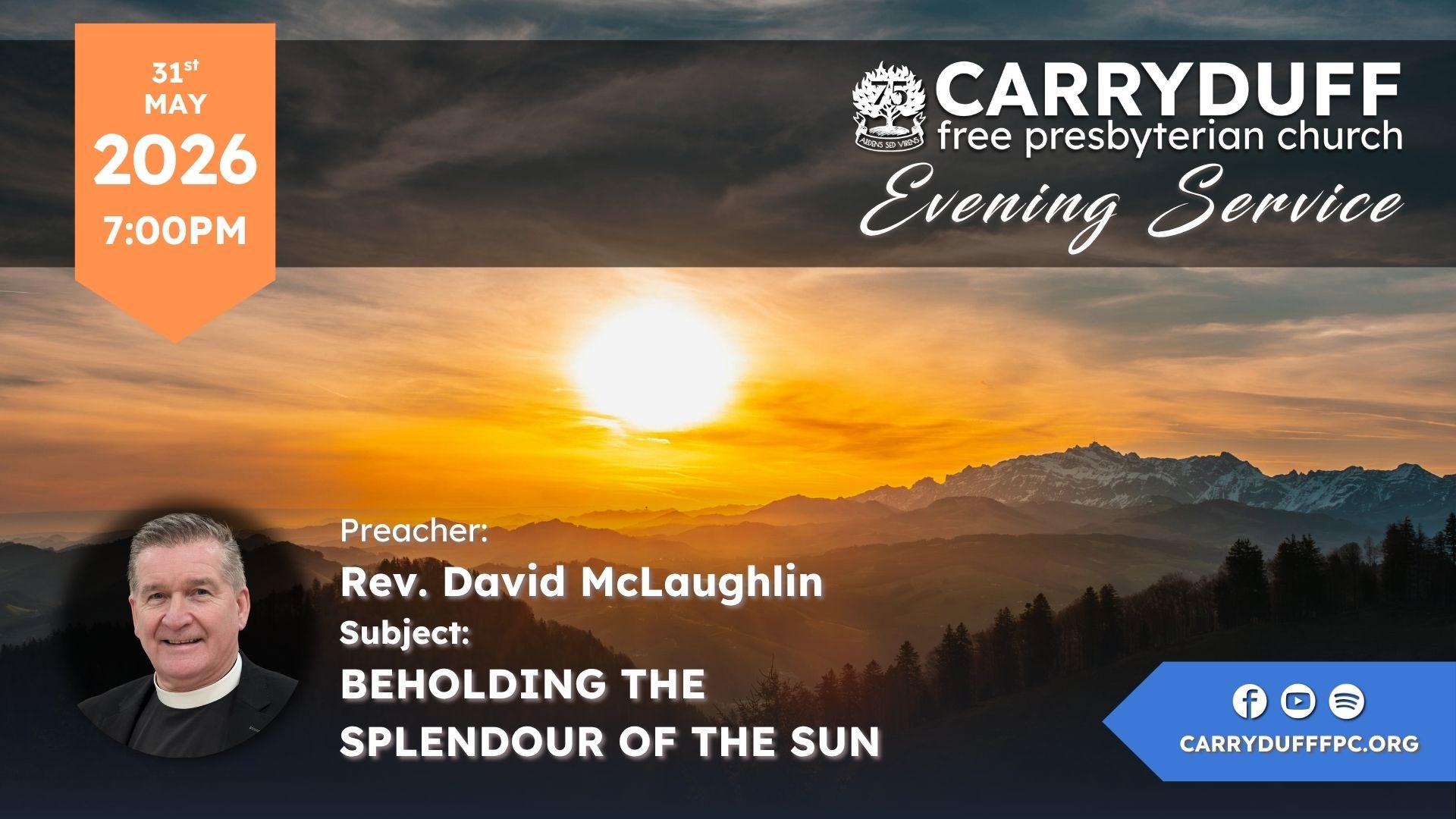

Date: SUN 7:00pm 31st May 2026
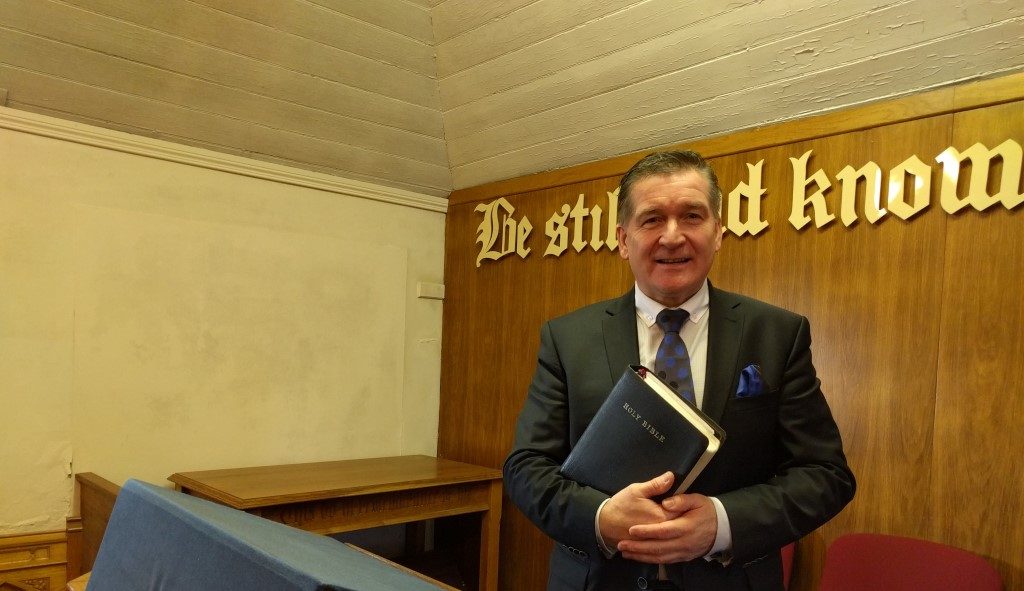
Testimony: Christopher Orr (4th Year Whitefield College of the Bible)
Preacher: Rev. David McLaughlin
Bible Reference: Ecclesiastes 11:7
Podcast
Testimony of Christopher Orr
Christopher Orr: A Personal Testimony of Salvation and Calling
The Scripture Reading
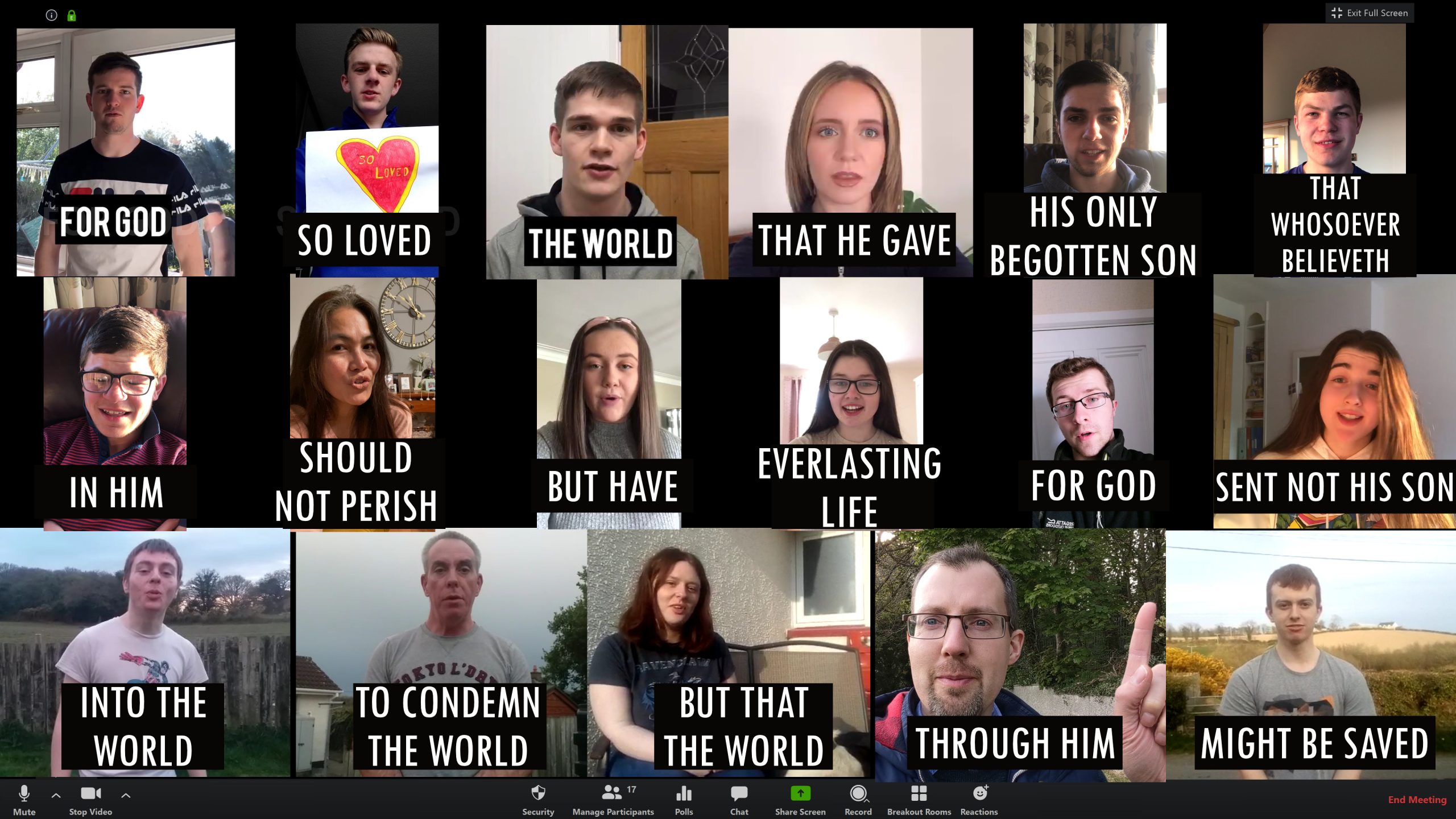
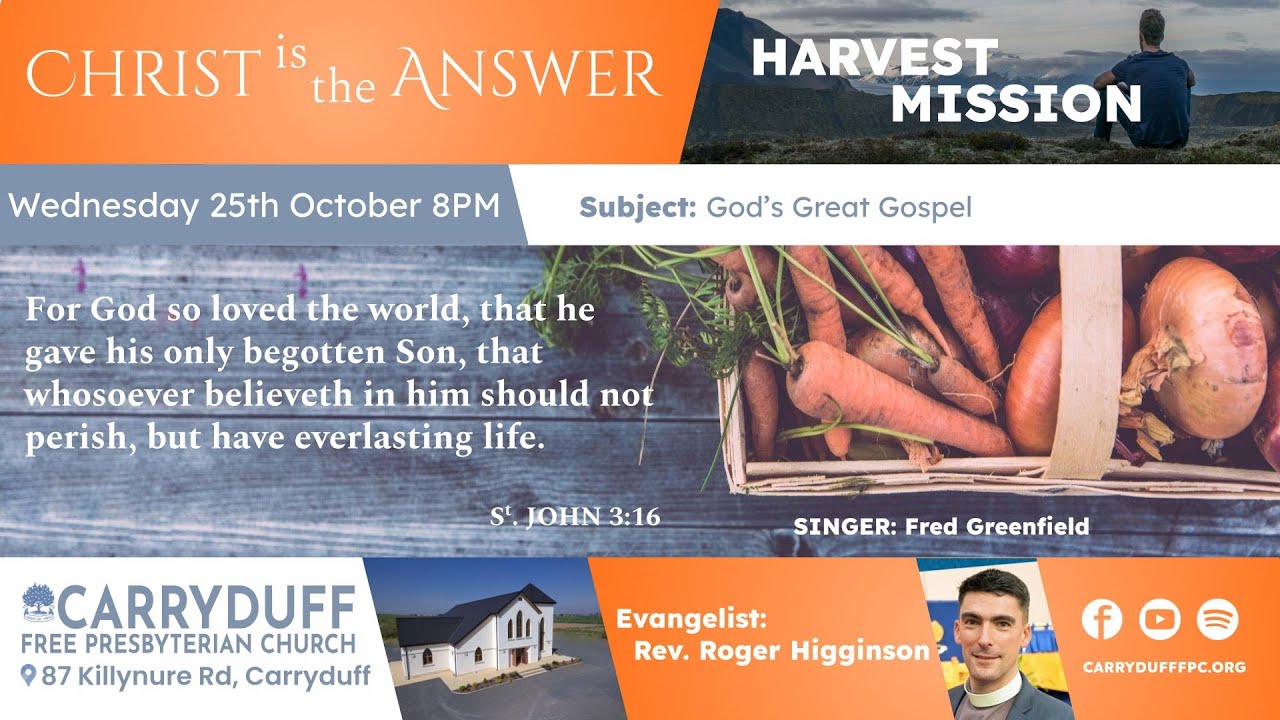
Christopher Orr begins his testimony by reading from the Gospel of John, chapter 3, the well-known account of Nicodemus coming to Jesus by night. The passage includes the familiar words of verse 16: “For God so loved the world, that he gave his only begotten Son, that whosoever believeth in him should not perish, but have everlasting life.” He explains that he has chosen this passage because Nicodemus was a man of great privilege—a religious leader, a Pharisee, a ruler of the Jews, a man who knew much of the Old Testament Scriptures and could offer counsel on the law and the ceremonial system. Yet despite all his knowledge, Nicodemus lacked one essential thing: he did not have Christ as his own and personal Saviour. Confronted by the God-man, Nicodemus was faced with the question that confronts every person who hears the gospel: what will you do with Jesus, the Son of God, who came to seek and to save that which is lost? Christopher identifies himself with Nicodemus, for he too had privilege, scriptural knowledge, and religious upbringing—and yet for many years he lacked the one thing needful.
Early Life, Privilege, and Difficulty
Christopher was brought up in a Christian home where the Word of God was open and taught. He attended Sunday school and children’s meetings from his earliest years. In those earlier years, his family attended the Martyrs Memorial Church, where they sat under the ministry of Dr. Ian Paisley. He counts it a great blessing to have been under such faithful preaching. Later, the family moved to their local church in Ballyclare, where Reverend McClung ministers to this day. By every measure, Christopher enjoyed abundant spiritual privilege.
Yet alongside those privileges, he also faced significant difficulties from birth. He was born with poor hearing, which in turn affected his speech. He suffered from a condition known as glue ear, and as a result he was unable to speak until the age of three. He could not utter the common first words that a baby would normally be able to say. On top of this, he was diagnosed with auditory processing disorder, which in simpler terms meant that he struggled to retain information and to give that information back when required.
He pauses at this point to give glory to God, because it would seem utterly improbable that a person with such difficulties—someone who could not speak from a young age, someone who needed speech therapy, someone who struggled to retain information—would ever be called into the Whitefield College of the Bible, an institution where men are trained to preach and proclaim the name of Christ, where they are required to retain substantial amounts of information and to reproduce it in examinations. Yet it is a wonderful thing, he reflects, that the Lord takes up the weak things to confound the mighty, and that despite disabilities and inabilities, the Lord gives grace and ability to fulfil one’s calling.
At the age of ten, Christopher was brought back to the Christian school in Newtownabbey, a school that facilitated speech therapy and learning difficulties. By this point, he had already spent ten years of his life under faithful preaching, attending Sunday school and children’s meetings, learning the catechisms and memory verses. And yet, he was still in his sin.
False Assurance and the Deceitfulness of the Heart
The truly frightening thing, Christopher reflects, is that if someone had asked him during those years whether he was going to heaven, he would likely have answered yes. Within his heart and mind, he thought he was good enough. He sat up well in church. He was not a troublemaker. He enjoyed great respect from the minister, the elders, the Sunday school teachers, and the church itself. His reasoning was simple: how could someone like him not be going to heaven?
At the Christian school in Newtownabbey, the Word of God was opened to him every single day. There were morning Bible studies, afternoon Bible studies, and Scripture classes. Virtually every day, God’s Word was being opened to him. As the Scriptures were opened, he began to realise that he needed to be saved. But there was a stage in his life, he confesses, where although he knew he needed to be saved, he was entirely unconcerned by that fact. Within his heart, he still longed after sin. His heart still longed to go into the world. He told himself he would get saved when he was much older—perhaps at seventy, after he had tasted the things of the world.
He recalls that Sunday school teachers and even his own minister exhorted the young people not to go into the world, not to get into drink, not to take up cigarettes. Yet within his heart, he said to himself that he wanted to try at least one—at least one taste of the world before returning to church. He is thankful, by God’s grace, that he never did, for otherwise he would likely have a very different testimony to give.
He wanted to delay his salvation. But he remembers being given a picture in Sunday school—a picture he did not think much of at the time, being more interested in the red sports car it contained. Yet within that picture was a text of Scripture: 2 Corinthians 6:2, “Behold, now is the accepted time; behold, now is the day of salvation.” That verse challenged him deeply. To be saved, he realised, one cannot push it off into the future. The only guarantee of being saved is to come to Christ now, just as one is.
Deepening Conviction
As these truths pressed upon his heart, Christopher began to become deeply concerned about his sin. He recalls a particular occasion at school, when he was in Primary 7. The teacher had left the classroom to photocopy some work, leaving the pupils alone. Anyone who remembers school knows what happens when the teacher leaves: talking, messing about, and then sitting up straight and quiet as mice the moment the teacher returns. But on this occasion, something remarkable happened. When the teacher was away, the pupils talked amongst themselves—but what they talked about was when they got saved.
Think about that for a moment, he urges: a classroom of children aged roughly seven to eleven, talking about when they were saved. And every child in that room could say that they were saved and could tell when it happened. Christopher sat quietly in the back row, knowing that he was the only person in that classroom who was not saved. He had eternity in view at that moment, thinking that if they were all to die at any instant, everyone else in the class would be forever with the Lord, and he would be eternally cast out.
He pauses to address anyone in the congregation who might find themselves in a similar position: perhaps you know you are not saved, and you look around at others whose testimonies you know, and you realise that if you were all to die in the next two minutes, they would be in heaven—but where would you be?
As these things worked in his heart, Christopher became very concerned about the things of God. But he was also confused. He knew John 3:16, that whosoever believeth in Christ should not perish but have everlasting life, but he struggled to understand what it meant to believe. His problem was this: he always believed there was a God. He never once would have denied the existence of God. He believed the things recorded in Scripture were true. He believed in heaven; he believed in hell; he believed in the triune God. What he was really missing was repentance. He was still holding on to his sins, still pursuing after sin. He was not resting and trusting upon Christ as his own personal Saviour. His eyes were not upon Christ; his eyes were upon himself and what he was doing.
The Night of Crisis
Christopher recalls many nights of crying unto the Lord, many nights of weeping, wondering if he would ever be saved. He remembers one particular occasion when his mother heard him crying and came in to see if he was alright. He lied to her, telling her he was fine—that it was just a bad dream. The door closed, and he says he never felt hell as close as he did on that night, because he thought he was seeing the door of opportunity close for all eternity. He thought he had given up his chance to be saved. He remembers punching his pillow and asking himself why he let it happen. An opportunity had been given to him, very clearly and very plainly, to simply ask his mother how he could be saved—but he did not ask. He was too ashamed to ask.
He returns to the passage in John 3 and draws another parallel with Nicodemus. When Nicodemus asked, “How can these things be?” regarding being born again, Jesus answered, “Art thou a master of Israel, and knowest not these things?” Christopher felt exactly the same way. Here he was, a person who had been going to church for ten years, and he still did not understand how to be saved.
Conversion: 14th May 2011
But on the 14th of May 2011, everything changed. His mother led him to the Lord, and he simply called upon the name of the Lord. No longer was he looking to himself; no longer was he looking to the church. He was looking to his Saviour, the one who bled and died for him, the one who took his sins and his sorrows and made them his very own.
At the time of giving this testimony, that date marked fifteen years since his conversion—fifteen years saved and kept by the power of God. He rejoices and thanks God that he ever set his love upon him, that God loved him and gave himself for him.
The Christian Life: Ups and Downs
Christopher is honest about his Christian life. There have been ups and downs. There have been times when he has let the Lord down. But the Lord ever remains that faithful God who never fails his people, the one who will never leave nor forsake them. There were even times in his life when he lacked assurance of his own salvation. He remembers his mother and father opening up the Scriptures to him again and again, and through their counsel he learned something of vital importance: the reason he lacked assurance was that he was not in God’s Word. He was not reading it. When he began to read the Scriptures, it was life-changing. He began to understand more of his God, and he began to know that sweet communion and fellowship with God. He offers this as an encouragement: keep at the Word of God, read it every day, pray over it, and pray to God every day.
The Call to Ministry
About two years after getting saved, the Lord began to press something upon Christopher’s heart concerning the future. He had many things in mind: being a joiner, being a photographer. But at the Christian school, the pupils were encouraged to seek the Lord for what he would have them to do. He remembers praying before a church service, simply asking the Lord what he would have him to do, and the Lord answered that prayer. He was brought to Ezekiel 2:7: “And thou shalt speak my words unto them, whether they will hear, or whether they will forbear: for they are most rebellious.” He felt the finger of God pointing at him. As time progressed, he doubted whether the Lord was really calling him into the ministry. But he praises God that he is a God who speaks once, yea twice. In 1 Chronicles 28:20, David said to Solomon his son, “Be strong and of good courage, and do it: fear not, nor be dismayed: for the LORD God, even my God, will be with thee; he will not fail thee, nor forsake thee, until thou hast finished all the work for the service of the house of the LORD.”
Christopher finished his time at school and went into joinery, which he did for a further six years. But he reached a point where no matter what job he was asked to do, something went wrong. For some reason, it always fell back upon him—something he failed to do or failed to understand as part of the job. These things happened so frequently that he began to bring it to the Lord, wondering whether he was where he ought to be.
The Lord’s Leading in January 2021
In January 2021, the Lord began to answer and to make it clear that it was time for him to move, time to fulfil the call, time to go into the Whitefield College of the Bible. On three consecutive days, the Lord spoke to him. The Lord spoke through a sermon that his girlfriend—now his wife—sent to him. The Lord spoke through a daily devotional. And the Lord spoke through the midweek prayer meeting on the Wednesday. The Lord was dealing with his heart about doing something for him.
By the end of that week, Christopher brought before the Lord every excuse he could think of. He was too weak. He was too inadequate. He was utterly unable for the great task of preaching the Word of God. The Lord silenced every excuse through Romans 12:1: “I beseech you therefore, brethren, by the mercies of God, that ye present your bodies a living sacrifice, holy, acceptable unto God, which is your reasonable service.” It was the phrase “by the mercies of God” that spoke to him particularly. On that Saturday, he was brought back to Calvary. He was brought back to remember Christ who loved him and died for him—Christ who made no excuse to die on the cross but went voluntarily out of love. And there he was, making excuses, unwilling to do just this one thing for Christ after all that Christ had done for him.
The Whitefield College of the Bible and Present Circumstances
By God’s grace, Christopher was accepted into the Whitefield College of the Bible. At the time of giving this testimony, he stood in his fourth and final year. There have been ups and downs, and he has learned much both inside and outside the college. He has ministered throughout the country in different churches, and it has been a blessing and a real privilege to minister God’s Word—to see the Word of God changing hearts, changing lives, and even impacting churches. It has been a wonderful privilege to see what God can do through someone who is, in his own words, simply a nobody—simply somebody saved by the grace of God.
He was at that time assisting in the work in Tandragee, visiting one day a week, sitting in on some of the session and committee meetings, and helping out since the previous September. Exams were approaching: a study week was imminent, followed by examinations, with the final exam scheduled for the 26th of June—which he hoped would be his very last exam. God willing, graduation was set for the 14th of September in Tandragee. He asked the congregation to keep himself and another man, Thomas Hanna from Annalong, in prayer—that the Lord would lead and guide them, and that God would send labourers into the college.
Closing Exhortation
Christopher closes his testimony with a brief but earnest appeal. He notes that the days are dark, and the church needs men and women of God to stand for truth. Pulpits need to be filled with men who will preach the gospel of Jesus Christ. He prays that whatever way God has spoken to anyone listening—whether unsaved or saved—they would yield to the Lord, step forward, and obey. If unsaved, that they would be saved that very night. If saved, that they would keep walking on with their great God in heaven.
Sermon Summary
Introduction and Context
The sermon takes as its text Ecclesiastes 11:7: “Truly the light is sweet, and a pleasant thing it is for the eyes to behold the sun.” The preacher opens by acknowledging the immediate context of this verse within the broader book of Ecclesiastes. King Solomon, the author, is known for his repeated refrain that all is “vanity of vanities”—the Hebrew word denoting emptiness, frustration, and the fleeting nature of life lived under the sun. Life, as Solomon observed it, is fallen, brief, and often bewildering. The book is widely regarded as one of sorrow, sighing, and solemnity.
Yet in this particular verse, there breaks forth what the preacher describes as a ray of bright sunshine. Solomon, while urging men and women to remember their Creator in the days of their youth—before the dark days of old age, death, and judgment arrive—also instructs them to enjoy the light while they have it. Life is brief, but it is also beautiful. The physical sun in the sky, the preacher argues, serves as a picture of earthly life itself. But more than that, it points beyond itself to a greater Sun: the Sun of Righteousness spoken of by the prophet Malachi, who declared that unto those who fear God’s name, the Sun of Righteousness would arise with healing in his wings. Just as the physical sun gives natural light and life, the Lord Jesus Christ gives abundant and eternal life to all who know and trust in him. The preacher then structures his exposition around five headings: the supremacy, singularity, solidarity, strength, and symbolism of the sun.
The Supremacy of the Sun
The preacher begins with the sun’s supremacy, drawing attention to Solomon’s words: “Truly the light is sweet.” There is something universally delightful about sunlight, and the preacher insists that God designed it that way. The very first thing God created was light, as recorded in Genesis 1:3. The sun in our solar system possesses a diameter of approximately 864,000 miles, making it roughly 109 times greater in diameter than the earth. All the planets of the solar system combined—Jupiter, Saturn, Uranus, Neptune, Earth, Venus, Mars, and Mercury—could be placed into the sun over a thousand times. The sun is vast; it is immense; it stands at the very centre of the solar system, with all the planets rotating around it and paying homage to it.
Without the sun, the preacher emphasises, there would be no life on earth. There would be no crops, no seasons, no growth, no vision—nothing but darkness and death. The sun is absolutely supreme in the natural order. And this supremacy, he argues, lifts our thoughts spiritually to the supremacy and superiority of the Lord Jesus Christ. Christ is the centre of a life of abundance, blessing, and eternal life. He is the one who holds the stars in their course, who holds our very breath in his hand, who has set the boundary of our days.
The sweetness of sunlight after a long winter, after days of rain and grey overcast skies, is unmistakable. How sweet is the sunlight after a period of darkness. The preacher then presses the spiritual application: although sinners live naturally in darkness, Christ is the true light that shines in that darkness. He cites Matthew 4:16, which declares that the people who sat in darkness saw a great light. Men by nature, he observes, love darkness rather than light because their deeds are evil. This world, with all its education, entertainment, religious observances, pomp, and power, nevertheless remains in spiritual darkness.
The evidence of that darkness, he contends, is visible in the multiplicity of churches that are not full, the multiplicity of churches that have closed, and the vast majority of people—nominal Protestant and Roman Catholic alike—who remain without the true knowledge of the Lord Jesus Christ. He draws an analogy: a blind man may have the sun shining upon him, but because he is unconverted, he does not perceive it. That blind man needs to be born again of the Spirit. When God acts in sovereign and saving grace, suddenly the light shines, and that light for that soul becomes sweet. The burden of guilt lifts, true hope enters the soul, Christ becomes precious, and the gospel becomes real and wonderful. The question he then poses is whether the hearer has experienced the sweetness of the light—whether Christ stands supreme, so that nothing else is wanted: not man-made religion, not tradition, not morality, not an institution or organisation, but Christ, the supreme Sun of Righteousness.
The Singularity of the Sun
The preacher’s second heading concerns the singularity of the sun. Returning to the text, he notes the definite article employed: “behold the sun.” The Hebrew word translated “behold” carries the sense of gazing and understanding. There is only one sun in the sky—one centre and source of light and life, one giver of life upon which the whole world depends for all its needs. Without the sun, there is no life, no light, nothing but darkness and death.
This, the preacher argues, is a wonderful picture of the Lord Jesus Christ. There is only one Saviour. He quotes Acts 4:12: “Neither is there salvation in any other: for there is none other name under heaven given among men, whereby we must be saved.” He also invokes John 14:6, where Christ declares himself to be the way, the truth, and the life, and that no man comes unto the Father but by him. There are not many sons in heaven; there is only one. The call to behold the sun points to the one true mediator between God and men, for there is one God and one mediator between God and men, the man Christ Jesus.
The preacher draws a further illustration from nature: during a week of tremendous sunshine, the flowers turned their heads and lifted themselves toward the sun. Everything on earth depends upon the sun. In the same way, every soul should depend upon Christ; every sinner should lift their head and look to Christ, who says, “Look unto me, and be saved, all the ends of the earth.” Without Christ, just as without the sun, there is death, darkness, and destruction. He quotes the great Baptist preacher Charles Spurgeon, who said that a world without a sun would be a black ruin, and a soul without Christ is an eternal midnight.
The Solidarity of the Sun
Thirdly, the preacher turns to the solidarity of the sun—its constancy, its faithfulness, its unchanging nature. Solomon says, “Behold the sun.” The sun is always there. It is always shining. There are days when clouds hide it from view; there are times when storms obscure it; the night removes it from our sight. But the sun itself has not ceased to shine. This, the preacher insists, offers profound comfort and consolation.
He addresses believers who may be passing through dark and difficult providences. There is a tendency, he observes, to read the Old Testament accounts of God inflicting pain and judgment upon people for their sin and then to assume, erroneously, that every trial and trouble that befalls an individual has a direct correlation with sin and judgment. This, he states plainly, is not true. He points to the Apostle Paul and his thorn in the flesh. What sin had Paul committed to warrant that thorn? The answer is none. The thorn was given for his sanctification; it was evidence of God’s goodness to him; it was given so that Paul might rely solely upon the grace of God, who declared, “My grace is sufficient for thee.”
God in his providence often visits believers with tragedies, and those tragedies are not a direct judgment upon sin. The preacher warns against rushing to judgment in the midst of tragedy. The blind man in the Gospels was not born blind because of his own sin or his parents’ sin; the disciples asked the question and received the answer that neither had sinned. Why tragedies happen, the preacher confesses he does not fully know. But he believes in a God who ultimately declares that all things work together for good. All the pain and suffering is but for a moment; the tragedies, the dark experiences, the dark clouds are only temporary and never permanent.
When trials come, when sorrows are heavy, when the spirit is filled with despair, and when the clouds hide the sun from view, the believer is to remember this: Christ has not changed. “Behold the sun. Jesus Christ the same yesterday, and today, and forever.” The clouds may hide him from sight, but never from reality. The sun is always shining in the sky, and the Sun of Righteousness is always shining. He has risen with healing in his wings. Even when the believer cannot see God, cannot feel any hope, and feels abandoned, there is no fault in the sun. The sun shines on. Christ remains.
To sinners who have ignored, rejected, and refused Christ, the preacher declares that he is still shining. Through the gospel, he gives a powerful invitation and exhortation to repent and believe. “Behold the sun. Look unto me, and be saved, all the ends of the earth.”
The Strength of the Sun
The preacher’s fourth heading addresses the strength of the sun. He notes that the congregation had felt the power of the sun during the preceding week: its heat, its warmth, and how it changed everything. Flowers opened, grass began to spring forth from the fields—good news for farmers anticipating a good crop of silage. Life seemed to burst forth. The sun possesses enormous energy; it causes all food and plants to grow. While the preacher confesses he knows very little about solar power and how its enormous energy works, he acknowledges that it surpasses human understanding. Yet he believes it is a faint reflection of the power of Christ.
He returns to Malachi’s prophecy: “But unto you that fear my name shall the Sun of righteousness arise with healing in his wings; and ye shall go forth, and grow up as calves of the stall.” He illustrates the healing power of light with an anecdote about the discovery of ultraviolet light treatment for jaundice. A nurse working in a maternity ward observed that babies placed on the side of the room where sunlight streamed through the windows onto their skin healed faster than those on the other side. The light streaming in brought healing. That is how the treatment was discovered: the healing power of the sun.
If the physical sun in the sky has the power to warm the earth, then how much greater is the power of the Sun of Righteousness who created that sun. Christ has power not merely to warm the earth but to raise the dead. To anyone who might protest that they are too sinful, too bad to be saved, or that it is too late, the preacher directs them to the call of Isaiah: “Come now, and let us reason together, saith the LORD: though your sins be as scarlet, they shall be as white as snow; though they be red like crimson, they shall be as wool.” Where sin abounds, grace does much more abound. No darkness can resist the sun’s rays; no sinner in their sin can resist the sovereign saving grace of Christ when he determines to act and work. Such is the strength of the Sun.
The Symbolism of the Sun
Finally, the preacher turns to the symbolism of the sun. The Hebrew word for sun, shemesh, appears 154 times in the Old Testament, and it is presented and set forth as a key symbol of earthly life. King Solomon, throughout Ecclesiastes, repeatedly uses the phrase “under the sun.” It signifies life in a fallen world—a life of labour, sorrow, trials, death, and vanity. What do people chase after today? Pleasure, profits, popularity, possessions, pomp—and yet it all fades and falters at the end.
The sun rises and sets every day, shining upon the just and the unjust. The sun, the preacher observes, is a witness to man’s mortality. Every sunset preaches a funeral sermon, declaring that the day the Lord has given us has ended. Evening reminds us that the day is ending; the sunset reminds us that life and time are short. Beautiful weather does not last. Spring passes; summer passes; youth and beauty pass away. Many in the congregation can look back over decades of life, even five or six decades—lives of opportunity. And yet what looms large after the time of opportunity is eternity.
The earthly sun points to Christ. The sun is glorious, but Christ is infinitely greater. Christ gives love, grace, truth, and an abundant and eternal life. The sun can give warmth, light, and life to the earth; the sun rises each morning—but Christ rose from the dead. The sun rules the daytime, but Christ rules heaven and earth. One day, the preacher notes, the physical sun will be turned into darkness at the second coming of Christ, when he comes to establish his millennial reign upon the earth. But Christ the Sun will reign forever.
Conclusion and Application
The preacher draws his message to a close by asking the congregation what they should do in light of all they have considered: the supremacy of the sun, its singularity, its solidarity, its strength, and its symbolism. The answer is clear: come to the light. Come to Christ. Do not remain in darkness. Do not waste your life under the sun, living for fleeting and temporal things. Yes, temporal things are to be enjoyed—work, health, pleasures—but how many people were eager to seek and enjoy the sunlight during that week of fine weather, and yet they neglect the one who is the Sun of Righteousness, the one who is the light of the world.