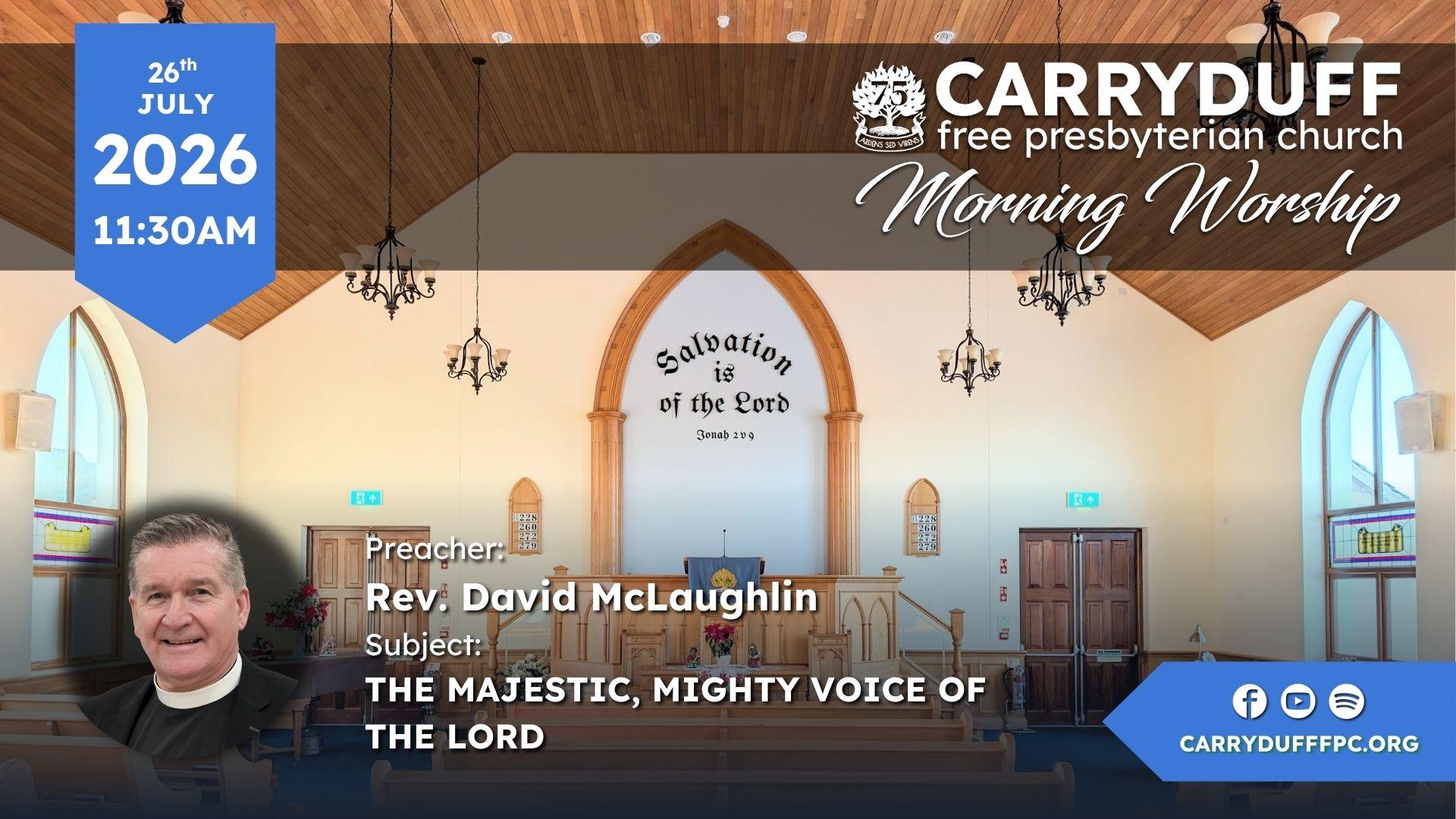

Date: SUN 11:30am 26th July 2026
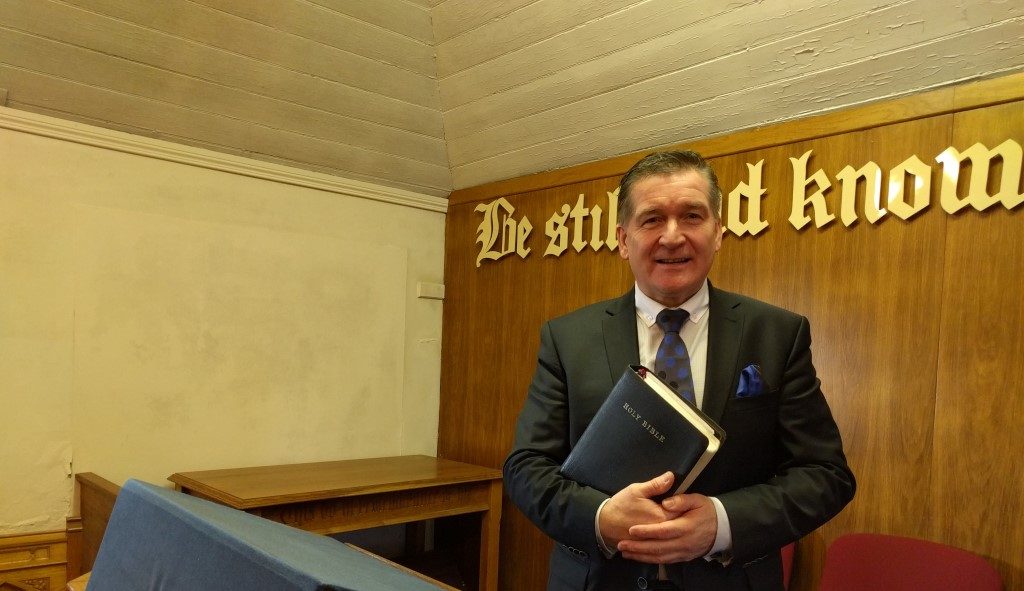
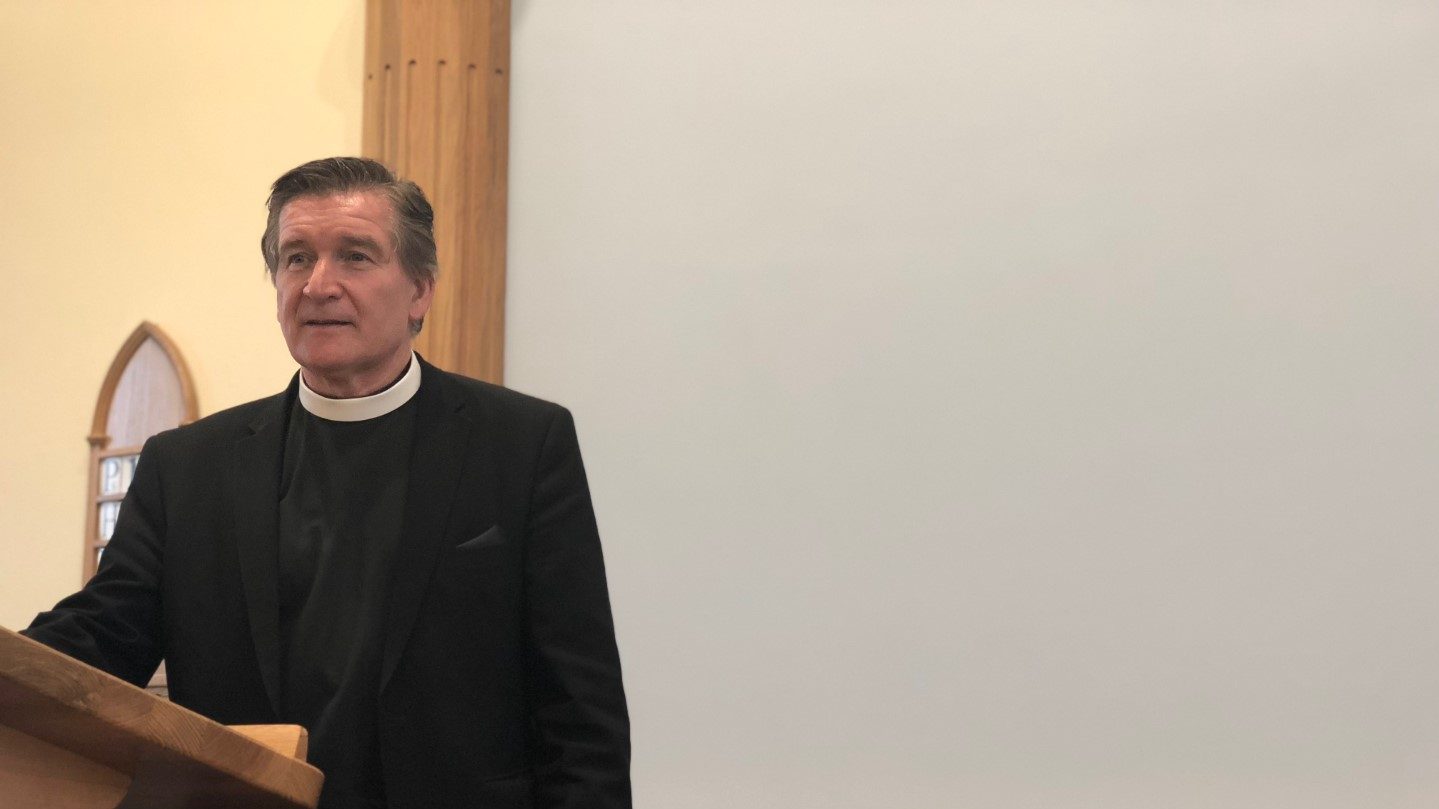
Preacher: Rev. David McLaughlin
Bible Reference: Psalm 29:3-9
Podcast
The Majestic and Mighty Voice of the Lord: A Sermon Summary
Text: Psalm 29, with particular focus on verses 3–4 — “The voice of the Lord is upon the waters: the God of glory thundereth: the Lord is upon many waters. The voice of the Lord is powerful; the voice of the Lord is full of majesty.”
Theme: The majesty and mighty voice of the Lord
Introduction: A Psalm of Thunder and Theology
The preacher opens by describing Psalm 29 as one of the most magnificent psalms in the hymnbook of the Bible. King David begins by calling upon “the mighty” — angels, kings, queens, princes, rulers, magistrates, and merchants — to give unto the Lord glory and strength, and to worship the Lord in the beauty of holiness.
What follows is a description of a terrifying thunderstorm sweeping from the Mediterranean Sea across Lebanon, over the wilderness of Kadesh, until finally impacting upon the temple in Jerusalem. At that point, every worshipper inside cries out and speaks of the glory of Jehovah, as verse 9 records: “And in his temple doth every one speak of his glory.”
The Psalm’s structure is noted: it begins with a proclamation to give glory unto the Lord and concludes with peace given — “The Lord will bless his people with peace” (v. 11). David, inspired by the Holy Spirit, is not merely fascinated by meteorology or poetry. In the thunder, he hears true theology. In the storm, he listens to the speech of the sovereign God who governs the storm.
The preacher draws attention to a significant structural feature: the phrase “the voice of the Lord” occurs seven times in Psalm 29 (verses 3, 4 twice, 5, 7, 8, and 9). Seven, being the number of perfection, emphasises the completion and perfection of God’s speech. God’s voice is perfect in authority, perfect in its attributes, and perfect in its accomplishment. God accomplishes His purposes by speaking. The Word of God that goes forth out of His mouth shall never return void (Isaiah 55:11). The God who spoke the whole of creation into existence in the beginning still speaks today through the book of the law, through the Holy Scriptures, and by His Spirit. Charles Spurgeon is quoted: “Every thunder clap is the voice of God. Every lightning stroke is the speech of the Almighty.”
A searching question is posed: Are we hearing the voice that rules the universe? In today’s world, as in the ancient world, there is a saturation of voices — the voice of the Pope and priests and prelates, the voice of preachers and pastors, the voice of politicians and princes, the voice of false prophets and false religionists and false cults. All clamour to be heard. Yet above every voice stands one voice that cannot be ignored, one voice that is head and shoulders above the rest: the majestic, mighty voice of the Lord.
The preacher notes that in the Authorised Version of the Bible, the phrase “the voice of the Lord” appears 99 times, with the first being Genesis 3:8 — “the voice of the Lord God walking in the garden in the cool of the day.” Seven of those 99 occurrences are found in this single psalm.
The sermon is structured around five aspects of the voice of the Lord.
Part One: The Powerful Voice of the Lord in Creation
The first aspect is drawn from verse 3: “The voice of the Lord is upon the waters: the God of glory thundereth: the Lord is upon many waters.”
David begins with waters. The waters represent the Mediterranean Sea; the many waters represent the seas and oceans of the world. In biblical symbolism, waters speak of chaos, change, and uncontrollable power. Yet before God, the waters are His witnesses. Before God, the storm is His servant. David is describing the sovereign authority of God over every element of creation.
The preacher highlights that David deliberately repeats the name of the Lord — eighteen times the word “Lord” (Jehovah) appears in this psalm. Jehovah is God’s covenant name. The storm is not an impersonal force of nature; it is ruled by the sovereign power of a mighty God. The covenant God rules over creation. The storm is no accident of nature — creation obeys its Creator.
The progression of the storm is traced as it intensifies:
- Over the waters
- Over many waters
- Over Lebanon, breaking the cedars
- Dividing flames of fire
- Shaking the wilderness
- Making the hinds to calve
- Stripping the forest floor bare of its trees
Nothing resists His command. Everything obeys. Creation obeys immediately. It is only sinful man that rebels.
The preacher then connects this to the doctrine of creation itself. Genesis 1 records ten times “and God said.” Why does the universe exist? Because God spoke. The whole of creation came into existence by God’s word. Psalm 33:6 declares, “By the word of the Lord were the heavens made.” Hebrews 11:3 states, “Through faith we understand that the worlds were framed by the word of God” — not just our world but the whole of the galaxies. Creation is not framed by chance, not the result of a big bang, not the product of evolution or some random impersonal force. It is the result of the sovereign speech of Almighty God.
John chapter 1, verses 1–3, is shown to deliberately echo Genesis 1:1–2: “In the beginning was the Word, and the Word was with God, and the Word was God. The same was in the beginning with God. All things were made by him; and without him was not any thing made that was made.” In the Greek, “Word” is logos. Christ is more than a messenger — He is the Master. He is not merely a servant of Jehovah; He is the Son of Jehovah. All things were made by Him.
The Lord Jesus demonstrated His divine power over creation during His earthly ministry. He spoke and the sea obeyed Him. The wind ceased on the Sea of Galilee. In Mark 4:39, He stood in the boat and said, “Peace, be still.” The disciples were terrified and asked, “What manner of man is this, that even the wind and the sea obey him?” The answer is clear: He is not just a messenger, He is the Master. Christ is the eternal Logos through whom all things were made. Christ is the voice of the Lord God walking in the Garden of Eden in the cool of the day.
John Calvin is cited: “Don’t stop at second causes.” We stop to listen to the thunder and look at the lightning, but the thunder is not the ultimate, nor the lightning. God is governing every event. There are no accidents in His providence — only appointments. R.C. Sproul is quoted: “There’s not one maverick molecule in the whole of the universe, because every thunderbolt obeys its Creator.”
If God governs and controls the galaxies, and His voice rules over creation even in relation to a thunderstorm, then there is a great necessity for every person to hear and heed the voice of God as far as their lives are concerned.
Part Two: The Penetrating Voice of the Lord in Conversion
The second aspect is drawn from verse 5: “The voice of the Lord breaketh the cedars; yea, the Lord breaketh the cedars of Lebanon.”
The cedars of Lebanon are the strongest trees in that region. Yet these trees snap before God’s voice. The cedars symbolise human strength, human pride, and human beauty. Walking through a forest of cedar trees, one would be impressed by their massiveness, their strength, their height — apparently immovable. Yet one word from God Almighty and they break and splinter.
What is true of the cedars of Lebanon is also true of the sinner’s heart. At the voice of the Lord, the hardest human heart must bow. No sinner is too strong for sovereign grace. The preacher affirms belief in the sovereign, supernatural, regenerating power of God to resurrect dead sinners into newness of life, to open blinded eyes, and to stir diseased hearts and minds.
The Bible’s description of fallen humanity is set forth:
- Spiritually dead — “dead in trespasses and sins” (Ephesians 2:1)
- Spiritually blinded by the god of this world (2 Corinthians 4:4)
- Diseased, having the understanding darkened (Ephesians 4:18)
- Hostile to God — “the carnal mind is enmity against God” (Romans 8:7)
- Having no fear or love for the Lord
- Unable to come to God of themselves apart from sovereign grace
True conversion is not the triumph of human free will. It is the miracle of the regenerating power of sovereign grace. When God speaks, not only do cedars break — sinners break.
Two historical illustrations are given:
The Conversion of Saul of Tarsus: Saul was not seeking the Lord Jesus Christ. On the Damascus Road at noon, he was breathing out threatenings, seeking Christians to beat, imprison, and kill. Yet the Lord Jesus sovereignly came, revealed Himself, sought Saul out, and spoke: “Saul, Saul, why persecutest thou me? It is hard for thee to kick against the pricks.” There was no argument, no altar call, no appeal — only the voice of the risen Christ. Instantly, upon hearing the voice and seeing the light, Saul was on his knees in the dust. Instantaneously, the persecutor became a pardoned man; the blasphemer became a believer. No debate, no human manipulation — just the sheer, irresistible voice of God accomplishing an effectual call. Saul’s response was, “Lord, what wilt thou have me to do?” He later testified, “I am what I am by the grace of God.”
The Conversion of Martin Luther: Luther was a Roman Catholic monk in an Augustinian monastery, desperately searching for peace. He fasted, offered prayers, went to confession repeatedly, observed the mass, beat himself, and did penance — yet found no peace. Then, while lecturing on the book of Romans, the Holy Spirit opened his heart and mind through Romans 1:16–17: “For I am not ashamed of the gospel of Christ: for it is the power of God unto salvation to every one that believeth… For therein is the righteousness of God revealed from faith to faith: as it is written, The just shall live by faith.” Those words — “the just shall live by faith” — illuminated his soul. Luther described the experience as if the gates of paradise had opened unto him. The Protestant Reformation was not born by political power but by the power of the Scriptures.
The preacher emphasises that faith comes by hearing, and hearing by the Word of God (Romans 10:17). James 1:18 declares that of His own will He begat us with the Word of Truth. 1 Peter 1:23 speaks of being born again by the Word of God. The Westminster Confession teaches that the outward call comes through the Word, and while the Spirit effectually calls God’s elect, renewing their wills and drawing them freely to Christ, He does it through the Word.
One word from Christ can accomplish what years of arguments cannot. Spurgeon said the Word of the Gospel is the rod of His strength. The same voice that called Lazarus from the tomb can call dead sinners to life. Lazarus contributed nothing to his resurrection — he was dead. He received a call: “Lazarus, come forth,” and he came forth.
The application is pressed: no heart is too hard, no past too dark, no sin too great, no sinner beyond the sovereign grace of God. Isaiah 1:18 is invoked: “Come now, and let us reason together, saith the Lord: though your sins be as scarlet, they shall be as white as snow; though they be red like crimson, they shall be as wool.”
Practical exhortations follow:
- Pray that people will read the Bible and let the Scriptures be heard
- Pray that someone will receive a gospel tract and God will speak through it
- Endeavour to share the gospel with family, friends, neighbours, and strangers
- Pray for the children and the Holy Bible Club — “a little child shall lead them”
- Pray for the preaching of the Word, because it pleases God by the foolishness of preaching to save them that believe (1 Corinthians 1:21)
Part Three: The Personal Voice of the Lord in Communion
The third aspect is drawn from verse 9: “The voice of the Lord maketh the hinds to calve, and discovereth the forests: and in his temple doth every one speak of his glory.”
The storm ends and gives way to worship. True worship begins with God speaking. The voice of the Lord that terrorises rebels thrills the redeemed. God speaks of His glory in verse 1, and those who hear the command to give glory are being called to worship. The response is found in verse 9: “In his temple doth every one speak of his glory.”
When God speaks, He reveals something of Himself. Believers receive that speech, embrace it, and believe it as a word from God. When He gives a promise — and there are over 7,300 in the book — they can trust Him.
Christ declared of His own sheep: “My sheep hear my voice, and I know them, and they follow me” (John 10:27). Christ speaks to His own sheep through the Holy Scriptures, from Genesis 1:1 through to Revelation 22:18. When God speaks, believers must receive it, and their response is to speak of His glory. True worship is initiated by divine revelation. The Christian life is lived by hearing Christ in the Scriptures.
Verses 1 and 2 contain an exhortation to worship, an exercise of worship, the exclusivity of worship, and the extent of worship — “O ye mighty,” which includes angels, kings, queens, princes, rulers, magistrates, and merchants. If the mighty are called to give glory and worship, then it must include the rest of humanity. Praise and prayer are the response to God’s revelation of Himself.
The ordinary means of grace — the Scriptures, the preaching of the Word, prayer, and the sacraments — are all God’s appointed means of speaking to His people. God spoke to Moses face to face, not because Moses desired it, deserved it, or earned it, but because of God’s sovereign grace.
The account of the two discouraged disciples on the road to Emmaus (Luke 24) is recounted. They were leaving Jerusalem, sad, with hopes dashed. The Lord Jesus drew alongside, opened the Scriptures to them, and with that opening came truth and light that opened their understanding. Their testimony was, “Did not our hearts burn within us, while he talked with us by the way?” They were thrilled, full of joy, excited — as if on fire. The order is noted: He opened the Scriptures, then He influenced their understanding. Truth came first. Their affections and understanding were awakened; it was as if they woke up, flooded with light.
Martin Lloyd-Jones is quoted: “The main emphasis in true preaching is not entertainment… It’s certainly not excitement, although we should be excited when God speaks. No, the main emphasis in true preaching is the authoritative exposition of the Word of God attended by the power of the Spirit.” Lloyd-Jones described true preaching as “logic on fire” — truth grips the heart, truth impacts the mind. Why does it grip? Because God speaks, and when God speaks, no one can escape. God’s Word is infallible, inerrant, and authoritative — not the preacher.
When believers come to worship, they come to encounter the living God and His living Word. This is why there must be a central place for preaching in worship. Like the boy Samuel in the temple, the posture should be: “Speak, Lord; for thy servant heareth.”
Part Four: The Piercing Voice of the Lord in Condemnation
The fourth aspect concerns the judicial nature of God’s voice. Verse 4 declares the voice of the Lord is powerful and full of majesty — creative and authoritative, but also judicial.
Verse 3 speaks of the voice of the Lord upon the waters, and verse 10 declares, “The Lord sitteth upon the flood.” The word “flood” is a deliberate reference to the universal flood in Noah’s day (Genesis 6–9). The voice that speaks is also the voice that seizes and sentences. The King enthroned upon the flood is also the righteous Judge. The same voice that calls sinners to repentance and faith now will one day pronounce judgment on every sinner. The waters speak of control, but also of chaos and condemnation.
Psalm 69:2 is cited as a Messianic reference: “I sink in deep mire, where there is no standing: I am come into deep waters, where the floods overflow me.” This is Christ speaking. The Lord Jesus stood in the waters of God’s judgment for His people. He stood in them to experience the full wrath of God against sin. On the cross, He was made sin for us — a substitute, a surety, a sin-bearer, a sin offering, a sacrifice. The floods of God’s wrath broke upon Him, so much that He cried out, “My God, my God, why hast thou forsaken me?” What was happening was the imputation of guilt and punishment — sin being put to Christ’s account. Not that Christ was made into a sinner, but He was treated as the worst of sinners, until He cried, “It is finished.” At that voice, the earth responded: the veil of the temple was rent, there was an earthquake, rocks split, the sun was darkened, and graves were opened.
The preacher acknowledges living in a world with many forces at work against the true church and the work of God — resurgent Romanism, the ecumenical movement, charismatic confusion, radical Islam, and false religion. He recounts an encounter in Belfast where a group was chanting “Hail Christ” with music so loud that preaching was nearly drowned out, while a policeman merely laughed about the noise.
Yet one day, regardless of affiliation with Roman Catholicism, the ecumenical movement, charismatic confusion, radical Islam, false religion, or any false cult, every eye will see Christ coming in the clouds of power and glory. Every tongue will confess that Jesus Christ is Lord to the glory of God the Father, and every knee will bow before Him.
The preacher addresses the ungodliness observed in society — pro-abortion and pro-homosexuality marches, anti-God and anti-Christian sentiment, opposition to the family, and a new morality. Yet these people are not the enemy. The enemy is the devil, the ungodly anti-Christian world, and sinful flesh. Those marching are pawns of the devil — dead, blind, and diseased. They are the mission field. Apart from the grace of God, believers would be just as immoral and depraved. The grace of God is a transforming power.
Believers are to live in light of that day when the books will be opened and the Judge will speak — for all judgment is committed to the Son (John 5:22). Every word in the Scriptures, every sermon heard, every tract given, every open-air meeting passed by, every gospel warning — one day all will rise up and testify against those who rejected Christ. On that day, there will be no secrets, no excuses, no appeals. The King’s verdict will be pronounced. Hence the biblical exhortation: “Today if ye will hear his voice, harden not your hearts” (Psalm 95:7–8; Hebrews 3:7–8).
Part Five: The Peaceable Voice of the Lord in Consolation
The final aspect concerns how the Psalm ends. It does not end in pain or punishment, but in peace: “The Lord will bless his people with peace” (v. 11).
Romans 5:1 is cited: “Therefore being justified by faith, we have peace with God through our Lord Jesus Christ.” Beyond peace with God, there is the peace of God. Philippians 4:6–7 exhorts believers to be anxious for nothing, but in everything by prayer and supplication with thanksgiving to let their requests be made known unto God — and the peace of God, which passes all understanding, shall keep their hearts and minds through Christ Jesus. Isaiah 26:3 promises that God will keep them in perfect peace whose mind is stayed on Him.
The preacher closes with a pastoral word of realism. Believers will still face storms:
- Illness
- Bereavements
- Disappointments
- Financial hardship
- Opposition
- Persecution
Yet every storm is under the control of God. Every storm passes under His throne. The One who commands the thunder controls the tempest, and nothing will touch the believer outside of His wise, loving providence. This is not a cold determination — He is a loving Father. At times His ways are hard to understand, but Romans 8:28 remains: “And we know that all things work together for good to them that love God, to them who are the called according to his purpose.”
The sermon concludes by returning to the central question: What is the voice of the Lord saying? The voice of the One who created the universe, who converts the sinner, who communes with the saints, who can damn sin in the world, and who comforts His people. Hebrews 12:25 warns: “See that ye refuse not him that speaketh.” The chief question is whether we are hearing and listening to the voice of Him that rules the universe — the majestic, mighty voice of the Lord in creation, in conversion, in communion, in condemnation, and in consolation.