
Guest Post by Rev. Marcus Lecky – Cookstown FPC

There ‘appears’ to be a renewed interest in the online discussion regarding music in the FPC of Ulster, with some claiming that the FPCU is now infiltrated by contemporary worship music, and needs to repent and speedily return to its roots of only traditional hymns. Many of these voices belong to people whom I respect greatly, and what I say here is not a personal criticism, but rather a simple treatment of the issue.
Let me be crystal clear—the FPCU has always been fairly modern in its worship. Its style could best be described as classic AND current, with a hefty dose of common sense: and this has been a great blessing from the Lord.
If you were to scan through a sample of the first 300 hymns in our ‘old’ hymnbook you would find that…
- 1% of the hymnwriters died in the 17th century
- 20% in the 18th century
- 44% in the 19th century
- 36% in the 20th century
It is clear we have adopted music from many different musical eras, including the twentieth century in which the hymnbook was compiled. It is also interesting to note that in the hymn no. 200-300 region, which embodies many of our ‘Gospel favourites’ that our congregations sing very frequently, the number of authors who died in the 20th century increases significantly.
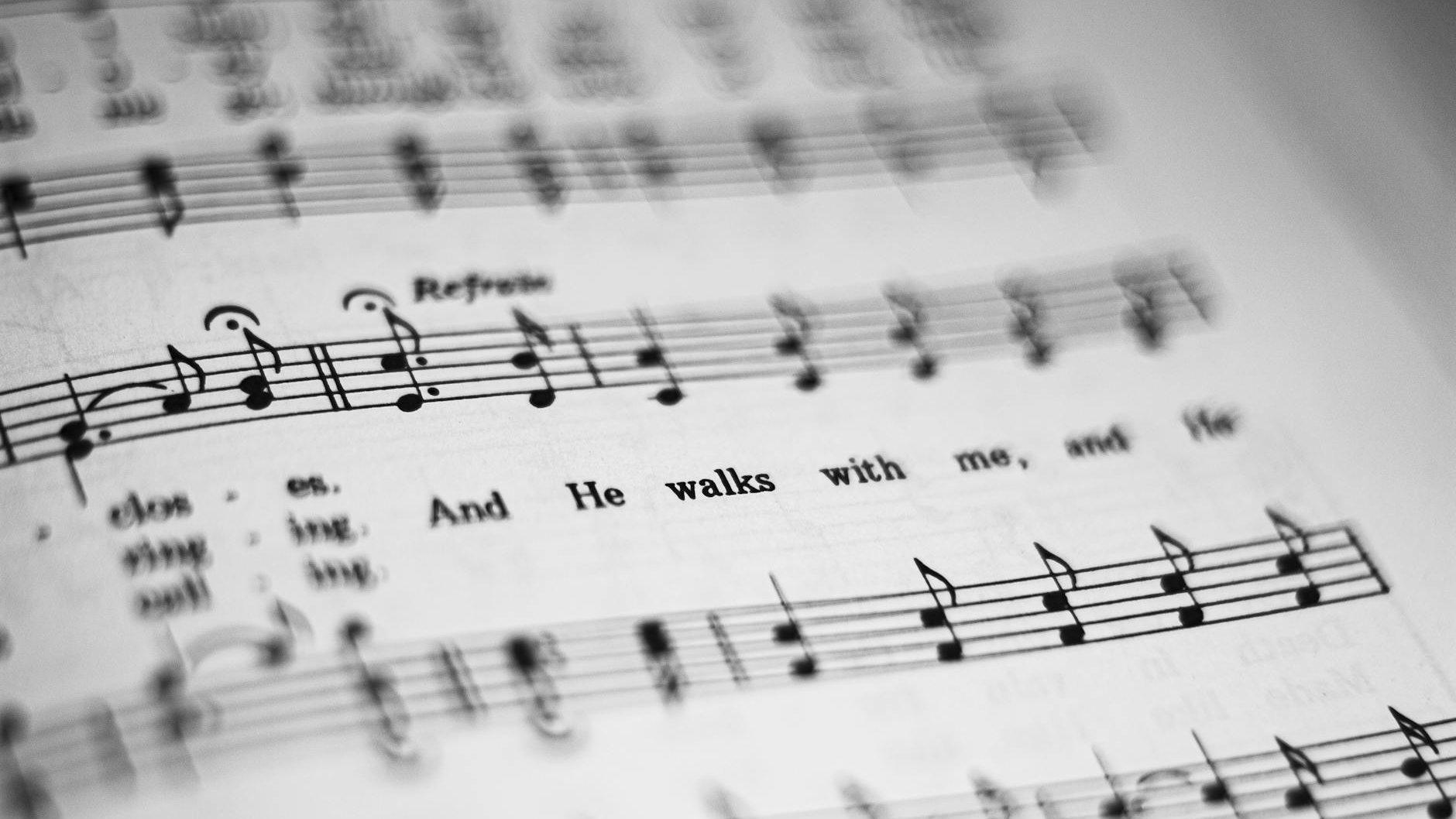
It is a simple statement of FACT that the FPCU has drawn widely from hymns written by those who lived into the 20th century. It is also clear from a musical perspective that these hymns feature melodies, harmonies and rhythm patterns that were commensurate with their time; in other words, CURRENT.
The FPCU has been blessed of God with great congregational singing, compared to the musically comatose mainstream denominations. It is evidence of the spiritual life within our congregations. But I cannot help but feel that it is also partly because we sing hymns which are demonstrably of our own time.
However, this is not the full picture. The old ‘Blue Magherafelt Chorus Book’ was a common feature in many of our congregations, and has become the basis for many of the recent chorus books. Not all used it, and not all who used it were content with all of its content, but that is not the point. The point is that it was widely accepted and used across the FPCU on a weekly basis, and a cursory glance will reveal the very CURRENT nature of the content. The more recent chorus books also exhibit a broad range of yet more CURRENT music: this is entirely in keeping with FP common practice.
In terms of ‘guest singers’ (and the songs they sing) the FPCU has also been fairly broad. I grew up in the late 70s and early 80s hearing my parents rave about Bertha Norman singing the Gaither magnum opus ‘He Touched Me’ in the Martyrs, and Fague Springman returning from the Holy Land to the Easter Convention to sing ‘I Walked Today Where Jesus Walked’ (written by Geoffrey O’Hara, 1882-1967). My teenage years were spent enjoying guest soloists, duets, trios etc. singing a broad range of good Gospel music in FPCs.
An indisputable feature of Ulster Free Presbyterianism is the music of Rev. William McCrea. Rev. McCrea’s repertoire has always combined the great hymns of the Church with current Gospel songs. While he had his detractors (especially in his use of Nashville session musicians and big orchestrations), yet their objections did not gain serious traction in the minds of the majority of FPs, whose homes have countless William McCrea CDs, tapes and LPs as testament to the fact. The sheer number of services in which he has been the guest singer stands as proof of the acceptance of his broad repertoire in the minds of Sessions and congregants.
It should be noted that Rev. McCrea’s decision to use the accordion and piano in Church services in lieu of orchestrated tracks is an excellent example of the common-sense approach that has prevailed across the denomination.
There may be those who imagine/wish that the FPCU had a solely traditional hymnody, but that is simply not accurate. The wonderful thing is this, that the FPCU managed to embrace much current music, but did not adopt the more exuberant features of the modern music scene. For example, many a guest singer has sung Andrae Crouch’s wonderful song of faith ‘Through It All’ without any attempt to recreate the theatrics of his concerts which you can view on social media! I suppose one could say we took the wheat and dispensed with the chaff.
Without any great amount of legislating, common sense prevailed. We anchored our hymnody in the hymnbook, but we gave great liberty of conscience to Sessions and congregations in way of the chorus books and singers, and they took that liberty. And, we largely controlled the accompaniment and the presentation by common sense and Christian sensitivity, creating a reverent yet relevant musical atmosphere. This approach has served us very well for 70 plus years.
The Connection Between Composer and Composition
From what I have previously said, it is obvious that we have accepted that the hymn stands separate from the hymnwriter.
Many hymns in our own hymnbook were written by people who we might not have to preach in our pulpits for a wide variety of reasons, yet the hymns themselves have been embraced enthusiastically, and their inherent standalone value recognised. For my part I think this is a sensible position to take. Hymns are by nature more than theological treatises: music ALWAYS involves emotions. It is precisely this unique compound that makes a hymn popular with the masses—it touches the heart of the people of God as well as their mind, and they sing it over and over again. This was the popular process that created our first hymnbook and chorus books.
I for one would not like to see our hymnbook torn asunder, while we comb with magnifying glasses through the lives of the composers. To me, current hymns should be treated in the same manner. Is the hymn sound—having no heresy? Has it touched the heart of the common genuinely saved man to a significant degree? If so, use it. Allow the flaws of the composer to sink into the mists of history—as they will do. Sing it to an accompaniment that fits our beliefs around what the atmosphere and character of a worship service should be. Sing it to an accompaniment that elevates the message of the hymn/song, and does not drown it out by sheer volume. Sing it accompanied by instruments that are acceptable to the WHOLE congregation, recognising that the unity of the congregation is FAR more important than any individual’s own personal preferences as to musical instruments.
Much more could be said, but if you have read this length, thank you for your great patience.
Concluding Thoughts
I conclude with this; I believe we in the FPC have been blessed of God to have a powerful singing legacy, both in our congregations and in our guest singers. We are not ‘musical Amish folks’ riding around in the musical ponies and traps of centuries ago, unwilling to accept the good of our current time. We have preserved the classic hymns of the past, we have embraced the good of today, and we have interpreted them all using common sense and Christian sensitivity. Thanks be to the Lord. Long may this continue.
Related post by Rev. Peter McIntyre – Opinionated Saints and Divided Fellowships; Lessons from Corinth