
Service Details
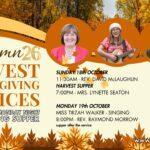
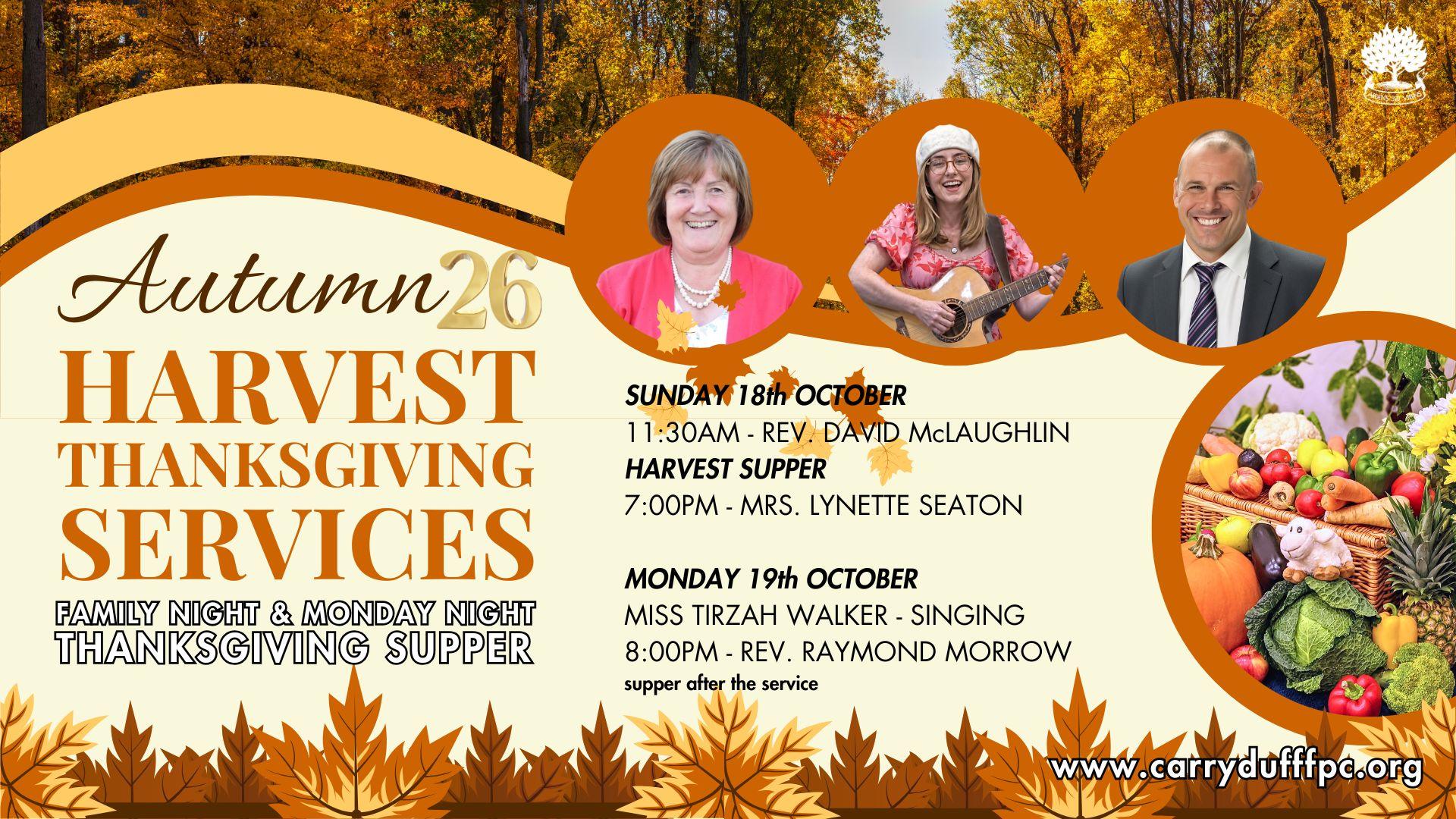
Date: SUN 8:00pm 19th October 2026
Soloist: Mrs. Tirzah Brown (formerly Walker)
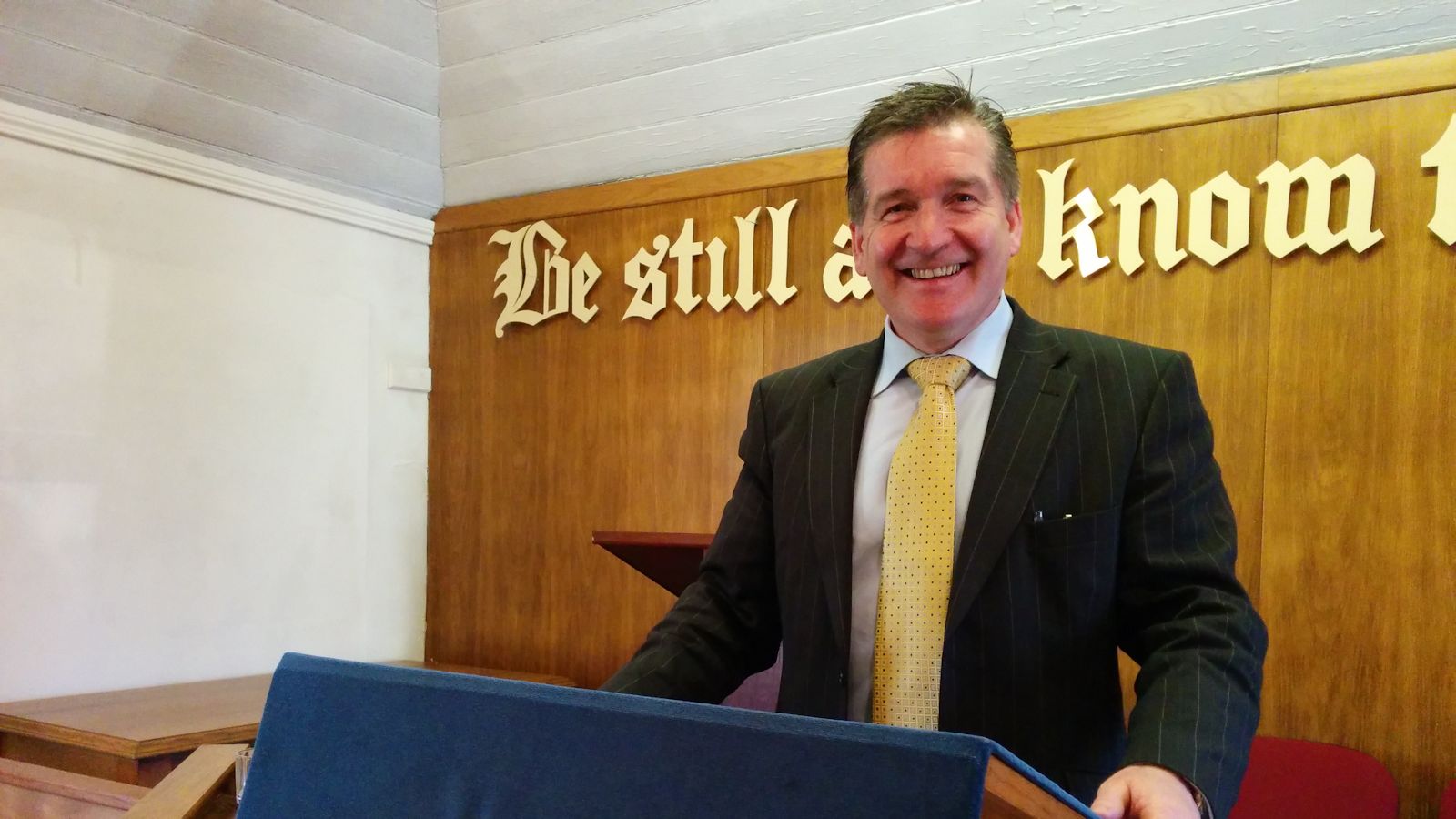
Preacher: Rev. Raymond Morrow
Bible Reference: 2 Samuel 23:15-17
Podcast
Sermon Summary
Introduction and Setting
The visiting preacher, Reverend Raymond Morrow, formerly of Bushmills and now ministering in Crossgar, was welcomed to the pulpit by the resident minister, Reverend McLaughlin. The occasion was the closing evening of a special Harvest weekend, and the church had been decorated in a manner that reminded the congregation of God’s goodness over the course of another year.
Reverend Morrow opened his remarks with a reference to the prophecy of Jeremiah, chapter eight and verse twenty, where the prophet declares, “The harvest is past, the summer is ended, and we are not saved.” He used this verse to frame the entire service as a moment of urgent spiritual examination. Drawing attention to the fact that the congregation was coming to the close of a Harvest weekend, he posed a series of pointed questions to those gathered and to those listening online. He asked whether they were saved, whether this might prove to be their final Harvest Thanksgiving service, and whether they were ready should the Lord come or call them into eternity. He described this as a solemn thought, one that ought not to be dismissed lightly.
The preacher also made a light-hearted remark about timekeeping, noting that Rev. McLaughlin had told him not to worry about the clock. He observed that in Fermanagh, where he evidently had connections, people do not work by the clock but by the calendar, and he jokingly placed a small clock in front of him so that the service would not run into the following day. This humorous aside served to put the congregation at ease before he turned to the serious business of the sermon.
The Scripture Reading
The passage chosen for the sermon was Mark chapter eleven, verses one to fourteen. This section of Mark’s Gospel recounts two connected events in the ministry of the Lord Jesus Christ. The first is the triumphal entry into Jerusalem, when the Lord sent two of His disciples to fetch a colt, which He then rode into the city while the crowds spread their garments and branches in the way, crying, “Hosanna; blessed is he that cometh in the name of the Lord.” The second event, which formed the heart of the sermon, is the cursing of the fig tree.
The preacher read the passage in full, and then offered a brief prayer, asking the Lord for help and presence, giving thanks for the bountiful harvest, and pleading especially for any in the gathering or listening online who were still outside of Christ. He asked that the Holy Spirit would fill the place and speak to preacher and hearer alike.
The Central Illustration: The Harvest Field
Before expounding the text, Reverend Morrow invited the congregation to picture a harvest field with him. He described a farmer leaning over a gate, looking out across his crops. To the eye, all appeared grand. The farmer might say to himself that the harvest was going to be good this year, that the crop had done well, and that the conditions had been favourable. Yet, as the farmer climbed the gate and walked through the field, what looked so good on the outside turned out to be a very different story upon closer inspection.
The preacher developed this illustration in detail:
- The farmer leans the ears of corn and rubs the grain in his hand, only to find very little grain and much chaff.
- He takes his spade and digs the first patch of potatoes, and the stems that looked so well have underneath only a handful of small potatoes that have not grown properly.
- He examines the maize standing tall, but when he unravels the husk, there is little to be seen.
- In the greenhouse, the tomato plants and the apple tree seem to be doing well, but on closer inspection there is little or no fruit.
The point of the illustration was that everything looked good on the outside, but the heart of the matter was something different and very disappointing. The harvest was poor. The preacher invited the congregation to picture the disappointment of that farmer as he considered what would be gathered in and how the stock would be fed over the winter season. This agricultural picture served as the bridge to the text concerning the fig tree, which similarly appeared promising from a distance but proved fruitless upon inspection.
The Text Expounded: Nothing but Leaves
The preacher took as his title the phrase “Nothing but Leaves,” drawn from verse fourteen, where the Lord Jesus, having found nothing on the fig tree but leaves, pronounced that no man would eat fruit from it thereafter forever. He read verses twelve to fourteen again and drew attention to the humanity of Christ, evidenced in the statement that He was hungry. He noted that this shows the Lord knew weariness, thirst, and hunger, and yet was the perfect Son of God without sin.
Reverend Morrow then set out to examine the passage under three headings, which formed the structure of the sermon:
- The dynamic of the tree.
- The deception of the tree.
- The destiny of the tree.
Each heading was designed to press home a spiritual application to the congregation, moving from observation of the text to searching application of the heart.
The Dynamic of the Tree
Under the first heading, the preacher considered the promising appearance of the fig tree. He noted that Mark adds the detail that the time of figs was not yet, and he was careful to explain that the Lord Jesus did not condemn an ordinary tree simply because the main harvest had not arrived. Rather, the striking feature was the tree’s display of leaves ahead of the normal fig season. He observed that fig trees can bear early developing fruit around the time their leaves appear, so the leafy appearance of this particular tree offered a promise which examination did not fulfil.
The preacher then drew attention to the placement of this incident in Mark’s Gospel. The cursing of the fig tree is set in the middle of the narrative, and the verses that follow record the Lord going into the temple and cleansing it. Between the seeing of the tree and the later discovery that it had withered, the Lord was among the religious and the righteous in the temple, seeing and knowing their hearts and actions. The preacher described this connection as searching.
He then applied the point directly to the congregation. There could be an abundance of religious activity, and perhaps someone gathered in the service who attends church regularly, whose attendance is remarkable, whose Bible knowledge is wonderful, whose conduct is respectful, and whose giving is generous, and yet whose so-called religion is nothing more than leaves on a fruitless tree. Many things can make an individual look like a very good and upright person. A person may say they are a Christian and have all the outward signs of following the Lord Jesus Christ. People may see them going out on a Sunday morning with a Bible under their arm and say that there is a great Christian. They may be out again on Sunday night, and at the prayer meeting on Wednesday night, looking the part and doing their bit, involved in the local community and helping with various organisations, and people may say what a wonderful Christian they are. But the Bible warns of those who have a form of godliness but have never come to Christ for salvation. The tree looked wonderful on the outside and stood out among the other trees, yet the dynamic of that tree meant absolutely nothing in reality and was of no value whatsoever.
The Deception of the Tree
Under the second heading, the preacher moved from the promising appearance to the fruitless reality. The Lord came to the tree, the distance disappeared, and the leaves could no longer conceal its barrenness. Mark records plainly that He found nothing but leaves, and no fruit lay hidden beneath that impressive display. The preacher described this as a searching picture of the difference between man’s judgment and God’s knowledge.
He observed that people judge by what they can see and observe, drawing conclusions about situations, circumstances, and individuals. He confessed that he himself had drawn conclusions that proved very far wrong on more than one occasion. He offered two illustrations of this tendency:
- A person sees something online, perhaps in a marketplace setting, where all the pictures show it to be beautiful and exactly what is wanted, but upon collecting it, it proves to be something completely different when examined up close.
- A person appears so upright, honest, and righteous, but once one gets to know them, the truth begins to come out, the dynamic is stripped away, and their deceptiveness becomes apparent.
The preacher reminded the congregation of the words spoken to Samuel, that man looks on the outward appearance but the Lord looks upon the heart. He applied this directly to the gathering, noting that the preacher looks down and sees a group of individuals but cannot tell whether they are putting on a facade. The Lord, however, looks upon the heart right where each person sits, and knows exactly where each one stands before Him. The Lord knows whether it is all a facade, maintained for the sake of one’s own conscience or to look good before others. In Hebrews it is written that the Lord is the discerner of the thoughts and intents of the heart, and that no creature is hidden from His sight, but all things are naked and opened unto the eyes of Him with whom we have to do.
The preacher then posed a searching question: if each person were revealed to the person beside them as the Lord sees them, would they not all rush out and hang their heads in shame? The Lord knows the heart and the mind, and right where each one sits, He knows the thoughts and whether that person is in Christ or out of Christ. There is no in-between, and the Lord knows all things.
He then returned to the harvest field illustration with the image of the scarecrow. Scarecrows are not seen so much anymore, but a scarecrow in a field is nothing but a bundle of straw and a few bags and clothes put on over the outside. One can take the rags off the scarecrow and put the best suit upon it, but it does not change the inward reality. It does not change the deception displayed, the heart, or one’s standing before God. The preacher asked what outfit each person had put on as they came out to the harvest service. It may look great, but it is only deception. The deepest need is not to become more convincing before others, nor to live a more whole, righteous, or charitable life. The greatest need is to be born again and to have sins forgiven.
He then invited the congregation to consider whether, if all were stripped away and all revealed, they could say that they had been born again, that they knew the day and hour when they put their trust in Christ, when they realised they were a sinner before God, and that all their show and self-righteousness was worth nothing. He described the Lord revealing to him his own depravity and sinfulness, showing him that he was nothing but vile and wretched in His sight. He described falling on his knees and crying out to the Lord Jesus Christ, the only one who could cleanse him from sin and save him. He testified that he was not trusting in anything of himself but only in what the Lord Jesus Christ did for him on Calvary’s Cross. He quoted the familiar words, “Nothing in my hand I bring,” and observed that people bring all sorts of offerings and lay them before the Lord, but the Lord wants lives laid on the altar before Him. The Lord wants surrender, not of money or possessions, but of life itself. He asked whether the congregation had surrendered their lives to Christ, and what covering or coat they were wearing, and whether it was all for show with nothing beneath it.
The Destiny of the Tree
Under the third and final heading, the preacher considered the destiny of the tree. The Saviour pronounced a sentence upon it, saying that no man would eat fruit from it thereafter forever. In verse twenty of the same chapter, we read that in the morning, as the disciples passed by, they saw the fig tree dried up from the roots, and Peter, calling to remembrance, said unto the Lord, “Master, behold, the fig tree which thou cursedst is withered away.”
The preacher connected this to the words in Genesis chapter six and verse three, where the Lord says, “My spirit shall not always strive with man.” As the disciples returned, they saw the tree dried from the roots up, and the leafy appearance could not preserve it from the Lord’s judgment. He acknowledged that people naturally prefer to think about the kindness of Christ and the goodness of God, and that some might say the Lord would not cast them into utter darkness and into that awful place called hell because God is a God of love. He affirmed that God is indeed a God of love, for He sent His only begotten Son to Calvary so that whosoever believes in Him should not perish. But he also noted that John’s Gospel goes on to tell us that those who do not believe are under the condemnation and judgment of God. If God the Heavenly Father is just and righteous, then sin must be punished, and it will be punished in that place of everlasting torment called hell. He acknowledged that people do not like to think about this, but insisted that it is the reality of life and death, and that only those who are in Christ Jesus will be saved. Christ is the one who offers salvation, but He is also the judge before whom all must stand on the great day.
The preacher drew out the application that the tree reminds us that an outward flourishing can continue for a time. Underneath, a person may enjoy help and success and the esteem of Christian friends while remaining unconverted. But God’s patience must never be interpreted as His approval. He quoted a hymn writer to the effect that God’s patience may some day weary and leave the sad soul in the blast, drifting over the deadline into eternity without Christ. He asked what would happen if the Lord should come or call before the next harvest weekend, before the next year began, or even before the next day came. Everything that had been held on to and worked for would be a sham, with nothing but leaves and nothing to show.
The tree was withered, barren, and dead. The Bible tells us that we are all dead in trespasses and sin. The Bible warns that one day there will be a mighty gathering. The preacher read the solemn words of Revelation chapter twenty, verses eleven to fifteen, describing the great white throne, the One who sits upon it, from whose face the earth and the heavens fled away. He described the dead, small and great, standing before God, the books being opened, and another book, which is the book of life. The dead were judged out of those things written in the books according to their works. The sea gave up the dead which were in it, and death and hell delivered up the dead which were in them, and they were judged every man according to their works. Death and hell were cast into the lake of fire, which is the second death, and whosoever was not found written in the book of life was cast into the lake of fire. The preacher observed that dead wood is only fit for the fire, and the soul who rejects Jesus Christ alone as Saviour will face that great eternal fire and the judgment of God.
Conclusion and Appeal
The preacher acknowledged that some might feel this had been a very solemn or sombre end to a wonderful weekend, but he cited the words, “Woe unto me if I preach not the gospel.” The gospel is that all are born in sin and shaped in iniquity, but that Christ came into the world to save sinners. It is only by trusting in Christ. When all is stripped away, that is all that matters: whether one is in Christ or out of Christ. He asked where each person would be when death comes or calls. He expressed the prayer that the congregation’s lives would not be nothing but leaves, but that they would come and put their trust in Christ, laying all else aside and asking the Lord Jesus Christ to forgive them for their sin and to be their Saviour, and be ready when the sheaves are gathered in.