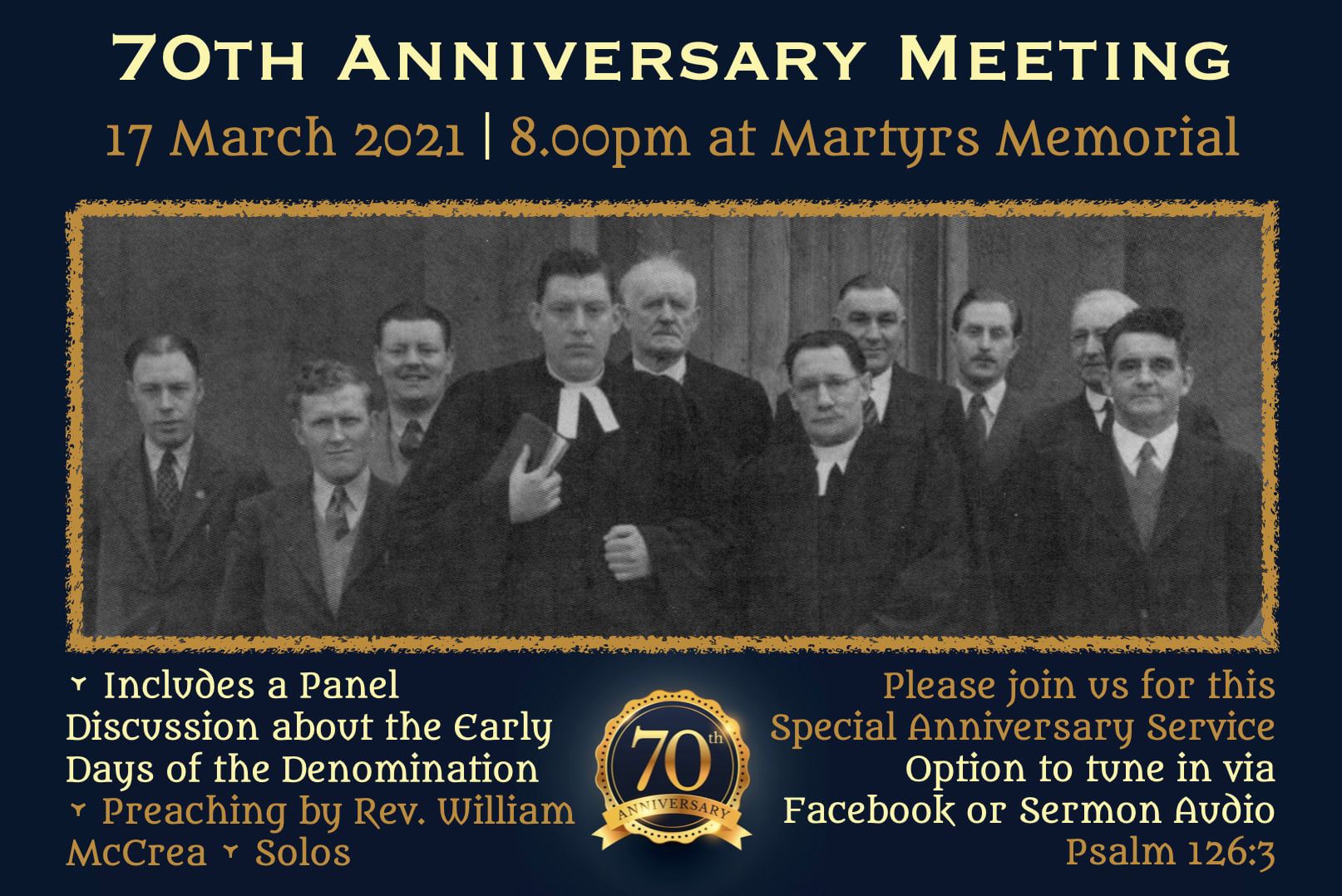

The 70th Anniversary Service of the Free Presbyterian Church took place at Martyrs Memorial Free Presbyterian Church, featuring:
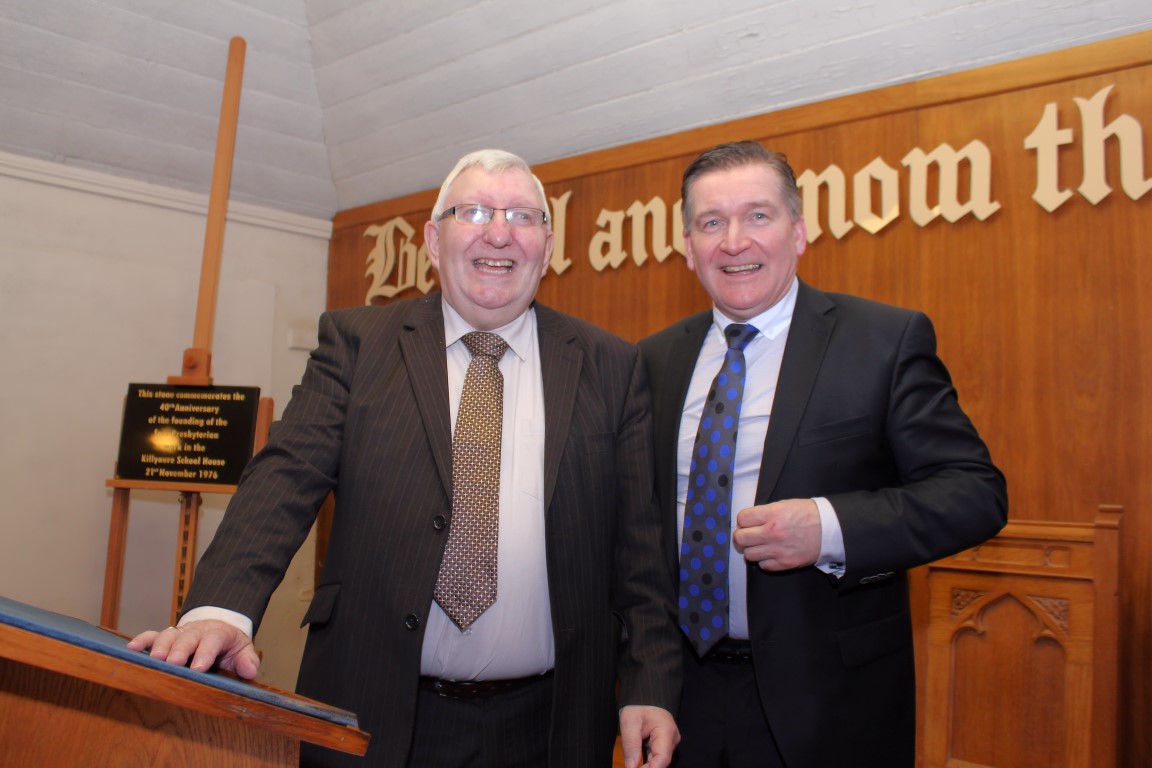
- a panel discussion, directed by Rev. Paul Foster, that deals with the Early Days of the FPC (included on the panel is Mr Jackie Allister – who was present at the first Mission in Crossgar);
- soloists – Rev. William McCrea and Mrs Helen Magill;
- sermon, by Rev. McCrea
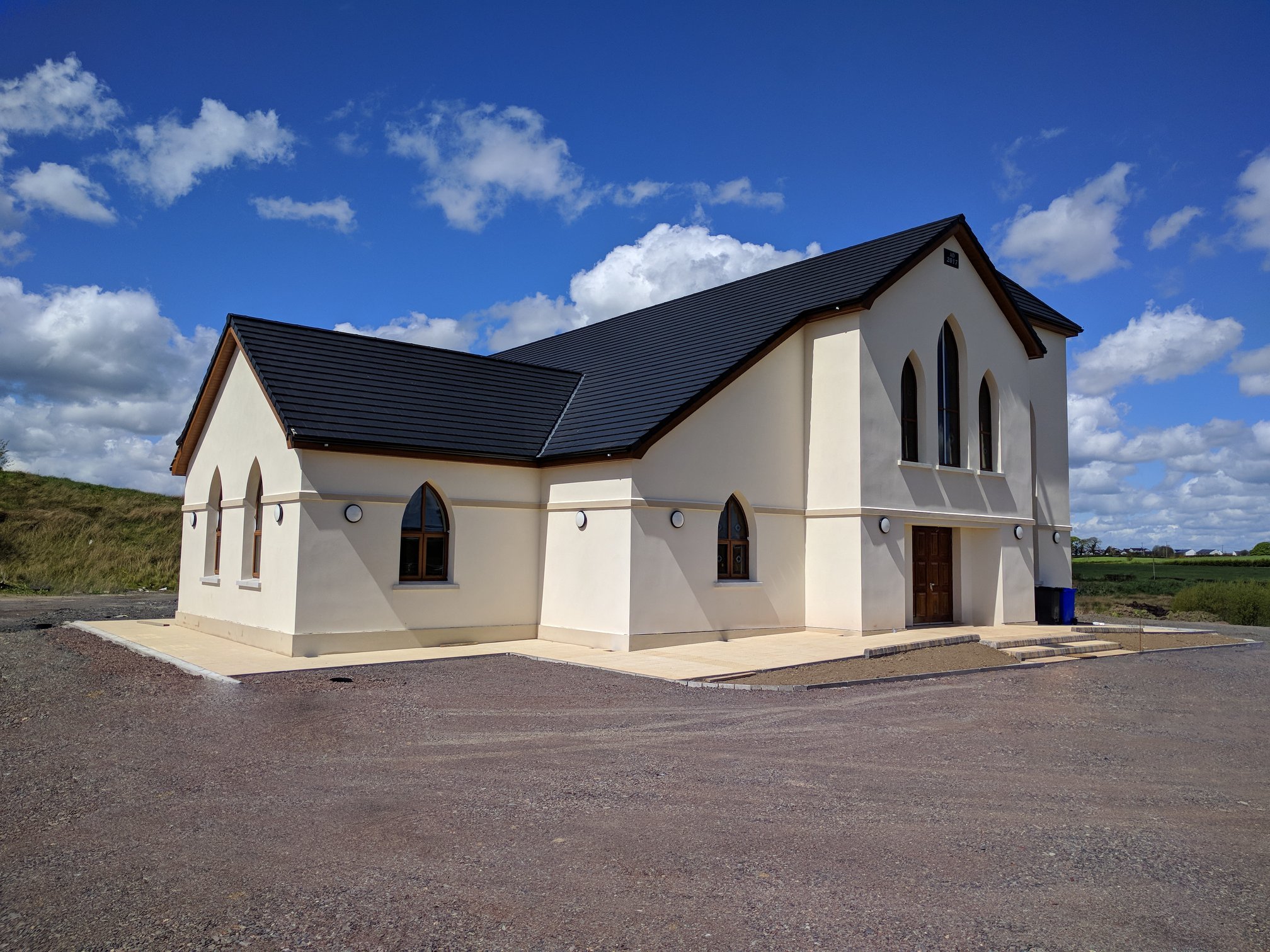
It is with a profound sense of gratitude to the Almighty that we record the proceedings of a most solemn and stirring occasion held recently at the Martyrs Memorial Free Presbyterian Church to mark the seventieth anniversary of the founding of the Free Presbyterian Church. In a day of widespread apostasy, when the crimson banner of the Cross is so frequently lowered by those who once professed the Reformed faith, it was a refreshing draught to witness a gathering dedicated to the remembrance of the Lord’s faithfulness within the very walls that have long stood as a witness to the Truth.
The meeting, held in the spirit of those early days of mission, sought not to exalt the achievements of men, but to magnify the grace of God. It served as a stark reminder that while the world may rage and the modernists may plot, the Word of God standeth sure. The proceedings were marked by a return to the old paths—the singing of the Psalms and hymns of old, and the proclamation of that same Gospel which has been the heartbeat of this denomination since its inception on Saint Patrick’s Day in 1951.
The Oversight of Dr. Ian Brown
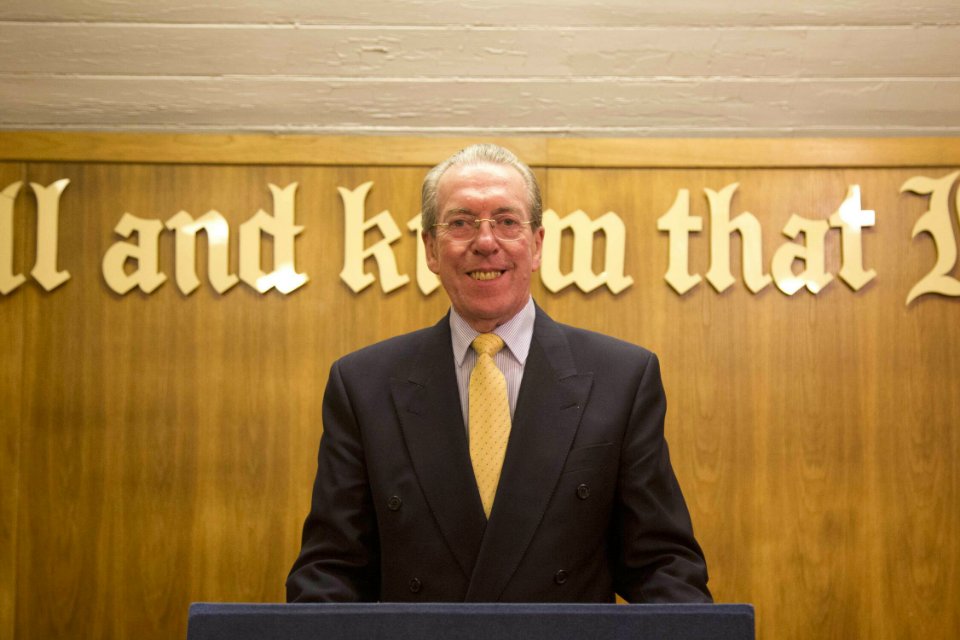
The evening was presided over by the Reverend Dr. Ian Brown, whose steady hand and godly oversight guided the proceedings with a gravity befitting such a milestone. Dr. Brown, in his opening remarks, set the spiritual trajectory for the meeting from the pulpit of Martyrs Memorial. He reminded the congregation that they gathered not merely as an exercise in nostalgia, but as an act of spiritual stewardship.
Reflecting upon the current climate, Dr. Brown lamented the tendency of the modern believer to seek the ease of the armchair, observing how many have become accustomed to viewing the proceedings of the church through the lens of digital media whilst in their homes, often to the detriment of their own spiritual nourishment. He welcomed those present with a warm exhortation to be fully engaged in the meeting, that the presence of the Lord might be known amongst them. His own words, and his careful steering of the panel, ensured that the focus remained squarely upon the “King’s business.”
The Panel Discussion: Recollections of a Godly Stand
The evening’s proceedings were enriched by a panel discussion, moderated by the Reverend Paul Foster, featuring the Reverend Dr. William McCrea, Mr. Jackie Allister, and Dr. Ian Brown, who, though remaining in the “ivory tower” of the moderator’s chair for the duration of the panel, provided necessary context to the discussion. The dialogue provided an invaluable historical record of the trials, tribulations, and ultimate triumphs that defined the birth of the church.
Reverend Dr. McCrea set the tone by reflecting upon the state of the province in the mid-twentieth century. He remarked upon the prevailing deadness, ritualism, and formality that had gripped the major denominations, leaving swathes of Ulster without a single faithful Gospel preacher. It was into this spiritual vacuum that the Lord raised up the Reverend Ian Paisley.
It was clarified that the Free Presbyterian Church was not birthed out of a mere desire to add another evangelical body to the landscape, but out of a desperate necessity to stem the tide of ecumenism and modernism. The denomination was called to be not only preachers of the Word, but contenders for the Truth. Reverend Dr. McCrea recounted how men like Dr. Paisley, Reverend Bert Cook, and Reverend John Douglas took a stand when it was exceedingly unpopular to do so, demonstrating a fearlessness that is sorely lacking in the present age.
Mr. Jackie Allister, sharing his own recollections as one who was present at the inaugural mission in the Killyleagh Street Mission Hall in Crossgar, provided a moving personal testimony. He spoke of the providential move of his family to the area just months before the mission, and the profound impression the meetings made upon his seven-year-old heart. He paid tribute to the six elders who seceded from the existing church, describing them as the “unsung heroes” of the denomination. It was through their instruction in the Sabbath School, and the ministry of the first full-time minister, the Reverend Sidney Lince, that he received the spiritual stability that has sustained him for over seven decades.
The panel concluded with a sober call to the younger generation. Mr. Allister urged them to establish their priorities in their youth, asking the same question the Apostle Paul posed on the road to Damascus: “Lord, what wilt thou have me to do?”
The Sermon: The Reverend Dr. William McCrea on Earnestly Contending for the Faith
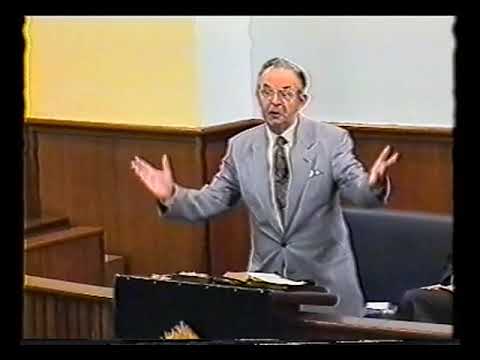
Following the singing of hymns that have long served as anthems for the denomination, the Reverend Dr. William McCrea ascended the pulpit of Martyrs Memorial to deliver the anniversary message based upon the General Epistle of Jude. Opening his Bible to the first chapter, he directed the congregation’s attention to the necessity of defending the Truth once delivered unto the saints.
Reverend Dr. McCrea began by expounding upon the identity of Jude, a brother of James and a brother of the Lord according to the flesh, yet one who chose to describe himself primarily as a “servant of Jesus Christ.” He highlighted this as a model for every preacher: one who is a bond-slave of the Master, existing for no other reason than to do His will, possessing no personal rights, and seeking no popularity.
Turning to the nature of the salvation described by Jude, he reminded the hearers that they are “sanctified by God the Father,” which he explained is synonymous with being beloved of God. He expounded upon the security of the believer, preserved for Jesus Christ, and called by the Holy Spirit. He challenged all present to search their hearts as to whether they had truly experienced the mercy, peace, and love of God, or if they were merely relying upon the rituals of denominationism.
The core of the message, however, was a piercing exhortation to “earnestly contend for the faith.” Reverend Dr. McCrea noted that while Jude had intended to write of the “common salvation,” the Holy Spirit constrained him to write of the battle that must be fought. He argued that we are in a spiritual struggle, and that many of God’s people are far too content to sit upon the sidelines.
He addressed the prevailing modernistic notion that “all roads lead to heaven,” provided one has sincerity of faith. He denounced this as a soul-destroying lie, asserting with Scriptural authority that there is but one way, the Lord Jesus Christ, and that outside of Him, there is no hope. He made an impassioned plea for the use of the traditional Word of God, lamenting the infiltration of modern versions which add to or take from the sacred text.
The preacher then turned his attention to the “certain men who have crept in unawares”—the apostates who have subverted the church from within. He drew a sharp distinction between the devil’s method of persecution, which only served to spread the Gospel, and his method of infiltration, which seeks to destroy the biblical base of the church. He insisted that the only biblical response to such apostasy, as commanded in 2 Corinthians 6:14-18, is to “come out from among them and be ye separate.”
Reverend Dr. McCrea’s conclusion was a direct application to the present day. He cited the counsel of Dr. Paisley: to recognize false spirits, mark them, withdraw from them, and reprove them. He spoke with great solemnity of the cost of such faithfulness, but affirmed that the cost of disobedience—the loss of power to protest against error and the compromising of the Gospel—is far greater.
He finished with a powerful call for men to stand in the gap, echoing the commitment of those who went before. It was a message that left no room for complacency, challenging the believer to live Christ, proclaim the Truth in love, and be willing to suffer for the sake of the Gospel.
Concluding Reflections
The anniversary service was brought to a close in time-honored fashion with the singing of the Doxology and a final prayer of thanksgiving led by Dr. Brown. The atmosphere within the Martyrs Memorial building was one of solemn resolve. It was evident that the burden of those who gathered was not merely to look back upon seventy years of history, but to ensure that the testimony of the Free Presbyterian Church remains untarnished for the years that may yet remain, should the Lord tarry.
As the congregation dispersed, the sentiment was clear: the best is yet to be if the Church remains faithful to the Word of God. The challenge issued from the pulpit was not one to be easily forgotten. It remains the duty of every believer, in this dark and perverse generation, to hold fast to the crimson banner, to contend for the faith, and to remain unashamed of the Gospel of our Lord and Saviour, Jesus Christ. To God alone be the glory.