
Date: SUN 11:30am 9th February 2026
Preacher: Rev. David McLaughlin
Bible Reference: Luke 24:7-8
Podcast
Sermon Summary
A Reformed Meditation on the Bodily Resurrection of Christ
Text: “And, behold, there was a great earthquake: for the angel of the Lord descended from heaven, and came and rolled back the stone from the door, and sat upon it.”
— Matthew 28:2, KJV
Introduction: The Heart of the Christian Gospel
Easter Sunday stands at the very centre of the Christian faith. It is not merely a sentimental commemoration, nor a vague spiritual metaphor about renewal or hope. It is, according to Holy Scripture, the historical, bodily, and glorious resurrection of Jesus Christ from the dead. The apostle Paul declares in 1 Corinthians 15:17: “If Christ be not raised, your faith is vain; ye are yet in your sins.” Here lies the keystone of the Gospel — the resurrection is not an optional doctrine to be admired, but the granite foundation on which salvation itself rests.
For this reason, the cry of the early church — “Christ is risen indeed!” — remains not merely liturgical repetition but the triumphant proclamation that death has been conquered, sin defeated, and Satan overthrown. The event that took place early on that first day of the week is both a historical moment and a spiritual reality which eternally changed the destiny of mankind.
The Context of the Resurrection: Darkness and Despair
The scene, as Matthew records, is set at dawn on the first day of the week. The Sabbath has passed, and two women — Mary Magdalene and the other Mary — make their way to the tomb of Joseph of Arimathea. The atmosphere is still and heavy. These faithful women had seen their Lord crucified; their hearts were broken, their hopes crushed. To them, the death of Christ seemed final.
Yet, even in grief, there is devotion. They bring spices to honour His body, though they cannot change His fate. But as they walk, a practical question troubles them: “Who shall roll us away the stone from the door of the sepulchre?” (Mark 16:3). It is an honest and human question — one which still echoes through the ages. The stone stood as a real, physical barrier between them and their Lord, just as sin, guilt, fear, and despair serve as barriers between man and God today.
The Problem the Women Faced: The Great Stone
The stone was no small obstacle. Mark’s Gospel notes that “it was very great” — likely weighing close to two tons. It represented finality, closure, and hopelessness. It was the visible marker of a sealed fate — the Lord shut away, the mission finished, the hope extinguished.
Yet, in the broader spiritual sense, that stone symbolises the human condition under sin. It represents:
- The stone of sin, which separates the sinner from God.
- The stone of guilt, which weighs heavily upon the conscience.
- The stone of fear, the anxiety of death and judgment.
- The stone of despair, which seeks to bury hope altogether.
The women were devoted but powerless; they had faith but no strength; they had love but no leverage. This mirrors the state of every human soul apart from the grace of God. Without divine intervention, the stone remains unmoved. Only God can roll away the barrier that separates sinners from Himself.
The Proof the Women Found: A Moved Stone and an Empty Tomb
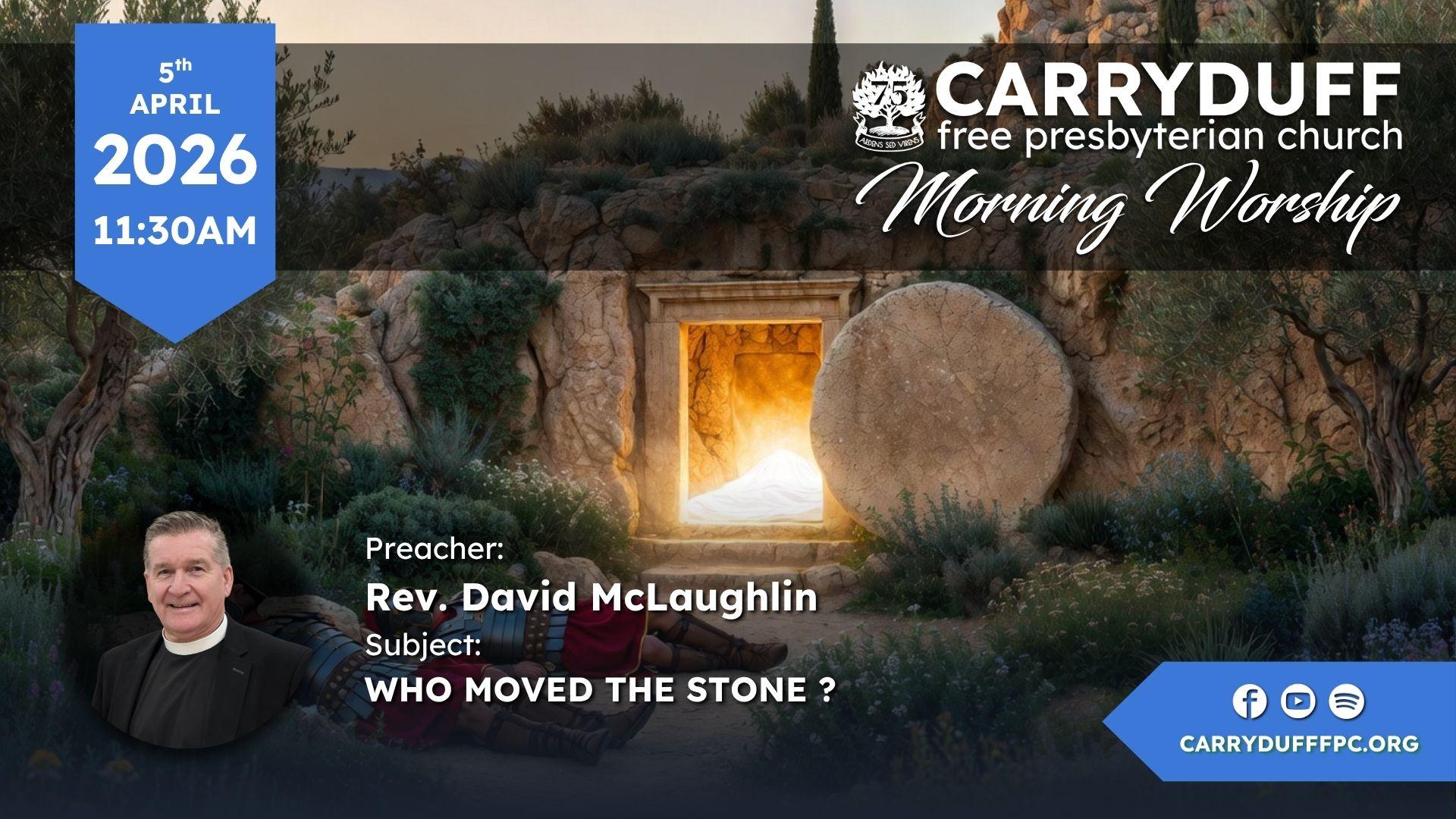
When the women reached the garden tomb, they discovered what human hands could never have accomplished. The stone had been rolled away, not to let Christ out, but to let witnesses in. As Matthew declares, “behold, there was a great earthquake: for the angel of the Lord descended from heaven…” (Matt. 28:2). The world trembled as Heaven acted.
That rolled-away stone stands as divine proof. It is God’s testimony that Jesus Christ truly died, truly rose again, and triumphed over death. In that moment, the separation between life and death, hope and despair, was shattered forever.
The resurrection of Christ is not a myth or moral parable — it is factual, historical, and supernatural. The evidence has stood unrefuted for over two millennia. Indeed, no alternative explanation withstands serious scrutiny. Five major alternative theories have been advanced over the centuries, each one crumbling under the weight of reason and evidence.
Refuting the False Theories
1. The Temporary Tomb Theory
Some claim that Joseph of Arimathea temporarily placed Christ’s body in his tomb and later moved it elsewhere. Yet, Scripture refutes this folly.
- Joseph’s actions were public, performed with Pilate’s permission.
- Roman guards were stationed, and the tomb sealed under Roman authority.
- Any attempt to move the body would require re-breaking the Roman seal — a punishable offence.
There is no record, biblical or historical, of such a transfer.
Furthermore, if the body were merely relocated, the authorities would have produced it immediately when the disciples began preaching the resurrection. They did not — because they could not.
2. The Legal or Official Removal Theory
Others suggest that either the Roman or Jewish authorities moved the body. Yet, this theory collapses under its own weight.
- The Gospel of Matthew records that the Jewish leaders bribed the guards to spread the false story that the disciples had stolen the body (Matt. 28:11–15).
- If the authorities already had possession of Christ’s body, they would not have needed to fabricate lies.
Seven weeks later, when Peter publicly proclaimed the resurrection in Jerusalem, no one produced the corpse to silence him. The authorities’ silence was an embarrassing concession that the tomb was empty.
3. The Swoon Theory
Popularised by sceptics from the Enlightenment onward, this theory suggests that Jesus never actually died but merely fainted and later revived in the tomb. Such thinking is grotesque in its ignorance of Roman execution.
- Roman soldiers were professional executioners who ensured death.
- The piercing of Christ’s side with a spear produced blood and water — medical proof that death had occurred.
- To suggest a man tortured, scourged, crucified, and sealed in a tomb could revive, remove heavy grave clothes, roll aside a two-ton stone, evade guards, and inspire His disciples — is beyond absurdity.
4. The Wrong Tomb Theory
This theory imagines that the women simply went to the wrong place in their grief. Yet Scripture destroys that notion: “The women also, which came with him from Galilee, followed after, and beheld the sepulchre, and how his body was laid.” (Luke 23:55). They knew precisely where His body rested. The disciples, angels, and Roman guards confirmed the same location. The idea that all were simultaneously confused about the site defies reason.
5. The Stolen Body Theory
The most commonly repeated claim of sceptics is that the disciples stole the body and fabricated the resurrection story. Yet again, the facts refute it:
- The disciples were demoralised, fearful, and scattered after the crucifixion.
- To steal the body, they would have had to overpower armed guards, break the Roman seal (at pain of death), and move a massive stone — all silently and in darkness.
- More unthinkable still is that these men would later suffer persecution, torture, and martyrdom for what they knew to be false.
No one willingly dies for a lie he himself invented. Their courage and conviction were not born of deception, but of seeing the risen Lord with their own eyes. Thomas fell before Him and confessed, “My Lord and my God.”
The Proclamation the Women Heard: Victory Declared
The angel not only rolled away the stone but “sat upon it.” That posture was deliberate — a proclamation of divine authority. The heavenly messenger sat in triumph upon the very instrument which men had used to seal Christ’s defeat. The angel’s message was clear:
“He is not here: for he is risen, as he said. Come, see the place where the Lord lay.” (Matt. 28:6).
In that one statement, Heaven proclaimed three enduring truths:
- The finality of death has been shattered. Death no longer reigns; Christ has conquered it.
- The promise of Scripture is vindicated. He rose “as He said”; every word of His prophecy has proved true.
- The believer’s hope stands secure. Those united to Christ by faith will share in His resurrection life.
The Theological Foundation: The Bodily Resurrection
A purely “spiritual” resurrection is an invention of unbelief. The empty tomb, the physical appearances, and the tangible body of the risen Christ all affirm that His resurrection was bodily and literal. He invited Thomas to touch the wounds. He ate before His disciples. He rose in the same body that was crucified — though now glorified.
This bodily resurrection is essential to redemption itself. The same power that raised Christ will raise every true believer: “But now is Christ risen from the dead, and become the firstfruits of them that slept.” (1 Cor. 15:20). Our hope is not ethereal, but concrete — anchored in the historic fact of the empty tomb.
Spiritual Application: Stones Still Need Rolling Away
The question of the women — “Who will roll away the stone?” — speaks profoundly to every generation. Humanity faces its own stones: sins too great, fears too deep, guilt too heavy to move. These stones cannot be shifted by mere resolve, religion, or philosophy. They yield only to divine power.
If God could move the stone sealing the tomb, He can remove the obstacles that bind the human heart. He can move the stone of unbelief, the stone of moral failure, the stone of despair. As the angel rolled it aside to reveal the victory of Christ, so too the Gospel opens a way for sinners to enter into that victory by faith.
Conclusion: Death is Defeated, Christ is Risen
The angel’s announcement resounds through history: “He is not here: for he is risen.” That sentence is the most important ever spoken. It declares that eternal life is no myth; redemption is no dream; salvation is no abstract idea. It is a finished, factual work wrought by the risen Christ.
Therefore, let every believer cling to this truth: the same God who moved the stone still moves stones today. He makes the dead to live, the guilty to be forgiven, and the fearful to rejoice. And one day, He will roll away the final stone — when graves are opened, and those who sleep in Christ shall rise incorruptible.
As the angel sat upon the stone in triumph, so Christ sits enthroned in glory. The work is finished, the victory sure. “Thanks be to God, which giveth us the victory through our Lord Jesus Christ.” (1 Cor. 15:57).