
Service Details
Date: SUN 7:00pm 22nd November 2026
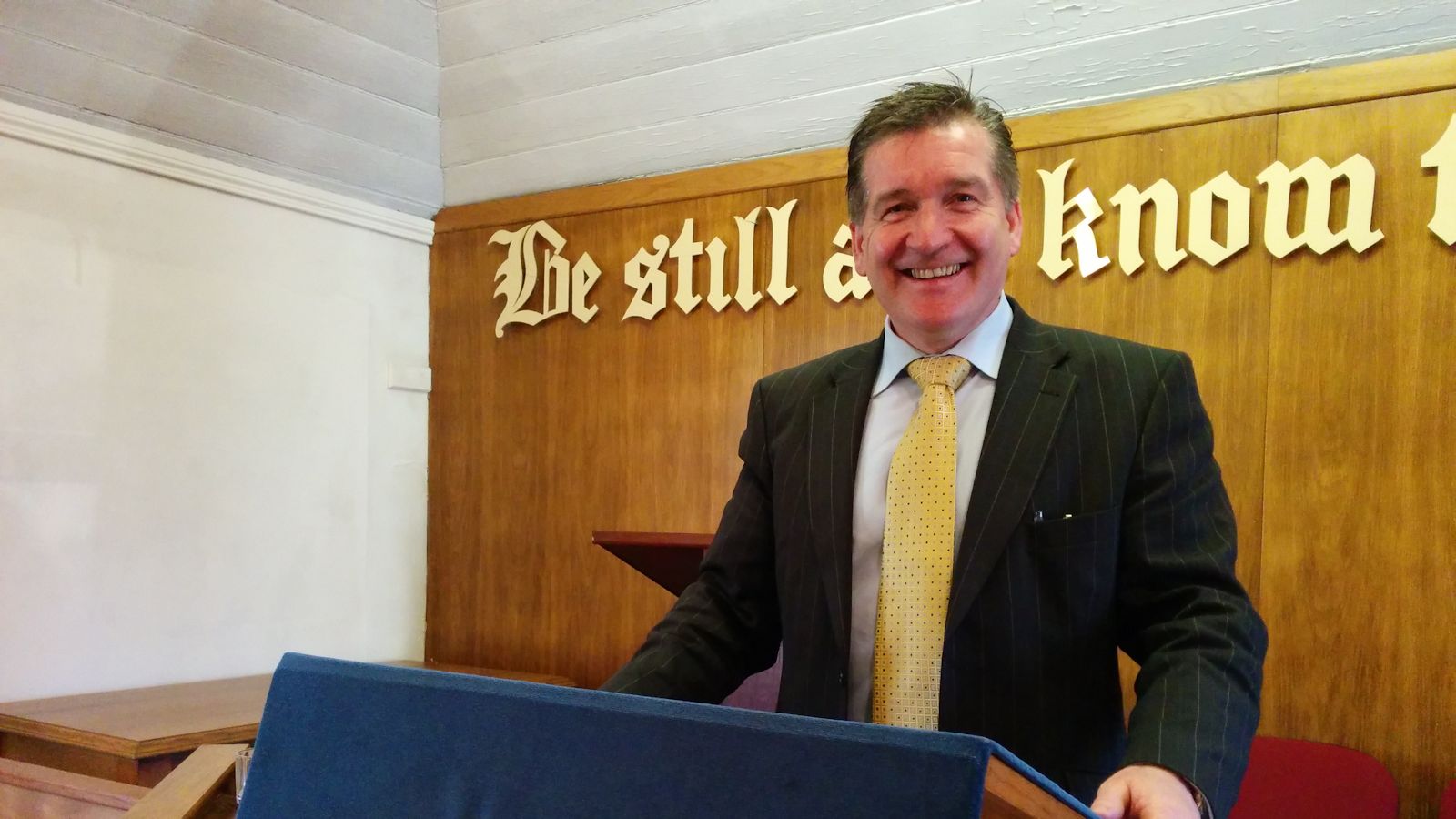
Preacher: Rev. David McLaughlin
Bible Reference: Numbers 10:2
Podcast
Sermon Summary
The sermon opens where the text opens: with the children of Israel encamped at the foot of Mount Sinai. They are a redeemed people. They have been brought out of Egyptian bondage by the blood of the Passover lamb, carried through the Red Sea, and brought to the mountain where God gave them his law, the pattern of the tabernacle, its priesthood, its furnishings and its sacrifices. Yet they are not home. They are pilgrims and strangers, about to embark on the next leg of the journey toward the land flowing with milk and honey, the promised inheritance.
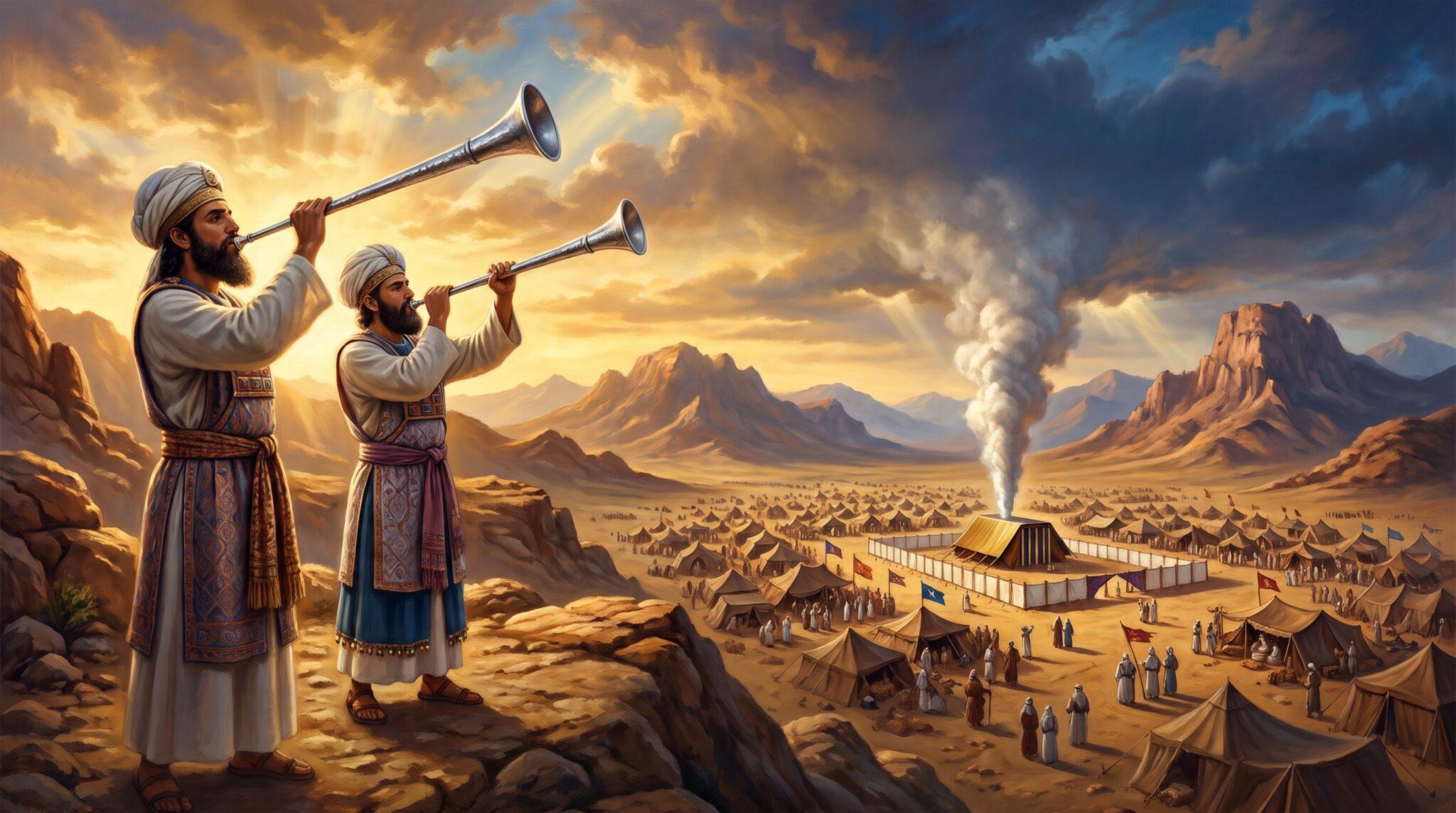
It is precisely at this point, before the camp moves, that the Lord speaks to Moses about two silver trumpets. The preacher is careful to press the point that this was not Moses’ idea, not something dreamed up by Aaron, and not something demanded by the people. The origin of the trumpets was in the heart and mind of the living God. Their construction was commanded by God, their purpose was appointed by God, and their use was entrusted to God’s ordained servants. Verse 8 makes this plain: the sons of Aaron the priest shall blow with the trumpets, and it shall be an ordinance for ever throughout their generations.
These were not merely musical instruments. They were instruments of divine communication. They summoned the congregation to assemble for worship. They directed the congregation to advance. They sounded an alarm in the face of enemy attack. They marked the solemn gatherings of the people before the Lord.
From that foundation the preacher draws his central claim: the gospel is not man’s invention any more than the trumpets were Moses’ invention. The church did not devise the gospel, and the apostle Paul did not dream it up. He received it by divine revelation. The preacher cites Galatians with force: though we, or an angel from heaven, preach any other gospel, let him be accursed. The church has no authority to manufacture its own message, and the preacher has no right to reshape the message to suit the mood of the age.
The Construction of the Trumpets
The number two: a testimony
The first detail is the number. Two trumpets, not one. In the pattern of Scripture, two speaks of witness and confirmation. Deuteronomy 19:15 establishes that at the mouth of two or three witnesses a matter is confirmed, and the Lord Jesus applies the same principle in Matthew 18 in the discipline of the church. Two trumpets gave the congregation an ordered, recognisable, agreed testimony.
That testimony runs in three directions.
- Concerning the Scriptures. There is one Bible, but two Testaments: sixty-six books in one volume, thirty-nine in the Old and twenty-seven in the New, written by forty different authors across some sixteen hundred years, and yet a single coherent testimony. “Thy word is truth” (John 17:17). Peter acknowledges that some things in Scripture are hard to be understood (2 Peter 3:16), but the difficulty is no licence for neglect. We are to read, pray, meditate, and compare Scripture with Scripture. We do not sit in judgment over the Word; the Word judges us.
- Concerning the Son. Hebrews 1 opens by telling us that God, who spoke in time past by the prophets, has in these last days spoken by his Son. The Bible is Christ-centred. The Lamb is traced from Revelation 5 back through John the Baptist’s “Behold the Lamb of God”, back through Isaiah 53, back to Abraham’s prophecy that God would provide himself a lamb, and back to the first gospel promise in Genesis 3:15. The Old Testament anticipates Christ; the New Testament announces him. This is why the incarnation, the virgin birth, the sinless life and the atoning death matter, and why John 3:16 gathers the whole message into twenty-five words.
- Concerning salvation. “Let the redeemed of the Lord say so” (Psalm 107:2). Romans 10 joins confession of the mouth to belief in the heart. And how is a trumpet made to sound? By the mouth. So the witness opens his mouth. The preacher applies this warmly: at this season of the year, invite family, friends, neighbours and strangers. Even where you have been refused before, go back and ask again.
Silver: the metal of redemption
The trumpets were to be made of silver, not brass, not gold, not iron. Silver in Scripture is bound up with redemption. Exodus 30 records the atonement money, the half shekel given as a ransom for the soul, twenty gerah to the shekel, appointed for the service of the tabernacle, a memorial before the Lord to make atonement for souls. Silver is the ransom metal.
Peter takes up the same thread: we were not redeemed with corruptible things, as silver and gold, from our vain conversation received by tradition from our fathers, but with the precious blood of Christ, as of a lamb without blemish and without spot. The old chorus comes to mind, precious blood shed for rebels, shed for sinners, shed for me. The gospel trumpet is a silver trumpet because its whole subject is redemption.
Of one whole piece: a complete salvation
The trumpets were to be made of a whole piece, of one continuous substance. Not poured into a mould, not assembled from odds and ends contributed by different people. They were beaten out of one piece of silver.
The application is immediate and pointed. Our redemption is not partly Christ’s work and partly man’s work. There is one God and Father, one Saviour of sinners, one Holy Spirit, one revelation of salvation. Both Testaments testify to the same finished work. “It is finished” (John 19:30). Christ did not begin salvation and leave man to complete it. Hebrews 10:4 reminds us that the blood of bulls and goats could not take away sin, so the work had to be done by the Lamb himself.
The preacher presses the exclusivity of this with clarity. We are not saved by a works righteousness, not by religious achievement or effort, not by Christ plus works, not by Christ plus the works and prayers of the Virgin Mary. Mary is not a co-redemptrix. Salvation is of the Lord, all of grace and all of God.
The beating of the silver speaks as well of the sufferings of Christ. He is the man of sorrows, acquainted with grief, wounded for our transgressions, bruised for our iniquities, the chastisement of our peace laid upon him, and by his stripes we are healed. The message that should sound from every pulpit is Christ alone, solus Christus. And so the searching question is put plainly: are you resting in Christ alone? Have you abandoned every attempt to establish your own righteousness and earn salvation? The construction of the trumpet announces a complete redemption by a sufficient, revealed, suffering Saviour.
The Communication of the Trumpets
The trumpets were given so that the people might be called and the camps directed. The blowing carried four meanings.
An appointed ministry
Only the sons of Aaron were authorised to blow. Not everyone with enthusiasm, not everyone with ambition, not everyone who thought it would be a fine thing to have a go. There was a calling, a commissioning, a consecration. The ministry of the trumpet was a trust, not a hobby.
The preacher names the sounds that this ministry was to produce: the joyful sound of salvation, the sound of the second coming of Christ, and the sound of the wrath of God. He laments that several of those notes are missing from much modern preaching. Blessed is the people that know the joyful sound (Psalm 89:15), but the joyful sound is only intelligible against the full score of Scripture.
A blowing for acceptance
The assembly was called to the door of the tabernacle to worship, and the sound that called them was the sound of redemption. The only ground of acceptance before God, at any time and in any age, is the ground of redemption. Hence the hymn, Redemption ground, the ground of peace.
Scripture supports it on every side. Without shedding of blood there is no remission (Hebrews 9:22). The blood of Jesus Christ his Son cleanseth us from all sin (1 John 1:7). In 2 Chronicles 29, when Hezekiah commanded the burnt offering, the song of the Lord began with the trumpets as the offering was made, so that praise rose on the basis of sacrifice. Singing must never be divorced from the crosswork of Christ. As the late Dr Paisley put it, we are to make much of the blood in theology as well as in doxology. Hebrews 13:15 tells us that it is by him we offer the sacrifice of praise. Numbers 10:10 calls the trumpet-blowing a memorial before God, a reminder to God of the covenant: I am their God, they are my people.
So the question returns: what is the basis of your acceptance before God? Only the precious blood can redeem.
A blowing for assembly
The trumpet called the redeemed people to gather at the appointed place, to worship, to hear God speak, to receive instruction, and to go out to serve and witness, full of love to the Lord and full of peace and joy.
A blowing for alarm
The trumpet also sounded when the enemy attacked the camp. Paul asks who shall prepare himself for battle if the trumpet gives an uncertain sound (1 Corinthians 14:8). The gospel trumpet must sound clearly. It must set forth the sinner’s sinfulness, dead, blind and diseased in total depravity. It must set forth the absolute holiness of God and the justice of his righteousness. It must set forth the person and work of Christ in all his fullness, including the bodily resurrection. It must sound the call to repent of sin and believe in Jesus Christ.
This is a sacred trust. “Preach the word” (2 Timothy 4:2). The whole counsel of God must be declared. The preacher insists that he is not the author of the gospel but a servant of it, unworthy and unprofitable, not in the work for money or as a career but as a calling, and not at liberty to change the message to suit the spirit of the age. Paul speaks of the glorious gospel of the blessed God committed to his trust (1 Timothy 1:11), and the gospel is committed to the preacher just as the trumpets were committed to Aaron’s sons.
The Calling of the Trumpets
The final movement of the sermon sets out the threefold purpose of the trumpets in the life of God’s people, and applies each one to the Christian life.
The gathering of God’s people
The people were not to remain scattered through the camp. They were called to come together at the appointed place and time for worship. This is what the gospel does: it gathers people to Christ. The church is not a social club and not a human organisation. It is a people called out of darkness into the light and liberty of the gospel, out of the kingdom of the devil into the kingdom of God’s dear Son. There is an outward call, go into all the world and preach the gospel to every creature, and there is an inward call, as the Spirit convicts and convinces men of their need of Christ. “All that the Father giveth me shall come to me; and him that cometh to me I will in no wise cast out” (John 6:37). Come as you are. Come as a sinner. Call out, Lord, save me, I perish, and he will save. Regeneration is the Spirit’s work, but the invitation is genuine and free.
The journeying of God’s people
The trumpet called for movement: tents packed up, a forward direction, a pilgrim people on the road. From Sinai the land was eleven days away, and yet unbelief and defeat turned it into forty years. Nevertheless they were on a journey. The believer is to press on, to grow in grace, to advance in holiness, to know the Lord better. The Christian life is governed by the Word of God and by God’s providence, following the Good Shepherd who leads in the paths of righteousness for his name’s sake. The gospel that saves us is the same gospel that shapes and sustains us.
The warfare of God’s people
The trumpet was also an instrument that called men to battle. The redeemed people of God will face opposition, conflict and ridicule. The Christian life is not a holiday excursion but a holy exercise of spiritual warfare. “We wrestle not against flesh and blood, but against principalities, against powers, against the rulers of the darkness of this world, against spiritual wickedness in high places” (Ephesians 6:12). We are sons in a family, but we are also soldiers in a fight.
Yet the confidence of the Christian soldier is not in the size of the army or in his own strength or the strength of his fellow soldiers. His confidence is in the Lord his God. Christ has already conquered sin, death, hell and the grave. He has risen, he is seated at the Father’s right hand, and he prays for his people. The gospel is the power of God unto salvation, and the gospel cannot be defeated. Therefore the church is to stand fast and blow the trumpet, not only in the wilderness but throughout the whole world, summoning sinners to heed the sound of redemption.
A Closing Word
The sermon ends where a good sermon should, at the feet of Christ. The prayer is that the gospel of the silver trumpet would instruct and help every hearer as they press on in the Christian life. The trumpets were God’s idea, made of the metal of redemption, beaten from one piece, entrusted to appointed men, and blown to gather, to guide, to warn and to summon to worship. Every detail preaches. The application is not complicated: rest on redemption ground, come when the trumpet sounds, keep moving forward, and stand firm in the warfare, because the Saviour who purchased the redemption has finished the work.