
Date: SUN 11:30am 28th June 2026
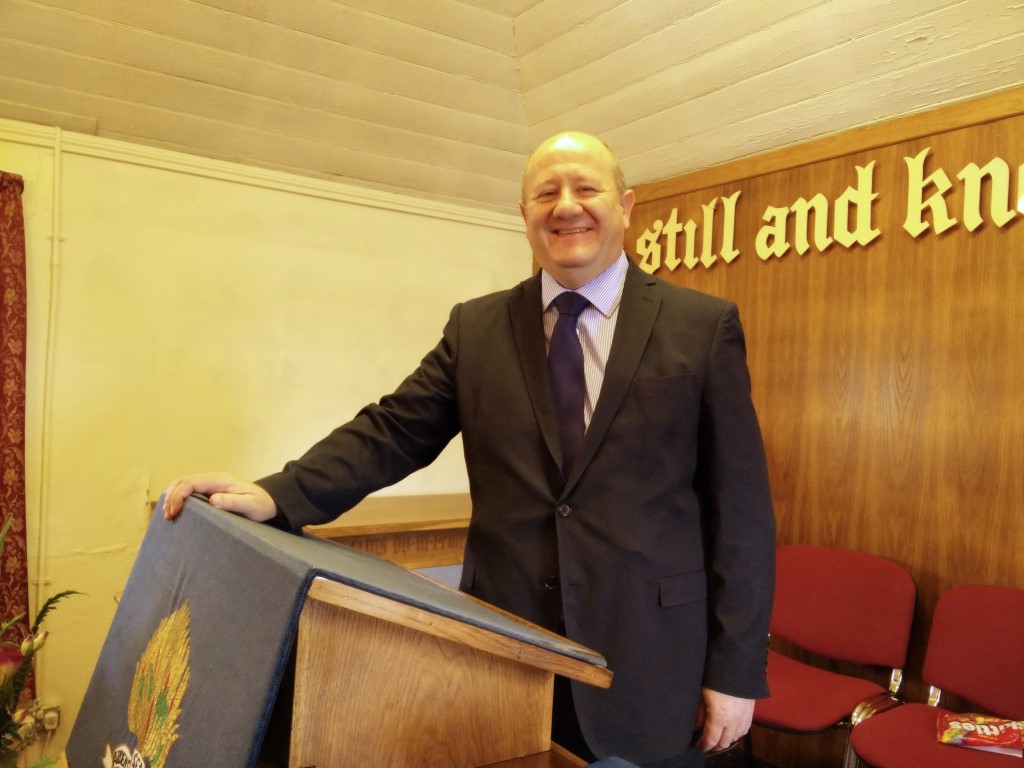
Preacher: Rev. David McLaughlin
Bible Reference: 2 Corinthians 4:17-18
Podcast
Suffering Saints in Light of Eternity: A Summary
Preached from 2 Corinthians 4:17-18
Introduction and Context
The sermon opens with a reading of 2 Corinthians chapter 4 in its entirety, establishing that this epistle is perhaps the most personal of all Paul’s letters. Throughout 2 Corinthians, the apostle opens his heart and lays bare the true cost of being a faithful minister of the gospel.
False teachers at Corinth had questioned Paul’s apostleship on superficial grounds:
- He was bold in speech yet suffered a speech impediment
- He was, by his own admission, a short man of unimpressive physical stature
To the worldly mind—both then and now—a life marked by weakness, physical suffering, and hardship appears to be evidence of failure. Paul presents the exact opposite: the Christian life is measured not by earthly experiences but by heavenly faithfulness.
The preacher draws attention to the verses immediately preceding the text (verses 8-9), where Paul catalogues his afflictions:
- Troubled on every side, yet not distressed
- Perplexed, but not in despair
- Persecuted, but not forsaken
- Cast down, but not destroyed
He also speaks of “bearing about in the body the dying of the Lord Jesus” (verse 10), and in verse 16 reminds believers that though the outward man perishes, the inward man is being renewed day by day.
Then comes what the preacher calls “one of the greatest paradoxes of all of holy scripture”: Paul places present suffering beside eternal glory, the experiences of life beside everlasting life, and the visible beside the invisible.
The older Reformed preachers termed this “the heavenly prospectus”—the practice of judging God’s love, grace, and wisdom not by present circumstances but by His eternal purposes in Christ. Matthew Henry wrote that believers should compare the longest sufferings with eternal glory, and when they do, present sufferings “vanish into nothing.”
The preacher’s opening challenge to the congregation is direct: Are you interpreting your suffering through the lens of eternity? Paul’s words are not theatrical or theoretical—they come from a man who had been beaten, imprisoned, stoned, shipwrecked, slandered, and hunted from place to place. Yet this same man could write, “For our light affliction, which is but for a moment, worketh for us a far more exceeding and eternal weight of glory.”
The sermon then unfolds under four principal headings.
Point One: The Present Burden That Is Addressed
The text begins with the arresting phrase, “For our light affliction.” The preacher notes the apparent contradiction: how could Paul, given all he endured, describe his sufferings as light?
To demonstrate the severity of Paul’s afflictions, the sermon turns to 2 Corinthians 11:23 and following, where Paul catalogues his sufferings in detail:
- In labours more abundant
- In stripes above measure
- In prisons more frequent
- In deaths oft
- Five times received thirty-nine stripes (195 lashes out of a possible 200—the Jews stopped at thirty-nine by law, either to prevent miscounting or death)
- Three times beaten with rods
- Once stoned
- Three times shipwrecked
- A night and a day in the deep
- In perils of waters, robbers, his own countrymen, the heathen
- In perils in the city, in the wilderness, in the sea
- In perils among false brethren
- In weariness and painfulness
- In watchings often
- In hunger and thirst
- In fastings often
- In cold and nakedness
The preacher asks: “What did his back look like?” after 195 lashes. And yet Paul says “light affliction.”
The explanation is not that Paul minimises his sufferings, but that he maximises—magnifies—heaven and eternal life. The preacher illustrates this with a small stone: it seems heavy in the hand until compared with a large rock one could not possibly carry. Likewise, the trials of life seem overwhelming until compared with eternal realities. Against that backdrop, they are indeed light.
The true Christian does not deny pain; he interprets pain. He evaluates it with the heavenly prospectus.
Paul uses the collective pronoun “our,” including himself alongside every true believer. Trials and troubles are the common lot of God’s people. Psalm 34:19 states, “Many are the afflictions of the righteous.” No believer is promised a pain-free or trouble-free life.
The preacher reinforces this with biblical examples:
- Joseph: suffered betrayal by his brothers at seventeen, was falsely accused, imprisoned for thirteen years, and forgotten—all before the age of thirty
- David: endured years of persecution from a jealous King Saul, hunted and pursued
- Daniel: cast into the den of lions
- The prophets: maltreated and mistreated by the very people to whom they were sent
- The Lord Jesus: wore a crown of thorns before the crown of glory; called in Isaiah “the man of sorrows and acquainted with grief”
An old Puritan saying is quoted: “The road to heaven is paved with tribulation.”
The Burden Is Limited
The text continues: “which is but for a moment.” This is a reference to time—to one’s pilgrimage from birth to death, or from conversion to entrance into glory.
Many believers suffer for years: chronic illness, real grief, genuine tragedy. The preacher recounts the story of a pastor and his wife:
- Their first child was stillborn
- Their second child, a boy of eight, was killed by a reckless driver
- Years later, their only remaining daughter, aged forty-three, died in a road accident when her car left the road on ice and struck a tree
Yet when this period of suffering is measured against eternity, even a lifetime of suffering seems but a moment. Scripture confirms the brevity of life:
- James 4:14: “For what is your life? It is even a vapour that appeareth for a little time and then vanisheth away.”
- Psalm 90:10: “The days of our years are threescore years and ten; and if by reason of strength they be fourscore years, yet is their strength labour and sorrow; for it is soon cut off, and we fly away.”
The preacher invokes Robert Murray McCheyne’s counsel: when suffering, take one look at your suffering and then take ten looks into eternity.
The story of Lazarus the beggar in Luke 16 is employed as illustration:
- Lazarus’s earthly life was marked by poverty, suffering, and illness; he lay at the rich man’s gate, hungry, with dogs licking his sores
- The rich man lived in prosperity but died unrepentant and lifted up his eyes in hell, being in torment
- Lazarus, upon death, entered into everlasting comfort
God measures life not by seventy, eighty, or ninety years, but by eternity—either a happy eternity or a hellish one.
The Burden Is Labourous
The text states that affliction “worketh for us.” Afflictions are not merely something believers endure; they are something God uses. Trials are not accidents but appointments; not mere incidents but instruments in the hands of divine providence.
Paul is not saying that afflictions deserve glory or earn heaven. He is saying that God sovereignly employs suffering for His eternal purposes. This connects to Romans 8:28, which the preacher insists must be quoted in full and correctly:
“And we know that all things work together for good to them that love God, to them who are the called according to his purpose.”
The qualification is essential. The question every sufferer must ask is: “Do I love God with all my heart, soul, mind, and strength? Do I know Him as Lord and Saviour? Am I numbered among those who have been effectually called to repent of sin and exercise faith in Christ?”
The preacher then turns to Paul’s “thorn in the flesh” from 2 Corinthians 12—identified as a disease of the eyes, a severe affliction of near-blindness. Paul prayed three times for its removal. In Galatians 4:13 and 6:11, Paul notes that the Galatians would have plucked out their own eyes and given them to him. Every trial Paul recognised was under divine control.
The purposes of affliction are then listed:
- Affliction makes the Bible a new book to us; it is the golden key by which the Lord opens the rich treasure of His word and promises
- Afflictions are the handmaid to prayer, leading us to the neglected mercy seat
- Afflictions help wean us from this present evil world
- Afflictions help us discover the plague of sin in our hearts, humbling us
- Afflictions teach us to lean hard on our Beloved
- Afflictions call grace to work and be exercised in our lives
- Afflictions help us shine for the Lord in the midnight hour of sorrow
The metaphor of the sculptor and the marble slab is employed: every strike of the hammer and chisel, though painful, is producing a masterpiece. Samuel Rutherford’s letter to a widow who had lost her husband and all five children is quoted: “Oh, how Christ must love you. He would take every bit of your heart to Himself.” The pot must go into the furnace; the gold must be cast into the melting pot.
Proverbs 17:3 is cited: “The fining pot is for silver, and the furnace for gold: but the LORD trieth the hearts.”
Spurgeon’s observation closes this section: “Faith without trial is like a diamond uncut, the brilliance of which has never been seen.”
Point Two: The Promised Blessing That Is Announced
Paul piles phrase upon phrase because ordinary language cannot adequately describe heaven:
- Not merely “glory”
- Not merely “a weight of glory”
- Not merely “exceeding glory”
- Not merely “far more exceeding glory”
- But “a far more exceeding and eternal weight of glory”
The contrasts are deliberate and sharp:
| The Affliction | The Glory |
|---|---|
| Light | Weighty |
| Momentary | Eternal |
| Belongs to earth | Belongs to heaven |
John Bunyan, who spent twelve years in Bedford jail for the crime of preaching Christ in the open air, wrote in Pilgrim’s Progress that when the Christian reached the celestial city, the sufferings of the journey were forgotten in the joy of arrival.
What awaits the believer in glory is then enumerated:
- Absent from the body, present with the Lord—in a moment
- Seeing Jesus face to face
- Perfect fellowship with Him
- Being with Him forever
- Perfect freedom from all sin
- Perfect holiness
- Perfect joy
- A life of eternal praise and worship
- Perfect reunion with loved ones of long ago
- A resurrected body
- The eternal presence of God, seeing Him as He is
The glory of heaven is not the golden streets, the pearly gates, or even the tree of life. The greatest glory is God and Christ Himself.
Point Three: The Pardoned Believer That Is Assured
The text reads: “While we look not at the things which are seen.” The word “look” is not a mere glance; it indicates a continued gaze, a sustained focus, a beholding.
The true believer lives by faith. The just shall live by faith—not only saved by faith (Ephesians 2:8-9) but living the whole of the Christian life by faith. Faith comes by hearing the word of God, and believers pray as the disciples did: “Lord, increase our faith.”
The world looks at visible things:
- Money
- Possessions
- Popularity
- Success
- Power
- Pomp
- Drugs and drink culture
- Party culture
- Dressing up to feel good
These dominate human attention. But the believer looks beyond visible things to eternal glory, to heaven. True faith has a spiritual eyesight to gaze from the visible into the invisible.
Moses is the exemplar: he endured suffering in Egypt “for he endured, as seeing him who is invisible” (Hebrews 11:27). Seeing the unseen God with the eye of faith sustained Moses and shaped him in every trial.
The application is direct: what occupies your mind? What shapes your soul? If earthly troubles dominate, the result will be dying, discouraged, dispirited, disheartened, and depressed. The remedy is to focus on eternal things.
Psalm 121 is referenced—the pilgrim on his journey from earth to glory, lifting up his eyes to the hills, his help coming from the Lord who made heaven and earth. This is the spirit of endurance: “I can do all things through Christ which strengtheneth me” (Philippians 4:13), accomplished by keeping one’s eyes focused on Him who is the invisible God.
Point Four: The Permanent Benefits That Are Anticipated
“For the things which are seen are temporal; but the things which are not seen are eternal.”
Everything visible is temporary:
- Wealth comes and goes
- Empires rise and fall
- A man in power one moment may be in prison the next
- A man in plenty one moment may be in poverty the next
- Beauty fades—the flower that blossoms today may wilt by nightfall
- Health declines
- Nations change
- Civilisations crumble
- Even the heavens and earth in their present form shall one day pass away, giving way to a new heaven and new earth wherein dwelleth righteousness
If everything visible is temporary, what remains? Only eternal realities:
- God remains
- Jesus Christ remains—the same yesterday, today, and forever
- His word remains—forever settled in heaven
- God’s kingdom remains
- God’s people remain—their souls are secure in Christ
Martin Luther’s observation is quoted: “God’s kingdom is everlasting. Earthly kingdoms are temporary.”
The true Christian must look by faith into heaven and invest in eternal realities that can never perish.
Concluding Applications
The sermon closes with searching questions and pointed applications:
Are you obsessed with the visible?
- Social media magnifies appearance, especially for young women
- Consumerism magnifies possessions—better car, better home, better clothes, better job
- The entertainment industry magnifies immediate experience: enjoy yourself independently of God
- Technology trains people to focus on the here and now
When facing illness: Remember the outer man perishes but the inner man is being renewed.
When facing financial woes: Remember earthly treasures are temporal; eternal riches are heavenly.
When facing persecution for being a Christian: Remember present affliction is producing eternal glory.
When grieving loss: Remember Christ has conquered death and secured eternal life for all who trust in Him. Revelation 14:13: “Blessed are the dead which die in the Lord.”
When discouraged: Christ is the Ruler, the Redeemer, reigning in heaven. He remembers His own. His kingdom is advancing. His glory is certain. Despite threats from emperors, persecution, culture wars, revolution, and cultural collapse, Christ declares: “I will build my church, and the gates of hell shall not prevail against it.”
The sermon returns to its central figure: Christ Himself, the Man of Sorrows acquainted with grief, afflicted with our afflictions because He is our Great High Priest who sympathises with us.
The four points are recapitulated:
- The present burden that is addressed—light, limited, and working for the believer
- The promised blessing that is announced—a far more exceeding and eternal weight of glory
- The pardoned believer that is assured—looking not at things seen but at things unseen
- The permanent blessings that are anticipated—the things that are eternal, the things to grasp for