
Session 4 — Rev. Thomas Martin, Comber Free Presbyterian Church
“Service: Standing Fast in the Faith Through Evangelism”
“They that sow in tears shall reap in joy. He that goeth forth and weepeth, bearing precious seed, shall doubtless come again with rejoicing, bringing his sheaves with him.” — Psalm 126:5–6
Introduction — The Final Charge
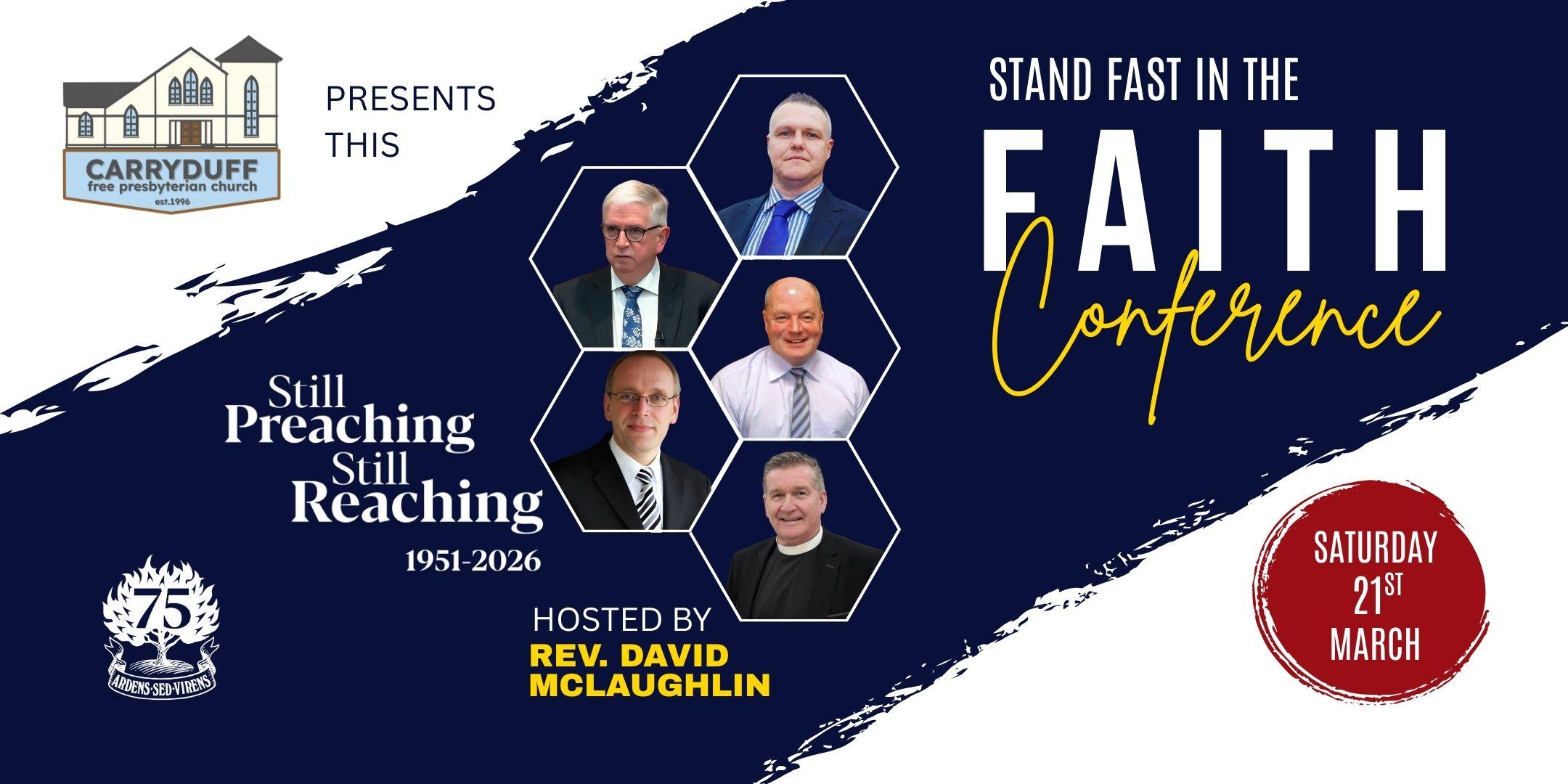
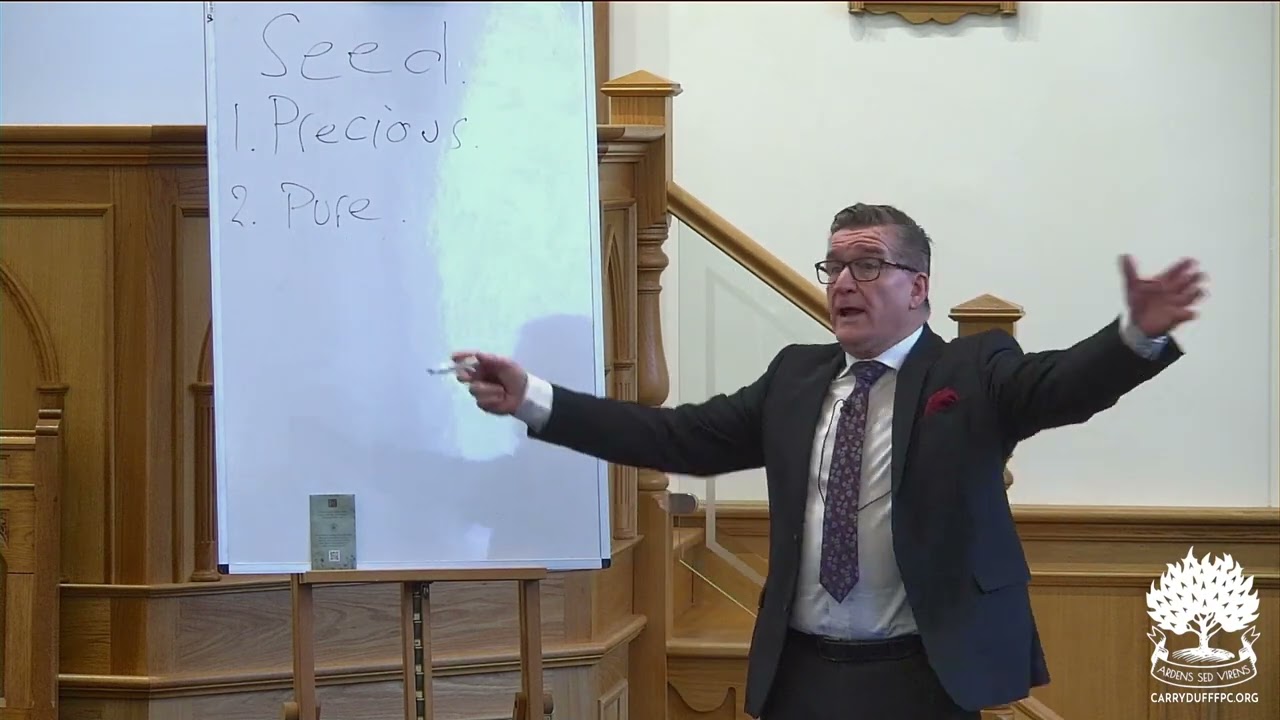
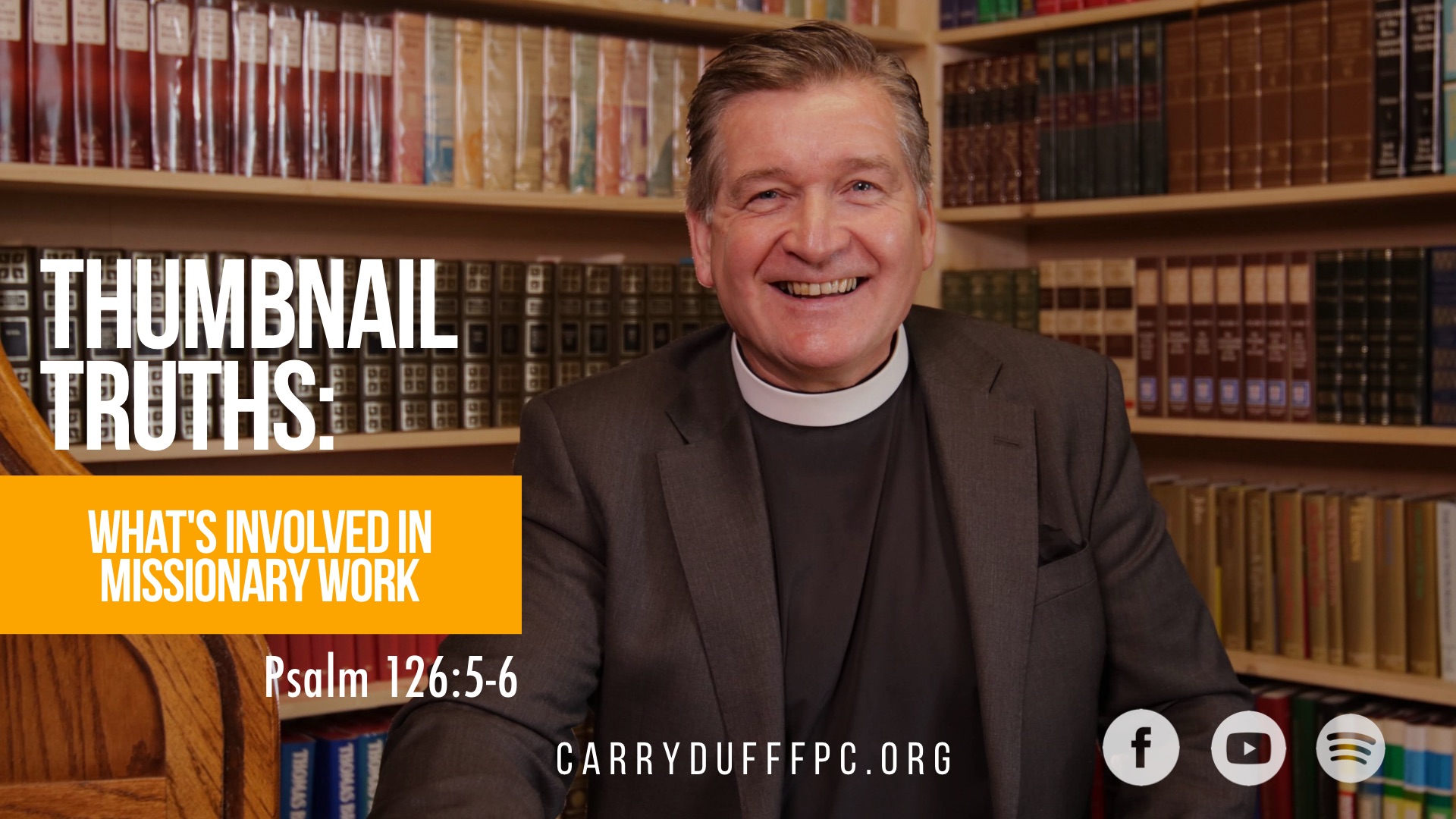
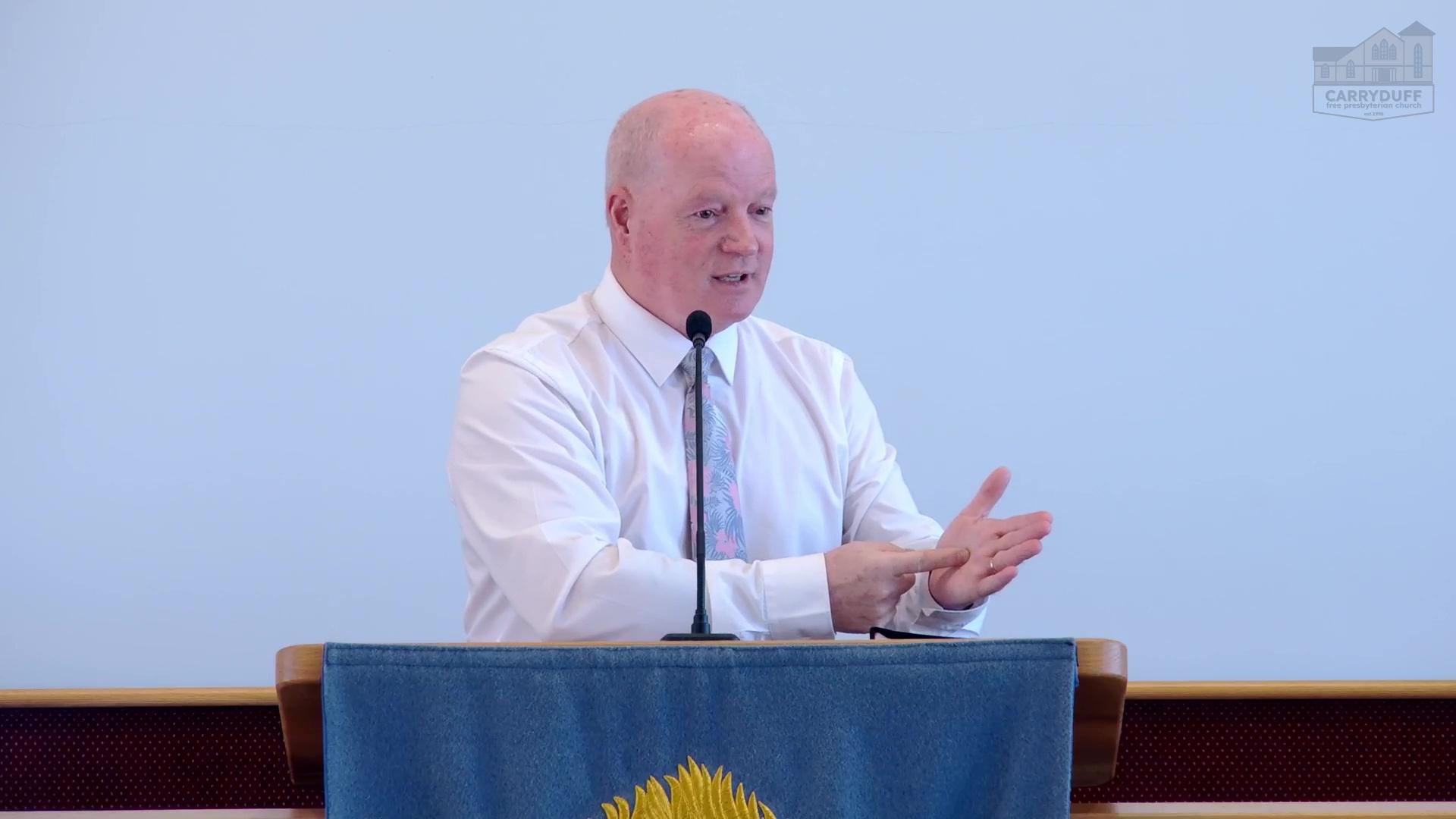
As the afternoon drew to a close in the Carryduff Free Presbyterian Church sanctuary, the final session of the Stand Fast in the Faith Conference began. Rev. Thomas Martin, minister of Comber FPC, took the pulpit to bring the day’s proceedings to a conclusion.
Addressing the congregation, he quipped about the endurance required for an all-day conference: “It would be very easy just to make a break, head off just after lunch, stay for the first session, do well for the second, you’ve reached the third — that’s the pinnacle of all you could ever do — but to see you here for the fourth, I felt sitting down there, the more the men preach the heavier it gets.”
Yet, he quickly turned to the gravity of the hour. “We’re not here for a celebration of 75 years,” he reminded them, “we are here for a commemoration of God’s dealings and God’s grace within our denomination.” He then outlined his theme: the necessity of service and soul-winning, and why the Church must hold the line in an age of indifference.
1. The Soul-Saving Business
Rev. Martin began by asserting that despite the imperfections of any denomination, God remains at work. “God is still in the soul-saving business,” he declared. He recounted recent evidences of grace: a Roman Catholic lady in County Antrim brought to Christ, a family living beside him restored to the Lord, and a teenager saved through a gospel leaflet.
He challenged the notion that God’s sovereignty in election excuses the Church from the duty of evangelism. “We believe in the sovereignty of God, we believe in the election of God, we believe that salvation is of the Lord, but there is a human responsibility.” He lamented the modern trend of clergymen telling people they do not need to be saved because they were born into a “Christian country.”
“I’ll tell you a good reason why we mention this from the pulpit,” he said, referencing those who claim baptism or confirmation saves. “First of all, it’s wrong. You got saved through confirmation? No.” He drew from his own upbringing in the Church of Ireland, where he was “forced up” to church. “I did not want to go to church no more than the Pope wants to be the Moderator of the Free Presbyterian Church.” It was only when he came to personal faith, he explained, that he understood the necessity of the new birth.
2. The Soul-Winner’s Pathway
Focusing on Psalm 126:6, he identified the first mark of the servant of Christ: “He that goeth forth.”
“The soul-winner is not someone who is idle,” he stated. “He doesn’t literally sit down and let maybe someone else do it or just say, ‘Well, God will do it.’ He doesn’t sit idly by; he will go to his neighbour.”
He called the congregation to account regarding their own outreach. “Have you ever knocked their door? Have you ever invited them to a gospel meeting? Have you ever given them gospel literature?” He acknowledged that the pathway is often one of hardship. “All that will live godly in Christ Jesus shall suffer persecution,” he reminded them, noting that sinners may mock, curse, or bar their doors.
He shared a personal anecdote of a man who put a “No Religious Groups” sign on his door. Rev. Martin recalled, “I was about to put it through the door and the door opened like a bullet. He says, ‘Can you not read?’ I didn’t know what to say because I did read it.” Yet, he argued that such resistance is no excuse for silence. “If they make their choice for eternity, that’s their choice. I go down their path, I stop at their gate, and I do what the Lord says and I shake the dust off my feet.”
3. The Soul-Winner’s Passion
Rev. Martin then turned to the phrase “and weepeth” in Psalm 126:6. “The word weepeth,” he explained, “if you look it up in the Hebrew, is a very strong word. It means literally to lament.”
He argued that evangelism devoid of compassion is hollow: “If you don’t care for somebody, you’ll not reach them. If you don’t love them, if you couldn’t weep for the erring one and lift up the fallen, you’ll never go after them.”
He spoke with deep emotion of the burden he, and others, have felt for lost loved ones. “I have been distressed and I mean shaking, my heart pounding, my mind was overwhelmed and broken at the thought [of hell].” He warned that the Church today is in danger of making hell a “forgotten doctrine.” He challenged his hearers: “When was the last time that you were ever disturbed about the thought of hell?”
He insisted that the reality of eternal judgement is no “scare tactic” but the most alarming fact in the created universe. “Hell exists, hell burns… and maybe they will curse me for not preaching long enough, hard enough on the subject of hell.”
4. The Soul-Winner’s Power
Addressing the excuse that many are not gifted for evangelism, Rev. Martin directed them to the phrase “bearing precious seed.”
“It’s not your oratory power,” he said. “It’s not the words you say. The most important thing is to get the Word of God to them.” He challenged the congregation to make the 75th anniversary year a period of intensive gospel distribution. “Arm yourself this year and I challenge you to give out the gospel.”
He shared the story of his Aunt Mary, a “prim and proper” woman who would not let him into her house. When she was diagnosed with terminal cancer, he visited her in the hospital and found her reading the Bible he had given her. She later testified to accepting the Lord shortly before she passed away. “Wasn’t I glad that I didn’t buy her flowers and I’m not opposed to that, nor jewellery? I got her a Bible, and she read it.”
5. The Soul-Winner’s Promise and Prize
He concluded by expounding the words “shall doubtless come again with rejoicing, bringing his sheaves with him.”
“If we didn’t have this promise, we wouldn’t have a big lot of motivation,” he said. “Not only we’re told to go, but the Lord tells us you’ll have success.” He urged believers to remain faithful despite the “discouragement” of rejection.
He ended with a final appeal to the parents and families present. “If my life’s work was only to bring my three boys to heaven, I’d be a happy man.” He spoke of his brother Colin, who had lived a violent life, but who, a year and a half before his death, came to know Christ. “I determined to do something: that I would live the gospel before him… and I’m glad I did.”
Conclusion and Benediction
Rev. Martin’s sermon ended with a fervent plea for the Church to maintain its militancy in evangelism. “As the Free Church progresses into a new year and a new era, I pray God will strengthen us with militancy and evangelism and we’ll stand fast for the sake of the gospel.”
He closed in prayer, asking that God would “give a tear in the heart, love in the soul, and a compassionate disposition” to reach the lost.
Following the message, Rev. David McLaughlin rose to express his gratitude. “We do thank the Reverend Martin for preaching on the theme of Stand Fast in the Faith in relation to service,” he said, “and we thank the Lord for him and all that he shared.”
After a final hymn and the closing benediction, the conference concluded. The attendees dispersed, having been called back to the ancient task of the Church: to sow the seed in tears, that they might one day reap in joy.