
Date: SUN 11:30am 10th May 2026
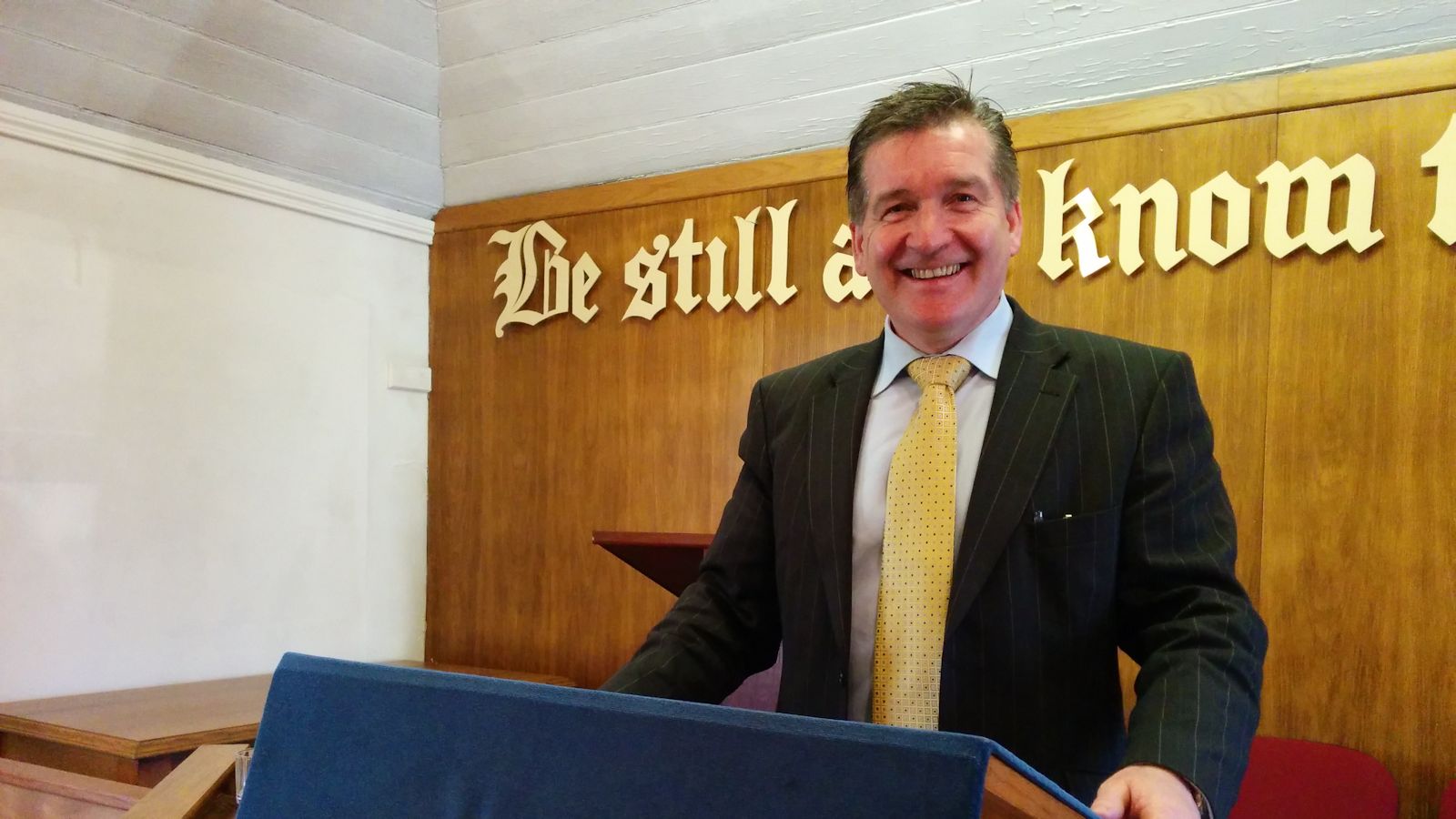
Preacher: Rev. David McLaughlin
Bible Reference: 1 Thessalonians 5:23-24
Podcast
Sermon Summary
The doctrine of sanctification constitutes one of the most vital, yet frequently misunderstood, pillars of the Christian life. In the closing movements of the First Epistle to the Thessalonians, the Apostle Paul transitions from the imperative of apostolic exhortation to the necessity of divine intercession. In chapter 5, verses 23 and 24, we are presented with a profound prayer for the church, a petition that encapsulates the entirety of the believer’s progression from the initial work of grace to the ultimate consummation at the return of the Lord Jesus Christ. It is a text that demands not merely our intellectual assent, but our total spiritual engagement.
- The Context of Apostolic Duty: Paul has laid out a series of strenuous commands: to warn the unruly, to comfort the feeble-minded, to support the weak, to be patient toward all men, to abstain from the appearance of evil, and to prove all things.
- The Shift to Dependency: These are not suggestions; they are the active duties of a congregation living in the light of the impending return of Christ. Yet, as the Apostle concludes these instructions, he recognizes a sobering reality: the fallen nature of man is utterly incapable of performing these duties in its own strength.
- The Necessity of Prayer: The shift from exhortation to intercession is therefore not accidental. It is the acknowledgement that duty must be sustained by dependency. The commands of God find their fulfillment only through the operative power of God.
The Comprehensive Subject of Sanctification
The subject of this sanctification is the whole man. When Paul prays that the very God of peace may sanctify them wholly, he is utilizing a comprehensive term that signifies completeness, extension, and integrity. This is not a partial transformation or a surface level behavioral modification. It is the work of God’s free grace whereby the believer is renewed in the whole man after the image of God.
- The Definition of Grace: The Shorter Catechism rightly defines this as the enabling of the soul to die more and more unto sin and to live unto righteousness.
- The Requirement of the Christian: This process is integral to the Christian profession. One cannot claim to be justified by faith in the Lord Jesus Christ while remaining indifferent to the pursuit of holiness.
- Departing from Iniquity: To profess Christ is to name the name of the Lord, and all who name that name are bound by Scripture to depart from iniquity. This is a life of ecclesiastical and personal separation unto God.
The Source of Divine Grace
The source of this supplication is identified as the very God of peace. This title is significant. It reminds the believer that sanctification is not a human manufacture. It is not the result of a decision made in the power of the flesh. It is the work of the Sovereign Creator who has reconciled the penitent sinner to Himself through the blood of the Cross.
- The Supremacy of God: The true and living God, the God of the Bible, is not a distant deity. He is the one who has reconciled sinners to Himself.
- Justification Precedes Sanctification: Romans 5:1 confirms that being justified by faith, we have peace with God through our Lord Jesus Christ. Peace with God procedure comes before purity before God.
- Divine Purchase: True sanctification is grounded in the merits of the Lord Jesus Christ. It is not something we do, but something that is done within us by the Spirit of God. As Exodus 31:13 declares, it is the Lord who sanctifies His people.
The Scope of Entirety
The scope of this sanctification is articulated in the tripartite division of spirit, soul, and body. This is not to be understood as a rigid anatomical or psychological theory, but rather as a comprehensive expression of the totality of human existence.
- The Spirit: This represents our God consciousness, the seat of the new life imparted by the Holy Spirit during regeneration. It is the Holy Spirit who indwells us, creating new life.
- The Soul: This encompasses the inner life, the heart, the mind, the emotions, and the affections. We now have a new interest in Christ, new joy, new peace, and new love.
- The Body: This refers to the outward conduct and the physical life, which must be yielded as an instrument of righteousness. Even our bodies belong to the Lord.
- The Illustration of Integrity: As the illustration of the parrot suggests, a truly sanctified life is one that can endure the scrutiny of the home. We should live in our private spheres so that nothing would be said that would be derogatory or demeaning to our character.
The Standard of Blameless Pursuit
The standard of this sanctification is to be preserved blameless unto the coming of our Lord Jesus Christ. Here we must be careful to avoid the error of sinless perfectionism. The Scriptures nowhere teach that the believer shall attain to a state of absolute sinlessness in this mortal frame.
- The Reality of Conflict: We remain, in this life, in a state of conflict. The flesh lusts against the spirit, and the spirit against the flesh.
- Passionately Pursuing Holiness: To be preserved blameless is to pursue a life that is free from scandal, a life of consistent repentance and daily reliance upon the means of grace.
- Short Accounts with God: It is a life that keeps short accounts with God, confessing sin as it is recognized and finding the cleansing power of the blood of Christ to be ever sufficient.
- The Life of Dependence: The Lord comes to us and says that we can do nothing without Him. We must cry out for His help in every endeavor, from the mundane to the most significant.
- The Role of the Word: The psalmist asked how a young man might cleanse his way, and the answer remains for all believers: by taking heed thereto according to the Word of God. We must hear it, heed it, and hold unto it.
The Security of Faithful Completion
Finally, we must consider the security of this sanctification. The Apostle assures us in verse 24 that faithful is He that calleth you, who also will do it. This is the bedrock of our assurance.
- God Completes What He Begins: The same God who commences the work of grace in the heart is the one who shall perform it until the day of Jesus Christ. This echoes Philippians 1:6.
- Preservation on the Journey: There is an aspect of this work where God is guiding and guarding us on our journey. God preserves whom He sanctifies.
- Preparation for Christ: True sanctification is always looking forward to a person. A life of holiness now anticipates a life of heavenliness.
- The Marriage Metaphor: The church is being sanctified and cleansed by the washing of water by the Word, that she may be presented to Christ as a glorious church, not having spot or wrinkle or any such thing.
- Resurrection Hope: Even if our bodies die and are under death for a time in the grave, they will be resurrected. The spirit will return, the soul will return, and the body will be raised as a new body like unto Christ’s glorious body.
A Call to Sanctified Living
In conclusion, we must resist the temptation to be content with half heartedness or coldness in our spiritual walk. The call to holiness is a call to moral seriousness. It is a call to recognise that every area of our lives, our worship, our witness, our words, and our warfare, falls under the divine requirement of sanctification.
- Rejecting Half Heartedness: We are not to rest in our progress, but to press on toward the mark. We are to trust in the God of peace who has promised to complete the work He has begun.
- The Practical Application: We are to live as those who are expecting the return of their King. Let this be the motto of our lives: holiness unto the Lord.
- The Final Reliance: Let us seek to die unto sin and live unto righteousness, finding our strength in the merits of Christ, our guidance in the Word of God, and our hope in the sure promise of His return.
- The Promise of Faithfulness: Faithful is He that calleth you, who also will do it. To Him be the glory, both now and forever. Amen.
Deepening the Expository Analysis of the Sanctified Life
To fully grasp the magnitude of the Apostle’s prayer, one must look deeper into the mechanisms of this divine work. The Christian life is not merely a static state; it is a dynamic movement of the soul toward God. As we have seen, this movement is characterized by a persistent and passionate pursuit of holiness that is fueled by divine promise rather than human effort.
The Necessity of Moral Seriousness
The modern church often suffers from a lack of moral seriousness. We see thousands of individuals who profess to know the Lord Jesus Christ but whose lives show no evidence of a sanctified heart. The Bible, however, is uncompromising. The Lord knoweth them that are His, and let everyone that names the name of Christ depart from iniquity. This departure is the hallmark of the truly justified soul. Our attitude toward sin is the ultimate test of our relationship with the Lord. If we have truly been bought with a price, we will have a growing hatred for sin and a deepening love for righteousness. We will mourn over our failures, not because we fear the penalty of death—which has been satisfied by Christ—but because we love the One who died for us.
The Mechanics of Divine Grace
Sanctification is the work of God’s free grace. This must be emphasized repeatedly. Too often, believers attempt to manufacture holiness through legalistic adherence to rules. While the law of God is good and holy, it cannot produce the transformation of the heart. Only the Spirit of God can do that. When we are born again, a new principle of life is implanted within us. This principle is in constant conflict with the remaining corruption of our fallen flesh. Sanctification is the process of this new life gaining dominance. It is the branch drawing life from the vine. The branch does not struggle to produce fruit; it struggles only to remain connected to the tree. If we abide in Christ, the fruit of the Spirit will naturally grow in our lives.
The Totality of the Christian Experience
There is no compartment of the Christian’s life that is exempt from God’s sanctifying work. We are not to be holy only on the Sabbath or only when we are within the walls of the church building. Our holiness must be evident in our public life, our private thoughts, our business dealings, and our domestic relationships. When Paul speaks of spirit, soul, and body, he is covering the entirety of human existence. Our God consciousness must be sharpened by the daily reading and meditating on the Word of God. Our inner life, our emotions, and our affections must be constantly submitted to the lordship of Christ. Our bodies, which are the temples of the Holy Spirit, must be kept from the defilement of the world.
The Hope of the Resurrection
The ultimate goal of our sanctification is not merely to be better people in this world; it is to be prepared to dwell with God for eternity. The return of the Lord Jesus Christ is the blessed hope of the church. When He appears, we shall be like Him, for we shall see Him as He is. This hope is the ultimate engine of sanctification. He who has this hope in him purifies himself, even as He is pure. We are being prepared as a bride for her husband. The wedding day is coming, and on that day, our sanctification will be perfected. The struggles with sin, the weariness of the flesh, and the limitations of this mortal life will all be left behind. We shall be forever with the Lord, in a state of perfect and unending holiness.