
“This is a faithful saying, and worthy of all acceptation, that Christ Jesus came into the world to save sinners; of whom I am chief.”
— 1 Timothy 1 : 15 (KJV)
Childhood in a House of Prayer and Poverty
Willie Mullan entered the world in 1911 in the back‑streets of Newtownards, County Down – the seventeenth child of Sergeant‑Major William Mullan and his wife Mary. He would later joke, “sixteen boys and one girl – have you ever seen seventeen knives go at a quarter pound of butter?” What now reads as humour was once survival. The house, two rooms under a sagging slate roof, held seventeen voices, a coal smell, and an iron discipline. His soldier‑father fell at the Somme on 1 June 1916, leaving a widow and a brood barefoot on the cobbles. Mary Mullan – tiny, proud, indomitable – scrubbed bar‑floors before sunrise and boiled her potatoes in a black pot that hung over the grate. The boys slept six to a bed, three at top, three at bottom, wrapped in their dead father’s greatcoat. When wealthy cousins came from the country she hid the children upstairs out of shame, whispering, “Not a cheep out of you.” Yet out of that poor, cramped room came more moral strength than luxury could breed.
Each night she marshalled them onto their knees on the cracked red tiles. “Fold your hands – close your eyes.” Then, with head lifted toward heaven, she prayed through every name in order until she reached the last: “Lord, save Willie, and make him a man of God one day.” He sometimes peeked through half‑shut lids watching the lamplight carve her worn face. Long after she was gone he would recall those moments with trembling gratitude: “She was a nobody in a back street, but God heard her prayer.” That nightly discipline of supplication and humour, poverty and praise, forged the pattern that would later re‑emerge in his ministry – a gospel rooted in kitchen floors and answered prayers.
The Death of His Mother and the Breaking of the Family
Adolescence brought not promise but the slow undoing of everything his mother had built. At sixteen he strayed into a bookmaker’s shop with older lads, tasted strong drink for the first time, and felt the craving take root. “I got drunk,” he admitted, “and although I knew I’d get a hiding I went back night after night.” Soon he was stealing the few coppers from his mother’s purse to feed the habit—“stretching her out broke for the week.” One winter afternoon, while they stood in the small kitchen, she caught her breath, clutched her chest, and sank in his arms. He laid her down on the floor; within two minutes she was gone. He wept beside the still body and, touching the cold forehead, vowed, “Mommy, I will never be drunk again.” Two hours later he was drunk. That confession – simple, shame‑filled, and true – would shape his theology for life: man’s will is powerless until grace intervenes.
When the funeral ended his brothers stood about uncertainly. One said, “What are we going to do with you?” The silence after it answered its own question. “Look after your houses,” he shot back, lifted his coat over his arm and walked into the night. Later he would tell young men, “You’ll reap what you sow.” For him, reaping began that moment. The poverty that had once been sanctified by a mother’s prayer was now just poverty. He was sixteen and fatherless, motherless, houseless—and not yet fathered by God. So began three and a half years of wandering that would scour his soul before grace found him.
The Years on the Road
For three and a half years after leaving home Willie Mullan was what he later called “a graduate of the open road.” He never saw the inside of a house or a bed, nor ate a set meal. Some days he walked thirty miles with rain pouring through a ragged coat and thin shirt until it ran down his back and legs. At night he would crawl beneath a hedge or lie at the foot of a tree, only to wake with his clothes frozen stiff. In the mornings he peeled the shirt from his skin and walked on. To keep alive he stole, fought and bartered bottles for bread. Once he climbed a factory wall to sleep in the yard, only to wake under a watchman’s gun and flee into the night. When theft was discovered next day the police found his footprints on the wall, and he saved himself by betraying the real culprit at a pub counter – proof that even self‑preservation can masquerade as honesty.
In his own blunt theology those years were the anatomy of sin. “When you’re out in the wild world and there’s no mother, and you suffer and think there’s no God, there is not a sin on the calendar you won’t stick to.” To his dying day he would insist that what he was delivered from mattered more than what he became. “The same old nature is still in me somewhere,” he told listeners, “but the Lord has His hand ’round the cracks.” The road had hardened his skin and broken his conscience, but it also prepared the ground for the miracle to come. By the time he drifted back to Newtownards around 1930, he was barefoot, bearded, and beyond shame – yet ready for the strange mercy that lay in wait for him.
The Gambling Den and the Gospel Leaflet
When at last he drifted back to Newtownards it was not homecoming but collapse. Bearded, barefoot, and rag‑clothed, he approached a small shop run by Mrs Orr—an old friend of his mother—who on recognising him simply took a key from the nail and said, “Your mother was good to me, Willie; here’s the key, the house is yours.” The gift was meant for mercy, yet became the setting for his ruin. The house was hardly standing, its roof bent and floor bare; he bought a gas mantle for light and slept on the boards. Within weeks the place was alive with drinkers, gamblers and vagrants of every creed – men known as Peter and Pat sharing the same bottles and blasphemies. “There was no politics in our sin,” he said later; “we were all the devil’s fellow travellers.” It became the worst den of iniquity in Ulster – a roomful of gas fumes, puke, cards, and revolvers passed round like toys. He remembered once meeting a man on the stairs and kicking him down to save his life. “If there was ever a dark, desperate, diabolical sinner, that was me,” he would say.
One evening someone slid a white handbill under the door – a notice of Dr W. P. Tucker’s Baptist mission in the town. He read it, snorted, and threw it onto the cold hearth: “it doesn’t concern us at all.” But toward four in the morning he grew sick of the stench and stepped over the drunk bodies into the alley, thinking he would give his right arm to be free of the whole lot. In his self‑disgust he bumped into a street‑preacher, a man he had seen reading Scripture outside picture houses. At first he raised a knife, then recognised him. “Hello,” he said, “see you’re having a mission at the Baptist Church.” The preacher smiled: “You’re afraid to go.” “I’m not afraid,” snapped Willie, “Pick your night – I’ll come for you.” And so he did.
That night Dr Tucker took his text from Revelation 6: the kings and captains crying to the rocks to fall on them. He warned of a coming day of wrath. Mullan sneered, declaring the old man a fool who had read too much. When the three‑week mission closed without a single convert, no one knew that a seed had been sown. Days later, while surveying a building he planned to rob, the sermon’s words echoed through his mind. He argued with himself—“There might be no God…”—then looked at the horizon and answered, “The only sensible answer is God.” Conviction followed quickly. “All right, You’re God, I’m a sinner—if You pitch me into hell, You’re just.” Then the text of John 3:16 flashed like lightning: God so loved the world. Could He love such a man? “God so loved me,” he realised, and fell to his knees, twisting his cap in his hands. “All right Lord Jesus, on this spot today I will give You my life.” When he rose from the hedgerow he was a redeemed man with nothing—but Christ.
He proved his faith at once, telling a passer‑by, Henry Todd of the Brethren, what had happened. Todd gripped his hand and said, “Fear not the hour nor morrow; the One that saved you today will keep you for all eternity.” Armed only with that promise, Mullan walked back toward the alley of his old house. To a man with a razor in his belt and blood on his hands, salvation was no metaphor—but a miracle. The house that had been his hell would soon be the starting point of Heaven’s work.
Rebuilding a Life
He walked back from the hedgerow still shaking, a saved man with a sinner’s reflexes. At his belt hung an open razor – his old truth serum of violence. As he prayed for courage to face the gang he muttered, “Lord, first man says a word about You, I’ll cut the head off him.” Just then a plane roared overhead—one of Lord Londonderry’s two‑seat trainers from the nearby airfield. He knew the type: a young pilot at the front controls, an old instructor behind ready to switch off and take charge when danger threatened. As the aircraft dipped and lifted, an inner voice seized him: “That’s you, Willie – you’re not in control at all. Throw the thing down. Give Me control.” He let the razor fall into the grass and lifted his empty hands. In that act the pilot who had wrecked his own life surrendered the controls to Christ.
The first test of faith came round the corner of the alley in the shape of Paddy Hannah – the strongest and most feared of the crowd. Mullan stood his ground: “Paddy, I’ve met the Lord Jesus today and I can’t run with you any more.” He braced for a blow, but instead a tear slid down the other man’s cheek: “I wish to God I was saved.” That first confession from another’s mouth was his first fruit as an evangelist – proof that real boldness is born of surrender, not violence. Later he warned his listeners: “Some of you aren’t saved because you’re afraid of men – men who are themselves longing to be saved.”
Reflecting on that day he would teach what he called “five minutes of theology for a lifetime of assurance”: Christ on the cross – the sacrifice for my sins; Christ out of the grave – the Saviour for my soul; and Christ on the throne – the Lord of my life. That threefold truth became the keel of his preaching and his character. The man who once carried a razor now carried a Bible. He had given the controls to another—and discovered flight.
First Steps of Faith and Early Ministry
The tramp who once slept under hedges soon found himself tending roses in another man’s garden. Mr and Mrs Calder of Bangor hired him as gardener, boat‑hand, and general help, eventually calling him their “right‑hand man.” He helped row their fishing parties, served meals to guests, and at night leaned over his Bible by the lamp. The Calder children and their pony became like his own – the first stable family he had ever known. When he married Mary and two sons, Donald and Michael, were born, his home echoed at last with the sound of music instead of violence.
As his work prospered spiritually, so did opportunity. The Methodist minister Beresford Lyons asked him to conduct a three‑week evangelistic mission for the troops stationed at Comber. Mullan agreed, though it meant labouring by day and preaching night after night. Out of that campaign came friendship with three men whose voices blended into song and testimony – Hugh McKee, Sam Scott, and Tom Donaldson. With the trio singing and the former tramp preaching, they bicycled from farm to town under any sky. One was a clerk, one a milkman, one a grocer, and the last a man who had once been their customer in sin. They called themselves “The Trio and the Tramp.” “We sang on the way to meetings and on the way home,” he said, “and one day we shall sing together in Heaven.”
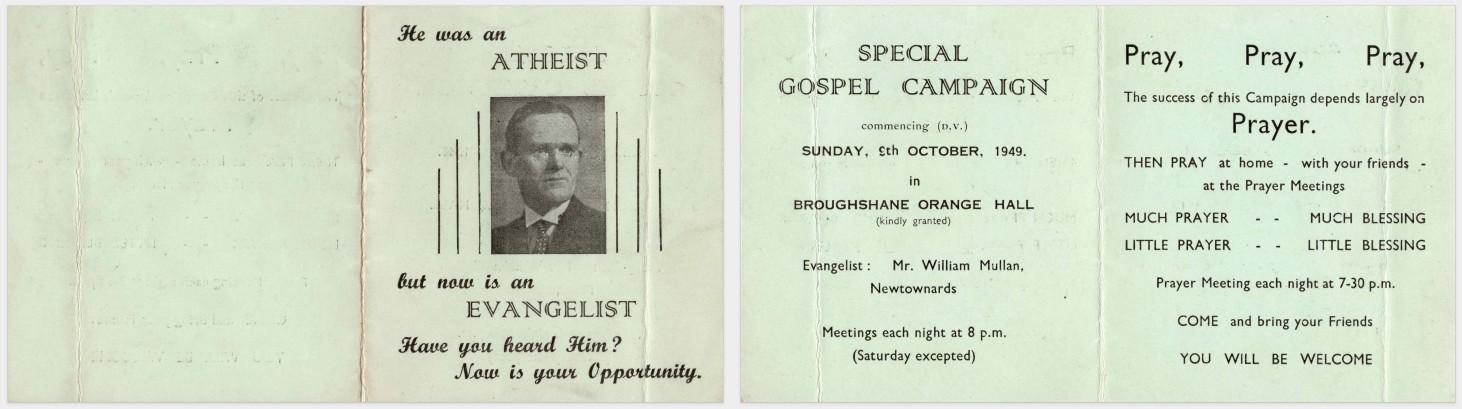
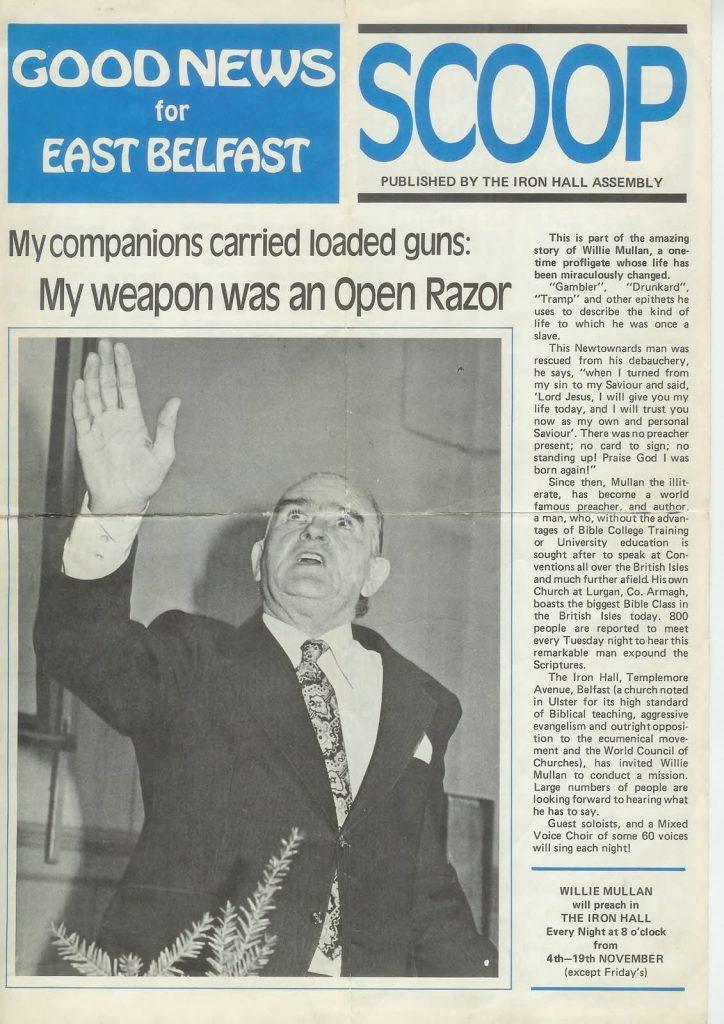
Invitations multiplied—Ballymena, Coleraine, Portrush, Derry, Rathcoole, Carryduff – until the journeys led even to the Tent Hall in Glasgow, where sixteen hundred filled the marquee nightly and hundreds found faith. Returning to Bangor “tired but happy,” he wrote, “The Lord of Hosts is with us.” He had once wandered three and a half years without a home; now he wandered for the Gospel without regret. Those bicycle roads of Ulster were his seminary and his sanctuary.
The Lurgan Years (1953 – 1979)
When Willie Mullan accepted the call to Lurgan Baptist Church in 1953 he arrived without formal theological training, without denominational pedigree, and without pretension. He brought with him only a Bible worn smooth at the edges and the conviction that the Word of God required no embroidery. The church stood on Johnston’s Row—an unadorned red‑brick building with bare pews and more zeal than funds. Barely a hundred names were on the roll, and the small pulpit looked suited to small ambitions. Within a few years it would become one of the best‑known in Britain.
The Pulpit Voice
At first the people of Lurgan encountered a form of preaching they had never heard. Mullan spoke neither with the polished diction of the college nor the measured cadence of clerical Latin. He spoke as he had lived – abrupt, vivid, fiercely alive. The sound of field and street clung to his tongue: a musician’s cadence woven through a prophet’s thunder. Congregants called it “a hammer and a harp in one.” He never used notes: “If a preacher depends on paper,” he told the youth class, “he’s reading a sermon instead of feeling it.” Instead he held the open Bible before him like a living thing, pacing the platform in an almost conversational wrestle with the text. His gestures were rough but his logic razor‑clear—a ploughman handling Greek truths with calloused hands.
The Great Bible Class
From his first week in Lurgan Willie Mullan set about one change that would define the next quarter‑century of his ministry. On his first Sunday morning he preached from Philippians 4 – “The Lord is at hand” – and afterwards an elder, John McGill, asked what he planned to do with the small mid‑week Bible Class that traditionally met in the little hall at the back of the church on Tuesdays. Mullan’s answer was immediate:
“It will never be held there again. I propose announcing the Bible Class to be held in the church this coming Tuesday.”
McGill smiled at the audacity. “It’s a big building for such a small class,” he said. Mullan replied, “Let’s trust God and see.”
They did. That first Tuesday evening the church was half full; within weeks there was standing room only. Before long the structure itself had to be enlarged, an extension in 1958 providing seats for two hundred more – and even that proved inadequate. On most Tuesday nights six to eight hundred people crowded into the sanctuary, some travelling long distances from other denominations, all drawn by an eagerness for the Word.
The Tuesday Bible Class quickly became a regional institution. Each week Mullan opened a passage of Scripture and worked through it line by line, explaining doctrine in the language of carpenters, farmers, and factory hands. He was as direct as the morning headlines, yet as reverent as a scholar translating Greek. He never used notes: “Now look at this!” he would cry, pacing the platform, then drop to a whisper – “Did you see what God said there?” It was theology delivered with the urgency of discovery. People of every denomination flocked in, and – in his own words – the class kept Lurgan “in touch with the wider family of God.”
By the mid‑1960s the church had begun recording each Tuesday study along with the two Sunday sermons. “The tapes still revolve around the world,” he wrote later, noting more than a thousand titles in the catalogue. They circulated to Britain, Europe, and Canada, and all proceeds beyond expenses were given “to the work of the Kingdom – not just to our own church but to the mission field overseas.” The class thus became both a local fellowship and a global ministry.
Even after two decades of unbroken attendance the hunger never lessened. Year after year his voice could be heard on Tuesday nights expounding Romans, Isaiah, Revelation – every book of the Bible – to a packed crowd of ordinary Ulstermen intent on every word. “It wasn’t spectacular,” he later wrote, “but it was solid.” Solid indeed: by the late 1970s the Tuesday Bible Class had become so synonymous with faithful exposition that recordings were identified simply by day and place – Lurgan Tuesday – a phrase that came to stand worldwide for straight, uncompromising Bible teaching.
Evangelistic Expansion
News of the Lurgan ministry spread fast. Coach parties arrived from Belfast and Ballymena; missions booked him years in advance. He preached throughout Great Britain and well beyond: the Faeroes, Germany, Greece, Palestine, Syria, and Canada. A note in the SermonAudio archive summarises it simply: “The voice of Willie Mullan has been heard in almost every country.” Wherever he went the same pattern emerged – doctrine as story, grace as fire. Farmers understood him; theologians argued with him and kept coming back. Tapes like “Christ in the Old Testament” and “The Glory of His Grace” bear audible evidence of crowded emotion – the soft murmur of agreement, spontaneous hymn phrases rising from the floor, occasional weeping when a text found its mark.
Influence and Character
For twenty‑seven years his life beat to one rhythm – study, visitation, preaching, prayer. Neighbours remember seeing him pacing the streets after midnight, praying aloud to the God whose mercy he never took for granted. His study was a lean‑to at the back of the manse, lined more with notebooks than books, a shotgun beside the door in the dark years of the Troubles. Guests found that his table offered rough bread and strong tea, never pretence. He remained a working‑class Ulsterman who believed that dignity was measured not in china but in truth.
He preached what he lived – repentance, perseverance, and grace absolute. His Reformed convictions were robust but never brittle: he once called Calvinism “a wildflower from the field, not a plant from the greenhouse.” For him the heart of every sermon was Christ crucified and risen, the end of all pretension. “You’ll not come striding into Heaven,” he liked to say, “you’ll come crawling on mercy’s knees.” That sentence condensed his gospel: total ruin met by total grace.
Under his leadership Lurgan became a missionary nerve‑centre. Collections for Africa and the Middle East were common features of Sunday services. He regularly shared his pulpit with friends such as Harold Paisley, T. Ernest Wilson, and Denis Lyle (who would succeed him years later). In a province riven by sectarian division his pulpit offered another kind of identity – moral seriousness without hatred. He insisted that the Bible divides humanity only by two banners: sin and salvation. Many who entered the church as Protestants or Catholics left as believers and friends.
By the late 1970s his voice softened. The trumpet grew tender. Sermons like “Hide Me in the Cleft of the Rock” and “The God of All Comfort” betray a weariness that was almost beautiful. He dwelt often on Elijah under the juniper tree, on Paul’s thorn in the flesh. Once he told his people, “Sometimes even preachers need the Gospel – I’ve needed it this week more than any man in this place.” It was vulnerability carved from faith, not fatigue.
Retirement and Aftermath
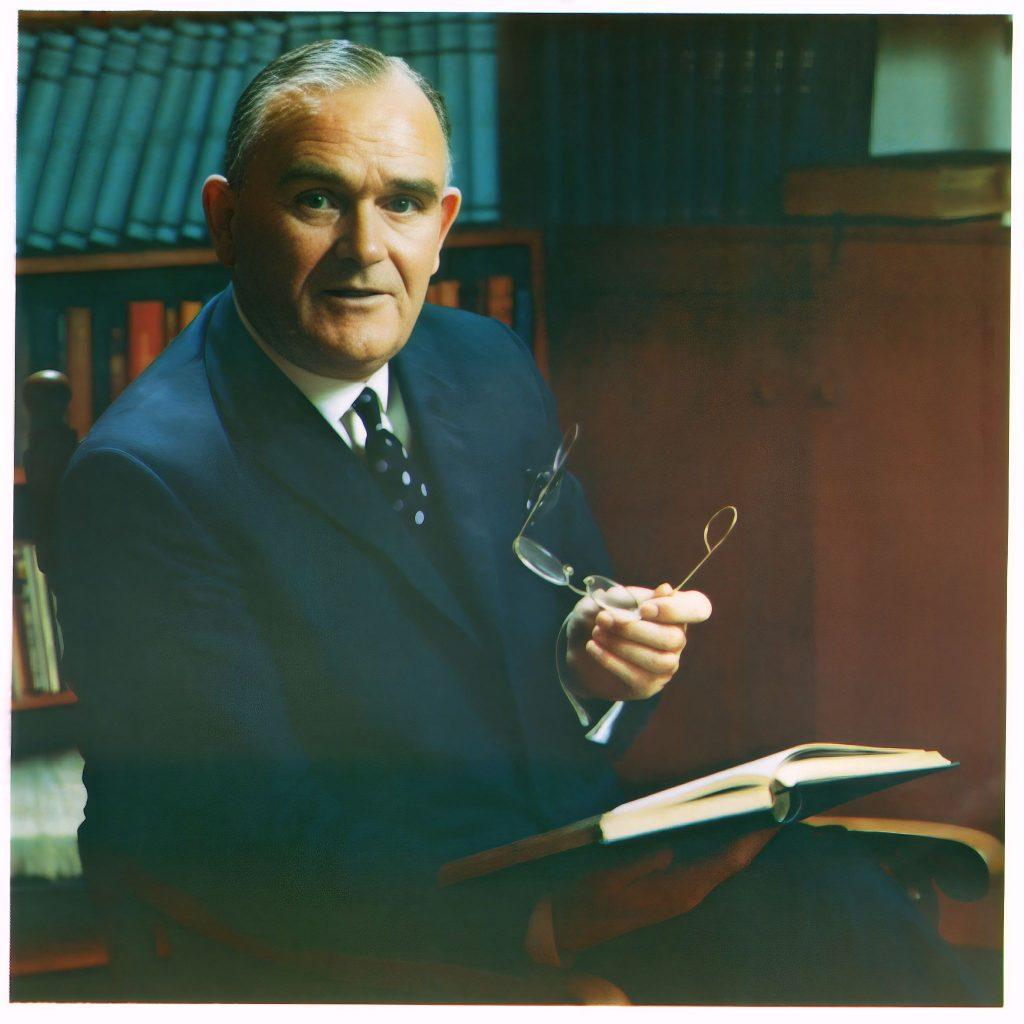
When he stepped down in 1979 the church he left bore little resemblance to the struggling fellowship of 1953. Membership exceeded a thousand, and attendance many times that. At his farewell service the congregation sang “When I Survey the Wondrous Cross” without instrument, as he had asked – a simple unaccompanied confession of the Christ who had carried him from the hedge to the pulpit. Illness shadowed his final year, yet his influence echoed from one end of Ulster to the other. Tapes were copied, texts circulated, phrases quoted until they became part of evangelical air. He died in 1980, still calling himself “a tramp after God.” More than four decades on his church—now pastored by men like Jonny Ormerod—retains the same accent of faithful exposition he set in place: Scripture first, Christ central, grace amazing.
Tramp After God eBook
EVERY TUESDAY evening hundreds flock to the Baptist church in Lurgan, Northern Ireland, to hear Willie Mullan. But it is not only in his homeland that Willie Mullan is well known. In Iraq, Arabs in the desert squat around a tape recorder to hear Willie Mullan. In New Zealand, 200 Maoris stand to show they were converted through the words of Willie Mullan. As the arctic seas crash around the Faeroe Islands, a group of rugged fishermen enthusiastically recall the visit of Willie Mullan. And so it goes on. But—
How has the son of a poverty-stricken Irish widow become so well known around the world?
How did this son, youngest of seventeen, who was a tramp, a drunkard and a gambler, become one of the greatest preachers today?
The answer is God—who still works miracles today. This is the story of Willie Mullan, a prodigal son.
Digitised by the Internet Archive and available to “borrow” from their virtual library and read in full.
Video of Willie Mullan’s Testimony
The Final Months
By 1979 Willie Mullan was a spent athlete of grace. The decades of travelling, study, and public burden had worn him down, yet friends noticed that the fire in his eyes burned cleaner for it. He was only in his sixties but looked older – his voice hoarser, his frame lean as a reed. He began to speak more often about heaven, not as a destination but as a presence that kept drawing near. In those final months he insisted that his people sing no anthem for him, only the old hymns that had carried him through the wars of sin and the battles of faith.
He continued to preach where strength allowed, leaning on the pulpit for support, eyes half‑closed from pain. On tape his voice sometimes breaks, but the conviction never does. “Even preachers,” he told one congregation, “need the Gospel; I’ve needed it this week more than any man in this place.” That confession summed up his theology: no one graduates from grace. When illness finally confined him to the manse he spent hours with his old recordings, scribbling new notes in the margins as if he were still preparing for Sunday. Visitors found him tired but jovial, joking that he was “nearly home and packing light.”
In his closing weeks he dictated a short poem of Christ’s incarnation and crucifixion – its final lines read:
He made the steel that pierced each hand, / He made the hill on which it stood; / and there in death He made a way / back to Himself eternally.
It was his creed in four lines: creation, redemption, consummation.
“Contrasts,” 8th November 1980 – The Last Word
On 8th November 1980, just weeks before his death, Willie Mullan appeared on a recorded conversation with his long‑time friend Dr Ian Paisley. The programme, titled Contrasts, caught him exactly as Ulster had known him—worn by years of labour yet wholly unbowed, eyes alive with humour and conviction. Sitting across from Paisley, he spoke easily of his boyhood in Newtownards, of his mother’s prayers that God would “make him a man of God,” and of the grace that found him after three and a half years on the road. When Paisley invited him to summarise his ministry, he answered without hesitation: “Preach the Gospel—and preach the Word. If you don’t get round to the cross, you’ve missed the job altogether.” He explained how he had spent twenty‑seven years “taking the chapter and expounding it phrase by phrase—just giving the sense,” and urged younger preachers to stay filled with the Spirit and faithful to the text. He described his own daily discipline—reading Scripture through each year on Robert Murray M’Cheyne’s plan and beginning every January with a new Bible—then smiled: “Reading opens the Word to you; studying opens the Bible to you.”
As the conversation drew to a close he reflected on the state of the church, grieving over its loss of prayer and truth, yet ending in expectation: “We’ve come to the hour where the Lord is looking for individuals—the Lord is coming; that must be the breaking of the day.” It was his final public testimony—a farewell spoken not in resignation but in triumph. Within two months his voice had fallen silent on earth, though the tapes of the Tuesday Bible Class were still spinning on every continent. The tramp after God had reached home, leaving behind a trail of Scripture‑marked Bibles and a heritage of preachers still trying to “get round to the cross.”
By late 1980 friends noticed anxiety shadowing his usual cheerfulness. Medical complications multiplied. Dr Ian Paisley, who knew him well, would later say he was “passing through deep physical, mental, and spiritual turmoil.” Mullan confided to two fellow ministers that “no one knows how sick I really am”. Yet he continued preaching. His last public sermon took place at Bloomfield Baptist Church on Sunday 14 December 1980.
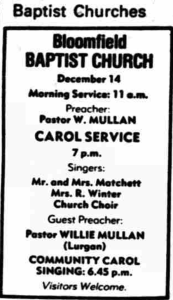
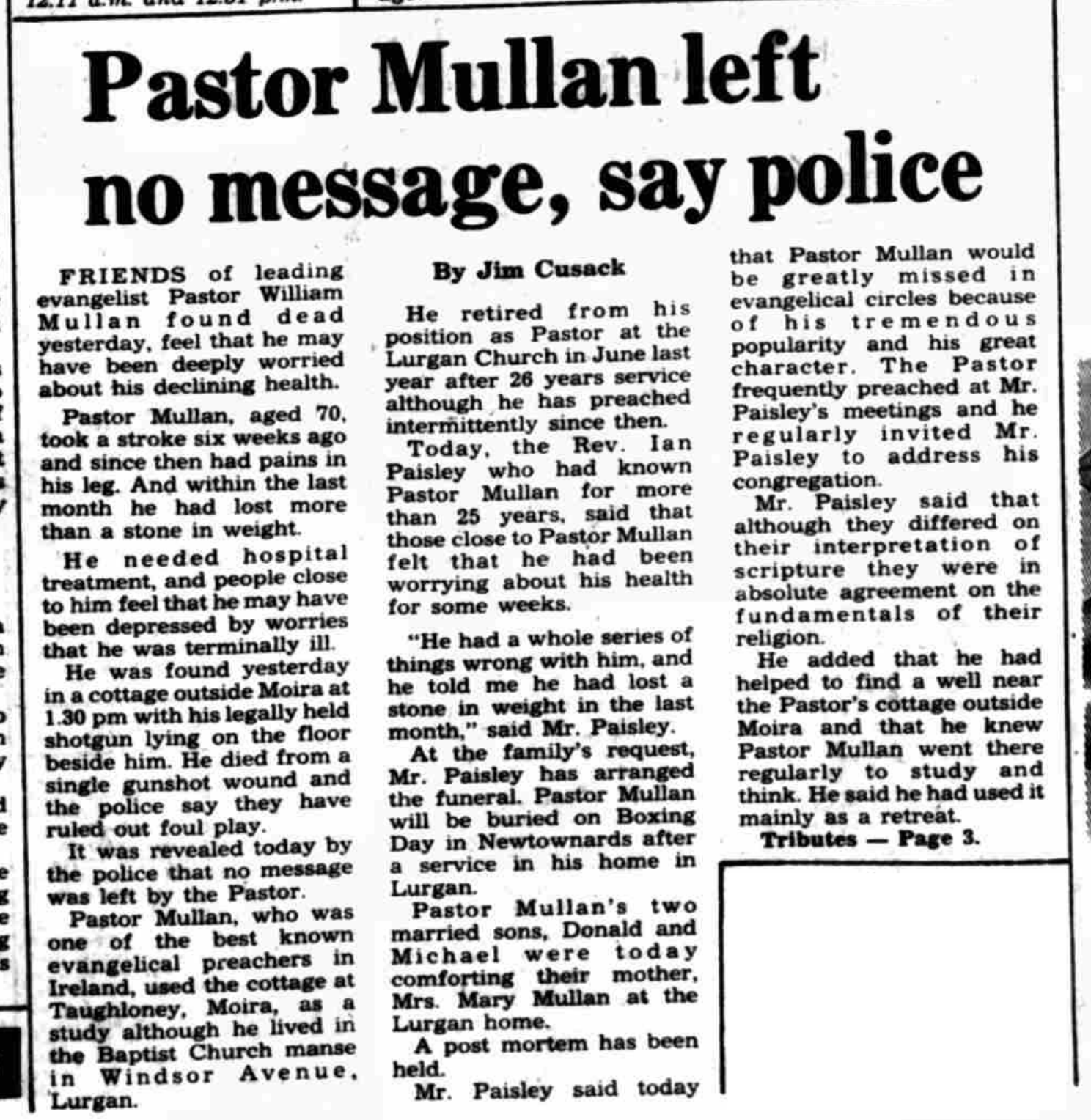
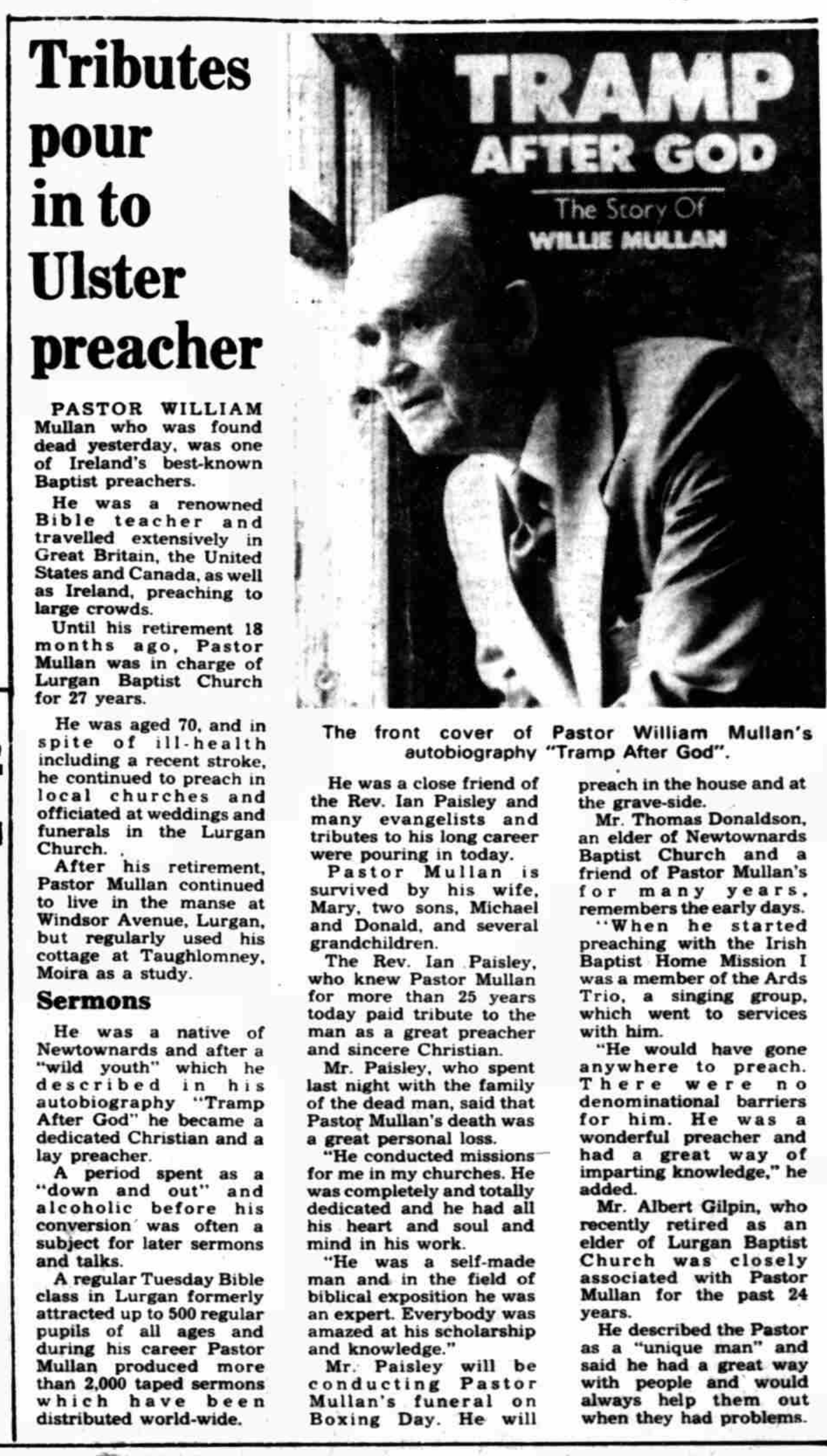
Eight days later, on Monday 22 December, he was found dead at his study cottage near Taughlumny, Moira. A legally owned shotgun lay beside him. Police confirmed that foul play was not suspected.

Boxing Day 1980 – The Funeral at the Manse and Church
Christmas week in Northern Ireland was bitterly cold and full of disbelief. On the morning of 26 December 1980 many hundreds gathered at the Lurgan Baptist Manse where the private service was conducted. The service, recorded and later distributed on cassette, reveals a gathering heavy with grief but framed by Scripture and hope.
The hymn chosen to open, “There’s a Land That Is Fairer than Day,” was sung softly through tears before Pastor James Irvine prayed: “Lord, we come before Thy throne this morning with saddened hearts… there are things in life that we cannot understand, but we bless Thee, Thou wilt reveal them all in the glory land.” Psalm 103 followed — “Like as a father pitieth his children, so the Lord pitieth them that fear Him.”
Then came a solo of “The Storm is Passing Over,” a favourite of Mullan’s, sung by Mr William Weatherall. In the main address Dr Ian Paisley, speaking as both friend and colleague, faced the mystery directly:
“An eminent, honoured, and much‑used servant of Christ has died in mysterious and alarming circumstances… Circumstances that have shaken us all, and cast a gloom over our province and over all parts of the world in which our beloved brother’s name and ministry were known… Yet as God’s people we meet these facts with the Bible in our hand.”
His sermon moved through raw honesty to consolation. He described Mullan’s worsening health, his fear of physical attack, and his constant habit of keeping a loaded shotgun beside the bed. Holding a small card found among the preacher’s notes, Paisley read the final outline Mullan had written on Psalm 69 — “The Man, the Mire, the Midnight.” “No one knows what that midnight was like for Willie Mullan,” he said, “but amidst the ruin of his intellect, his tender heart for the Lord remained unbroken.”
The message then turned to hope: the mercy, the mind, and the memory of God, “unfathomable and inexhaustible.” Paisley reminded the congregation that even the strongest servants of God—Abraham, Elijah, Samson—were “men subject to like passions as we are,” and that grace, not performance, would carry them home. When the final hymn, “When My Life’s Work Is Ended,” was sung, the assembly joined in as one. The closing benediction rang through the hall:
“Blessed are the dead which die in the Lord… They rest from their labours, and their works do follow them… There’s a shining star in the firmament of heaven today, a brother that’s gone in to see the King in His beauty, and the trumpets have sounded on the other side.”
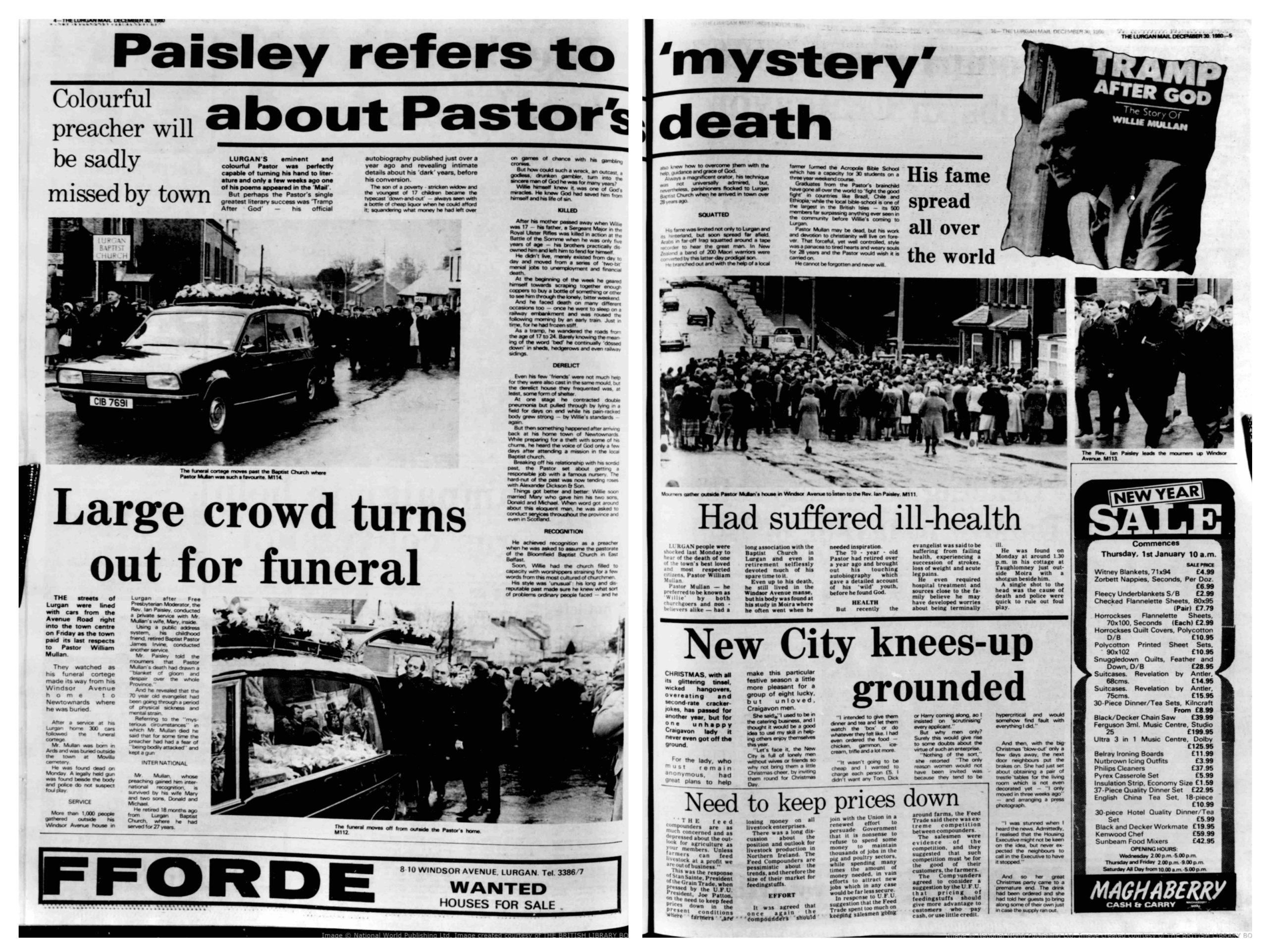
Outside, more than a thousand people filled Windsor Road, spilling into neighbouring streets. The News Letter reported that three hundred cars followed the cortège to Movilla Cemetery in Newtownards. There he was buried near the ground of his boyhood. As the coffin disappeared beneath winter soil, the wind carried fragments of that final chorus — “The storm is passing over.”
Memorial Service for Pastor William David Mullan, Ulster Hall, 11th January 1981, 3:00pm
The Ulster Hall had standing room only as three thousand souls gathered to honour the memory of Pastor Willie Mullan — evangelist, Bible teacher, and beloved servant of Christ. The service, woven together with hymn and prayer, was marked by a rare combination of grief and glory. Voices lifted in “My times are in Thy hand” and “When I survey the wondrous Cross” set the tone: sorrow was not to have the final word.
Dr. Ian R. K. Paisley’s address stood at the heart of the gathering — not a eulogy to a man, but an exaltation of the Saviour whom that man loved. Speaking with visible emotion, Paisley described Mullan as “a handler of the Sword”, a fearless preacher of Christ who never spared himself in service. He likened their friendship to that of David and Jonathan — forged in truth, sanctified by struggle, and parted only by death. Yet, he insisted, the separation was temporary: “I am distressed for thee, my brother Willie — but I thank God I can view this on resurrection ground.”
Paisley called the congregation to see beyond tragedy to triumph — to the grace that had reclaimed Mullan from the streets and made him a vessel of divine power. His closing declaration rang through the hall: “We magnify not the man, but the grace of God that was in the man.”
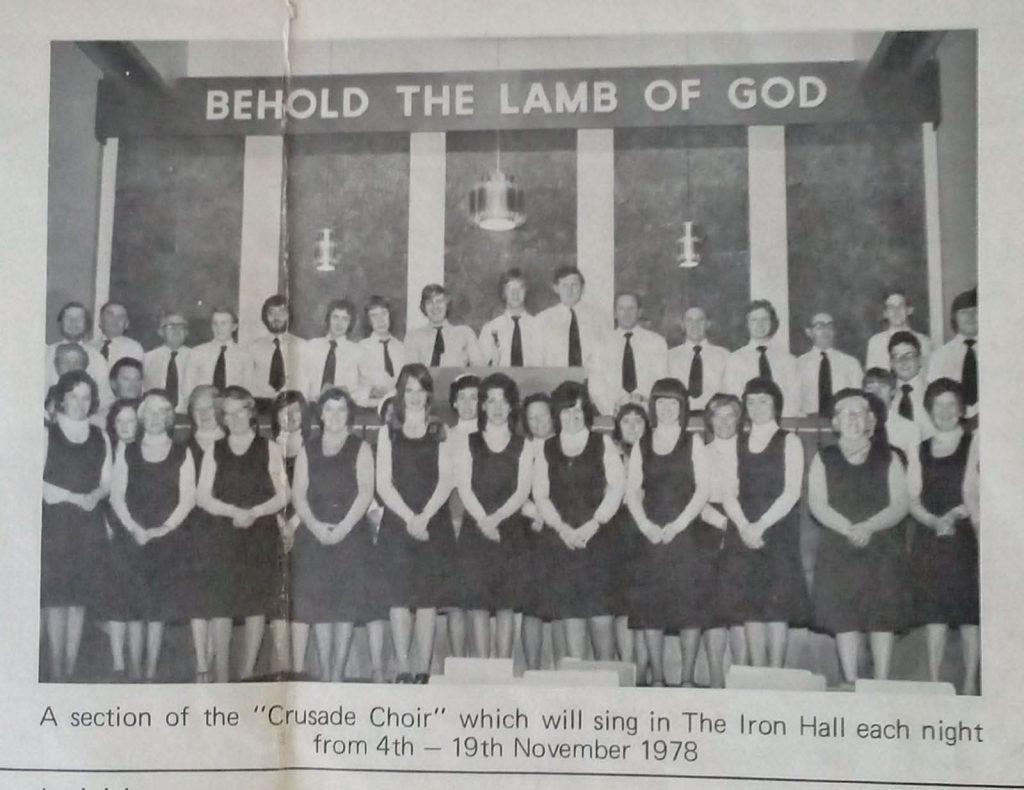
As the Iron Hall Choir sang and the organ played softly, tears mingled with worship. There was grief, yes — but greater still was the assurance of eternal life, captured in the final hymn:
“When by His grace I shall look on His face,
That will be glory, be glory for me.”
The service ended not in despair, but in the steadfast hope that the friend, preacher, and pastor was now “living more than ever he lived before.”
The Inquest
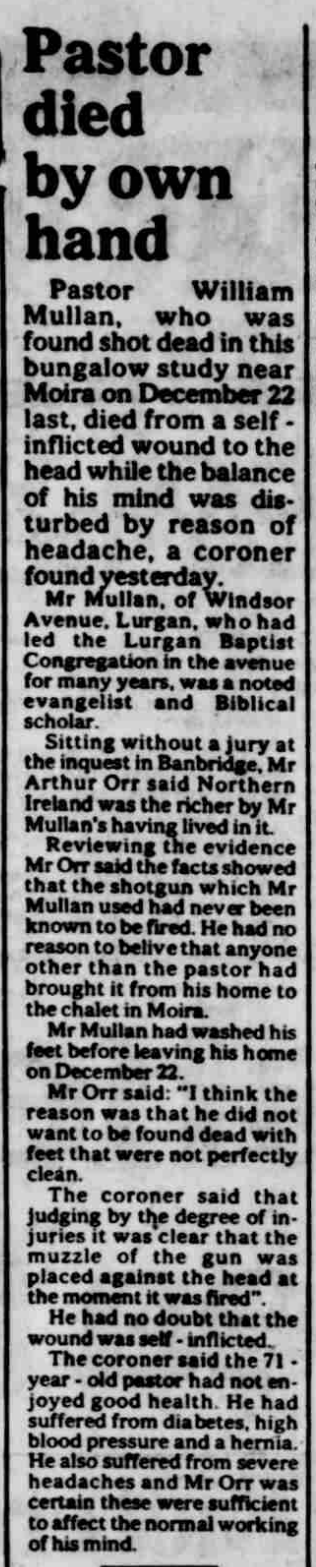
Seven months later, in July 1981, the official inquest concluded. The Belfast News Letter headline read “Pastor died by own hand.” The coroner, Arthur Orr, stated that Mullan had died from a self‑inflicted gunshot wound while “the balance of his mind was disturbed by reason of headache.” Chronic illness, diabetes, high blood pressure, and unrelenting pain had eroded his reason. The court recognised the disturbance as temporary and rooted in disease, not despair of faith. Those present at the hearing described the finding as both inevitable and merciful.
The Spirit That Remains
More than forty years later the analogue recordings still circulate – the creak of the church doors, the hiss of reel‑to‑reel tape, and that unmistakable voice bending between compassion and command. When he cries out, “Trust Him now!” the decades evaporate and the crowd seems to answer again. His accent, his phrasing, his relentless insistence on grace – all remain. The man is gone, but the note still vibrates. That is the spirit that remains: the tramp after God still walking, Bible in hand, calling the weary home.
Willie Mullan’s sermons span nearly every theological domain through the prism of a fiery, evangelical conviction forged by his own life on the streets and redemption through faith.
| Thematic Axis | Spiritual Focus | Tone & Style |
|---|---|---|
| Human Depravity | Need for Regeneration | Urgent, confessional |
| Holy Spirit | Empowerment & Holiness | Reverent, corrective |
| Demonology | Moral Vigilance | Fiery, warning |
| Prophecy | Hope amid Crisis | Apocalyptic yet hopeful |
| Prayer & Revival | Intimate Conviction | Encouraging, heartfelt |
| Doctrine | Scriptural Authority | Didactic, uncompromising |

SermonIndex

PromiseBox

SermonAudio
Legacy and Assessment
To understand the significance of that day one must imagine the hold Mullan had on Ulster Protestantism. For nearly three decades his Bible Class had been spiritual theatre and theological schooling rolled into one: a forum where miners, mill‑hands, doctors and farmers sat side by side under the spell of a rough‑voiced man who spoke as if eternity had slipped through his fingers. The shock of his death reverberated across denominations. Even those outside the evangelical orbit recognised in him a kind of honest authenticity seldom seen in religious life.
His published autobiography Tramp After God, first issued by Christian Literature Crusade, remains one of the most striking works of working‑class conversion narrative in twentieth‑century Britain. Hundreds of sermon tapes survive, many in private collections or now digitised. Lurgan Baptist Church continues to regard his ministry as the defining era in its history.
To dismiss his death as tragedy alone would be to misunderstand the scope of his life. What shines through every account—from Dr Paisley’s funeral sermon to the quiet tributes printed in the Belfast Telegraph—is the conviction that the grace Mullan preached was large enough to embrace even the manner of his leaving. The recurring words of the service, “Like as a father pitieth his children,” seemed chosen as epitaph.
He had begun as a barefoot boy watching soldiers march toward death; he ended as a preacher whose congregation spanned nations. Between those poles ran one unbroken line of divine mercy. If the final scene was dark, the larger story glowed with light. As Dr Paisley concluded at the Manse: “He being dead yet speaketh, and he speaketh today to all our hearts.”
Sources
- William Mullan, Tramp After God (Christian Literature Crusade, 1978).
- Funeral service transcription, Lurgan Baptist Manse, 26 December 1980.
- Belfast Telegraph, 23 December 1980 – “Tributes pour in to Ulster preacher.”
- Belfast Telegraph, 24 December 1980 – death notices.
- News Letter, 27 December 1980 – “Paisley speaks at pastor’s funeral.”
- Lurgan Mail – 30th December 1980 – “Paisley refers to mystery over pastor’s death” – p.4,5
- News Letter, 9 July 1981 – “Pastor died by own hand.”
- Archives and oral records from Lurgan Baptist Church and the Mullan family.
Epilogue — The Continuing Voice
To many in Ulster today his name is less a memory than a sound – the crackled voice on old tapes that still rings from kitchen radios and car speakers on Sunday mornings. Pastors quote him instinctively; phrases he coined have become part of local Gospel speech. You can trace his influence in the plainness of modern Free‑Church preaching, in the expectation that a sermon must reach both the mind and the farm gate, in the insistence that doctrine must stand on its own legs. The Lurgan Bible Class model—Scripture read out loud, explained line by line, and applied to ordinary people—has become the template for countless study groups across Northern Ireland and far beyond.
Among younger preachers his recorded sermons are still a school. They listen for his timing, his clarity, his fearless gentleness when he turns from wrath to mercy half‑way through a sentence. They discover what he knew all his life – that authority in preaching does not come from letters after a name but from wounds before grace.
Half a century after his last Bible Class, Reformed churches still echo his priorities: Scripture first, Christ central, grace free. Wherever students of the Word gather with their Bibles open on ordinary tables, Willie Mullan is there in spirit – the tramp after God still walking ahead, calling back to those who follow, “Trust Him now.”
A Quiet Gift
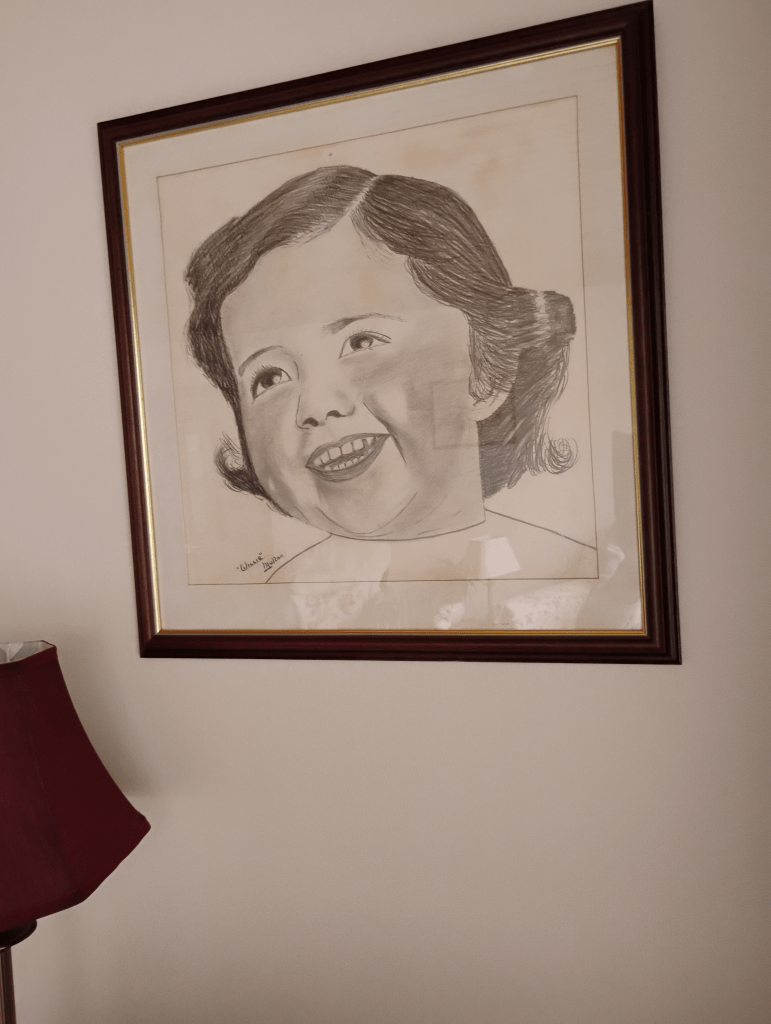
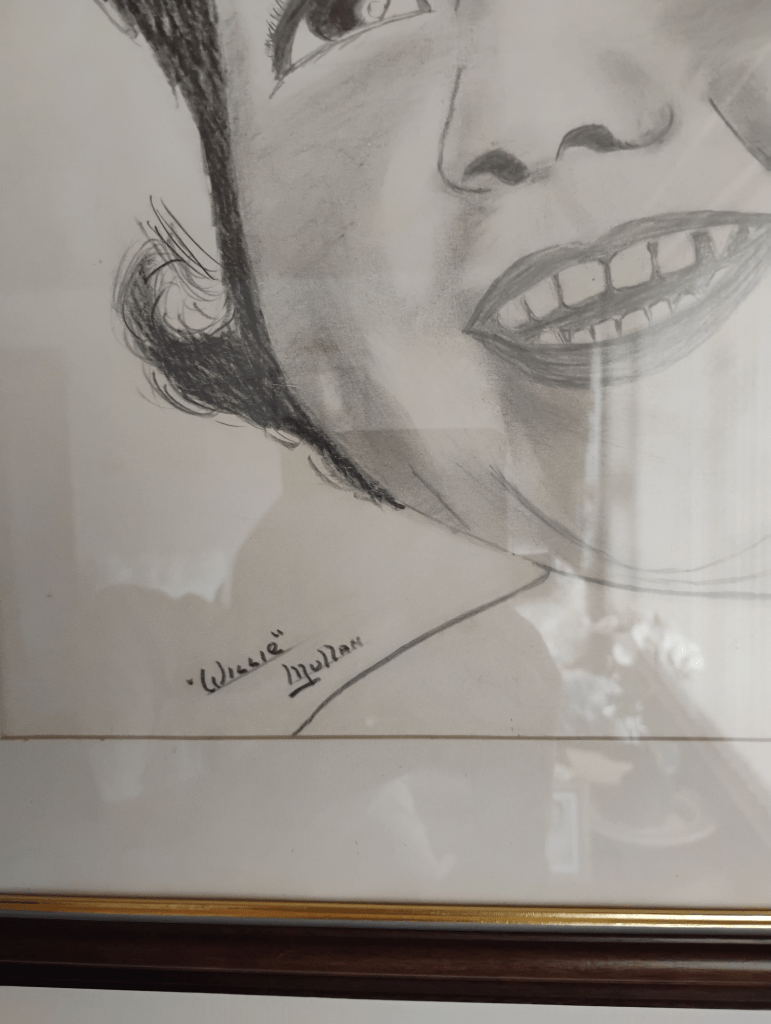
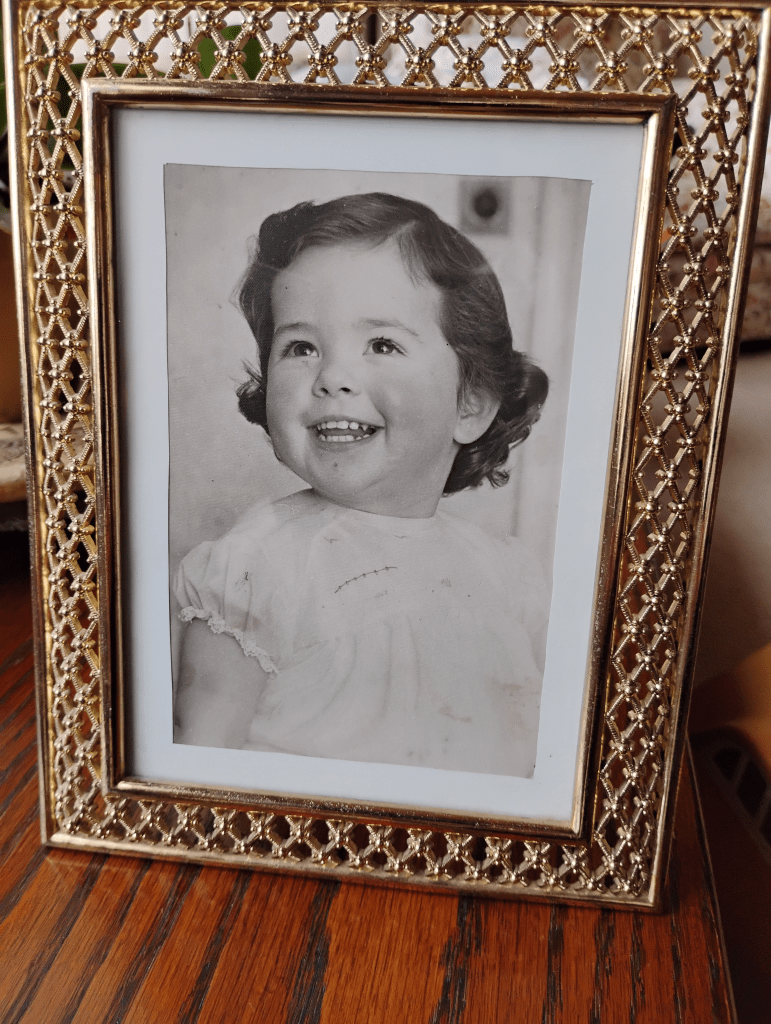
Away from the pulpit Willie Mullan found rest in a different kind of ministry—one of charcoal and paper. When the strain of preaching or visitation left him weary, he would sit by the fire and sketch; country scenes at first, later portraits taken from photographs in the Lurgan Mail’s “Bonnie Baby of the Month” column. His renderings were tender and unsentimental, drawn with the same patience he brought to Scripture, every shade an act of observation. One surviving work—his charcoal study of a smiling child from the 1970s—still hangs framed in a Lurgan home, signed simply “Willie Mullan.” It reminds viewers that the preacher whose voice once shook packed churches also had an eye gentle enough to trace grace in a child’s face; the same grace he had spent a lifetime proclaiming in words.