
Why Holiness Still Matters Before We Approach the Lord’s Table
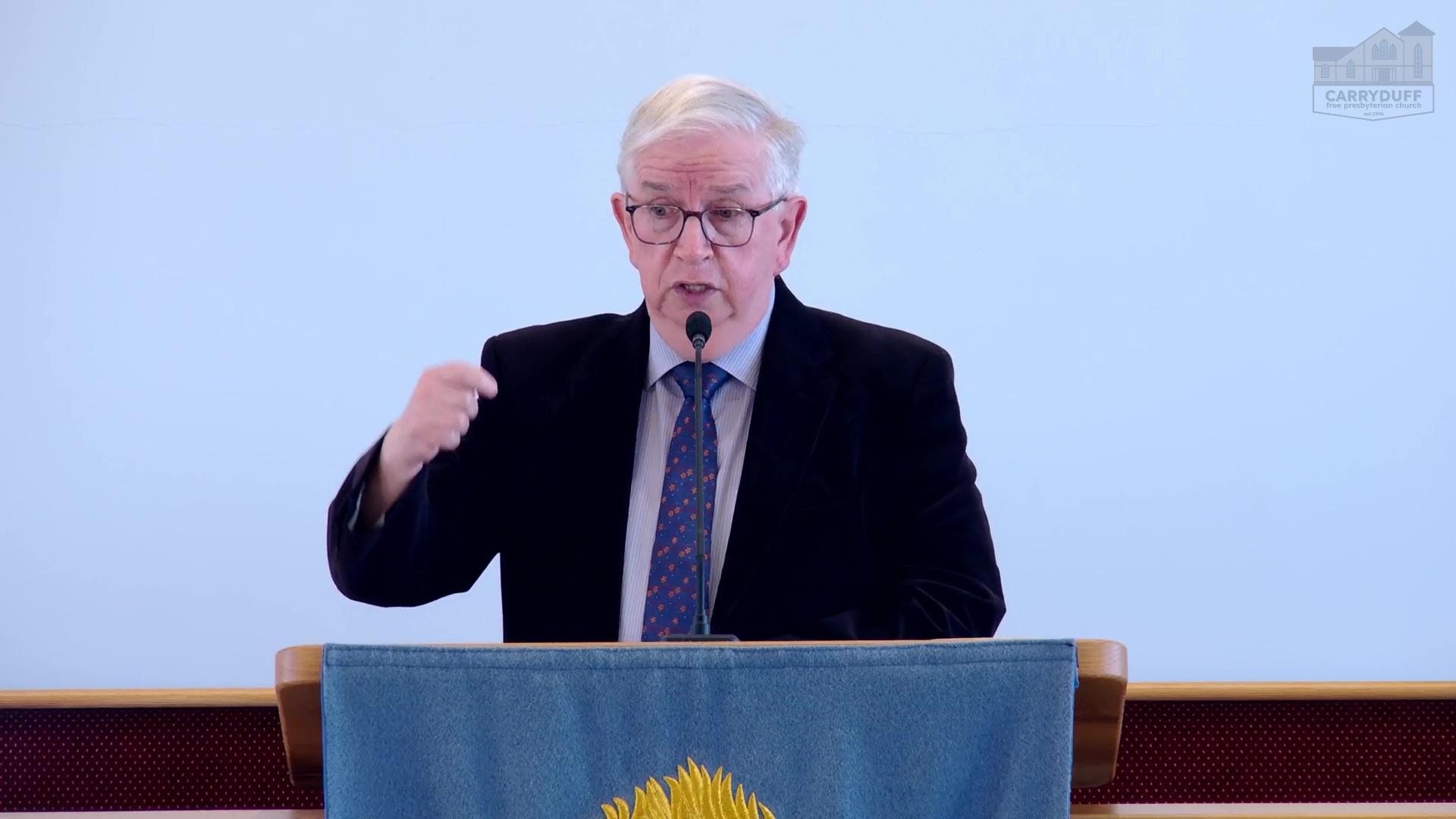
At the Stand Fast in the Faith Conference in Carryduff, Rev. Ian Harris took up the subject of sanctification—that vital outworking of the work of grace by the Holy Spirit in the lives of the redeemed. His teaching struck a lingering chord, because holiness, for all its prominence in Scripture, has become the most neglected grace in the modern church. While we are saved by grace alone, through faith alone, in Christ alone, it is an immutable truth that the faith which justifies also begins the process of transformation; the same Spirit who regenerates the soul will inevitably set about the work of sanctifying it.
The tragedy may be summed up in one haunting image familiar across congregations: the unholy exodus before Holy Communion.
The Scene We Too Readily Accept
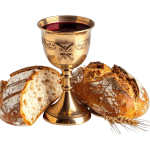
Every pastor has witnessed it. The elements of bread and wine are set upon the Communion table; the minister solemnly states that only those “who are saved by the cleansing work of the blood of Christ and walking worthy of His calling in Him” are to partake, and suddenly a not‑so‑subtle migration begins. Rows empty quietly; the door swings; heads bow as if in reverence—but the crowd outside are not praying. They are leaving.
We tell ourselves it is humility—“I don’t feel worthy.” Yet Scripture calls all believers to self‑examination, not self‑exile. The Apostle Paul did not say, “Let the man stay away if he be unworthy.” He said, “Let a man examine himself, and so let him eat” (1 Cor. 11:28). A conscience that flees instead of confesses has misunderstood grace.
Rev. Harris reminded us that the Lord’s design in redemption is not merely to deliver from the penalty of sin, but from its power and pollution. Sanctification is the life‑long consequence of justification. The same Spirit who regenerates also purifies. Therefore, to absent oneself continually from the Table is not a mark of humility but of sickness—a symptom of a life unwilling to be sanctified.
The Confusion of Grace Without Godliness
Why do so many professing Christians shrink from the presence of the Lord? Because holiness has been separated from happiness. Grace is preached today as permission rather than transformation. “We are under grace, not under law,” has been twisted into “We are under grace; therefore, law is irrelevant.”
This distortion, as Harris warned, is precisely what the Reformers rejected. The Westminster Confession defines sanctification as “the work of God’s free grace, whereby we are renewed in the whole man after the image of God, and enabled more and more to die unto sin, and to live unto righteousness.” In other words, the gospel does not merely hand us a pardon; it gives us a new nature.
The modern desire for a painless Christianity gives rise to the unholy exodus. People who never miss a “praise service” hesitate to attend communion because it confronts them with the demand of holiness. It reminds them that the Christ who saves also sanctifies, and the grace that justifies also disciplines.
The Forgotten Pursuit of a Holy Church
Rev. Harris turned with gravity to Ephesians 5:25–27: “Christ also loved the church, and gave himself for it; that he might sanctify and cleanse it.”
The goal of the cross was not only redemption but purification. The church Christ presents to Himself will be “without spot or wrinkle.”
The preacher’s words must have stung: “No bride will ever be as glorious as the Bride of Christ.” That means that our indifference to holiness is not a light matter—it is an insult to the Groom.
The early Puritans once spoke of “the beauty of holiness.” Today holiness is regarded as unattractive, a thing of severity and gloom. Yet the absence of holiness gives rise to ugliness—the moral blur between church and world, the entertainment‑driven services, the “Christian” living that mirrors everything but Christ.
When holiness fades, worship becomes performance, and Communion becomes custom. What begins as a quiet drifting to the lobby on a sacramental Sunday ends as a theological departure from grace altogether.
Sanctification: God’s Ongoing Miracle
Harris reminded the congregation that sanctification is both positional and progressive. By faith in Christ, the sinner is set apart once and for all—positionally sanctified. But through daily repentance, mortification of sin, and obedience to Scripture, the believer is progressively made holy.
The process, he admitted, is often painful. “He’s still working on me,” he said, quoting an old gospel chorus to illustrate divine patience. The workmanship of God is not yet finished, but neither is it idle. The Master Carpenter never leaves His project half‑done.
Hence, when we withdraw from the Lord’s Table out of faintheartedness or spiritual lethargy, we interrupt that process. Sanctification thrives on fellowship with Christ, not avoidance of Him. The Table is not the reward for the flawless; it is the feast for those who desire to be clean.
Repentance, Not Retreat
The unholy exodus betrays a greater danger than guilt—it signals satisfaction with imperfection.
Better to come trembling than not come at all. The biblical remedy for unworthiness is repentance, not retreat. As Harris expounded from 1 Thessalonians 5:23–24, sanctification is God’s act: “The very God of peace sanctify you wholly.” It is He who makes us blameless, not we ourselves. The only unpardonable posture is to refuse His cleansing.
To remain outside while the Table is spread is to mirror Adam hiding among the trees. Grace calls us out of the shadows: “Where art thou?” The answer that brings healing is confession.
A Call Back to the Table
The conference’s message lingers far beyond that afternoon in Carryduff. “He’s still working on us,” Harris told the people, “and He hasn’t left off His Church.”
The Lord will not rest until His Bride is radiant. Sanctification is proof that God never gives up on His own. He who began the good work will finish it.
The Church, then, must stop excusing sin as weakness and start seeing holiness as privilege. Every Communion Sabbath should not trigger a quiet retreat but a holy renewal—a rediscovery of the joy Christ prayed for in John 17:13: “That they might have my joy fulfilled in themselves.” The joy of a cleansed conscience, a restored fellowship, a heart made new.
The unholy exodus must end, and the holy approach must begin.
“Sanctify them through thy truth: thy word is truth.” — John 17:17
May the Lord cause His people to walk to the Table again—slowly, thoughtfully, gratefully—rebuking casual religion and rediscovering the beauty of holiness that adorns the Gospel of Christ.