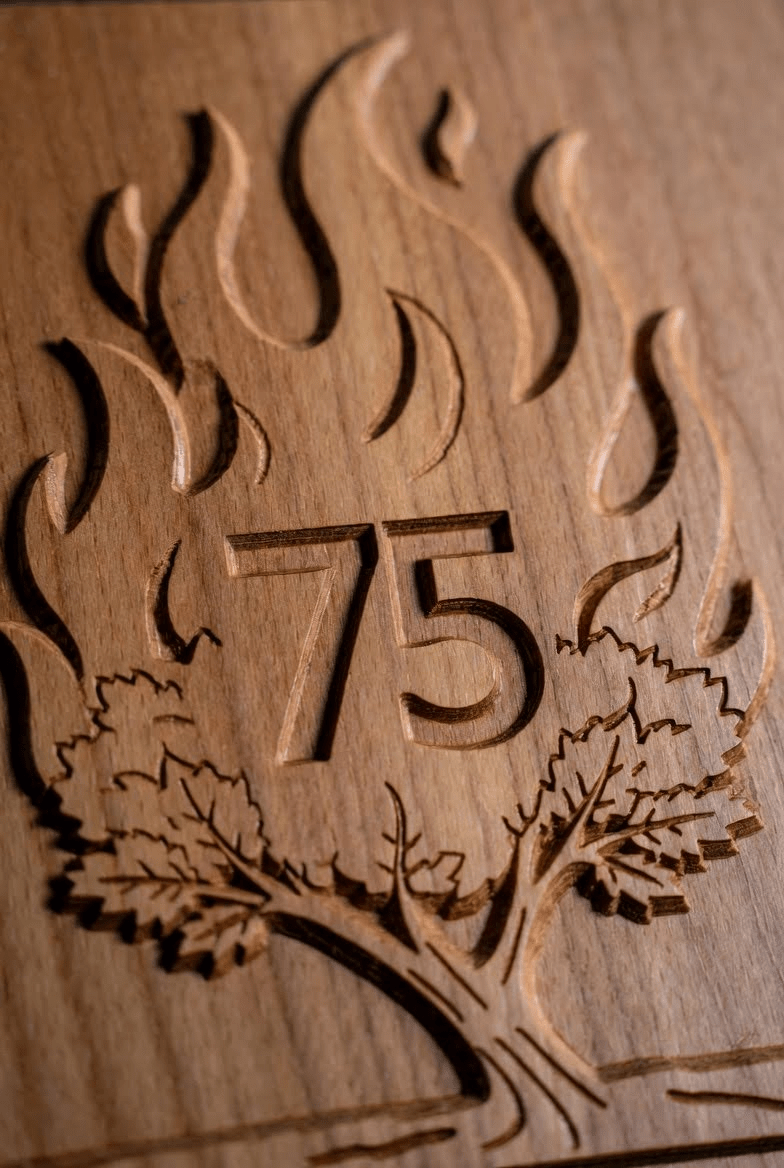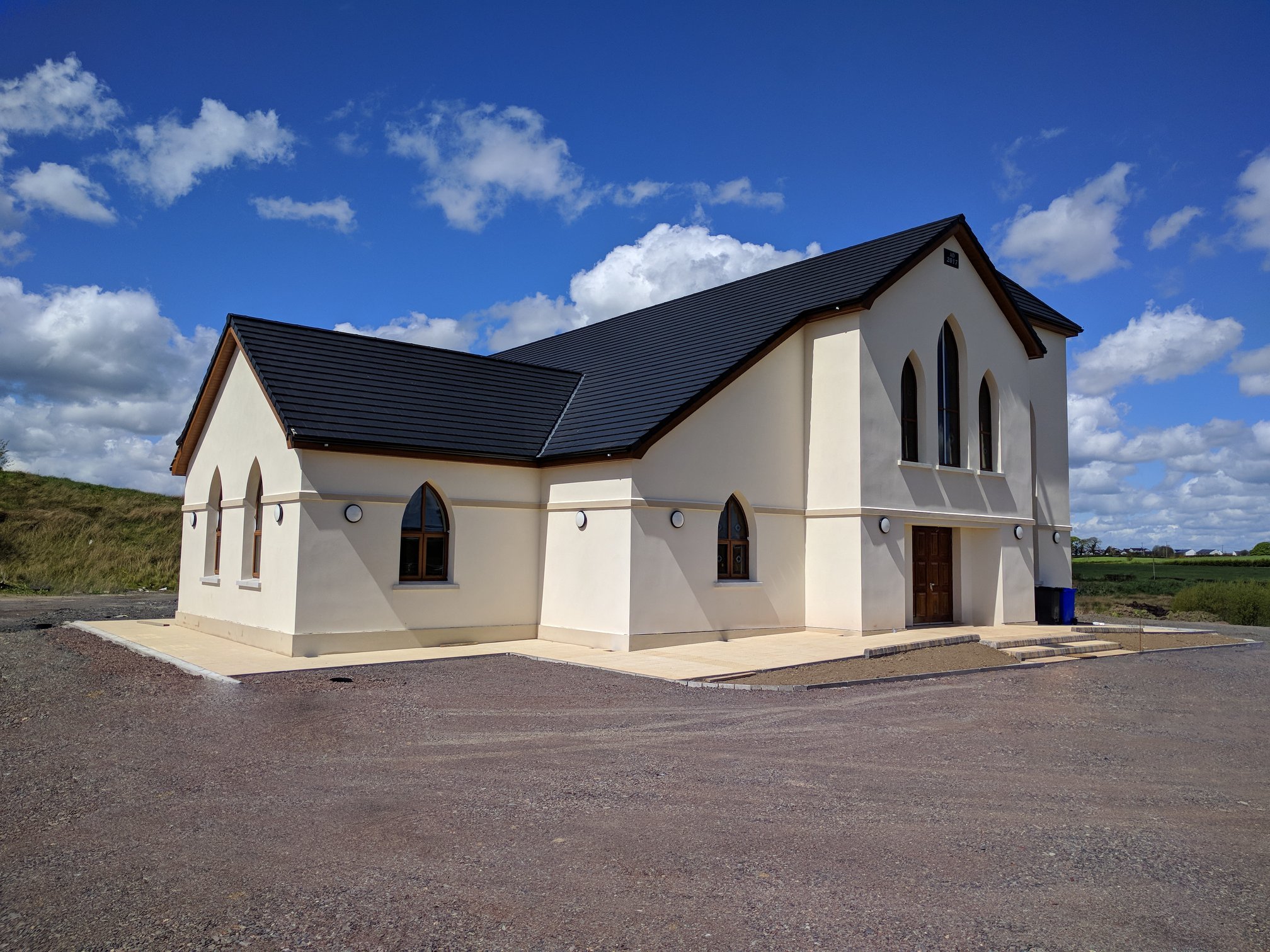

As we stand in the doorway of 2026, we mark seventy‑five years since the founding of the Free Presbyterian Church of Ulster in 1951. Three‑quarters of a century have elapsed since a small assembly of believers in Crossgar defied the ecumenical tide, affirmed the absolute authority of Scripture, and dedicated themselves to proclaiming the Gospel in purity and power.
Much has changed since those early days. The West that once revered Scripture now scorns it; doctrine has been replaced by dialogue; the holy has been trivialised for the sake of relevance. The same corrupt forces that confronted the Free Presbyterian pioneers—modernism in theology, moral decline in culture, and compromise in the Church—are more aggressive today than ever before.
Yet the voice of faithfulness still speaks clearly from Ulster’s hills and through every Free Presbyterian pulpit worldwide:
“Thus saith the Lord.”
This seventy‑fifth anniversary is therefore not sentimental reflection but a solemn reaffirmation of duty. The same spiritual principles that sparked the formation of the Free Presbyterian Church must again be sounded as a trumpet call in our age. What follows is a restatement of the distinctives that have defined the Free Presbyterian witness for seventy‑five years and remain its charter for the decades to come.
1. The Final Authority of the Word of God
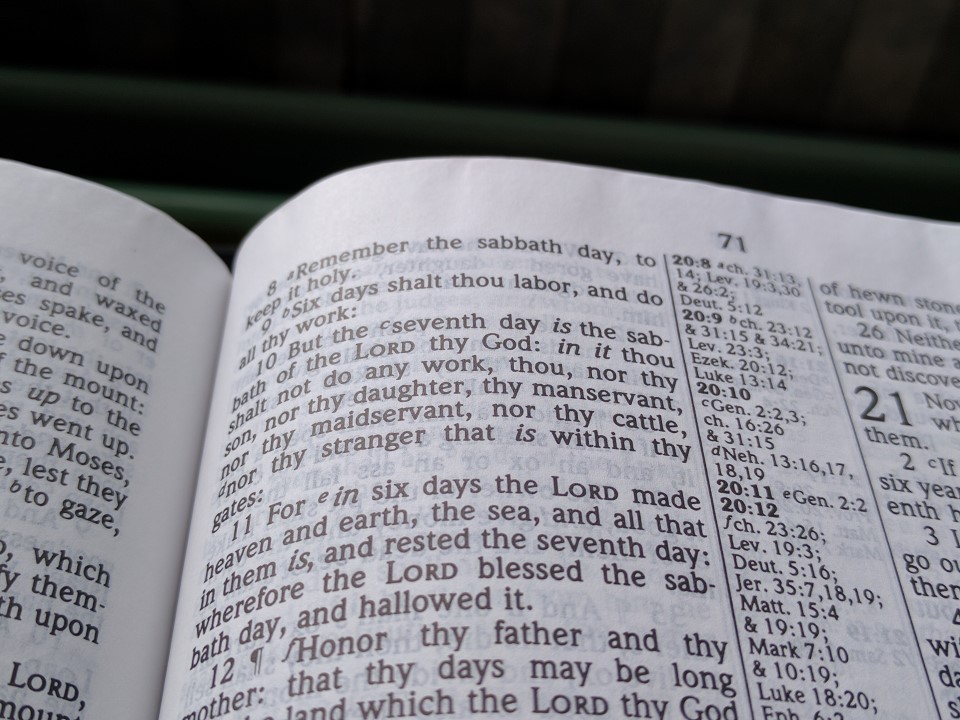
The foundation of every Free Presbyterian conviction is the complete inspiration, inerrancy, and final authority of Holy Scripture. Without a flawless Bible, there can be no sure truth, no certain Gospel, and no enduring standard of right and wrong. The Church therefore affirms that “All Scripture is given by inspiration of God” (2 Timothy 3:16) and that the Lord has preserved that Word through every generation as He promised: “My words shall not pass away” (Matthew 24:35).
The Texts Behind the Bible
The Free Presbyterian Church recognises that God’s Word was originally written in Hebrew, Aramaic, and Greek, and that what we possess today in the Masoretic Text and Textus Receptus represents the providentially preserved form of those inspired writings. The Hebrew Masoretic tradition was maintained by devout scribes who reverently copied the Scriptures with mathematical precision, ensuring uniformity and purity. For the New Testament, the Textus Receptus—compiled from the Majority Text, formed by more than 3,500 Greek manuscripts that remarkably agree with one another—stands as the truest representation of the apostolic writings.
Those manuscripts embody the faith of generations of Christians who read, preached, and died for the same words of Scripture we hold today. Unlike the speculative Critical Text constructed from a few erratic fourth‑century codices (Vaticanus, Sinaiticus), the Majority Text bears witness to the preservation through usage that Christ promised to His Church.
The King James Version
The English translation founded on these Hebrew and Greek texts—the Authorised Version of 1611—remains unmatched for accuracy, reverence, and doctrinal clarity. Its translators compared every available manuscript, engaged the most rigorous scholarship of their age, and produced a rendering both precise and majestic. It is not inspired anew in English, but it is the most faithful translation of the inspired Word.
The Authorised Version grew out of the Reformation spirit: a conviction that God’s people must have the Bible in their own language and that meaning should never be sacrificed for modern style. The Free Presbyterian Church thus regards the King James Bible as the standard English text for faith and practice, the touchstone for preaching and for every doctrinal formulation.
Its reliability stands proven: whenever English‑speaking nations treasured it, moral order and missionary zeal flourished; wherever it was set aside, spiritual confusion followed. The words of Spurgeon remain apt: “If this book be not infallible—where shall we find infallibility?”
Playlist of 4 video presentations covering:
- The Doctrine of Presevation
- The Preservation of the Old & New Testament Texts
- Why We Reject Modern Textual Criticism
- Comparing Modern Versions and the Authorised King James Version
- Textual Criticism Explained in 4 MINUTES! How Do We Establish The Right Text of Scripture?
2. Biblical Separation: The Principle of Obedience
The second great distinctive is Biblical separation—the duty of Christians to remain distinct from apostasy and from the defilements of the world. This was the birth cry of the Free Presbyterian movement. Its founders saw that ecumenism demanded unity without truth and that many denominations were joining hands with Rome and the modernists in the name of “love.” They recognised that such union was spiritual betrayal.
“Be ye not unequally yoked together with unbelievers… Wherefore come out from among them, and be ye separate, saith the Lord.” — 2 Corinthians 6:14‑17
Separation in Doctrine and Fellowship
Biblical separation involves rejecting all forms of religious compromise whereby error is treated as equal with truth. The Gospel tolerates no rival mediators, no rival authorities, and no rival saviours. It was for this conviction that early Free Presbyterians were vilified and ostracised. Theirs was a costly loyalty, but conscience demanded it.
Separation, however, is never arrogance. It is not the claim of superior holiness but the desire for purity. The separated believer is not a self‑exalting critic but a servant who fears God more than men. It is the difference between the narrow way and the broad road, between faithfulness and conformity.
Separation in Conduct
Personal separation flows naturally from doctrinal separation. Christians are called not only to be doctrinally correct but experientially holy. The Church’s forefathers reflected the Puritan understanding that outward life must mirror inward grace. The modern church often imitates the culture it should confront, but the separated believer stands as light in darkness. The world may mock such devotion, yet the Scripture is unequivocal: “Come out from among them.”
Separation remains the price of revival; compromise remains the prelude to ruin. Where the Church has courted popularity, she has lost power; where she has drawn clear lines, God has blessed.
3. Personal Holiness and Total Abstinence
The third distinctive expands separation into everyday living: personal holiness. The Free Presbyterian Church insists that the new birth must produce a new life. Regeneration is not a notion but transformation. Scripture teaches, “If any man be in Christ, he is a new creature.” The Church’s historic testimony to practical godliness safeguards that truth against modern moral laxity.
Total Abstinence
The Church’s stand for total abstinence from alcohol encapsulates this ethos. In a society ravaged by addiction, violence, and moral decay, believers must display a better way. The Bible repeatedly warns of the dangers of strong drink:
“Wine is a mocker, strong drink is raging.” — Proverbs 20:1
“Look not thou upon the wine when it is red… at the last it biteth like a serpent.” — Proverbs 23:31‑32
To abstain completely is not Pharisaic legalism but gracious witness. It is a free and joyful dedication that keeps mind and body clear for service. Early Free Presbyterians, often mocked for their “strictness,” understood they were preserving their testimony before a watching world. One cannot preach deliverance to drunkards while imitating their behaviour.
Purity Beyond Drink
That same principle extends to other realms: speech free from vulgarity; entertainment free from corruption; relationships governed by chastity; finances marked by integrity. Holiness is the daily practice of applying biblical truth to every moral choice. The separated life is a radiant, not a rigid, life—it offers what the world cannot: peace of conscience and power with God.
4. Reverent Worship and Scriptural Order
Fourthly, the Free Presbyterian Church defends reverent worship governed by Scripture. Worship is not a performance for spectators but a holy dialogue between redeemed sinners and their sovereign God. In the modern era, worship has been trivialised: rock bands replace choirs, pulpits are exchanged for stages, and entertainment masquerades as evangelism. Against this trend the Free Presbyterian pulpit continues to proclaim:
“God is greatly to be feared in the assembly of the saints, and to be had in reverence of all them that are about Him.” — Psalm 89:7
The Simplicity of Biblical Worship
Congregational singing, earnest prayer, and expository preaching form the heart of the Free Presbyterian service. The aim is not to manipulate the emotions but to move the will through truth. Hymns, not choruses, dominate; the Psalms still sound forth. Reverence begins with recognition that “Where two or three are gathered together in My name, there am I in the midst of them.”
The Head Covering
An enduring mark of this order is the head covering worn by women in worship, in obedience to 1 Corinthians 11. This act testifies to the divine hierarchy established by God—Christ the Head of man, man the head of woman, God the Head of Christ. Paul writes, “For this cause ought the woman to have power on her head because of the angels.” The meaning is not cultural but theological, a visible witness to submission and respect in the presence of heavenly spectators. Though the world mocks such obedience as antiquated, it is the kind of obedience God still honours.
Preaching Centrality
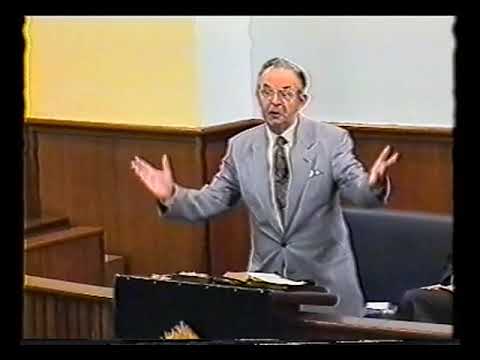
Likewise, the pulpit occupies its proper place—central, elevated, and authoritative—not to glorify men but to magnify the Word. The sermon is not a talk but a declaration. True preaching is fire in the bones, not entertainment for itching ears. As Dr Paisley often said, “When preaching dies, religion dies with it.”
5. Reformed Doctrine: Salvation by Grace Alone
Another unshakable pillar of the Free Presbyterian movement is its Reformed and Evangelical theology—a Gospel both sovereignly divine and evangelistically urgent. The Church adheres to the Reformation watchwords: Sola Scriptura, Sola Gratia, Sola Fide, Solus Christus, Soli Deo Gloria.
The Sovereignty of God
Free Presbyterians proclaim salvation as the work of a sovereign God who elects by grace, redeems through the blood of His Son, and regenerates by the Spirit. This is not fatalism but faith in divine mercy. The human heart is by nature dead in sin; only sovereign grace can raise it. “No man can come unto Me, except the Father which hath sent Me draw him.” (John 6:44)
Evangelistic Zeal
That understanding does not diminish the Church’s missionary zeal—it fuels it. Knowing that God has purposed to save His elect through the preached word, the Church sends forth missionaries worldwide. Faithful proclamation, not manipulated sentiment, remains the Church’s method. The Gospel invitation is universal, yet always honours Christ’s glory: man contributes nothing; grace provides everything.
The Cross at the Centre
Christ’s substitutionary atonement stands at the heart of every message. “We preach Christ crucified” (1 Corinthians 1:23) is not a motto but a mandate. No social gospel, political agenda, or psychological therapy can replace the simple message that sinners are justified freely through faith in the Redeemer who died and rose again.
6. A Witness in a Backslidden Age
The Free Presbyterian Church has always been more than a local fellowship; it is a public witness for truth in a world of deception. From the 1950s protests against apostasy to global missionary labour, its leaders have refused silence where God commands speech.
Standing Against Apostasy
The imprisonment of Dr Paisley and his colleagues in 1966 symbolised this witness. Accused of “unlawful assembly,” they were in truth guilty only of fidelity to conscience. Their incarceration triggered revival; rallies across Ulster crowded with thousands longing for spiritual authenticity. Opposition meant growth, for persecution clarifies conviction.
Worldwide Expansion
Decade by decade, that spirit spread across oceans—to Canada, the United States, Kenya, Uganda, Nepal, Spain, Australia, and Tasmania. Everywhere, congregations gathered under the same confession: the absolute authority of Scripture and the necessity of a pure Gospel. From humble halls to mission stations in remote villages, the same voice has sounded—“Thus saith the Lord.”
Speaking Truth to Culture
Even now the Free Presbyterian Church speaks prophetically to this generation. It denounces the public sins of the nation, from abortion to moral relativism, yet always lifts high the cross as the only hope of forgiveness. It calls nations, not merely individuals, to repentance. Its mission is not to chase social trends but to testify that righteousness alone exalts a people.
7. The Spirit of Prayer
Every revival known to the Church has begun with prayer, and the Free Presbyterian story is no exception. The founders prayed through nights until the Spirit fell. Early services were punctuated by fervent intercession, not ritual repetition. They learned what Jonathan Edwards and Whitefield knew: that only prayer opens heaven.
Prayer as the Engine of Power
Prayer is not an accessory to ministry but its engine. The yearly Ministerial Week of Prayer remains a vital gathering where leaders seek fresh anointing. Congregations continue to hold seasons of united intercession, proving that those who wrestle with God in secret will prevail with men in public.
The Fruits of Prayer
From such supplication have sprung conversions, missionary calls, and renewed courage. The revival of the 1960s and 70s was rooted in humble prayer meetings; the spread of missions in later years arose from the same practice. If the Free Presbyterian Church possesses any power, it is the power of men and women who “pray through.”
8. A Call to the Bereans
After seventy‑five years, the meaning of the Free Presbyterian testimony comes down to this: holding fast the Word of Life. The pressing question for every believer in 2026 is the same as it was in 1951: What do you do with the Bible?
Do you read it? Do you submit to it? Do you test all preaching, all doctrine, and all cultural winds by it, as the Bereans did—searching the Scriptures daily to see whether these things are so (Acts 17:11)? In a generation intoxicated with spiritual novelties, God calls for men and women anchored to the old paths.
“To the law and to the testimony: if they speak not according to this word, it is because there is no light in them.” — Isaiah 8:20
Let every believer across the world therefore renew the Berean spirit—examining all things by the pure Bible, separating from error, standing firm in truth, and praying until the heavens open again.
Conclusion: Uncompromising Truth for a Changing World
The Free Presbyterian Church enters its seventy‑fifth year not as a relic of the past but as a remnant with a purpose. Its distinctives—confidence in the inspired and accurately translated Scriptures, separation from error, holiness in life, reverence in worship, Reformed doctrine, militant witness, and prevailing prayer—constitute a timeless pattern for the whole Church of Christ.
Wherever men and women have loved this Book, holiness and power have followed. Wherever it has been despised, decay has set in. The hope of the twenty‑first‑century believer is the same as it was for the pioneers of 1951:
“The grass withereth, the flower fadeth: but the word of our God shall stand for ever.” — Isaiah 40:8
So let the Church of Jesus Christ, in Ulster and across the nations, take courage once again. The battle for truth is never lost if the Bible remains open, the Gospel remains pure, and the people of God remain on their knees.
And when future generations look back on this seventy‑fifth year, may they be able to say what the founders once testified with awe and gratitude—
“God came down.”