
🗓️ Event Details
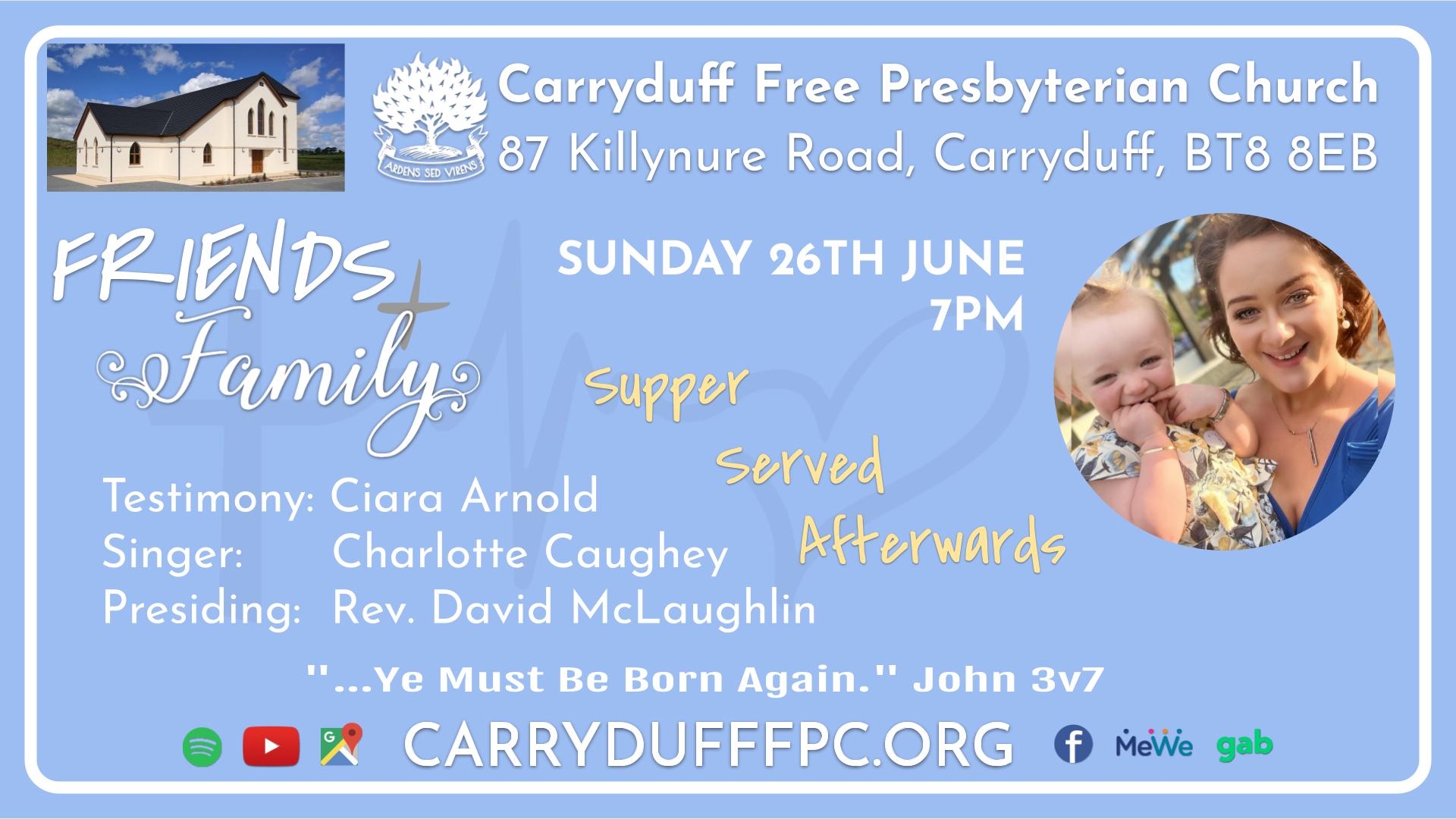
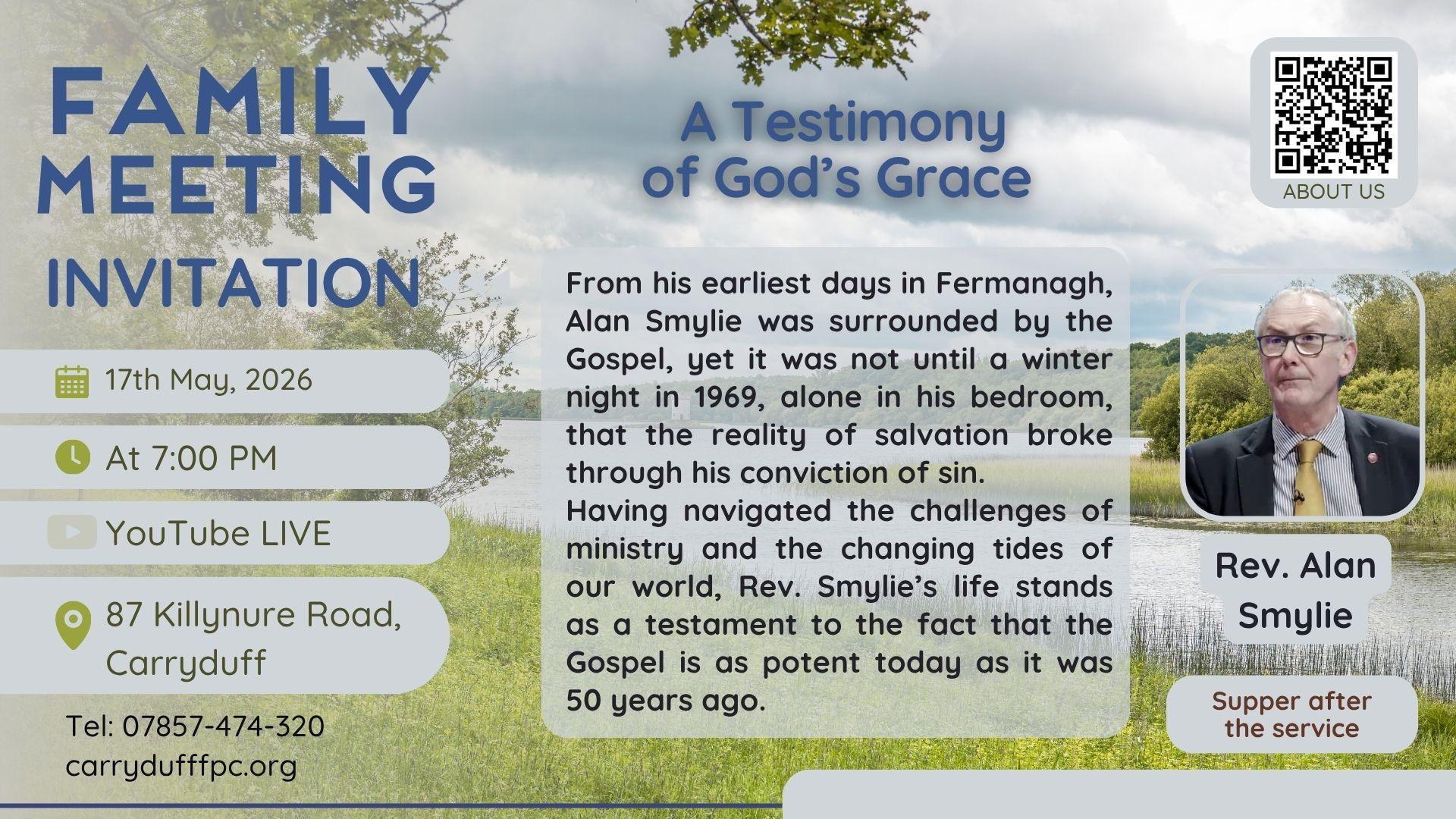
- Date: Sunday, 17th May 2026
- Time: 7:00 PM
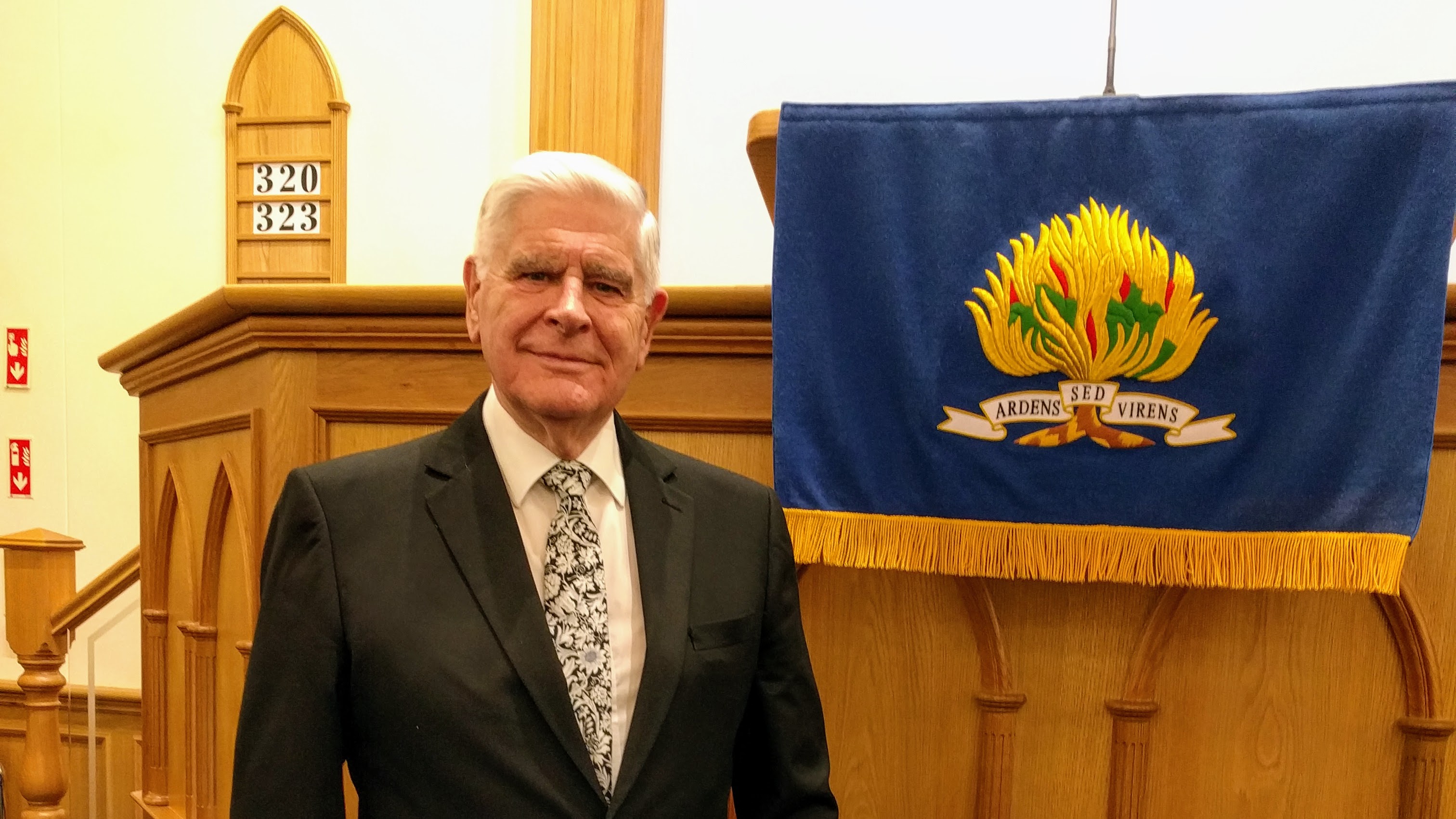
- Speaker: Reverend Alan Smylie
- Theme: A Testimony of God’s Grace
- Location: Carryduff Free Presbyterian Church
- Fellowship: Please join us for supper and a time of fellowship immediately following the service.
Podcast
A Life Given to the Gospel: My Testimony
They often tell me that retirement is meant to be a season of slowing down, of turning the page on a lifetime of labour. My wife, Vivian, asks me with a knowing smile if I will ever find the brake pedal. I tell her that I haven’t found it yet—and, by the grace of God, I suspect I never will. When I look back at my life, from the quiet, rolling hills of County Fermanagh to the pulpits of Belfast and the stark corridors of our prisons, I do not see the story of a man who achieved anything of his own making. I see only the sovereign, relentless grace of a God who took a nobody, a sinner, and made him a vessel for His truth.
I. Known from a Child: The Fermanagh Foundations
I was born in Clina, near Newton Butler, right on the border of County Fermanagh and County Cavan. I was the youngest of five, and while the world might look at those humble beginnings and see nothing of note, I see the hand of God. I was brought up in a home where the Bible was the final authority, the absolute compass by which we navigated our days.
I can still see my father, coming in from the morning milking, his hands rough from the farm work, opening the Scriptures on our kitchen table. Before the schoolbooks were opened, the Word of God was opened. Before the world had a chance to press its secular values upon us, we were saturated with the catechism and the Holy Scriptures. I didn’t know it then, but I was being prepared. I was learning that the Word of God is inspired, inerrant, and infallible—not just for the pulpit, but for the kitchen table.
We attended Ballyhoe Bridge Presbyterian Church. It was a lovely building, and I know exactly where it sits to this day, but I must be honest: in those early years, I did not hear the Gospel from the pulpit. My Sunday School teacher was a kind lady, but she did not know the Saviour, and therefore she could not lead me to Him. Yet, God was faithful. He used my parents, and He used the Gospel missions that were held throughout the countryside. I remember being bundled into the car, often falling asleep on the way home, but having the truth of the Gospel ringing in my ears. I was a child who knew the Scriptures, but I was not yet a child of God.
II. The Awakening: Ravenhill and the Reality of Sin
When I was nine, my father’s health failed, and we had to leave the farm. We moved to Belfast, to a three-story house on the Ravenhill Road. It was a massive culture shock—from the quiet of Fermanagh to the heart of a city that was beginning to feel the tremors of what would become the Troubles.
In Belfast, we attended Ravenhill Presbyterian Church. It was there that I sat under Dr. Fitzhugh, a Scotchman who preached the Word. It was there, too, that I encountered men like Mr. Beatty, a godly man who taught our Sunday School class, his tears falling as he pleaded with us to come to Christ. I am ashamed to admit it now, but we were a group of cheeky brats. We tortured that man, yet he persisted. He didn’t give up on us. He gave us the truth, and though I resisted, the seed was being planted deep.
I was eleven years old on the 15th of January, 1969. I had been attending a mission at the Christian Workers Union Hall in Lisburn, preached by Reverend Sam Workman. Night after night, the Lord spoke to my heart. I came home that night, walked into my room at 153 Ravenhill Road, and knelt by my bedside. There was no fanfare, no crowd, no emotion that could explain what happened. There was only the brokenness of a sinner who finally understood that church attendance, catechism, and family heritage could not save him. I trusted the Saviour. That was the moment everything changed. I was born again.
III. The Call to the Ministry: “Don’t Stoop to be a King”
Growing up in the shadow of the Martyrs Memorial Church, I watched the building go up. I saw Dr. Paisley preach, and I saw the thousands who hung on every word of the Gospel. My father had a great love for that ministry, and I found my heart stirred as well. I began to slip away from my own church to attend the Martyrs, and it was there that I truly began to grow in grace.
I became involved in everything—door-to-door work, open-air preaching, Sunday School. I remember Bob Gunning, a dear elder, putting his hand on my shoulder when I was sixteen and asking if I’d pray about teaching a Sunday School class. I didn’t think I was ready, but he pushed me, and that became my first step into the service of the Lord.
But the call to the full-time ministry is a different matter. I was working in the Civil Service, and I had a clear career path ahead of me. Yet, God was working in my heart. I remember sitting on the stairs at a youth rally in the old church building on Glen Torren Street, listening to Dr. Kearns preach on the will of God. That night, I knew. The Lord was calling me to preach.
I went to see Dr. Paisley in the little vestry at the Martyrs. I was seventeen, trembling, terrified. I told him I felt the call of God. He looked at me, and he said the words I have carried with me every day since: “If God has called you to be a preacher, don’t stoop to be a king.” He didn’t offer me a pat on the back; he got down on his knees and prayed over me. That was it. I was in.
IV. Staying the Course: Four Decades of Labour
The training at the Theological Hall, starting in 1974, was a time of immense challenge and great joy. We were twenty-one men, learning to handle the Word of God. I was never the brightest spark in the class, but God gave me a love for the truth that carried me through.
My ministry has been a varied one: Corregari, the John Knox Church, and finally Ballygowan. I have seen the IRA burn down a church building, and I have seen the Lord build it back up again. I have seen the dark days of 2013, when my dear wife, Vivian, was diagnosed with cancer. I remember those nights, the heaviness of it, the feeling that the world was collapsing. But we prayed. We sought the face of God, and He heard us. He gave us back thirteen years—thirteen years of ministry, thirteen years of life, thirteen years of His goodness.
People ask me about my retirement. I tell them I’m busier than I’ve ever been. Every Sunday, I am somewhere preaching. I spend my days in Maghaberry Prison, in Hydebank Wood, in the Young Offenders centres. I look into the eyes of men who are broken by sin, and I tell them what I had to learn myself: you don’t need a priest to get to God. You don’t need a building or a ritual. You have a High Priest in the Lord Jesus Christ, and you can go directly to Him.
V. The Theology of Faithful Endurance
Looking back over the long arc of my ministry, I see clearly that the greatest danger to the church is not the world outside, but the compromise within. I saw it in the ecumenical drift of the Irish Presbyterian Church, and I see it today in the subtle dilution of the Gospel.
Being “separated unto the Gospel” is not a fashionable stance. It invites criticism; it invites isolation. But I have found that the Lord’s favour rests upon those who refuse to bow the knee to the spirit of the age. My theology is simple, yet it is the bedrock of my life: the Bible is the Word of God from cover to cover. There is no error in it. It is profitable for doctrine, for reproof, for correction, for instruction in righteousness. When I stand in the pulpit, I am not there to share my opinions or to psychoanalyse the congregation. I am there to declare what God has already said.
I think of the men I trained with in 1974. We were young, we were zealous, and we were eager to see God move. We saw revival, though we didn’t always realize it at the time. We saw scores of people coming to Christ. That wasn’t because we had the best programmes or the most eloquent sermons. It was because the Word was preached in the power of the Holy Ghost. That power is just as available today as it was then. The problem is not that the Spirit has stopped moving; the problem is that the church has stopped expecting Him to move.
VI. The Sanctity of the Home and the Ministry
I would be remiss if I did not speak of Vivian. The life of a minister’s wife is often a lonely one, undervalued by the congregations they serve. But Vivian has been my strength. When I was called to Corregari, she went with me. When the John Knox building was burned, she stood with me amidst the ashes. When the cancer diagnosis came, she fought the battle of faith with a courage that humbled me.
We raised our family in the crucible of the ministry. They saw the late nights, the prayer meetings that went until three in the morning, the door-to-door work, and the weight of pastoral care. They saw that the ministry is not a nine-to-five job. It is a life. It is a sacrifice. But I thank God that they saw that it is a joyous sacrifice.
VII. The Need for Labourers: A Personal Appeal
I look at the harvest today, and my heart breaks. We are in a time of great compromise. The world is getting darker, and the voices of truth are fewer. I look at our college—we opened a beautiful new building in March—and I see the need for young men and women to step forward. I see the work that needs to be done among the addicted, the lost, and the broken. I only know of one young man applying this year.
To the young person reading this, who has known the Scriptures from a child, I ask you: what are you waiting for? Do not waste your life on the things of this world. There is nothing in politics, nothing in business, nothing in the pleasures of this life that can compare to the privilege of being a servant of the Most High God. We need men who are not afraid to be called “old-fashioned” because they believe in the blood of Christ, the power of prayer, and the necessity of repentance.
VIII. Final Thoughts: The Certainty of the Call
I am often asked if I have regrets. Do I wish I had stayed in the Civil Service? Do I wish I had taken an easier path? The answer is always no. I have seen God move in ways that defy explanation. I have seen the hardened criminal in Maghaberry weep at the mention of the name of Jesus. I have seen the broken home restored by the power of the Word. I have seen the Spirit of God take a room full of people and change the atmosphere until it was as if heaven itself had come down.
I am a nobody. If you remember anything from my life, let it be that I was a man who needed a Saviour, and who found that He was more than enough. I have had the help of God until this day, and I intend to keep going until He calls me home.
Whether I am preaching in a prison, filling a pulpit in a valley, or simply sitting down with a cup of tea to talk to a troubled soul, the message remains the same: Christ is the only answer. He is the only One who can satisfy the longing of the human heart. He is the only One who can forgive the debt of sin.