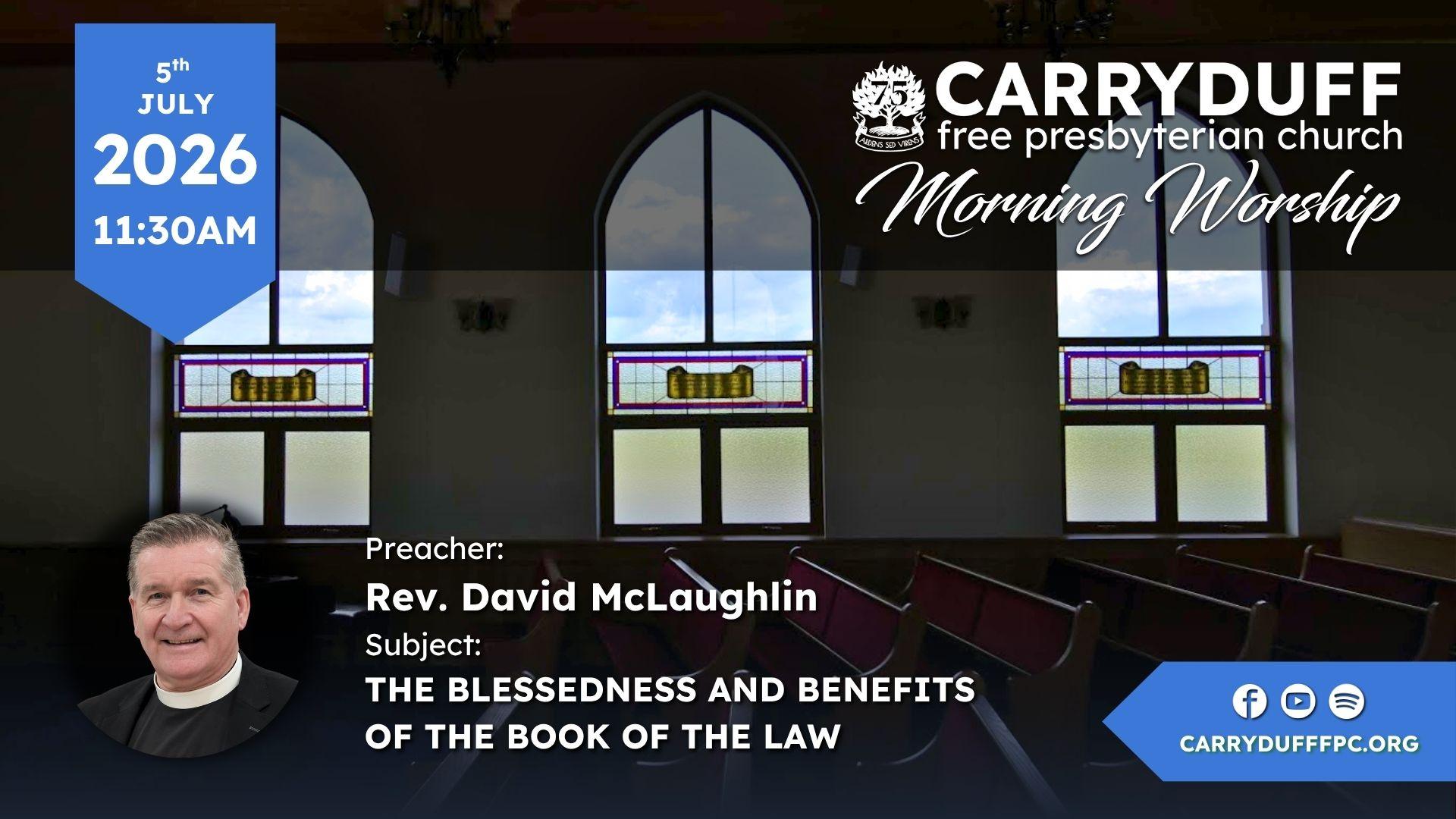

Date: SUN 11:30am 5th July 2026
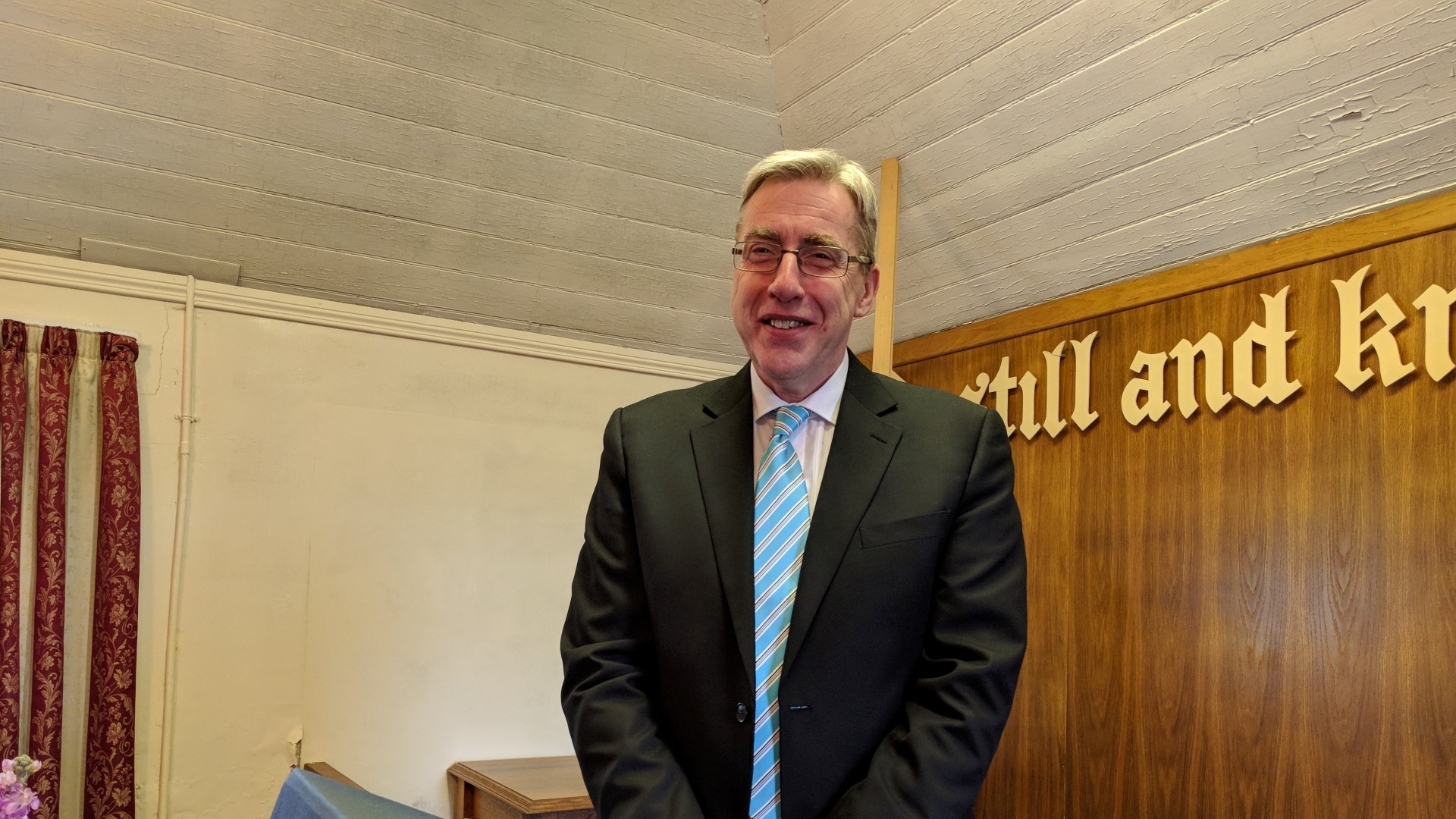
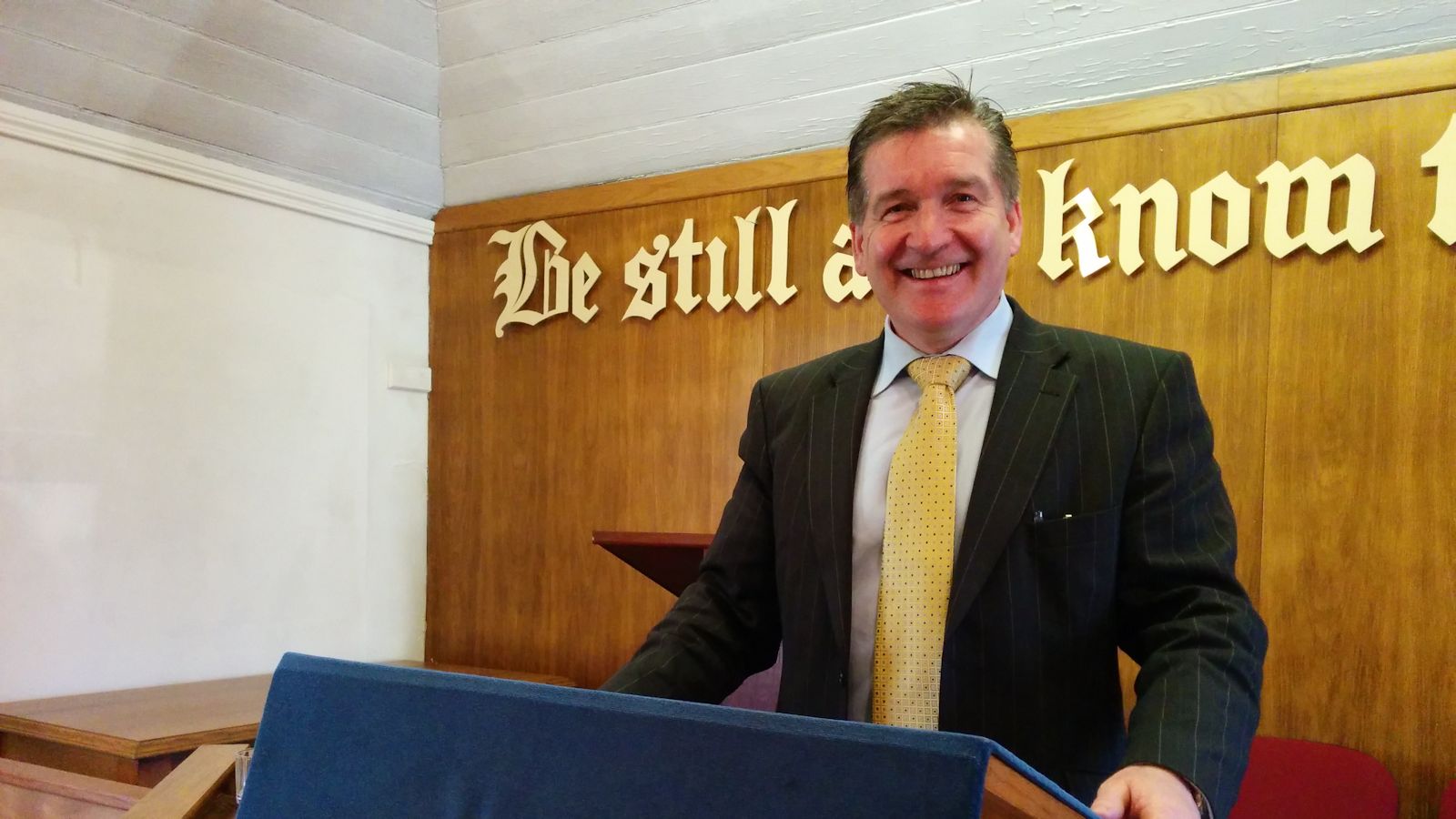
Preacher: Rev. David McLaughlin
Bible Reference: Joshua 1:8
Podcast
The Blessedness and Benefits of the Book: A Summary
Preached from Joshua 1:8 at Carryduff Free Presbyterian Church
Introduction: The Setting of Joshua’s Commission
The sermon opens with a reading from Joshua chapter 1, verses 1–9, taken from the King James Bible, described as “the most faithful and reliable translation of the Holy Scriptures.” The preacher establishes the solemn context immediately: Moses is dead, buried by the Lord somewhere on Mount Pisgah, and the period of mourning has passed. Into this moment of transition and uncertainty, God speaks to Joshua with a specific command—arise, cross the Jordan, and take possession of the land of promised inheritance.
The command comes with a note of special comfort: “There shall not any man be able to stand before thee all the days of thy life, as I was with Moses, so I will be with thee: I will not fail thee, nor forsake thee.” Joshua knew great battles lay ahead; enemies had to be defeated, much land remained to be possessed.
The preacher then poses a critical question: What was the Lord’s first instruction to Joshua? It was not a plan of military strategy. It was not a political resolution. It was not any form of human ingenuity. God directed Joshua to the book: “This book of the law shall not depart out of thy mouth.”
The answer is plain—the true strength of Joshua’s leadership lay not in the sword but in the Scriptures. The way of success is the way of the Scriptures. The way of blessedness is set forth here. Before Joshua could conquer Canaan, he himself had to be conquered by the Word of God. Matthew Henry is quoted: “Those that would govern others and would do it well must first of all be governed by the Word of God themselves.”
The preacher then applies this principle broadly: churches flourish when the Scriptures reign; churches flounder when the Scriptures are rejected. What is true of the church is true of the family, the individual, the monarch on the throne, and all in authority. Deuteronomy 17:18–19 is cited—the king was to write his own copy of the law and read it all the days of his life.
Part One: The Recognition of the Book
A Particular Book
The text says “this book of the law”—not a book, not Joshua’s book, not man’s book, not the church’s book, but this book. God’s people must be a people of the book.
While the immediate reference is to the first five books of Moses (Genesis to Deuteronomy) and may include the Ten Commandments and the wider Old Testament Scriptures, the preacher argues that the word “law” here is wide enough to serve as a synonym for the entire Bible. King David’s prayer in Psalm 119:18—”Open thou mine eyes, that I may behold wondrous things out of thy law”—demonstrates this usage, where “law” stands for the whole Word of God.
True Bible-believing Christianity is a revealed religion. It does not follow:
- Man-made traditions
- Mystical experiences
- Popes, councils, or creeds
The true foundation of the Protestant Reformed faith is the Word of God alone. Bishop Chillingworth is cited: “The religion of the Protestant is the religion of the Bible.” The people of God stand forth for the Bible as the infallible, inerrant Word of God. Paul’s words to Timothy—”All scripture is given by inspiration of God”—are foundational.
The Bible is described as unlike any other book because it is God-breathed. The preacher offers a children’s acrostic: Be Instructed Before Leaving Earth. Yet the Bible is more than an instruction manual; it is a revelation of who God is, what God is like, and what God has done in creation, providence, and redemption.
The Bible introduces us to God:
- Genesis 1:1 begins with Elohim, a plural noun speaking of more than one person
- John 4:24 teaches that God is a spirit and must be worshipped in spirit and truth
- God is defined as “a spirit, infinite, eternal, unchangeable in His being, wisdom, power, holiness, justice, goodness, and truth”
The Bible teaches the doctrine of the Holy Trinity:
- 1 John 5:7—”There are three that bear record in heaven, the Father, the Word, and the Holy Ghost: and these three are one”
- The Shorter Catechism: there is but one only, the living and the true God; three persons in the Godhead, the same in substance, equal in power and glory
The Bible reveals the holiness of God (Exodus 15: “Who is like unto thee, O Lord, glorious in holiness”; Isaiah 6: “Holy, holy, holy is the Lord of hosts”).
The Bible exposes the depravity of the human heart (Romans 5:12 on original sin; Jeremiah 17:9 on the desperately wicked heart).
The Bible is Christocentric—it sets forth seven essential truths about the Lord Jesus:
- His incarnation
- His virgin birth
- His sinless life
- His atoning death
- His bodily resurrection
- His heavenly intercession as our High Priest
- His second coming
The Bible teaches the necessity of the new birth, how to be saved from sin, and how to be truly righteous in God’s sight—”the Lord our righteousness” (Jeremiah 23:6). It provides wisdom for life, is the means of entire sanctification (John 17:17—”Sanctify them through thy truth: thy word is truth”), and serves as a light in the darkness of life’s journey.
The preacher uses the illustration of a lighthouse: Donaghadee Lighthouse once guided ships safely into harbour and through dangerous coastal waters. God’s Word is like a lighthouse in a dark world. Psalm 119:105—”Thy word is a lamp unto my feet, and a light unto my path.” Without the Bible, we are lost, in the dark, stumbling, straying, and perishing.
A Precious Book
The text says the book “shall not depart out of thy mouth.” To be in the mouth, it must first be received. The preacher uses the illustration of food on a plate—unless it is taken into the mouth and assimilated, it provides no nourishment. So it is with the Bible. God gave the Bible to be read, revered, and received.
Joshua was to:
- Talk about the Bible
- Treasure the Bible
- Teach the Bible
- Testify about the Bible
The mouth reveals what fills the heart. Using the illustration of a well—what comes up in the bucket reveals what is in the well—the preacher argues that a person’s words reveal the true condition of their heart. Ephesians 4:29 commands that no corrupt communication proceed from the mouth, but only that which edifies. The Lord Jesus taught in Luke 6:45 that a good man brings forth good from the treasure of his heart, and an evil man brings forth evil—for out of the abundance of the heart the mouth speaks.
A man absorbed by the Word of God will talk of that Word, treasure it, testify to it, and be true to it. When Christ was tempted in the wilderness, He answered every assault of the devil with “It is written”—the sword of Christ was the Scriptures. If the sinless Son of God read, studied, meditated upon, and treasured the Holy Scriptures, how much more should His children.
A Neglected Book
The preacher laments that in the United Kingdom and Northern Ireland, the Bible is largely a neglected book. The nation has lost its appetite for the Word of God. There is scant regard for the Holy Scriptures, little interest, and little knowledge—because people have lost sight of this particular book and its preciousness. This has impacted both the church and the life of the country.
The preacher expresses his prayer for revival—a revival of true Bible-believing religion. Part of that revival would be a rediscovery of this particular, precious book. The Bible needs to be rediscovered and prioritised. 2026 marks the 500th anniversary of the completion of William Tyndale’s English New Testament. Men like Tyndale and John Wycliffe should be remembered with gratitude—90% of the King James Bible comes from Tyndale’s pen. His New Testament was a book stained with the blood of the martyrs.
A Prioritised Book
The preacher draws from Psalm 119:
- Verse 9: “Wherewithal shall a young man cleanse his way? By taking heed thereto according to thy word”
- Verse 11: “Thy word have I hid in mine heart, that I might not sin against thee”
This book is described as:
- The best publication in the world
- Meant to be in the best place in the world—not in the library, not just in the hand, not just in the head, but in the heart
- Serving the best purpose in the world—”that I might not sin against thee”
The late Dr Bob Jones is quoted: “This book will keep you from sin, and sin will keep you from this book.”
Returning to Joshua: he was a new leader, change had come, but the Bible does not change with changing circumstances. New challenges, conflicts, and difficulties lay ahead, but the Word of God was to be regarded as the same. At King Charles’s coronation, he was presented with a Bible and told, “This is the greatest treasure in the world.”
The preacher references Orange parades where banners display a Bible with a crown on top—the Bible representing supreme authority for faith and practice, the crown symbolising allegiance to the Protestant succession established by law after the Glorious Revolution.
God’s Word is forever settled in heaven. Yet many preachers and clergy today treat the Bible as irrelevant, outdated, or untrue—leading to a rash of novel ideas entering the church. This is based on a lie, the same tactic the devil used with Eve: to make her doubt, deny, distort, and depart from the Word of God.
The Bible does not change. 1 Peter 2: “The word of the Lord endureth for ever.” The Word generates faith and regenerates—being born again “not of corruptible seed, but of incorruptible, by the word of God which liveth and abideth for ever.” Christ said, “Heaven and earth shall pass away, but my words shall not pass away.” The Bible is a living Word, eternal, abiding forever.
Part Two: The Reception of the Book
A Conscious Reception
“Thou shalt meditate therein day and night.” To meditate means to ponder, to mull over, to fill the heart and mind with. The preacher uses the illustration of a cow chewing its cud—extracting every bit of goodness from what it has consumed. David said, “O how love I thy law! It is my meditation all the day” (Psalm 119:97).
The godly man of Psalm 1 is described first by what he does not do—he walks not in the counsel of the ungodly, stands not in the way of sinners, sits not in the seat of the scornful. Then by what he does: his delight is in the law of the Lord, and in that law he meditates day and night. It is not a duty or a drudgery; he delights to meditate.
Biblical meditation involves filling the heart and mind with the Word of God, mulling over what has been read. Philippians 4:8 is cited: “Whatsoever things are true, whatsoever things are honest, whatsoever things are just, whatsoever things are pure, whatsoever things are lovely, whatsoever things are of good report—think on these things.” It is rooted in an honest, conscious choice.
A Constant Reception
“Meditate therein day and night.” This means continually—not literally 24 hours a day, for we are awake part of the day and part of the night, and we do sleep. We have responsibilities at work and to our families; we are not monks or nuns. Rather, it is an attitude, a spirit that governs the way we choose to live. If one is too busy, then time must be made to meditate.
A Complete Reception
“That thou mayest observe to do according to all that is written therein.” Here is the revelation of God’s will for Joshua: his life was to be regulated and ordered around the Word of God. He was to obey every part—every precept, every promise, every proclamation.
All Scripture is important; two Testaments, one Bible. We cannot pick and choose. The preacher cannot pick and choose. The elders cannot pick and choose. The president cannot pick and choose. We cannot explain away parts we do not like and claim they no longer apply.
The preacher then raises a specific contemporary issue: the ordination of women. He states clearly that women should not be ordained to the ministry or eldership. He describes the recent appointment of a woman as Archbishop of Canterbury as “an abomination in the sight of God.” This is not about qualifications but about the Scriptures. He cites:
- 1 Timothy 2:11–15—the teaching office of the church is reserved for men
- 1 Timothy 3:1—”If a man desire the office of a bishop”
- The bishop was to be the husband of one wife
- The woman is not to govern or exercise doctrinal authority over or in the gathered church
This is not about local culture but about God’s order in creation—Adam was formed first, then Eve. It is a creation principle, not one of circumstances or culture, and applies to the church in every age. Once the Scriptures are set aside in one area to justify a practice, it is apostasy and opens the door to many other things—hence the religious downgrade in the church.
A Consecrated Reception
“Observe to do.” Knowledge alone is insufficient; God calls for obedience. The goal of the Bible is not merely information or revelation but transformation. Today there are more Bibles and Bible resources than ever before, yet the practice of Bible reading and biblical obedience is less than ever. This is true of prayer, of preaching, and of holy living.
The preacher expresses a desire for reading rooms—whether in Orange halls or church halls—where groups would gather to read the Bible and ask: What does this passage mean? What does it teach about God, sin, the Lord Jesus, and holy living?
It is not about partial obedience but practical obedience. True faith produces holy obedience. Good works do not save—salvation is by the work of Christ on the cross, by faith alone—but true faith is never alone; it is always accompanied by practical evidence and works.
A Comforting Reception
“For then thou shalt make thy way prosperous, and then thou shalt have good success.” The way of success is the way of the Scriptures—for the church, the Christian, the Christian family, and the community.
David drew comfort from the Word of God. Psalm 119:49–50: “Remember the word unto thy servant, upon which thou hast caused me to hope. This is my comfort in my affliction: for thy word hath quickened me.” The word “quicken” means made alive.
The preacher makes a critical distinction: this is not a promise of wealth. Many believers—in the Old Testament, New Testament, first century, and twenty-first century—face suffering, persecution, poverty, and hardship. Biblical prosperity has nothing to do with health and wealth; the health-and-wealth gospel is a false gospel.
Biblical prosperity is:
- Living under God’s grace in the way of the Scriptures
- Doing and accomplishing God’s will according to the Scriptures
- Faithfulness to the Word of God
Jeremiah the prophet appeared unsuccessful by worldly standards—he did not see national revival, he suffered greatly, was imprisoned multiple times, and saw Jerusalem destroyed—yet he remained faithful and true to the Word of God. Success is not measured by material or financial things, money, fame, popularity, ease, or looks. These things do not last; they are gone in a short time, gone at the end of one’s physical life. If one wants to be wise and live a life blessed by God, the way of blessedness is the way of the Scriptures.
Part Three: The Resolution of the Book
The preacher observes that three times God commanded Joshua to be strong and of good courage (verses 6, 7, and 9). Why three times?
- He needed courage to obey. He knew the people would have their own views and opinions; there would be calls to disobey.
- He needed courage to persevere. There would be pressures: “You’re being too narrow, Joshua. You’re being too bigoted. You’re being too old-fashioned. You’re being too intolerant.”
- He needed courage in the face of opposition as he faced the enemy and fought the Lord’s battles.
- He needed courage founded on God’s presence. God said, “I will be with thee: I will not fail thee, nor forsake thee.” God will guard, guide, and be good to His people in the way of the Scriptures.
The way of the Scriptures is the way of spiritual success as believers fight:
- The battle with inward remaining sin
- The pull and lure of the world
- The knowledge of a personal devil
God pointed Joshua not to military power, not to human wisdom, but to a book. The same is true today:
- The church that abandons the book will apostatise
- Families who abort the book will awaken
- Individuals who absorb the book will awaken to God
God’s people must be a people of the book. The preacher urges his congregation to read the book, rediscover the book, revere the book, meditate upon it, obey it, and proclaim it.
He closes with an unattributed quotation: “A Bible that is falling apart usually belongs to someone who isn’t falling apart.” The question is left with the hearer: Is your Bible falling apart, or are you falling apart?