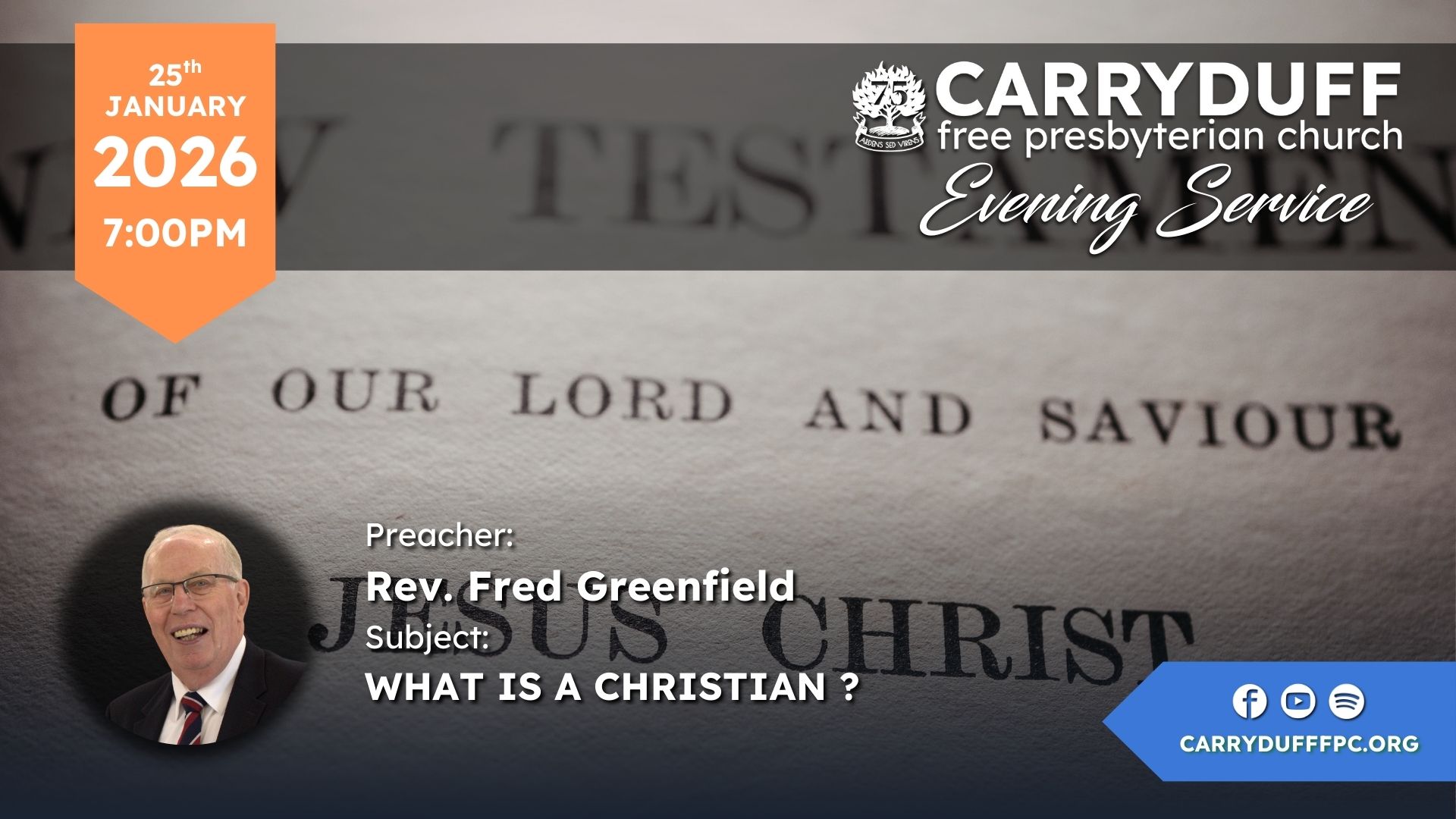

Date: SUN 7:00pm 25th January 2026
Preacher: Rev. Fred Greenfield
Bible Reference: Acts 26:19-32
Podcast
Sermon Summary
The sermon opens with a reading from Acts 26:19–32, where Paul recounts his conversion and ministry before King Agrippa, Festus, and Bernice. Paul explains his obedience to the “heavenly vision” on the Damascus road: he preached repentance, turning to God, and works befitting repentance to Jews and Gentiles alike. He affirms that his message aligns with the prophets and Moses—that Christ would suffer, rise first from the dead, and bring light to both Jews and Gentiles.
Festus interrupts, accusing Paul of madness due to excessive learning. Paul responds that he speaks words of truth and soberness, noting that Agrippa knows these things, as they were not done “in a corner.” Paul directly challenges Agrippa: “Believest thou…?” Agrippa replies, “Almost thou persuadest me to be a Christian.” Paul earnestly wishes that all present were not only “almost” but “altogether” like him—except for his bonds. The rulers conclude Paul has done nothing deserving death or imprisonment, but his appeal to Caesar prevents his release.
The preacher prays for the Holy Spirit’s power, that the gospel might bring salvation to hearers (in person or online), and invokes the filling of the Spirit.
Main Theme: What is a Christian?
The preacher laments how the term “Christian” is widely misused or claimed without substance—much like political labels (e.g., Communist, Conservative) or other ideologies (e.g., evolutionist) have clear meanings, yet “Christian” is bandied about loosely. Some assume birth in a “Christian country” makes one a Christian (countered with the analogy: being born in a garage does not make one a car). Even cults claim the label while denying core truths.
True Christianity, he argues, is illustrated in Paul’s life and testimony.
Key Points from Paul’s Example
- A Deliberate Choice
Paul, once a blasphemer and persecutor (Saul of Tarsus), encountered Christ in blinding light and heard His voice. He chose to call Jesus “Lord,” submitting to Him as Saviour. This echoes Old Testament calls to choose:- Moses (Deuteronomy 30:15–19): “I have set before thee this day life and good, and death and evil… therefore choose life.”
- Joshua (Joshua 24:15): “Choose you this day whom ye will serve… but as for me and my house, we will serve the Lord.”
- Elijah (1 Kings 18:21): “How long halt ye between two opinions? If the Lord be God, follow him: but if Baal, then follow him.”
- The preacher urges hearers not to “halt” or stagger between God and the world (pleasures, prestige, idols like celebrities). Jesus calls people to “strive” (agonise) to enter the narrow gate (Matthew 7; Luke 13), taking hold of salvation urgently, like grasping a lifeline.
- A Radical Change
Paul was transformed from persecutor (approving Stephen’s stoning, imprisoning believers) to apostle. The preacher cites 2 Corinthians 5:17: “If any man be in Christ, he is a new creature: old things are passed away; behold, all things are become new.”
Testimonies abound of changed lives: from prodigal sin, religious formalism (trusting ceremonies over Christ), or worldly powerlessness. Salvation is in Christ alone—not church, creed, or clergy.
He references the Lord’s Prayer (“Thine is the kingdom, and the power, and the glory”) and Jesus’ words to Nicodemus (John 3): one must be born again to see or enter God’s kingdom. God’s power breaks sin’s hold; His glory thrills the believer. - An Expectant Hope
Paul expected Christ’s return. He lived anticipating the Saviour he once denied—now alive and coming again (Acts 1:11). Whether by death (as in his martyrdom) or rapture, believers await the “upper taker” (not the undertaker). The preacher quotes gospel hymns and urges readiness: “It is well with my soul.” One must be prepared to meet Christ.
Application and Closing Appeal
The sermon is a passionate gospel invitation. The preacher stresses the simplicity of salvation: repent, turn from sin, receive Christ personally. He references hymns like “Only a step to Jesus” and urges immediate decision—”Today if ye will hear his voice, harden not your hearts.”
He concludes with prayer, thanking God for the gospel’s power, asking for any unsaved hearer to confess need and find Christ, the Lamb who takes away sin. The meeting closes seeking God’s blessing and safe return home.