
Part 1: Adultery
Part 2: Abortion
Part 3: Euthanasia
Part 4: Stem Cell Research
Part 5: Homosexuality
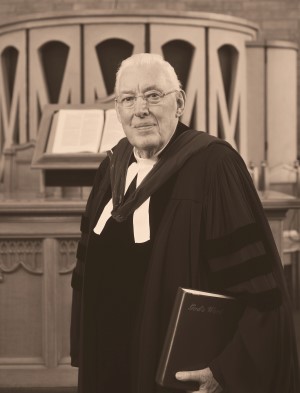
Nestled in the rolling hills of County Down, Carryduff Free Presbyterian Church has long served as a beacon of evangelical faith in Northern Ireland. Established in 1996 as part of the Free Presbyterian Church of Ulster, the denomination emphasises strict adherence to Reformed theology, biblical inerrancy, and separation from ecumenism. Under the leadership of the Rev. David McLaughlin, who was ordained and installed as minister on 31st March 1999, the congregation is described as “happy, friendly, faithful, loyal and eager.”
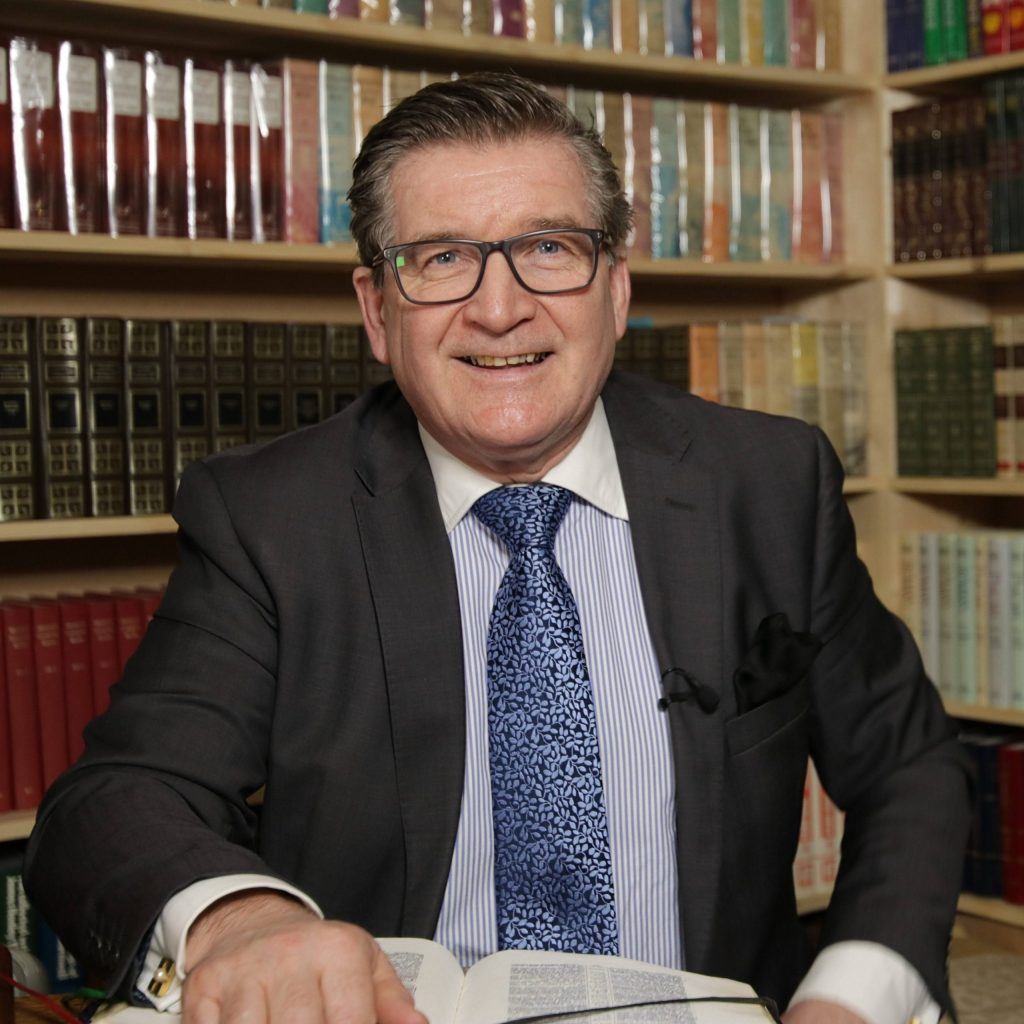
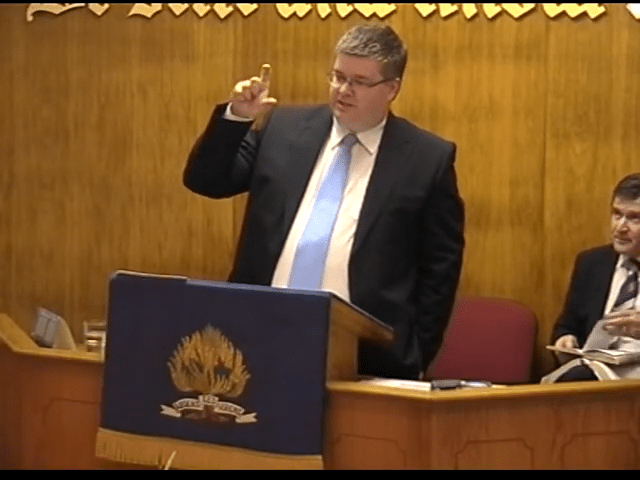
On a cold February evening in 2008—the congregation gathered for a series of meetings addressing profound ethical issues. Introduced by Rev. McLaughlin, the sermon was preached by Dr. Lindsay Wilson, then minister of Castlederg Free Presbyterian Church in County Tyrone. Dr. Wilson, a qualified general practitioner (GP) alongside his pastoral role, served as minister until his retirement in 2022. His dual expertise in medicine and theology lent a unique authority to his messages, blending scientific insight with scriptural exposition.
Drawing deeply from Psalm 139, a psalm attributed to King David that extols God’s omniscience and omnipresence, Rev. McLaughlin laid the groundwork for an exploration of life’s divine origins, its inherent value, and the ethical ramifications of abortion. This article incorporates biographical context, historical background, updated statistics, and additional scientific and theological insights to provide a more comprehensive analysis. It preserves the sermon’s passionate, unapologetic tone for readers in 2026, a time when debates on life issues remain as fervent as ever.
The Primacy of Scripture: Starting and Ending with God’s Word
Dr. Wilson opened with a prayer of thanksgiving for God’s mercy and the enduring relevance of Scripture: “We praise the Lord that before us we have the living and infallible word of God… as up to date tonight as it was those many years ago.” In an age dominated by rapid scientific advancements and media sensationalism, he cautioned against being swayed by the latest news reports on topics like stem cell research or cloning. These, he argued, are often presented with “politically correct phraseology” that masks underlying moral compromises.
This foundational principle sets the tone for the sermon’s core inquiry: What is life? Where does it come from? And what does God say about it? The Bible must be our standard, not the “end justifies the means” philosophy reminiscent of Jesuit casuistry and modern relativism where individuals do what is right in their own eyes.
The Divine Origin of Life: Creation Versus Evolution
Delving into Genesis, Dr. Wilson affirmed a young-earth creationist view: the world was created in six literal 24-hour days around 6,000 years ago. He critiqued evolutionary theory as a “religion without God,” reliant on unprovable assumptions of billions of years and random chance.
Humanity’s uniqueness culminates on the sixth day: animals were spoken into existence ex nihilo, but man was formed from dust and animated by God’s breath (Genesis 2:7), becoming a “living soul.” Made in God’s image (Genesis 1:26-27), this imago Dei refers to our spiritual nature, as God is spirit (John 4:24). Animals lack this eternal soul, which destines humans for everlasting existence in heaven or hell.
When Does Life Begin? Insights from Psalm 139
Psalm 139 portrays God’s exhaustive knowledge: “O Lord, thou hast searched me, and known me.” Dr. Wilson focused on verses 13-16, offering a verse-by-verse exegesis enriched by Hebrew insights.
- Verse 13: “For thou hast possessed my reins: thou hast covered me in my mother’s womb.” God sovereignly controls life from conception.
- Verse 14: “I will praise thee; for I am fearfully and wonderfully made.” The human body’s complexity demands praise.
- Verse 15-16: God sees the “unformed mass” (embryo) as a distinct individual—David himself—with every member’s formation recorded in His “book” before any exist.
Scientifically, conception fuses sperm and egg into a zygote with unique DNA. Within 24 hours, axial orientation is set; by 4 weeks, a heartbeat emerges; by 12 weeks, the foetus is fully formed in miniature.
The Moral Imperative: Abortion as the Deliberate Ending of Life
Defining abortion as the “artificial and deliberate ending of the life of an unborn child,” Dr. Wilson equated it to murder, barring exceptions like self-defence, capital punishment, or just wars.
Exodus 21:22-25 grants the unborn equal status: causing miscarriage demands restitution; if the child dies, it’s “life for life.”
Updated statistics (as of 2026):
Northern Ireland statistics (financial year 2024/25 – 2,899 abortions, up 3.7% from 2,795 in 2023/24, record high):
https://www.health-ni.gov.uk/news/northern-ireland-abortion-statistics-publication-202425
Northern Ireland data visualisation (NISRA):
https://datavis.nisra.gov.uk/health/ni-abortion-stats-2024-25.html
UK-wide estimates and analysis (Percuity blog, estimating ~300,000 abortions in 2024, up 11% since 2022 accredited figures):
Scotland termination of pregnancy statistics (year ending December 2024 – 18,710 abortions, record high):
United States abortion data 2024 (Guttmacher Institute full-year release – approximately 1,038,100 clinician-provided abortions in states without total bans):
WeCount ongoing reports (Society of Family Planning, including data up to June 2025):
The Brutality of Abortion Procedures and Ethical Considerations
Dr. Wilson did not shy away from describing common abortion procedures in stark, unflinching detail, drawing from his medical background to highlight their inherent brutality. His aim was to strip away the sanitised language often used in public discourse and confront listeners with the reality of what occurs, underscoring that these acts involve the deliberate dismemberment and destruction of a living, developing human being. He emphasised that such procedures are performed on awake foetuses, without anaesthesia reaching them in time, amplifying the moral horror. To drive home the point, he compared modern abortion practices to historical atrocities like the Holocaust, arguing that the scale and methods of abortion often surpass even the Nazis’ efficiency in taking innocent lives. Furthermore, he addressed “hard cases” such as rape, incest, or foetal abnormalities, insisting that these tragic circumstances—while deserving of compassion—do not justify the killing of the unborn, as they represent a minuscule fraction of abortions and echo dangerous eugenic ideologies from history.
Detailed Descriptions of Common Procedures (may be distressing)
Dr. Wilson began with suction aspiration (also known as vacuum aspiration), the most common method for first-trimester abortions, typically performed between 6 and 12 weeks of gestation. He described inserting a thin tube—often with a sharp edge for cutting—into the uterus, connected to a powerful suction pump that generates 10 to 20 times more force than a household vacuum cleaner. The foetus, at this stage about 3 inches long with a head roughly the size of half a golf ball, is too large to pass through the tube intact. As a result, the suction tears the body apart limb by limb, dismembering arms, legs, and torso before the head is crushed to fit through the cannula. He noted the sharpness of the tube’s end, which aids in severing tissue, and stressed that the procedure is done while the mother is under anaesthesia, but the foetus receives none, as there’s insufficient time for the drugs to cross the placenta. Ultrasound videos, he mentioned, capture the foetus flailing in distress as the probe approaches, a phenomenon documented in pro-life resources and some medical observations. Following suction, a curette (a sharp, looped instrument) may be used to scrape the uterine lining, ensuring no remnants remain, which can lead to complications like infection if incomplete.
For later-term abortions, Dr. Wilson referenced dilation and evacuation (D&E), common in the second trimester (13-24 weeks), where the foetus is more developed with bones, organs, and pain receptors. The cervix is dilated over one to two days using laminaria (seaweed sticks) or misoprostol to soften and expand it. Once dilated, forceps are inserted to grasp and twist off limbs, crushing the skull if necessary, before evacuating the remains with suction. This method, he explained, involves piecing together the extracted parts post-procedure to confirm completeness, a grim task akin to reassembling a dismembered body. Risks include uterine perforation, heavy bleeding, and infection, with the procedure taking 10-30 minutes under anaesthesia for the mother but none for the foetus.
He also highlighted “partial-birth abortion” (medically termed intact dilation and extraction, or D&X), a late-term method banned in the United States by the Partial-Birth Abortion Ban Act of 2003, signed by President George W. Bush and upheld by the Supreme Court in 2007. Coined by pro-life groups in 1995 to describe the procedure, it involves partially delivering the foetus feet-first (breech position), then puncturing the base of the skull with scissors, inserting a catheter to suction out the brain matter, collapsing the skull, and completing the extraction. Dr. Wilson called it “unbelievably barbaric,” noting that while banned in the US, similar late-term methods persist elsewhere, and the ban focused on the gruesomeness of delivering a nearly viable foetus only to kill it. He lamented that in an era of advanced medicine and humanitarian claims, such acts are performed without foetal pain relief, despite evidence that foetuses can feel pain as early as 12-20 weeks.
Comparisons to Historical Atrocities
To emphasise the moral outrage, Dr. Wilson drew parallels between abortion and the Holocaust, stating that “the Nazis were having a Sunday school tea party” compared to these procedures. He pointed out that the Nazis killed 6 million Jews over six years, including 2 million children, often via gas chambers or quick shootings—methods he described as “merciful” by comparison to the prolonged dismemberment in abortions. In the US alone, he noted, abortion tolls match the Holocaust’s total every six years, with over 60 million since Roe v. Wade in 1973—far exceeding Nazi figures when scaled annually. Pro-life advocates argue abortion is comparable or worse, as it targets the most vulnerable (the unborn) under legal sanction, echoing Nazi dehumanisation of Jews as “useless eaters.” Critics decry such analogies as diminishing the Holocaust’s unique anti-Semitic horror, but Dr. Wilson and others maintain the comparison highlights the atrocity of state-sanctioned killing of innocents, urging recognition of abortion as a modern “holocaust” in scale and ethics.
Hard Cases: Compassion Without Compromise
Finally, Dr. Wilson addressed “hard cases,” acknowledging the trauma of rape, incest, or foetal abnormalities but insisting they do not justify abortion. “Does it make anything right killing?” he asked rhetorically. He referenced Hitler’s eugenics program, which sterilised and euthanised the disabled to create a “master race,” leading to World War II—warning that selective abortion for abnormalities follows the same logic. Statistics substantiate his point: Rape and incest account for only 0.3-1% of abortions (with incest at ~0.03%), threats to the mother’s life or health are ~0.2-0.3%, and foetal abnormalities ~0.5-8%. Overall, “hard cases” comprise less than 5% of abortions, with the vast majority (over 90%) for socioeconomic or elective reasons. He argued that “hard cases make bad laws,” as basing policy on rare exceptions leads to widespread abuse, and true compassion involves supporting victims without compounding tragedy through killing the innocent child.
A Message of Hope: Forgiveness Through Christ
In the powerful conclusion to his sermon, Dr. Lindsay Wilson shifted from the solemn weight of moral conviction to the radiant light of divine grace. Having laid bare the biblical truth about the sanctity of life and the gravity of abortion as the deliberate ending of an innocent, ensouled human being, he turned to those who might be carrying the burden of personal involvement in such an act. With pastoral tenderness, he shared a real-life encounter that encapsulated the gospel’s transformative power.
A young woman, once a committed Christian but now backslidden and entangled in the world, approached Dr. Wilson in deep distress. Tears streaming, she confessed her turmoil: “You don’t know what I’ve done.” He responded gently, assuring her that the specifics were unnecessary—God already knew, and His invitation to repentance remained open. As she poured out her heart, she revealed the source of her anguish: she had undergone an abortion. In her despair, she believed the act was beyond redemption. “God couldn’t forgive me for that,” she wept.
Dr. Wilson countered with the unshakeable truth of Scripture. Abortion, though a profound sin—equivalent in gravity to taking innocent life—is not the unforgivable sin. No transgression, however dark, places anyone outside the reach of Christ’s atoning blood. He pointed to the Apostle Paul’s self-description in 1 Timothy 1:15 as the “chief of sinners,” a man who had persecuted and consented to the deaths of Christians, yet was gloriously saved and used mightily by God. If the Lord could forgive and redeem Paul—the foremost of sinners—then no one else need despair.
Central to this assurance is the promise in 1 John 1:9: “If we confess our sins, he is faithful and just to forgive us our sins, and to cleanse us from all unrighteousness.” This verse is not a vague platitude but a divine guarantee. When a person comes in genuine repentance—acknowledging the sin, turning from it, and trusting in Christ’s finished work on the cross—God is faithful to forgive and just because the penalty has already been paid by Jesus. The cleansing is complete: not partial, not provisional, but thorough and eternal.
Dr. Wilson reinforced this with other Scriptures that paint a vivid picture of God’s mercy:
- Psalm 103:12 declares, “As far as the east is from the west, so far hath he removed our transgressions from us.”
- God casts sins into the depths of the sea (Micah 7:19), remembers them no more (Hebrews 8:12; Jeremiah 31:34), and treats the repentant as though the offence had never occurred.
This message resonates deeply in the Free Presbyterian tradition, where the doctrines of grace underscore that salvation is entirely God’s work. No sin is too great for the cross, for Christ’s blood “cleanseth us from all sin” (1 John 1:7). True repentance involves not only sorrow for sin but a turning to Christ in faith.
In broader Christian circles, countless testimonies echo this hope. Many who have experienced the trauma and guilt of abortion have found profound healing through confession and reliance on God’s promises.
Dr. Wilson closed with a direct, compassionate appeal: “There’s nothing, nothing that you’ve done that would hold you back from coming to the Lord tonight.” The blood of Jesus Christ is sufficient for every sin, including the deepest regrets. He warned against the enemy’s accusations that seek to keep people in chains of shame—Satan is the accuser (Revelation 12:10), but Christ is the Advocate (1 John 2:1). For those burdened by past abortions, the path forward is simple yet profound: confess, repent, believe, and receive.
In an era when abortion rates remain tragically high and regret often lingers in silence, this section of the sermon stands as a beacon of hope. It reminds believers that the gospel is not merely about condemning sin but about conquering it through the power of the risen Christ. No one is beyond redemption. The same Saviour who breathed life into humanity offers abundant life to the repentant sinner—forgiven, cleansed, and forever held in the Father’s love.
Conclusion: A Call to Uphold Life’s Sanctity in 2026
Dr. Wilson’s sermon, informed by his medical and ministerial expertise, remains prescient. In 2026, amid rising abortion rates and bioethical debates, it calls us to Scripture’s unchanging truths. Life, fearfully and wonderfully made from conception, demands protection. As Christians, faith must compel action: treasure the Word, proclaim salvation, and defend the vulnerable.
If this article has spoken to you, consider reaching out to a trusted pastor or pro-life support ministry. God’s grace is sufficient.