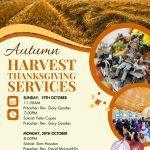

Date: SUN 7:00pm 12th October 2025
Preacher: Rev. David McLaughlin
Bible Reference: 2 Kings 4:38
And Elisha came again to Gilgal: and there was a dearth in the land; and the sons of the prophets were sitting before him: and he said unto his servant, Set on the great pot, and seethe pottage for the sons of the prophets.
Subscribe to the podcast here:
Spotify Podcasts | Apple Podcasts | Pocket Casts
Email | RSS | more information here
Summary of the Sermon: “There Is Death in the Pot” (2 Kings 4:38–41)
The sermon, rooted in 2 Kings 4:38–41, explores a biblical narrative where the prophet Elisha encounters a crisis during a famine in Gilgal, where he is teaching the sons of the prophets. The passage describes a poisonous stew accidentally prepared due to the inclusion of wild gourds, leading to a cry of alarm: “O man of God, there is death in the pot!” Elisha miraculously purifies the pot by adding meal, making the stew safe to eat. The preacher uses this historical event to draw spiritual parallels to modern times, focusing on four key themes: the condition Elisha found, the contamination he faced, the challenge he addressed, and the cure he focused on.
1. The Condition Elisha Found
The sermon begins by setting the scene in Gilgal, a place typically associated with lush vegetation and fruitfulness, yet suffering from a severe famine (referred to as a “dearth” in the Hebrew, meaning scarcity). This famine, one of 13 mentioned in the Bible, lasted seven years (2 Kings 8:1) and represents a time of physical and spiritual barrenness. The preacher highlights that Gilgal, a place symbolising redemption and renewal, was paradoxically struck by scarcity, reflecting the dire state of Israel at the time.
The preacher draws a contemporary parallel, suggesting that the United Kingdom is experiencing a spiritual famine, as described in Amos 8:11: “not a famine of bread, nor a thirst for water, but of hearing the words of the Lord.” He laments the decline of the Church in Ulster, which once thrived with revival, vibrant preaching, and prayer but is now a “mere shadow of its former self.” Many churches have closed or been repurposed into secular spaces like restaurants or warehouses, reflecting a spiritual barrenness. The preacher attributes this decline to a departure from God, rooted in sin, and calls for an evaluation of the Church’s spiritual state over its financial or social standing.
2. The Reason for the Condition
The famine in Gilgal, the preacher argues, was not accidental but a divine consequence of Israel’s sin. The people had forsaken God, turning to Baal worship and adopting the sinful lifestyles of surrounding nations, as described in Jeremiah 2:13: “They have forsaken me, the fountain of living waters, and hewed them out cisterns, broken cisterns, that can hold no water.” This spiritual apostasy led to God’s displeasure, resulting in physical barrenness as a sign of spiritual decay.
The preacher applies this to modern society, asserting that the United Kingdom’s moral and spiritual decline is due to widespread sinfulness, including rejection of God, rationalism, and societal acceptance of practices like abortion, transgenderism, assisted suicide, and relaxed laws on gambling and drinking. He cites Proverbs 14:34 (“Sin is a reproach to any people”) and Ezekiel 18:4 (“The soul that sinneth, it shall die”) to underscore that sin brings divine judgment. The greatest sin, he argues, is the rejection of Jesus Christ, which robs the nation and the Church of spiritual blessing.
3. The Contamination Elisha Faced
The sermon examines the poisonous stew as a metaphor for spiritual contamination. One of the sons of the prophets, unaware of the danger, gathered wild gourds and added them to the pottage, rendering it toxic. The phrase “for they knew them not” (verse 39) highlights a lack of discernment, which led to the crisis. The preacher sees this as a picture of both society and the Church today, where harmful elements have been introduced due to spiritual negligence.
In society, the preacher points to policies and cultural shifts—such as ID cards (seen as a precursor to the “mark of the beast”), abortion on demand, and the erosion of Christian values—as evidence of a “poisonous pot.” In the Church, contamination stems from apostasy, ecumenism, charismatic influences, modern Bible translations, and higher criticism, which dilute the truth of God’s Word. The preacher references Jude 4, warning of “ungodly men” who creep in unawares, turning grace into a licence for sin. He criticises clergy who deny God’s existence or Christ’s divinity, contributing to the Church’s decline.
4. The Challenge Elisha Addressed
The crisis reaches a climax when the sons of the prophets cry out, “O man of God, there is death in the pot!” (verse 40). This moment of awakening and alarm reflects their recognition of the danger. The preacher sees this as a call for the Church and society to acknowledge the spiritual poison in their midst. He urges a rediscovery of the reasons behind the nation’s and Church’s decline, particularly the abandonment of biblical truth and the embrace of sin.
The preacher calls for repentance, both for sinners to turn from their ways and for believers to reject worldliness and return to biblical foundations. He cites Elisha’s steadfastness in teaching God’s Word despite the famine, encouraging believers to remain faithful in a day of apathy and apostasy. The sermon challenges the Church to continue preaching the Gospel, holding outreach, and teaching children, even when society seems uninterested.
5. The Cure Elisha Focused On
Elisha’s response to the crisis is to add meal to the pot, miraculously purifying it so “there was no harm in the pot” (verse 41). The preacher interprets the meal as a symbol of Jesus Christ, the ultimate solution to spiritual poison. He references John 12:24, where Christ is likened to a grain of wheat that dies to bear fruit, emphasising His role as the High Priest, Prophet, and Prince who offers salvation and healing.
The sermon concludes with a call to rediscover and receive Christ as the answer to both personal and societal sin. The preacher stresses that this miracle is a historical, literal event meant for education and encouragement, urging believers to trust in Christ alone to address the spiritual famine and contamination of the age.
Key Themes and Applications
- Spiritual Famine: The sermon draws a parallel between the physical famine in Gilgal and the spiritual famine in the modern United Kingdom, marked by a rejection of God’s Word and Christian values.
- Consequences of Sin: Sin, particularly the rejection of Christ, brings divine displeasure and spiritual barrenness, affecting both society and the Church.
- Lack of Discernment: The accidental poisoning of the pot reflects a lack of spiritual discernment, allowing harmful influences to infiltrate society and the Church.
- Call to Repentance: The sermon urges sinners to turn to Christ and believers to abandon sinful practices and return to biblical truth.
- Christ as the Solution: Jesus Christ, symbolised by the meal, is the only cure for spiritual poison, offering salvation and restoration.
- Faithfulness Amid Decline: Elisha’s commitment to teaching God’s Word despite adversity encourages believers to remain steadfast in sharing the Gospel.
Conclusion
The preacher concludes by expressing hope for a spiritual awakening in the United Kingdom, particularly among young people, and a rediscovery of Christ as the cornerstone. He prays for God’s blessing on the congregation, encouraging them to apply the lessons of Elisha’s miracle by repenting, rejecting sin, and trusting in Christ to purify and restore. The sermon is both a warning against spiritual complacency and an encouragement to remain faithful in proclaiming God’s truth in a challenging era.