
Date: SUN 11:30am 7th February 2026
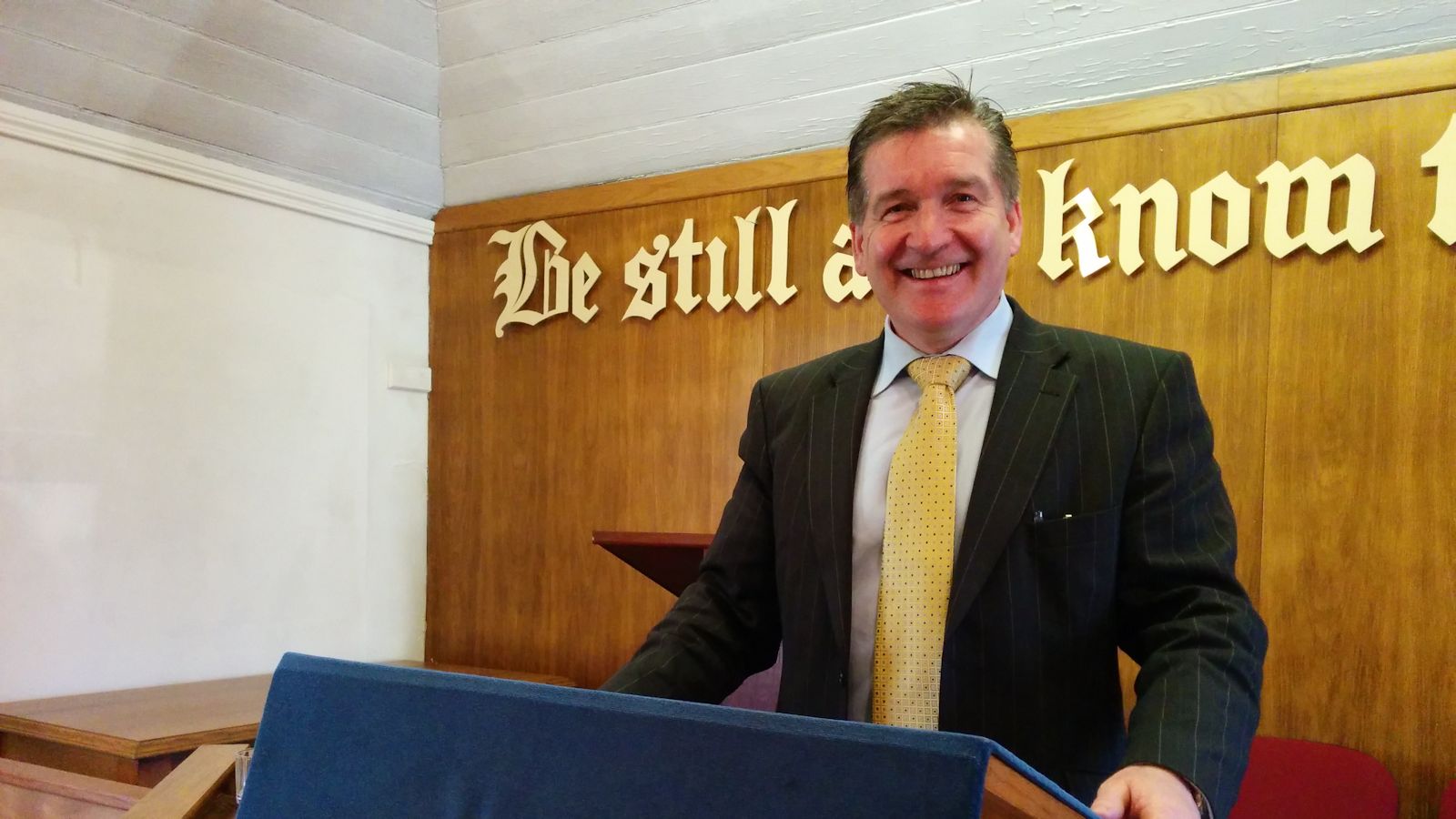
Preacher: Rev. David McLaughlin
Bible Reference: 1 Thessalonians 4:16
Podcast
Sermon Summary
This sermon is a detailed exposition of the Apostle Paul’s teaching on the Second Coming of Jesus Christ. It draws on 1 Thessalonians 4:13–18 and sets out to give believers comfort, encouragement, and clarity concerning the hope of the resurrection and the visible return of Christ. The preacher builds his message around four key points — the promise, the particulars, the programme, and the purpose of Christ’s coming — all grounded in the redemptive and resurrection work of Jesus.
Context and Background
Paul’s First Epistle to the Thessalonians was, the preacher explains, the earliest of all Paul’s letters — the first he ever wrote to a New Testament church. The congregation in Thessalonica was relatively young, only a few months old, yet already facing serious persecution. Some of its members had been brutally murdered, imprisoned, expelled from their homes, or deprived of their livelihoods.
In the midst of this suffering, the believers wrestled with deep questions about death and the afterlife. They wondered:
- Would those who had already died miss out on Christ’s return?
- Would death somehow delay their resurrection?
- Were their loved ones’ bodies lost forever?
- Had death robbed them of the fulfilment of Christ’s promises?
Paul addresses their concerns not by telling them to look within themselves for strength or comfort, but by directing their eyes heavenward. The essence of his encouragement is bound up in one central truth: the Lord Jesus is coming again.
From the very first chapter to the last, the entire letter is structured around this great expectation — the personal, visible, physical return of Jesus Christ in power and glory. The preacher emphasises that waiting for Christ’s return is not a peripheral matter, nor a piece of religious speculation. It is the defining posture of the Christian life. It shapes how believers endure suffering, process loss, and live holy and hopeful lives.
The Central Message
The sermon unfolds the truth that the Lord’s coming is both certain and comforting. The preacher outlines four major ideas, supported by the text.
1. The Promise of His Coming Is Factual
In verse 16, Paul writes: “For the Lord Himself shall descend from heaven.” The preacher stresses the biblical certainty of this statement. The wording does not suggest possibility or symbolism but assurance and divine fact. Paul does not write “if” or “might” but “shall”.
This promise of Christ’s return is rooted not in an event but in a person — the Lord Himself. It will not be an angel or a heavenly delegate who comes; not even the Virgin Mary. It will be the same Jesus who was born at Bethlehem, who lived sinlessly, who died upon the tree, who rose bodily from the tomb, and who ascended visibly into heaven.
Acts 1:11 records the angel’s words to the disciples: “This same Jesus… shall so come in like manner as ye have seen him go into heaven.” The preacher draws attention to this phrase: “this same Jesus.” It confirms that the return will be literal, bodily, personal, and visible.
To suffering believers in Thessalonica, that certainty was no small comfort. Pagan religions had no doctrine of resurrection, no hope beyond the grave, and no answer to grief. But Christ’s words — “I will come again” — carried genuine consolation. The preacher relates this also to Christ’s encounter with Martha in John 11, where Jesus says: “Thy brother shall rise again.” That same assurance applies to every Christian facing bereavement. Christ’s return, promised and guaranteed by His own word, means that death, for the believer, is not the end.
2. The Particulars of His Coming Are Foundational
From verse 14 — “For if we believe that Jesus died and rose again…” — the preacher explains that the entire doctrine of Christ’s return is founded upon the truths of His death and resurrection.
The conditional phrase “if we believe” does not express doubt but rather presupposes faith. It could be read as “since we believe.” Before there could ever be the crowning day of His coming, there had to be the cross day of His suffering.
Christ’s death was not a mere historical event; it was a redemptive act that guarantees everything to follow. His death and resurrection secure the salvation of the soul and also the future redemption of the body.
Paul reminds believers in 1 Corinthians 6:19–20 that their bodies are temples of the Holy Spirit, bought with the precious blood of Christ. Therefore, the body belongs to the Lord; it is not meant for immorality or corruption. While our current bodies are subject to illness, decay, and death, they are not discarded or forgotten by God. Christ died to redeem the body as much as the soul.
Death separates soul and body — the soul goes to be with the Lord, while the body returns to the earth — but that separation is temporary. Because Christ died and rose again, He will one day raise and transform the bodies of His people.
Paul’s teaching in 1 Corinthians 15 and Philippians 3 underscores this point:
- “We shall not all sleep, but we shall all be changed.”
- “Who shall change our vile body, that it may be fashioned like unto his glorious body.”
Thus, the particulars of Christ’s coming are founded on the reality of His redemptive work. He died to redeem, raise, and change the human body, and His Second Coming will be the full unveiling of that redemption.
3. The Programme of His Coming Is Focal
Paul not only assures the church of Christ’s return but also outlines the order in which events will occur. Verse 16 describes this “programme”:
- The Lord Himself descends from heaven.
His descent is accompanied by three signals:
- A shout, the command of divine authority, echoing through the heights.
- The voice of the archangel, representing heaven’s response to the sovereign King’s movement.
- The trumpet of God, signalling divine triumph and assembling the redeemed for the King’s arrival.
- The dead in Christ shall rise first.
Those who have already died will rise before the living are changed. Their souls, now absent from their bodies and present with the Lord, will be re-united with transformed, glorified bodies. The dead saints are not forgotten or disadvantaged; they lead the way. - The living believers are caught up together with them.
Those still alive at Christ’s coming will be instantaneously changed — their corruptible bodies made incorruptible — and together with the resurrected saints, they will meet the Lord in the air.
The preacher explains that this sequence reveals divine order, not chaos. The resurrection of the dead precedes the transformation of the living, and together they go to meet the returning Lord.
He identifies himself as a historic premillennialist, understanding that Christ’s visible return precedes the millennial reign — a period of righteous rule culminating in the final judgment and the inauguration of a new heaven and a new earth.
4. The Purpose of His Coming Is Fruitful
Finally, the preacher turns to the reason and practical outcome of this doctrine. The Second Coming is not written to stimulate curiosity but to bring real transformation and comfort to believers.
1. It brings comfort for the grieving.
This doctrine speaks directly into hospital rooms, funeral services, and persecuted churches. It proclaims that death is temporary and not final. The grave will not have the last word, for the returning Christ will make all things new.
2. It calls believers to holiness.
Waiting for Christ’s return is a purifying hope. It encourages believers to live uprightly, to glorify God in body and spirit, to persevere through temptation, and to guard moral integrity.
3. It strengthens perseverance.
The knowledge that Christ will one day intervene to put all things right sustains believers through injustice and affliction. Every wrong will be made right; every tear wiped away.
4. It brings glory to Christ.
The One once crowned with thorns will be seen crowned with many crowns. The rejected King will return as the rightful ruler of all nations. His majesty will be vindicated, His people vindicated with Him, and all creation will acknowledge His lordship.
Concluding Emphasis
The preacher closes by reviewing the four points:
- The promise of His coming is factual — it is certain because Christ Himself has vowed it.
- The particulars are foundational — they rest on the redemptive work of the cross.
- The programme is focal — the dead rise first, then the living, both changed and caught up together.
- The purpose is fruitful — bringing comfort, holiness, perseverance, and glory.
He reminds the congregation that belief in Christ’s death and resurrection shapes everything: how we live, how we face death, and how we view the future. The Second Coming of Christ is not an abstract doctrine but a vibrant, personal hope for all who believe.
Christ’s victory over death guarantees our own. When He appears, both soul and body will be united, transformed, and glorified. Death will be undone, the curse removed, and creation renewed.
The sermon ends by noting that a future message will address the “most controversial aspect” of this doctrine, suggesting a continuation of the exposition in greater depth.