
Date: SUN 11:30am 15th March 2026
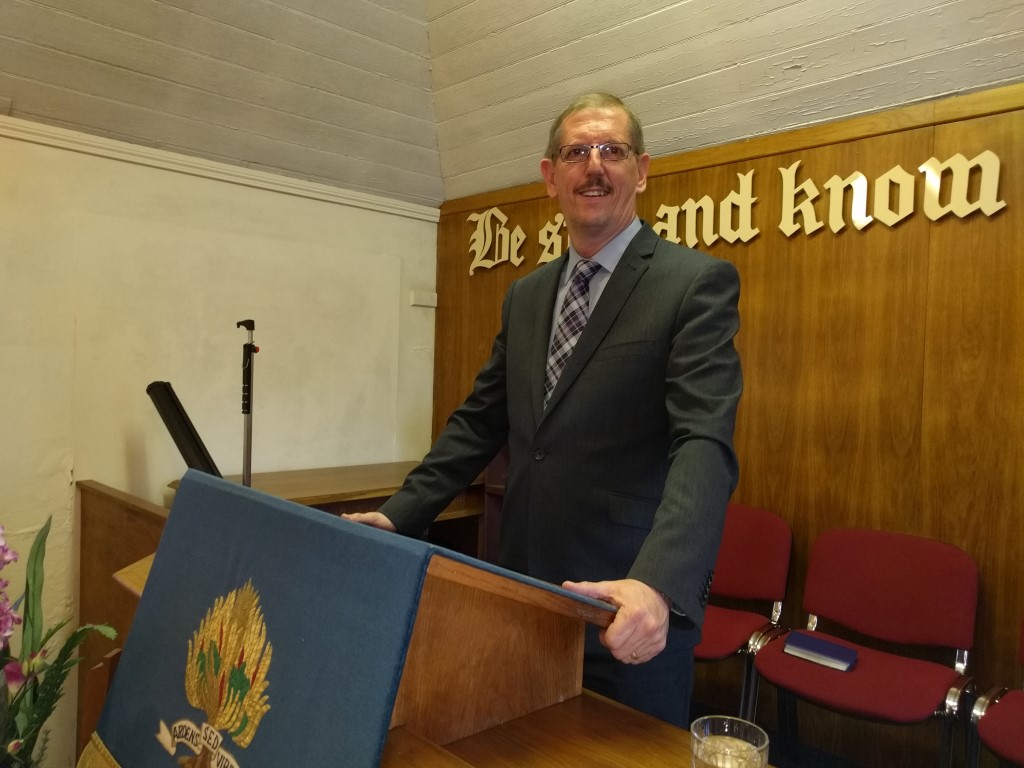
Preacher: Rev. David McLaughlin
Bible Reference: Judges 13:2-5
Podcast
Sermon Summary
Introduction: The Pattern of God’s Work in Hidden Places
Throughout the panorama of Scripture, the Almighty reveals a profound pattern: He delights to accomplish His greatest works through the weak, the discounted, and the nameless. The Reformed believer sees this not as coincidence, but as the unfolding of divine sovereignty—the mystery of grace magnifying itself in humble vessels.
The thirteenth chapter of Judges, read from the venerable King James Bible, draws our attention not first to Samson, the mighty Nazirite who shook the pillars of Dagon’s temple, but to his mother, known only as the wife of Manoah. The narrative introduces us to her without even the dignity of a name—yet through her, the covenantal purposes of God advance toward redemption.
What appears as obscurity in man’s eyes is, to God, cosmic significance. The Spirit of God begins great awakenings not in palaces, but in prayer closets; not amid the thunder of armies, but in a woman’s quiet faith. In this woman—barren, burdened, and unnamed—we behold the anatomy of grace: sovereign election, secret communion, sanctified obedience, and steadfast intercession.
I. The Darkness of the Age: Apostasy and Chastisement
“And the children of Israel did evil again in the sight of the LORD; and the LORD delivered them into the hand of the Philistines forty years.”
— Judges 13:1 (KJV)
Israel during the age of the Judges was a nation staggering between covenant memory and carnal appetite. The law of Moses was forgotten, idolatry flourished, and moral anarchy reigned: “Every man did that which was right in his own eyes.” This is the very image of postmodern man—religiously numb but sentimentally self-assured.
The Reformed interpretation sees in this cycle of rebellion and restoration a mirror of total depravity. Left to himself, man cannot sustain obedience; divine grace must intervene repeatedly. The forty years of Philistine oppression signify a generation-long judgment—a national reminder that without the Lord, freedom turns to bondage.
Even so, God’s electing love never extinguishes. When all appears lost, when Israel has neither prophet nor prayer, the covenant God still remembers His promise. His plan for deliverance—in this case, through Samson—was already forming while the nation lay spiritually comatose.
Thus, the story begins not with human initiative, but with divine intervention. The Lord stoops down to visit an obscure, barren woman. The Savior’s line of redemption is never dependent on visibility—it begins in obscurity and works its way upward in glory.
II. The Salvation of an Unnamed Mother: Sovereign Grace in Motion
“And the angel of the LORD appeared unto the woman…”
— Judges 13:3 (KJV)
Before there was Samson, there was grace. Before there was deliverance, there was a visitation.
The “angel of the LORD” in the Old Testament is more than a created messenger—it is the pre-incarnate Christ, the visible manifestation of the invisible God. The same Lord who would one day be born of a woman here descends to announce the birth of another deliverer. The story, in essence, is Christ foreshadowing Christ.
Manoah’s wife was not praying for greatness. She was pleading only for a child. In her barrenness, she embodies every heart that knows its helplessness before God. Barrenness in Scripture often symbolizes not merely the absence of children, but the futility of human effort apart from grace—and into that hopeless soil, God plants the seed of His plan.
Notice:
- Grace comes before repentance.
- Deliverance arises before Israel cries out.
- God moves while His people are indifferent.
This is sovereign grace at work. As Paul wrote, “It is not of him that willeth, nor of him that runneth, but of God that sheweth mercy.” (Romans 9:16).
The Almighty begins His saving work not with applause, but with a whisper to an overlooked woman. What heaven begins in secret will one day shake nations.
III. The Supplication of the Woman: The Hidden Furnace of Prayer
To the discerning reader, the narrative implies a profound reality: this woman had been seeking God long before He spoke to her. Her readiness to receive divine revelation reveals a heart already tuned to Heaven’s frequency.
Throughout Church history, prayerful mothers have been the midwives of spiritual awakenings. The Angel did not first appear to the official judges or to the priests, but to a solitary woman bowed low in faith. This reveals something central to Reformed piety: true revival begins not in public ceremony but in private supplication.
A. The Hidden Power of Maternal Prayer
The tears of believing mothers have always been the quiet architects of redemption. When Spurgeon said, “I cannot tell how much I owe to the prayers of my mother,” he spoke for thousands. Augustine of Hippo confessed that his mother Monica “wept for me more than mothers weep for the death of their children.”
Think of this: had Monica not prayed, the Augustinian theology we now treasure might never have come forth. Indeed, every theological mountain begins as a tear in a mother’s prayer closet.
B. A Rebuke to Modern Apathy
Our age suffers from the opposite spirit—busy mothers but prayerless homes. Excelling in work, media, and organization, yet neglecting the one labor that changes eternity: intercession. The women of Judges 13 and church history remind us that true influence is born on the knees.
Godly mothers do not merely raise children; they raise intercessors, preachers, and saints by persistent cry. As James 5:16 declares, “The effectual fervent prayer of a righteous man availeth much.” The same is true of a righteous woman.
IV. The Sanctification of the Mother: Consecration Before Conception
“Now therefore beware, I pray thee, and drink not wine nor strong drink, and eat not any unclean thing.”
— Judges 13:4 (KJV)
Here, grace demands response. Salvation always leads to sanctification. The woman who received divine promise was now called to divine discipline.
The Nazarite vow was to be Samson’s lifelong calling—but it began with his mother’s lifestyle. God instructed her to separate herself from certain foods, drinks, and associations. This carries a profound spiritual principle: the consecration of the next generation often depends upon the obedience of the previous one.
A. The Pattern of Separation
In the words of Ephesians 1:4, God “hath chosen us… that we should be holy and without blame before him.” Holiness, the Puritans taught, is not mere restraint but the soul’s delight in God above the world.
The unnamed woman’s abstinence symbolized the Christian’s call:
- Abstaining from worldly intoxication (literal and figurative).
- Refusing to be defiled by cultural impurities.
- Living unto God even in private habits.
Reformed sanctification is not monastic withdrawal—it is engaged purity. The believer lives in the world yet remains untouched by its spiritual poison, as Noah did in his generation.
B. The Mother’s Influence on the Child
Before Samson would ever lift the jawbone of a donkey, his mother had already lifted her heart in obedience. Scripture shows repeatedly that the spiritual disposition of parents before God becomes the seedbed of their children’s character.
- Lois and Eunice shaped young Timothy’s faith (2 Timothy 1:5).
- Hannah’s vows birthed the prophet Samuel (1 Samuel 1–2).
- And here, an unnamed mother’s holiness birthed a deliverer.
What the modern world forgets is that parenthood is priesthood. Holiness at the hearth is as crucial as holiness in the pulpit.
V. The Communion of the Soul: Meeting God in Secret
“A man of God came unto me, and his countenance was like the countenance of an angel of God, very terrible.”
— Judges 13:6 (KJV)
Here is the apex of her spiritual life: communion with the divine. Twice the Angel appears, twice she receives heavenly revelation—each time she sits alone, humble, attentive.
A. Reality of Communion
This was no fantasy, no superstition. God manifests Himself truly to those who seek Him in spirit and truth. “Draw nigh to God, and he will draw nigh to you.” (James 4:8).
Her testimony reminds us that private encounters with God precede public usefulness. He shapes His servants in solitude before He displays them in service.
B. Reverence in Communion
Her description of the Angel’s “terrible” countenance exposes a theology nearly extinguished today: the fear of the Lord. Reverence has been replaced by casual familiarity, worship by entertainment. Yet every genuine encounter with God—including Isaiah’s vision in Isaiah 6—begins with trembling, not laughter.
In that holy fear is freedom. Those who tremble before God need fear no man.
C. Revelation in Communion
Each meeting brought clearer instruction: purity, promise, prophecy. The Lord progressively illuminated her understanding. Here is experiential theology: knowledge growing through personal meeting with the living God, not mere recitation of doctrine. The Reformed faith, properly understood, is never dry scholasticism—it is truth aflame.
VI. The Fulfillment: The Birth and Mission of Samson
“And the woman bare a son, and called his name Samson: and the child grew, and the LORD blessed him.”
— Judges 13:24 (KJV)
The fulfillment of divine promise came precisely as foretold. From the barren womb of an unnamed woman arose the last of Israel’s judges, a man mighty yet flawed—Samson.
A. Typology and Christ’s Shadow
The parallels between Samson and Christ are deliberate:
- Both births were announced by angels.
- Both mothers were chosen through divine grace.
- Both children were consecrated from the womb.
- Both lived to deliver God’s people from oppression.
Yet the differences magnify the gospel. Samson’s strength failed; Christ’s never did. Samson’s death brought partial deliverance; Christ’s death brought eternal salvation. Thus, the story preaches Christ before Bethlehem was ever heard of.
B. A Model of God’s Faithfulness
Every fulfilled promise testifies to immutable grace. The child grew “and the Lord blessed him”—evidence that divine promises, once given, will ripen in God’s time. The same Lord who remembered Manoah’s wife remembers those who wait in quiet faith.
VII. The Enduring Legacy: The Theology of Unnamed Mothers
It is no accident that her name is missing. Scripture often omits names when the identity is irrelevant to the point: the focus is not on the vessel but on the God who fills it.
From Sarah’s laughter to Hannah’s weeping, from Elizabeth’s joy to Mary’s song, each generation of mothers testifies to this truth: the hand that rocks the cradle may indeed move the world, when that hand is clasped in prayer.
A. God’s Measure of Greatness
In the kingdom economy, obscurity is not failure—it is often divine strategy. Heaven sees differently than earth. God records the unnamed woman’s faith permanently in the inspired canon. The forgotten by men are memorialized by God.
B. The Modern Implication
Today’s culture idolizes visibility. Influence is measured in likes, titles, and platforms. Yet judges 13 interrupts this delusion: God’s most decisive works occur beyond human applause. Holiness, not notoriety, determines usefulness.
Every Christian mother, grandmother, and woman of faith should recognize that to raise a single godly child, to hold a family together in prayer, to point one soul toward Christ, may be among the most decisive acts of redemptive history.
VIII. The Reformed Application: Holiness Unto the Lord
- Sovereign Grace Precedes Human Response – The woman did not seek God first; God sought her. Salvation begins in divine initiative.
- Prayer Is the Engine of Deliverance – Every revival of family or nation begins with hidden intercession.
- Holiness Is the Mother of Power – Where faith is active, sanctification follows.
- Obedience Before Visibility – God works through consecration before He works through influence.
- The Gospel Resonance – Samson’s birth points forward to Christ, whose eternal deliverance redeems humanity’s corruption fully.
Conclusion: The Unseen Hand That Shapes Eternity
The unnamed mother of Judges 13 stands as a rebuke to spiritual apathy and as a beacon of hope to obscure saints everywhere. In her we see the theology of small things:
- unseen prayer,
- unrecorded names,
- unpublicized obedience—
and yet through these, God directs the flow of history.
When all around seems dark, when cultural Philistines rule the land, when faith feels barren, the Lord yet whispers His purpose to His hidden ones. He still visits praying hearts, still calls souls to separation, still raises deliverers through the wombs of the forgotten.
May the Spirit grant to our age a generation of godly mothers like her—women of the Word, women of reverence, women of perseverance. And may we, like her, live lives that may be unnamed on earth but inscribed forever in Heaven’s record.
“He that dwelleth in the secret place of the Most High shall abide under the shadow of the Almighty.”
— Psalm 91:1 (KJV)