
The apostle Paul’s teaching in 1 Corinthians 11:26–34 presents one of the most solemn and searching passages in all of Scripture concerning the observance of the Lord’s Supper. Within these verses, we find both a warning and a blessing: a warning against careless participation and a blessing for those who approach the table with faith, humility and discernment.
Paul reminds the church that each time believers eat the bread and drink the cup, they “show the Lord’s death till he come”. The Supper is not a mere memorial but a visible proclamation of Calvary—of Christ’s body broken and his blood shed for sinners. However, this sacred act also carries great spiritual responsibility. Those who partake “unworthily,” without discerning the Lord’s body, are said to be “guilty of the body and blood of the Lord.”
In examining Paul’s instruction, three vital aspects emerge. To approach the Lord’s Table rightly, one must understand Christ’s sacrificial body, Christ’s spiritual body, and the discipline of Christ’s saving body.
Discerning Christ’s Sacrificial Body
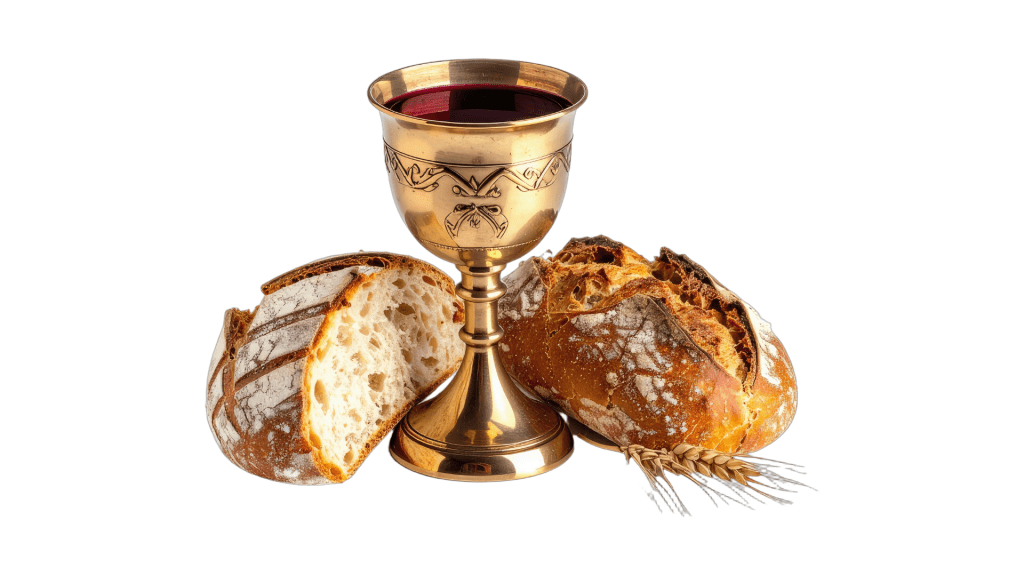
When believers take the bread and the wine, they are not engaging in a mystical transformation of the elements. The bread remains bread, and the wine remains wine. The notion that the elements become the literal body and blood of Christ—the Roman Catholic doctrine of transubstantiation—is rejected by the Reformed faith. Instead, the bread and wine serve as signs and seals of a spiritual reality.
Christ is spiritually present at the Supper, not physically contained within the elements. Faith, not sight, apprehends his presence. The bread signifies his true humanity—his body given for us—and the wine symbolises his substitutionary atonement, his blood shed for the remission of sins. These emblems point to the once-for-all sacrifice of Calvary, never to be repeated, and sufficient for all who believe.
To fail in discerning Christ’s sacrificial body is to treat his death lightly, to approach the table without reflection or reverence. The Lord’s Supper demands self-examination and repentance from sin—both open and hidden. It demands renewed faith in Christ alone. None approach the table as worthy in themselves, but only as forgiven sinners coming humbly to remember the Saviour who died for them.
Discerning Christ’s Spiritual Body
Paul’s rebuke to the Corinthians extends beyond their doctrinal failure; it reaches into their relational conduct. The church in Corinth had divided into factions, despising the poor and humiliating some within their fellowship. They professed communion with Christ while wounding his people.
Calvin famously observed that “you cannot love the Head and despise the body.” The church is Christ’s spiritual body, and to mistreat fellow believers is to fail in discerning this fact. True participation in the Lord’s Supper therefore requires love among brethren and unity in the congregation.
A local church that gathers for communion while harbouring bitterness or pride is guilty of hypocrisy. The table is meant to remind believers not only of their personal union with Christ but also of their shared membership in one body. The Supper, rightly observed, binds the redeemed together in humility, equality and peace.
The Discipline of Christ’s Saving Body
Paul declares that because many in Corinth had partaken unworthily, “many are weak and sickly among you, and many sleep.” This solemn statement indicates that divine chastisement had fallen upon the congregation. The Lord had permitted spiritual weakness, sickness and even premature death within the fellowship as a form of discipline.
God takes the worship of his people seriously. Irreverence toward the Lord’s Supper invites his corrective hand—not as condemnation, but as chastening. As Paul explains, “When we are judged, we are chastened of the Lord, that we should not be condemned with the world.” God disciplines his children in order to preserve them from greater judgment.
Yet this truth must not lead to speculation, as if every sickness were the direct result of sin. God alone knows the heart. Nevertheless, the Corinthian example stands as a warning: careless participation in the Supper profanes a holy ordinance, and God will not leave such irreverence uncorrected.
The Duty of Self-Examination
Paul writes, “Let a man examine himself, and so let him eat of that bread and drink of that cup.” Self-examination precedes participation; repentance, reverence and faith are the proper garments for the Lord’s Table.
This self-judgment includes an honest reckoning with one’s own sins, a readiness to forgive others, and a desire for reconciliation. The Supper is not for the perfect but for the penitent. It is not a place of condemnation but of communion—a meeting between the soul and its Saviour.
True participation is never casual. It is wrapped, as the preacher rightly said, “in the shadow of Calvary.” When Christ instituted this Supper, he did so on the night of his betrayal. The bread and the cup are therefore intertwined with the agony of the cross. Every time the believer partakes, he is called to remember not only the historical fact of crucifixion but also the personal reality: “The Son of God, who loved me, and gave himself for me.”
Faith feeds upon Christ in this sacrament—not bodily, but spiritually. The Supper strengthens weak faith, confirms divine promises, and assures the heart that the believer is part of Christ’s body and the object of his saving grace.
Conclusion
The Lord’s Supper is both a memorial and a means of grace. It unites the church around the Saviour’s sacrifice, reminding every man and woman of their complete dependence upon the crucified Christ. Yet it is also a solemn occasion. Those who come must do so thoughtfully, discerningly and prayerfully. To partake unworthily invites discipline; to partake rightly brings communion and blessing.
God’s people are therefore called to approach the table not with fear, but with awe; not in pride, but in penitence; not as spectators, but as those who actively remember and proclaim the Lord’s death until he comes again.
In all this, the message is clear: to discern the Lord’s body is to honour his sacrifice, love his people, and walk humbly in his discipline and grace.