
Part 1: Adultery
Part 2: Abortion
Part 3: Euthanasia
Part 4: Stem Cell Research
Part 5: Homosexuality
Introduction: The Timeless Relevance of Scripture
In an age of swift societal change and evolving ethical debates, ancient writings might seem distant or outdated. Yet, as powerfully demonstrated in a sermon from February 2008, the Bible remains a vibrant, living document. Written over a thousand years before Christ’s incarnation, its truths are as fresh and applicable today as when first penned. Unlike other ancient texts that fade into irrelevance, Scripture endures as the inspired Word of God, offering consistent principles on modern issues such as euthanasia, abortion, stem cell research, and in vitro fertilisation (IVF).
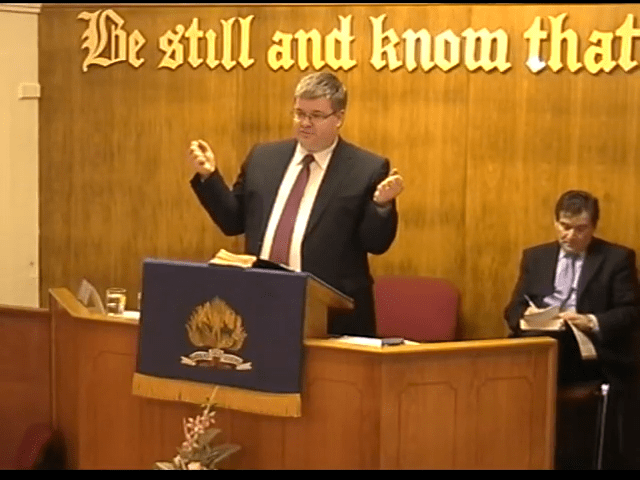
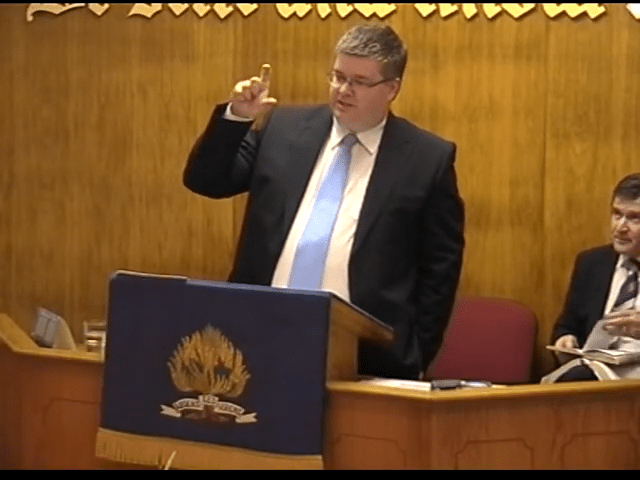
Delivered as part of a Christian Ethics Conference at Carryduff Free Presbyterian Church in County Down, Northern Ireland, this sermon was preached by Dr. Lindsay Wilson, then the minister of Castlederg Free Presbyterian Church in County Tyrone. A qualified General Practitioner (GP) with extensive clinical experience, Dr. Wilson combined medical insight with pastoral authority, making his exposition on life-and-death matters particularly compelling. The conference, hosted under the leadership of Rev. David McLaughlin, addressed pressing moral questions from a firmly biblical standpoint, equipping believers to navigate contemporary challenges through Scripture. Other sessions in the series included topics like adultery, preached by Rev. McLaughlin on 17 February 2008, and explorations of the sanctity of life, with Dr. Wilson delivering messages on the origins of human life, abortion, and this focused examination of euthanasia based on 2 Samuel 1.
Dr. Wilson, who had been elected Deputy Moderator of the Free Presbyterian Church of Ulster in January 2008, urged listeners to read the Bible sequentially—from Genesis, the “book of beginnings,” onward—rather than fragmentarily. He likened haphazard reading to dipping into a novel at random pages, leaving characters and plot incomprehensible. For instance, he humorously described attempting to read a thick novel by starting midway, only to be baffled by unfamiliar names like “Jack and Jemima.” Similarly, jumping into later biblical books without foundational knowledge from Genesis leads to confusion when recurring themes or figures reappear. Holistic engagement, he argued, reveals the Bible’s internal consistency: principles established in Genesis remain unchanged in Samuel or Hebrews. This approach, he believed, empowers believers to discern right from wrong in a world grappling with bioethical dilemmas, such as euthanasia, which he planned to address alongside stem cell research and cloning in subsequent talks.
Dr. Wilson’s dual expertise as a physician and minister lent weight to his teachings. Having practiced medicine in Scotland and Northern Ireland, he drew from real-life encounters to illustrate scriptural truths. His ministry at Castlederg spanned over two decades until his retirement in November 2022, marked by a thanksgiving service celebrating his faithful preaching of the Gospel, pastoral care, and involvement in denominational missions. Now, in January 2026—nearly 18 years after the sermon—its warnings resonate amid ongoing global debates on assisted dying.
In the UK, the Terminally Ill Adults (End of Life) Bill, which passed the House of Commons in 2025, continues through scrutiny in the House of Lords, with debates ongoing in the Committee stage as of early January 2026. The Bill, aimed at allowing terminally ill adults in England and Wales to request assistance to end their lives under safeguards, must complete all stages before the parliamentary session ends in early May 2026, or it will fail. Notably, it does not apply to Northern Ireland, where assisted suicide remains illegal under the Suicide Act 1961, punishable by up to 14 years’ imprisonment, as health matters are devolved.
Separate developments include Jersey’s anticipated vote on an assisted dying law in January 2026 and Scotland’s Assisted Dying for Terminally Ill Adults (Scotland) Bill progressing through its parliament. These contemporary shifts highlight the sermon’s enduring call to evaluate such issues through unchanging biblical lenses.
The Biblical Narrative: Saul’s Death and the Amalekite’s Fate
The sermon commenced with a heartfelt prayer, seeking divine illumination for the congregation as they delved into the Scriptures. Dr. Wilson praised God for the Bible’s preservation through centuries, describing it as “God-breathed” and eternally abiding. He implored the Holy Spirit, the author of the text, to inscribe its truths on listeners’ hearts, echoing Psalm 119:11: “Thy word have I hid in mine heart, that I might not sin against thee.” This invocation set a reverent tone before turning to the core passage: 2 Samuel 1:1-16.
This chapter unfolds in the immediate aftermath of the battle at Mount Gilboa, detailed in the preceding book of 1 Samuel chapter 31, where King Saul and his three sons, including Jonathan, meet their demise at the hands of the Philistines. Dr. Wilson encouraged familiarity with this context, noting how sequential reading enhances comprehension—much like understanding a story’s climax requires knowing its buildup. David, having just returned from defeating the Amalekites and residing in Ziklag for two days, receives a visitor on the third day: a man from Saul’s camp, clothes torn and head dusted with earth, signs of mourning in ancient Near Eastern culture.
The Amalekite recounts the chaotic scene: the Israelites fleeing, many slain, and Saul and Jonathan dead. Pressed by David for details, he describes stumbling upon Saul on Mount Gilboa, leaning on his spear as enemy chariots closed in. Saul, spotting him, inquires his identity—”I am an Amalekite”—and begs: “Stand, I pray thee, upon me and slay me, for anguish is come upon me, because my life is yet whole in me.” The young man complies, slaying Saul, convinced he could not survive his fall. He then removes the king’s crown and bracelet, bringing them to David, perhaps seeking reward or alliance, as David had been anointed Saul’s successor.
David’s response is multifaceted and instructive. First, he and his men rend their garments—a dramatic expression of grief common in biblical times, symbolising inner turmoil. They mourn, weep, and fast until evening, not only for Saul and Jonathan but for the people of Israel fallen by the sword. This communal lament underscores the value placed on life, even that of a flawed king like Saul, who had pursued David relentlessly. Then, in a scene Dr. Wilson likened to a courtroom proceeding, David re-interrogates the Amalekite: “Whence art thou?” Confirming his identity establishes the facts formally, mirroring legal protocols where identity is verified at the outset.
David’s condemnation is swift and severe: “How wast thou not afraid to stretch forth thine hand to destroy the Lord’s anointed?” He summons a young man to execute the Amalekite, declaring, “Thy blood be upon thy head, for thy mouth hath testified against thee, saying, I have slain the Lord’s anointed.” This judicial act aligns with Genesis 9:6: “Whoso sheddeth man’s blood, by man shall his blood be shed.” Dr. Wilson presented this as a direct parallel to voluntary euthanasia: Saul, mortally wounded and in agony, requests a hastened death to avoid Philistine torture; the Amalekite obliges out of perceived compassion, reasoning Saul’s inevitable demise justified the act. Yet David deems it murder, violating the sanctity of the “Lord’s anointed.” The narrative illustrates that even in terminal suffering, human intervention to end life usurps God’s authority over its timing: “There is a time to be born, and a time to die” (Ecclesiastes 3:2). Dr. Wilson emphasised how this ancient account, set against a battlefield’s chaos, speaks volumes to modern hospital bedsides, where similar pleas arise amid pain and prognosis.
Euthanasia Defined: A Euphemism for Murder?
Dr. Wilson began his Greek lesson with a nod to a linguistics expert in the audience, keeping it basic yet precise. “Euthanasia” derives from two roots: “eu,” meaning “good” or “easy,” and “thanatos,” signifying “death.” Combined, it implies a “good death” or “easy death,” but he swiftly dismantled this as a euphemism—a politically correct veil for what Scripture calls murder. He compared it to terms like “termination” or “abortion,” which soften the reality of ending life. “Mercy killing,” another phrase, he labelled a contradiction in terms: there is no mercy in disobeying divine law or propelling someone into eternity unprepared spiritually.
Central to this critique is the Sixth Commandment: “Thou shalt not kill” (Exodus 20:13), a clear prohibition against unlawful homicide. Dr. Wilson outlined three biblically sanctioned exceptions: self-defence, as in Exodus 22:2-3, where a thief slain during a night break-in incurs no bloodguilt; capital punishment, rooted in Genesis 9:6, emphasising man’s creation in God’s image as the rationale for such justice; and just wars, where life is taken in defence of righteousness. Beyond these, any termination of human life is forbidden.
Humanity’s exceptional status underpins this commandment. On the sixth day of creation (Genesis 1:26-27), God formed man distinctly: while animals were spoken into existence en masse, He moulded Adam from the dust—created on day one—and breathed into him the “breath of life,” making him a “living soul” (Genesis 2:7). This soul, eternal and spiritual, mirrors God’s essence as pure, invisible spirit (John 4:24). Animals lack this; thus, euthanising a suffering pet is permissible, as it ends mere physical existence without eternal ramifications. But for humans, the soul’s immortality demands reverence: bodies may endure 70-80 years, but spirits persist forever, in heaven or hell.
Euthanasia, typically involving terminal illness, pain, or diminished quality of life, ends life artificially—via lethal injection or overdose. Dr. Wilson argued it abuses the body while ignoring the soul, potentially condemning the unsaved to eternal torment. He simplified human composition as body and soul/spirit, avoiding trichotomy debates, but stressed the spiritual dimension’s primacy. God’s legislation applies uniquely to humans because of this imago Dei: even in capital punishment, the reason is “for in the image of God made he man.” Practising euthanasia oversteps into God’s domain, a perilous presumption. Dr. Wilson warned that such acts, often rationalised as compassionate, echo the Amalekite’s judgment call on Saul’s survivability, but Scripture condemns them unequivocally.
Modern Realities: Slippery Slopes and Historical Parallels
Dr. Wilson transitioned to contemporary applications, highlighting euthanasia’s prevalence where legalised. In the Netherlands, operational since the 1990s, one year’s statistics showed 2,700 lethal injections—enough to fill Belfast’s Waterfront Hall, with overflow. Shockingly, half were involuntary: doctors decided unilaterally, often prioritising economics over ethics. Intensive care costs, he noted from experience, run thousands of pounds daily; with limited resources, decisions devolve into “playing God,” favouring cost savings over life prolongation.
He shared a true story from Holland: an 80-year-old woman with pneumonia, otherwise fit, refused hospitalisation fearing age-based euthanasia. Her GP assured protection, but upon visiting, found her euthanised to free a bed amid high admissions. Dr. Wilson half-jokingly advised avoiding Dutch holidays or illnesses, underscoring the risk to vulnerable patients. Voluntary euthanasia, where requested, slides into involuntary when authorities deem lives burdensome.
Historical echoes amplify the peril. Adolf Hitler’s regime euthanised those with “life not worthy of life,” including disabled newborns, aiming for a “master race.” Midwives flagged imperfections for elimination. The Holocaust killed two million children in six years; modern US abortions claim one million annually—achieving in two years what Nazis did in six. Nations that warred against such atrocities now legalise parallels, from abortion to euthanasia.
In the UK and Ireland, though not fully legal, covert practices occur. A 1990s GP survey showed unanimous opposition; by 2008, over 50% supported it. Case law sets precedents: Dr. Nigel Cox’s 1992 conviction for attempting murder via potassium chloride injection on a 70-year-old with terminal cancer and rheumatoid arthritis resulted in a suspended sentence and GMC reprimand, allowing continued practice. Potassium chloride, Dr. Wilson explained from medical training, stops the heart instantly if injected rapidly, a fact Cox knew. Charged with attempted rather than actual murder due to ambiguity on causation, this establishes leniency for similar acts.
Abortion parallels: in Northern Ireland, outside the 1967 Abortion Act, the Bourne case (1938) justifies terminations for handicaps like Down’s syndrome or spina bifida. Dr. Wilson recounted his obstetrics rotation where Christian staff avoided involvement, performing routine duties but sidestepping abortions, which registrars handled without reproach, knowing their dubious legality.
These realities, Dr. Wilson argued, stem from eroding biblical values, leading to devaluation of life—from unborn to elderly.
Personal Reflections: A Doctor’s Dilemma
Dr. Wilson’s medical background infused his sermon with authenticity. He shared a night shift incident: administering diamorphine (heroin) incrementally to a dying patient for pain relief, he inadvertently suppressed her breathing. Reviving her with naloxone, he highlighted intent’s role—a slight dose increase could kill undetected, masked as analgesia. He suspected such “easy” euthanasias happen routinely, though unethical.
Another encounter: a patient in respiratory failure begged, “End it.” He refused, and she died naturally. High-profile cases like Diane Pretty’s—seeking prosecution immunity for her husband’s assistance amid motor neurone disease—illustrate the push for “rights.” Pretty lost in the House of Lords and died before appealing to Europe. Dr. Wilson critiqued human rights legislation as man usurping God’s ownership: we are created beings, not autonomous. Criminals gain protections; victims, less so. Life-ending “rights” contradict Scripture’s exceptions.
He extended to contraceptives: refusing the morning-after pill or IUDs, which prevent implantation post-conception (equating to abortion), led to professional clashes. One trainer grew angry at his stance; another respected it. Conscience, he noted, troubles compromisers.
These anecdotes reveal the frontline pressures in medicine, where ethical lines blur amid suffering pleas.
Conclusion: Standing Firm on God’s Principles
At the heart of the matter lies this profound truth: human life is not merely physical but encompasses an eternal spiritual dimension. While euthanasia may appear to offer relief from bodily suffering, it risks ushering an unsaved soul into everlasting separation from God—a consequence infinitely more terrible than any temporal pain. Dr. Wilson painted a sobering picture of deathbed scenes he had witnessed as a GP: families gathered around, convinced their loved one is now “better off,” comforted by religious rituals, rosary beads, or good works, yet unaware that true peace comes only through personal faith in the finished work of Christ on Calvary. Without that assurance, the soul faces the flames of hell for eternity.
Nearly two decades after this sermon was preached in February 2008, the ethical landscape continues to shift. In the United Kingdom, the Terminally Ill Adults (End of Life) Bill, which passed its second reading in the House of Commons in 2025, remains under scrutiny in the House of Lords as of January 2026. If enacted, it would permit terminally ill adults in England and Wales to seek assistance to end their lives under strict conditions. Meanwhile, Scotland advances its own Assisted Dying for Terminally Ill Adults Bill, and Jersey prepares for a further vote on assisted dying legislation. These developments illustrate how rapidly once-unthinkable practices are gaining ground.
Yet Dr. Wilson’s message remains as urgent today as it was then. From the unanimous opposition to euthanasia among GPs in the 1990s to the more than 50% support recorded by 2008, societal attitudes have shifted markedly. Once doctors are willing to carry out such acts, legal frameworks follow swiftly—as they have in Belgium, the Netherlands, and elsewhere. In the face of this momentum, believers are called to hold fast to the unchanging Word of God.
The preacher closed with a clear challenge: read the Scriptures as they were given, in their entirety and in order; allow the Holy Spirit to write their principles upon your heart; and stand resolutely when pressure comes to compromise—whether in the consulting room, the hospital ward, or everyday life. The living Word of God is not an ancient relic but a living guide, fully equipped to help us discern truth from error and to proclaim the Gospel of life in a world that increasingly devalues it. May we, like David in that ancient battlefield, honour the sanctity of the Lord’s anointed and entrust both the beginning and the ending of life into the hands of the One who alone has the right to determine them.