
Introduction: The Church in an Age of Disconnection
The twenty-first-century West suffers not from a lack of spirituality but from a crisis of belonging. Millions describe themselves as “spiritual but not religious.” They affirm belief in God yet reject the church, preferring private forms of devotion detached from any visible fellowship. This “de-churched” movement reflects the triumph of modern individualism—the idea that faith is purely personal, self‑constructed, and optional in community.
Scripture and the Reformed tradition teach the very opposite. From Adam’s household worship to Israel’s assemblies and finally to the apostolic church, God’s people have always been joined covenantally as one visible body under divine authority. Christianity is inherently social, not solitary; covenantal, not merely emotional.
Neglect of gathered worship is not a neutral habit but a spiritual malady. The writer of Hebrews warns, “Let us consider one another to provoke unto love and to good works: not forsaking the assembling of ourselves together, as the manner of some is” (Heb. 10:24–25). Sporadic attendance and private spirituality undermine discipleship, for God’s ordinary means of grace operate within the corporate body. According to the Westminster Shorter Catechism, “The Spirit of God maketh the reading, but especially the preaching of the Word, an effectual means of convincing and converting sinners” (Q. 89).
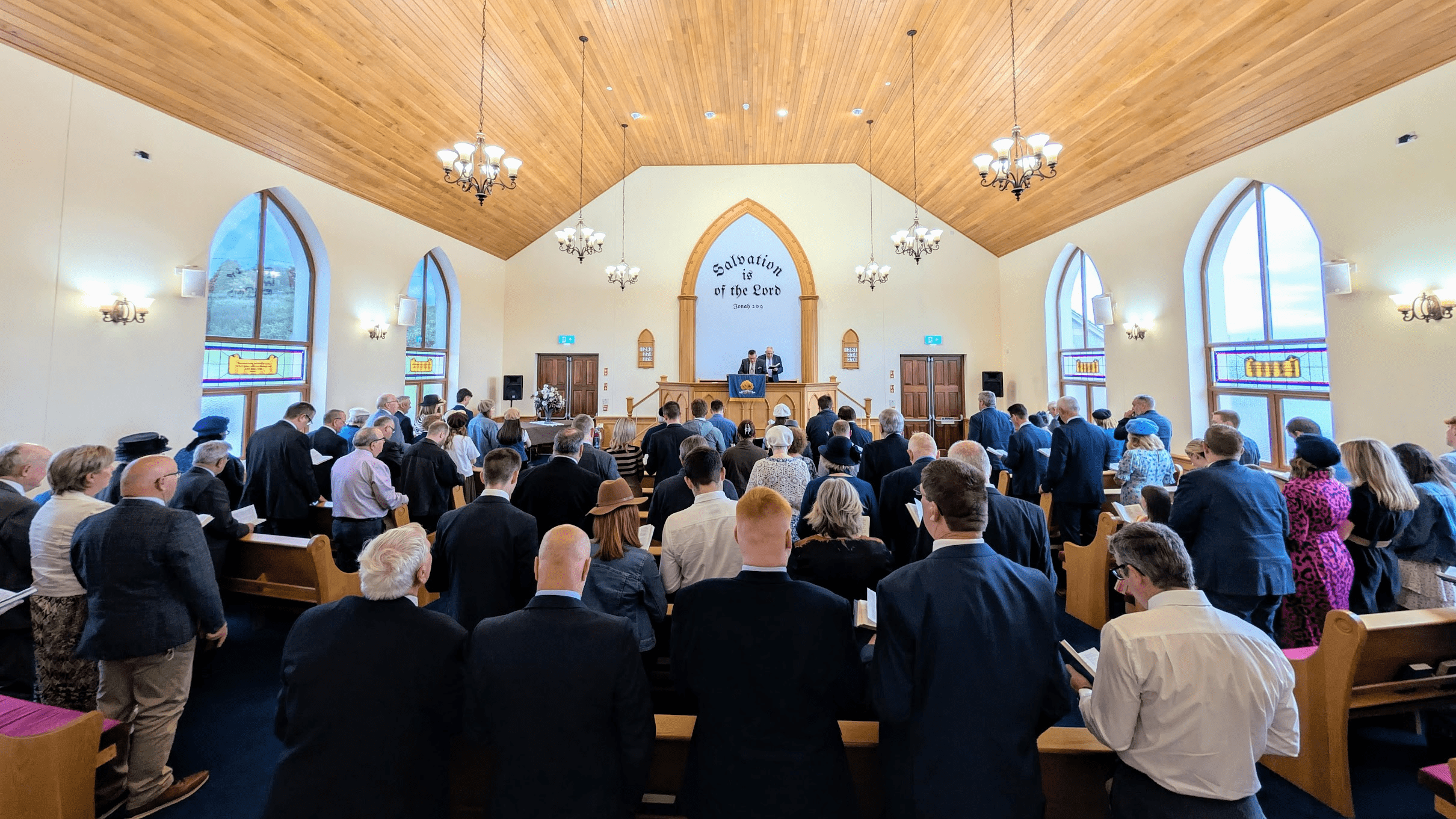
Public, corporate worship is therefore the climax of the Christian life—the arena where faith is nourished, discipline is practiced, and the Church’s witness is displayed before the world. To love Christ is to love His body.
1. The Church as a Collective Body Under Christ
The Apostle Paul describes believers as members of a single organism: “For as we have many members in one body… so we, being many, are one body in Christ” (Rom. 12:4‑5). The Church is Christ’s visible body on earth—an embodied fellowship rather than an abstraction.
Reformed theology distinguishes between the invisible church (the whole number of the elect united to Christ by the Spirit) and the visible church (those who profess the true faith with their children). The Westminster Confession states, “The visible Church… is the kingdom of the Lord Jesus Christ, the house and family of God, out of which there is no ordinary possibility of salvation” (WCF 25.2).
John Calvin stressed this necessity in his classic metaphor: “For those to whom He is Father, the Church must also be Mother; for there is no other way to enter life unless she conceive us in her womb, give us birth, and nourish us at her breast” (Institutes IV.1.4).
To despise or neglect the visible Church is therefore to spurn the very vehicle of God’s appointed grace. Every Christian is called to a specific, local congregation where Word, prayer, sacrament, and fellowship join as the pattern of covenant life (Acts 2:42‑47).
2. The Necessity of Spiritual Authority and the Regulative Principle of Worship
The Church of Christ is not an assembly of volunteers improvising devotion as they please, but a kingdom governed by divine law. “Obey them that have the rule over you, and submit yourselves: for they watch for your souls” (Heb. 13:17). God appoints shepherds as under‑stewards of Christ’s authority, charged to teach, guard, and order the household of faith. The apostles established this pattern from the beginning: “They ordained them elders in every church” (Acts 14:23; cf. Titus 1:5‑9). Such authority is not tyranny but service. “All authority in the church,” said John Owen, “is but a beam derived from the Head; it is stewardship, not dominion” (Works, 16.6). Leadership exists not to bind consciences arbitrarily but to ensure that every word and act of worship conforms to the will of Christ.
The Regulative Principle: Christ’s Kingship Over Worship
Because Christ is only Head of the Church (Eph. 1:22; Col. 1:18), He alone determines how He is to be worshiped. This is the foundation of the Regulative Principle of Worship articulated in the Westminster Confession:
“The acceptable way of worshiping the true God is instituted by Himself, and so limited by His own revealed will, that He may not be worshiped according to the imaginations and devices of men… or any other way not prescribed in Holy Scripture.” (WCF 21.1; Deut. 12:32)
In other words, the Church has authority to obey what God commands in worship, but none to invent. The ordinary elements of worship—reading and preaching of the Word, prayer, singing of psalms and hymns, sacraments, and lawful oaths and offerings (WCF 21.3–5)—are the only elements Christ authorizes. All else is intrusion. When this rule is disregarded, the Church lapses into confusion and man‑made religion.
Decency and Order
Paul summarizes the divine logic of worship government: “Let all things be done decently and in order” (1 Cor. 14:40). Order is not mere efficiency; it mirrors God’s own nature of peace and harmony (“God is not the author of confusion,” v. 33). Elders protect this order when they oversee liturgy, guard the sacraments, and send forth discipline when needed. Disorder in worship inevitably signals rebellion against Christ’s headship. True freedom exists only where Scripture reigns; every innovation beyond revelation is bondage to human fancy.
Visible Order and Head Coverings
The apostle’s instruction on head coverings (1 Cor. 11:2–16) illustrates this same theology of divine order. The visible practice displays an invisible hierarchy: “The head of every man is Christ; the head of the woman is the man; and the head of Christ is God.” The sign was and remains a public acknowledgment of that created order. Men uncover their heads to symbolize direct accountability to Christ; women cover theirs to signify the glory of willing submission to divine ordinance. It is not culture that grounds Paul’s command, but creation and redemption themselves.
The modern church’s neglect of this passage betrays an uneasiness with visible authority. Yet biblical symbolism matters: God weaves theology into form. The head covering, like baptismal water or sacramental bread, confesses truth bodily. It proclaims that worship is not a matter of self‑expression but of submission to the Creator’s pattern.
Authority as Servant Freedom
Rightly exercised authority liberates rather than enslaves. To worship within Christ’s appointed form and under His appointed officers is to rest beneath His easy yoke (Matt. 11:29‑30). The regulative principle thus protects the people of God from clerical tyranny and consumeristic chaos alike. It asserts that God alone legislates in His sanctuary; pastors merely execute His decree.
Where the Church abides by this order, the congregation flourishes in peace, reverence, and doctrinal unity. Where she departs from it—experimenting with novelty, spectacle, or fashion—she loses both power and purity. The visible order of elders, the reverent demeanour of worshippers, and the modest tokens of headship all testify to the same truth: Christ governs His Church through His Word, and every element of worship must bow to it.
3. Meeting on the First Day: The Lord’s Day
From creation, God sanctified one day in seven for holy rest and worship (Gen. 2:2‑3). This moral law is perpetual, yet, after Christ’s resurrection, its day changed to the first of the week. Scripture marks this transition:
- Jesus rose “the first day of the week” (John 20:1).
- He appeared again to the disciples the same day (John 20:19).
- The Spirit descended at Pentecost—the first day after the seventh Sabbath (Acts 2).
- The church gathered to break bread on the first day (Acts 20:7) and took collections then (1 Cor. 16:2).
- John speaks of “the Lord’s Day” (Rev. 1:10), already recognized terminology among Christians.
The Westminster Confession summarizes, “From the beginning of the world to the resurrection of Christ, the Sabbath was the last day of the week; but since the resurrection, it is kept the first day… to be continued to the end of the world as the Christian Sabbath” (WCF 21.7‑8).
Thus, the Lord’s Day stands as a perpetual memorial of the resurrection and a foretaste of eternal rest (Heb. 4:9‑10). Calvin called it “a day appointed for our meditating on the heavenly life” (Institutes II.8.34).
To profane the day through neglect or trivial pursuits undermines the rhythm of grace God built into creation. Setting the Lord’s Day apart—attending worship, resting from worldly employments, and delighting in God—anchors discipleship, family life, and community identity in Christ’s resurrection power.
4. Congregational Singing in Corporate Worship
Christian song is not ornamental; it is commanded and transformative. “Speaking to yourselves in psalms and hymns and spiritual songs, singing and making melody in your heart to the Lord” (Eph. 5:19); “Let the word of Christ dwell in you richly… singing with grace in your hearts to the Lord” (Col. 3:16).
Singing unites the mind and affections of the church around Scripture. In the sixteenth century, Calvin introduced metrical psalms to Geneva, convinced that believers should “sing to God in His own words” (Preface to the Geneva Psalter, 1543). Thomas Manton likewise wrote, “When we sing psalms, we are sure that God puts His own words into our mouths.”
Corporate singing counters individualism: isolated worship turns inward, but congregational psalmody melds many voices into one confession. In the Reformed view, singing is a means of grace—an audible form of mutual exhortation and a rehearsal for the communion of heaven.
5. The Preaching of the Word as the Central Act of Worship
The first church in Jerusalem “continued steadfastly in the apostles’ doctrine” (Acts 2:42). The same centrality marks faithful churches today. Paul’s solemn charge endures: “Preach the word; be instant in season, out of season” (2 Tim. 4:2). Faith comes by hearing, and hearing by the Word of God (Rom. 10:17).
Public preaching, not private reflection, is God’s chosen instrument for gathering and sanctifying His people. The Shorter Catechism declares:
“The Spirit of God maketh… especially the preaching of the Word, an effectual means of convincing and converting sinners” (Q. 89).
Thomas Watson compared ministers to conduits: “Ministers are the pipes through which the water of life is conveyed.”
John Calvin affirmed, “When the Word is preached, it is as if God Himself spoke in the midst of us.”
Because preaching is covenantal—God addressing His assembled people—it possesses a unique corporate power the solitary believer cannot replicate. To sit under faithful exposition each Lord’s Day is the chief act of discipleship and the ordinary channel of spiritual renewal.
6. Offerings as a Spiritual Sacrifice of Worship
Giving on the Lord’s Day is not a fundraiser but a form of worship. Paul directed, “Upon the first day of the week let every one of you lay by him in store” (1 Cor. 16:2). He rejoiced in the Philippians’ generosity as “an odour of a sweet smell, a sacrifice acceptable, well‑pleasing to God” (Phil. 4:18).
Regular offerings express faith and gratitude: “Bring ye all the tithes into the storehouse… and prove Me now herewith, saith the Lord of hosts” (Mal. 3:10). God loves a cheerful giver (2 Cor. 9:7).
In giving, believers acknowledge divine ownership of all things and participate in the advance of Christ’s kingdom—supporting ministers, aiding the poor, and sustaining gospel witness. As Watson said, “Our alms are fragrant incense to God when they rise from a heart inflamed with gratitude.”
7. The Sacraments in Corporate Worship
The Reformed faith recognizes two sacraments—baptism and the Lord’s Supper—as “holy signs and seals of the covenant of grace” (WSC Q. 92). They are corporate acts, visible words accompanying the preached Word.
Through baptism, believers and their children are received into the visible Church (1 Cor. 12:13); it testifies to God’s covenant promises rather than human achievement. The Lord’s Supper is a communal participation in Christ’s body and blood (1 Cor. 10:16‑17), not a private devotional act. Hence Paul warns, “When ye come together therefore into one place, this is not to eat the Lord’s supper” (1 Cor. 11:20)—the Supper exists precisely when believers come together.
Calvin wrote, “The sacraments are not empty shows, but pledges and tokens of God’s goodwill toward us” (Institutes IV.14.1).
They bind the congregation visibly to Christ and to one another, testifying that grace is not an abstraction but an embodied covenant reality.
8. Addressing Modern Objections
“I can worship God anywhere.”
Yes—but God commands that He be worshiped together by His people, not merely as individuals. Private devotion complements, but never replaces, corporate obedience. Jesus promises, “Where two or three are gathered together in My name, there am I in the midst of them” (Matt. 18:20). To isolate oneself from the body departs from both apostolic example and divine mandate.
“Church hurt has driven me away.”
Abuse or hypocrisy must indeed be confronted, but separating from Christ’s bride cannot heal wounds. Calvin noted that even in a corrupted church, God preserves a seed of life. Reform, not abandonment, honors Christ the Head. Discipline and restoration are themselves means of grace within the visible body (Matt. 18:15‑17).
“I’m tired of consumer Christianity.”
Then embrace covenantal Christianity. The gathered church is not an event to consume but a household to serve. The biblical prescription for spiritual maturity is steadfast participation, not customization.
Disconnection breeds apathy; community fuels holiness. The ordinary believer grows not by novelty but by consistency in Word, prayer, and sacrament under shepherding care.
A Confession Concerning the Church’s Failure During the Covid Era
We must speak not as bureaucrats smoothing public image, but as men under oath to truth. When the trial came, the visible church largely failed its Lord. Churches were silent when there should have been collective prayer, shepherds scattered when wolves came howling, and the doors of the sanctuary—the very refuge of the weary—were barred in obedience to men instead of God.
When magistrates issued decrees forbidding assembly, many churches obeyed without protest, even boasting of their compliance. Yet Scripture could scarcely be clearer: “Not forsaking the assembling of ourselves together” (Heb. 10:25) is not advice—it is a command of Christ the King. God never issues commandments that harm His people; He commands only what is good for body and soul alike. The closure of worship under the banner of safety implied the blasphemous notion that obedience to God’s Word is dangerous.
The civil quarantine codes of Leviticus 13–15 isolated only the unclean—those bearing contagious defilement—not the healthy covenant community. In contrast, modern leadership inverted God’s order: the sick were left unattended, the healthy were isolated, and fellowship was forbidden. The pattern of Scripture was reversed: uncleanness was treated as holiness, distance as virtue, and fear as love.
This betrayal was not merely pragmatic; it was theological treason.
By suspending public worship, by masking the image‑bearers of God during praise, by forbidding touch and brotherly greeting—handshake, hug, or holy kiss (Rom. 16:16)—by replacing the Lord’s Table with sterile packets or online substitutes, the church invented worship not commanded by God. This was an assault on the Regulative Principle of Worship (WCF 21.1; Deut. 12:32), erecting a man‑made liturgy of fear: six‑foot separations, face coverings, and mute congregations. These ceremonies pretended to honour neighbour, but in truth they dishonoured God.
Leadership bore the chief guilt. Pastors who should have guarded Christ’s bride offered her up to the state, citing “prudence” where courage was needed. They confused risk management with faith and reduced theology to public‑health compliance. The prophets of Baal demanded masks and distance; the priests of God nodded along.
And what was the fruit? Worship silenced, sacraments withheld, hearts starved. Lockdowns did not save lives; they crushed souls. Congregations dwindled, fellowship fractured, and unbelievers concluded—correctly—that the church believed its own worship non‑essential. When the light was most needed, we hid it beneath the governor’s decree.
Yet even divine rebuke is mingled with mercy. The Lord has used this disgrace as a searching judgment on our idols—comfort, reputation, and fear of men. Many have awakened to see that Christ alone is Head of the Church (Eph. 1:22; Col. 1:18), and that to yield His crown rights to any civil power is apostasy.
Therefore we confess this sin with bitterness and resolve. Never again must the Church permit earthly rulers—or panic—to dictate terms to the Sovereign King. The gathering of saints is not negotiable; the praise of God cannot be muffled; the fellowship of believers cannot be sterilized. The worship of the Triune God cannot be postponed, forbidden, or “safely modified.”
Let history record our repentance: what we surrendered in fear we now reclaim in faith. The damage was immense, but God’s mercy is greater. May this be the generation that relearns fear of the Lord and renounces servility to men. If another hour of trial comes, let the true Church be found with doors open, lamps lit, and voices lifted—trusting that the God who commands corporate worship will never make His commands the instrument of our harm.
9. Practical Implications for Today
- Prepare for the Lord’s Day.
Sanctify Saturday evening; plan rest and focus. The fourth commandment (“Remember the sabbath day, to keep it holy,” Ex. 20:8‑11) demands positive preparation as much as abstention from labor. - Order family discipleship.
Parents are to lead their households to the means of grace. As Joshua declared, “As for me and my house, we will serve the Lord” (Josh. 24:15). - Prioritize worship over busyness.
Modern schedules often compete with the Lord’s Day. Faithful obedience means re‑ordering life so Christ’s worship outranks leisure, commerce, or entertainment. - Recover morning and evening worship.
Psalm 92:1‑2 commends praising God “in the morning” and “every night.” Many Reformed churches historically observed both, sanctifying the entire day to holy delight. - Pursue unity and accountability.
Active membership binds hearts together, curtails gossip, and fosters mutual care—the visible witness Jesus meant when He said, “By this shall all men know that ye are My disciples, if ye have love one to another” (John 13:35).
The Beauty of the Gathered Church
Christ did not redeem isolated souls but a people for His possession. Through the visible Church He governs, teaches, disciplines, and blesses His redeemed. The “de‑churched” movement and consumer spirituality offer autonomy but starve the soul; the covenant community offers accountability and life.
Ephesians 4 portrays Christ giving “pastors and teachers, for the perfecting of the saints, for the edifying of the body” (vv. 11–12). Growth into maturity and unity flows only from speaking the truth in love within the body (v. 15‑16).
Psalm 133 concludes, “Behold, how good and how pleasant it is for brethren to dwell together in unity… for there the Lord commanded the blessing, even life for evermore.”
Here lies the heartbeat of a Reformed ecclesiology: the visible Church, gathered on the Lord’s Day under Christ’s Word, is the ordinary locus of salvation and sanctification.
As Calvin summarized, “Wherever we see the Word of God purely preached and heard, and the sacraments administered according to Christ’s institution, there we cannot doubt that a church of God exists” (Institutes IV.1.9).
To belong to that church—to love, serve, and gather faithfully—is not optional piety but covenant obedience. It is within this body that Christ commands His blessing, renews His people, and prepares them for the endless Sabbath rest to come.