
Date: Sun PM 15th February 2015
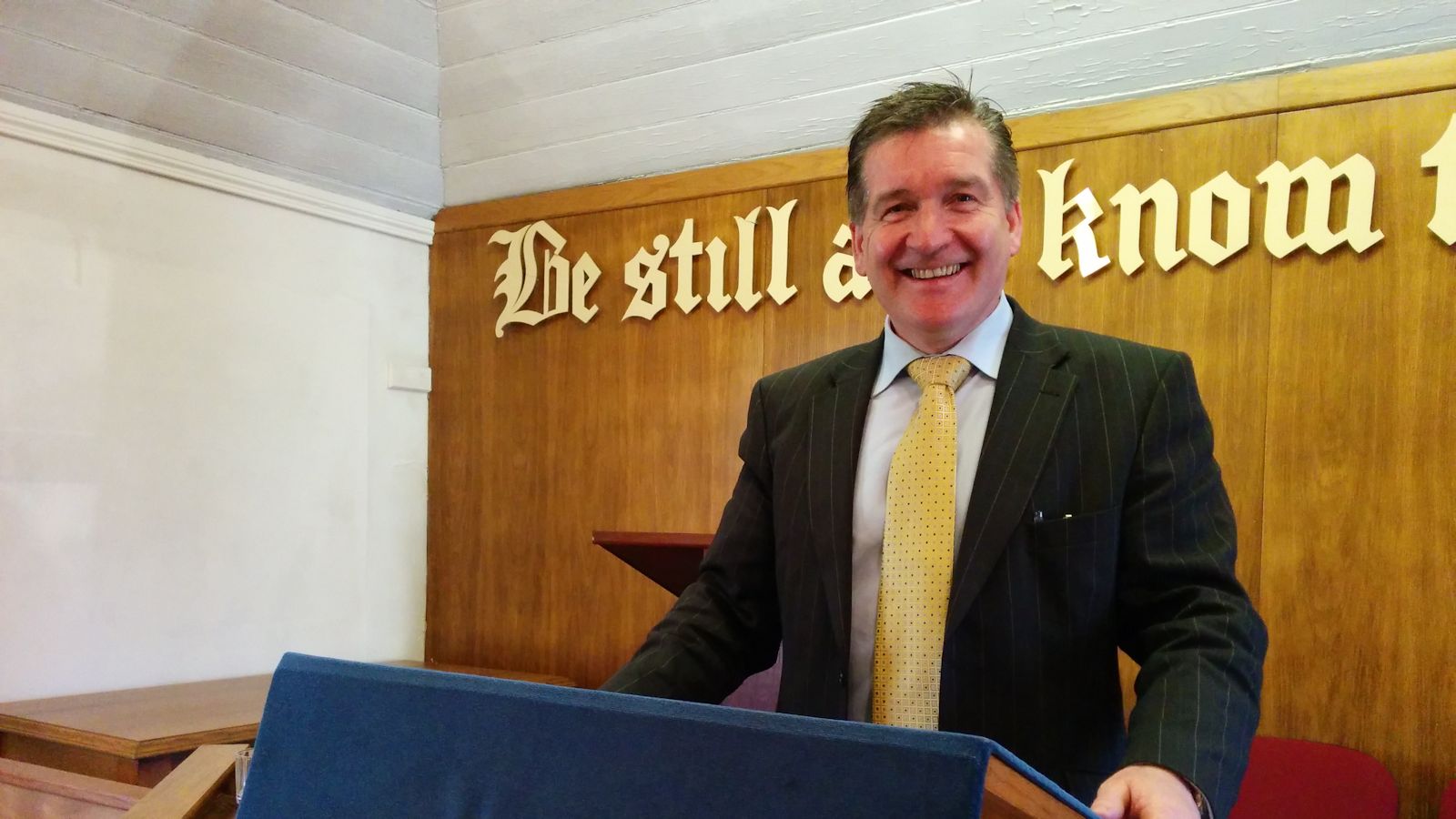
Preacher: Rev. David McLaughlin
Subject: Not in the Bible – woman bishops
Bible Reference: 1 Timothy 2:12
But I suffer not a woman to teach, nor to usurp authority over the man, but to be in silence.
Podcast
Sermon Summary: The Bible and the Question of Women Bishops: A Scriptural Examination
The controversy over the ordination of women to senior ecclesiastical office has provoked intense debate across the Christian world. The subject of women bishops within the Church of England, in particular, has been declared by some to be an historic advance and by others a spiritual departure. The sermon under consideration, preached by Rev. David McLaughlin of Carryduff Free Presbyterian Church, addresses this issue not through public opinion or modern cultural values, but by turning directly to the Word of God. Its title is plain: “The Bible Says No to Woman Bishops in the Church.”
1. The Scriptural Foundation of the Debate
Rev. David McLaughlin begins by turning to First Timothy chapter 2, reading from verse 8:
“I will therefore that men pray every where, lifting up holy hands, without wrath and doubting.
In like manner also, that women adorn themselves in modest apparel, with shamefacedness and sobriety; not with broided hair, or gold, or pearls, or costly array;
But (which becometh women professing godliness) with good works.
Let the woman learn in silence with all subjection.
But I suffer not a woman to teach, nor to usurp authority over the man, but to be in silence.
For Adam was first formed, then Eve.
And Adam was not deceived, but the woman being deceived was in the transgression.
Notwithstanding she shall be saved in childbearing, if they continue in faith and charity and holiness with sobriety.” (1 Timothy 2:8–15)
He continues into the opening of chapter 3:
“This is a true saying, If a man desire the office of a bishop, he desireth a good work.
A bishop then must be blameless, the husband of one wife, vigilant, sober, of good behaviour, given to hospitality, apt to teach;
Not given to wine, no striker, not greedy of filthy lucre; but patient, not a brawler, not covetous;
One that ruleth well his own house, having his children in subjection with all gravity;
(For if a man know not how to rule his own house, how shall he take care of the church of God?)” (1 Timothy 3:1–5)
From these passages, the sermon draws its text—“But I suffer not a woman to teach, nor to usurp authority over the man, but to be in silence.”
Rev. McLaughlin insists that the question is not whether such ordination is “historic”, modern, or politically desirable, but what saith the Scripture?
He establishes three main affirmations that structure the whole discourse: there are no contradictions in the Bible, there are numerous considerations in the Bible, and there are numerous condemnations in the Bible.
2. There Are No Contradictions in the Bible
Rev. McLaughlin asserts that all Scripture forms one coherent revelation. Citing 2 Timothy 3:16, he affirms:
“All scripture is given by inspiration of God, and is profitable for doctrine, for reproof, for correction, for instruction in righteousness.”
The apostolic injunctions in 1 Timothy 2 and 3 stand as part of the infallible record of God’s will. The sermon emphasises that the Bible is not contradictory, culturally conditioned, or mutable. As Psalm 119:89 declares, “For ever, O Lord, thy word is settled in heaven.”
To demonstrate this consistency, he turns to Revelation chapter 2, the letter to the church at Thyatira:
“And unto the angel of the church in Thyatira write; These things saith the Son of God, who hath his eyes like unto a flame of fire, and his feet are like fine brass;
I know thy works, and charity, and service, and faith, and thy patience, and thy works; and the last to be more than the first.
Notwithstanding I have a few things against thee, because thou sufferest that woman Jezebel, which calleth herself a prophetess, to teach and to seduce my servants to commit fornication, and to eat things sacrificed unto idols.” (Revelation 2:18–20)
Here Christ rebukes a church for allowing a woman, “Jezebel”, to teach and exercise authority in rebellion against divine order. Rev. McLaughlin cautions that Christ’s “eyes like unto a flame of fire” (v. 18) symbolise His piercing judgment, while His “feet like fine brass” represent the certainty of that judgment.
Thus, he concludes, the Word of God is inspired, infallible, inerrant, and eternal. “Let the Bible speak.” It declares plainly: “I suffer not a woman to teach.” The command that “a bishop then must be the husband of one wife” (1 Timothy 3:2) further confirms that the ordained ministry is male by definition.
3. There Are Numerous Considerations in the Bible
Having affirmed the unity of Scripture, Rev. McLaughlin outlines several scriptural considerations that clarify the subject.
(a) All People Are Equal Before God
Quoting Romans 3:23, “For all have sinned, and come short of the glory of God,” he underscores that both men and women are sinners who stand equally in need of salvation. In Romans 3:24–26, Paul explains:
“Being justified freely by his grace through the redemption that is in Christ Jesus:
Whom God hath set forth to be a propitiation through faith in his blood, to declare his righteousness for the remission of sins that are past… that he might be just, and the justifier of him which believeth in Jesus.”
Before God, all are equal in worth and are redeemed through the same Saviour. But equality in salvation does not abolish differences in God‑ordained function.
(b) Women Play a Vital Role in God’s Work
The sermon lists numerous examples where women served prominently in Scripture:
- Exodus 15:20–21 – “And Miriam the prophetess, the sister of Aaron, took a timbrel in her hand… and Miriam answered them, Sing ye to the LORD.”
She led the song of victory after deliverance from Egypt. - Judges 4:4 – “And Deborah, a prophetess, the wife of Lapidoth, she judged Israel at that time.”
- 2 Kings 22:14–15 – Huldah the prophetess said, “Thus saith the LORD God of Israel, Tell the man that sent you to me.” She warned of judgment and advised the king to repent.
- Joel 2:28, fulfilled in Acts 2:16–18 – “This is that which was spoken by the prophet Joel… your sons and your daughters shall prophesy.”
- 1 Corinthians 11:5 – “Every woman that prayeth or prophesieth with her head uncovered dishonoureth her head.”
This shows that women did pray and prophesy appropriately within the order of the church.
From these passages, Rev. McLaughlin concludes that no one can deny that God uses women mightily in service, song, mission, and testimony. Yet, in none of these examples did a woman occupy the ruling or teaching offices of the church. Their ministries, while essential, operated within the divine limits prescribed.
(c) The Bible Draws a Line That Cannot Be Crossed
Rev. McLaughlin then reads 1 Corinthians 14:34–35:
“Let your women keep silence in the churches: for it is not permitted unto them to speak; but they are commanded to be under obedience, as also saith the law.
And if they will learn any thing, let them ask their husbands at home: for it is a shame for women to speak in the church.”
He explains that the immediate subject in Corinth was the disorderly exercise of tongues and interpretation, yet the underlying principle concerns authority in public worship. The apostle commands silence not because of incapacity, but because of God’s order.
Once again, 1 Timothy 2:12–13 gives the theological reason:
“For Adam was first formed, then Eve. And Adam was not deceived, but the woman being deceived was in the transgression.”
This appeal to creation shows that the apostolic rule is not cultural but creational. God instituted an order of headship: as 1 Corinthians 11:3 puts it, “The head of every man is Christ; and the head of the woman is the man; and the head of Christ is God.”
The office of overseer and elder, therefore, is male by divine design—“a bishop then must be the husband of one wife” (1 Timothy 3:2).
4. The Example of Jezebel and the Warning of Judgment
Rev. McLaughlin returns to Revelation 2:18–29, the case of Thyatira, to show the consequences of defying these precepts:
“Notwithstanding I have a few things against thee, because thou sufferest that woman Jezebel… to teach and to seduce my servants to commit fornication.”
This “Jezebel” symbolises those who assume authority and lead God’s people astray. Her teaching compromised holiness, urging accommodation with sin. Christ’s fearful description—His eyes “like a flame of fire” and His feet “like fine brass”—warns of His penetrating vision and impending judgment upon disobedient churches.
Rev. McLaughlin quotes 2 Corinthians 2:17:
“For we are not as many, which corrupt the word of God: but as of sincerity, but as of God, in the sight of God speak we in Christ.”
The task of the church is not to corrupt or modernise the Word but to rightly divide it, as 2 Timothy 2:15 commands. Scripture is not subject to cultural revision. Where it speaks, it speaks absolutely.
He closes this section with Isaiah 8:20:
“To the law and to the testimony: if they speak not according to this word, it is because there is no light in them.”
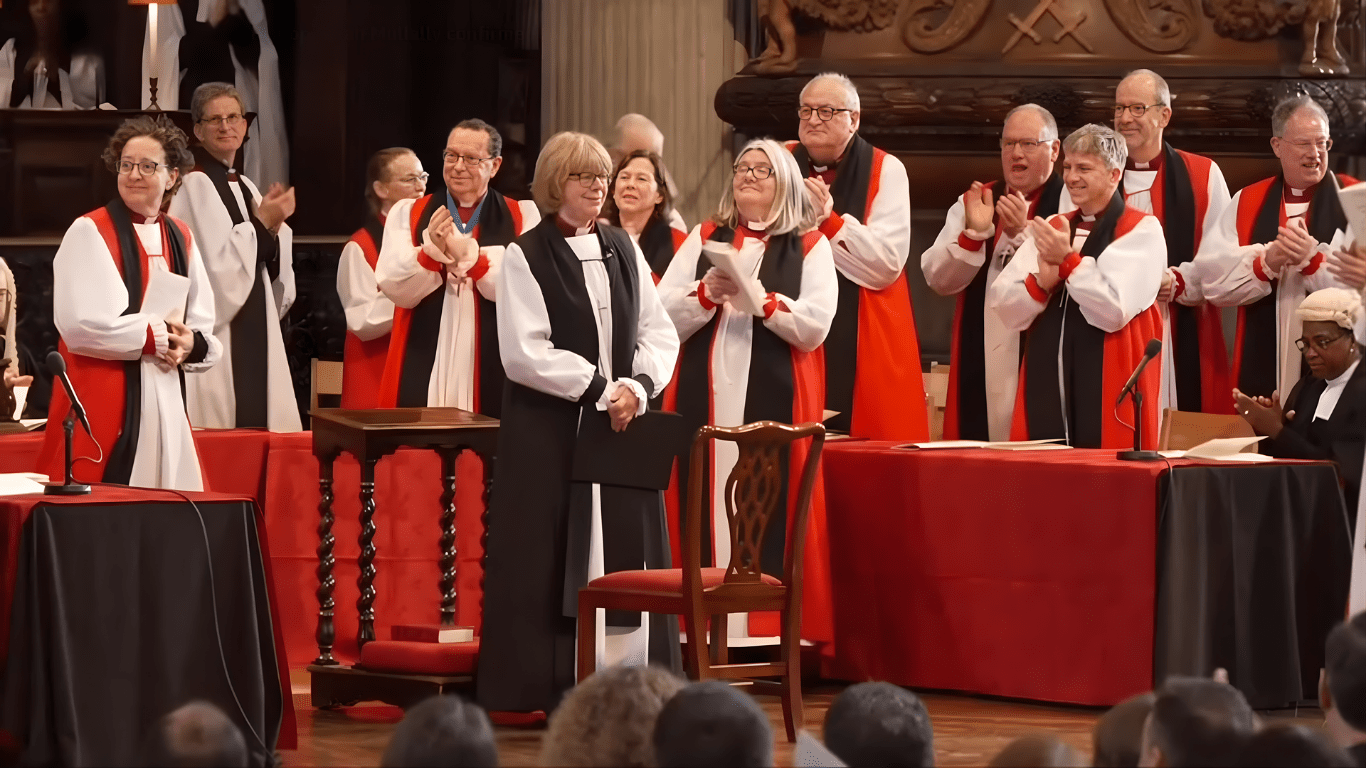
Any church that legislates contrary to Scripture walks in darkness. The cry of the protestor during the ordination of the first female bishop—“Not in the Bible!”—was, according to Rev. McLaughlin, entirely correct.
5. The Summation: Let the Bible Speak
Rev. McLaughlin concludes with solemn clarity. When modern religious bodies celebrate the consecration of female bishops as an “historic step forward,” they do so, he argues, in defiance of divine order. Christ Himself, in His earthly ministry, chose twelve men to be apostles. Were there not suitable women among His followers—Mary Magdalene, Joanna, Susanna, and others? There were indeed, yet He selected men, establishing a precedent that the church dare not overturn.
Three unshakeable principles emerge:
- There are no contradictions in Scripture. The Bible stands as the unchanging and harmonious Word of God.
- There are numerous considerations in Scripture. Women are equal in salvation, gifted for service, but distinct in role.
- There are numerous condemnations in Scripture. Churches that defy this order, like Thyatira tolerating Jezebel, incur Christ’s rebuke: “Nevertheless I have a few things against thee.”
The sermon ends in the same spirit in which it began—a call to obedience to God’s Word and a warning against substituting cultural progress for divine principle.
“Let the Bible speak. The Bible says No to woman bishops in the Church.”