
Date: Sun PM 5th November 2023
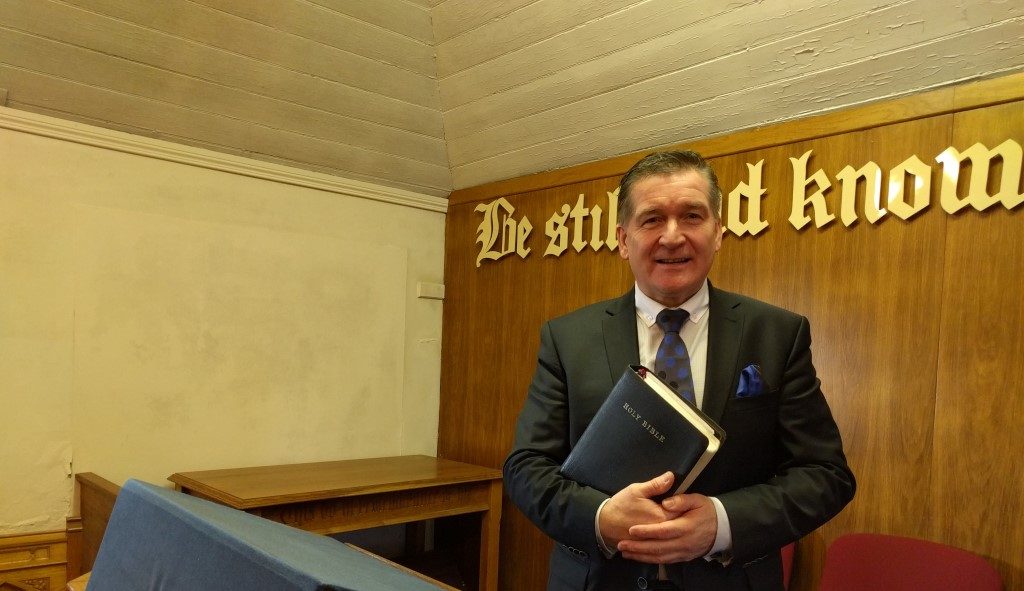
Preacher: Rev. David McLaughlin
Bible Reference: Lamentations 5:21
Turn thou us unto thee, O LORD, and we shall be turned;
renew our days as of old.
Subscribe to the podcast here:
Spotify Podcasts | Apple Podcasts | Pocket Casts
Email | RSS | more information here
🕊️ Summary of Sermon: “Do We Need Another Reformation?”
Text: Lamentations 5:21 – “Turn thou us unto thee, O Lord, and we shall be turned; renew our days as of old.”
📜 Introduction
The preacher begins by reading Lamentations chapter 5, lamenting Judah’s desolation. He then focuses on verse 21, where the prophet pleads for God to “renew our days as of old.” From this, the sermon’s theme emerges: “Do we need another Reformation?”
The preacher connects the verse’s cry for renewal with the Protestant Reformation of 1517, when Martin Luther nailed his 95 Theses to the church door in Wittenberg—an act that challenged the authority and corruption of the medieval Church and transformed the course of Western civilisation.
🕯️ Historical Background: The First Reformation
- Luther’s Awakening: While studying Romans 1:17, Luther realised that righteousness comes not through human works or church rituals but through faith alone in Christ. This rediscovery of the doctrine of justification by faith became the cornerstone of Reformation theology.
- Indulgences and Corruption: Luther protested against the sale of indulgences by figures like Johann Tetzel, which claimed forgiveness could be bought with money.
- Courage at Worms (1521): When ordered to recant his writings before Emperor Charles V, Luther refused, declaring: “Unless I am convinced by Scripture and plain reason… I cannot and will not recant. Here I stand; I can do no other; so help me God.”
- Translation and Education: Hidden for ten months in Wartburg Castle, Luther translated the New Testament into German, giving ordinary people access to Scripture.
- Reformation Outcomes:
- Challenged papal authority and abolished unbiblical doctrines such as purgatory and prayers to saints.
- Replaced the mass with the sermon as the central act of worship.
- Restored Scripture in the common language, congregational singing, and the priesthood of all believers.
- Affirmed two sacraments only: Baptism and the Lord’s Supper.
- Recognised marriage for church leaders and dignified all vocations as sacred callings.
The Reformation, he argues, blessed Europe and the world by rekindling authentic Christianity.
⚔️ The Central Question: Do We Need Another Reformation?
Answer: Yes – emphatically so.
The preacher contends that society and the Church today mirror the corruption and godlessness of Luther’s time. Modern people have, like Judah, “forgotten God” and abandoned the truth.
🔍 Analysis of the Question
The preacher structures his argument in four parts:
1. Recognition of Society’s Wickedness
- Moral decay mirrors ancient Jerusalem’s sins: violence, greed, adultery, pride, and idolatry.
- Legalised abominations such as abortion and same-sex marriage demonstrate the depth of national sin.
- The Church itself is “sick and dying” — many congregations have compromised with secular culture, forsaking holiness for social acceptance.
- He declares the present era one of spiritual darkness, warning: It is either rot or reformation.
2. Rediscovery of the Word of Scripture
- Just as Luther reasserted Scripture alone (Sola Scriptura) as the final authority, the modern Church must do the same.
- The Word of God is now ignored, rejected, or replaced by human opinions, traditions, and so‑called “direct revelations.”
- The preacher condemns movements claiming fresh revelations from the Holy Spirit when they contradict Scripture, calling them manifestations of “another spirit.”
- He warns that many modern churches falsely attribute their compromise on moral issues (e.g. homosexuality, interfaith unity) to the Holy Spirit’s guidance.
- New Bible translations dilute essential doctrines – the atonement, repentance, hell, and Christ’s blood – betraying the purity of the Word.
- A true Reformation today would require renewed reverence for every word of Scripture as divinely inspired and unalterable.
3. Re‑emphasis on the Wonder of Salvation
- Salvation is through Christ alone, not through rituals, clergy, or institutions.
- Humanity stands sinful before a holy God, needing the mediation of the man Christ Jesus (1 Timothy 2:5).
- Many modern churches preach “another gospel” — prosperity messages, legalism, easy-believism, and emotionalism — all distortions of biblical truth.
- The preacher lists false gospels:
- Prosperity Gospel
- Works-based Gospel
- Ritualistic Gospel
- Ecumenical Gospel
- Easy‑believism
- Sentimental Gospel
- He warns that these fabrications “bewitch” the Church just as early heresies did the Galatians.
- Genuine salvation must be proclaimed as it was in the Reformation: by grace alone, through faith alone, in Christ alone, as revealed in Scripture alone, to the glory of God alone.
4. Reliance on the Work of the Holy Spirit
- Renewal cannot come through human might or programmes but “by my Spirit, saith the Lord” (Zechariah 4:6).
- The Church must pray earnestly for the outpouring of the Holy Spirit (Luke 11:13).
- True spiritual revival comes when believers obey God’s Word and walk in righteousness.
- The preacher invokes Jeremiah’s call: “Stand ye in the ways, and see, and ask for the old paths… and ye shall find rest for your souls.”
Modern Christians are likewise urged to stand for truth and righteousness, as Luther once did.
🕰️ Application: The Call to Action
- Britain, like ancient Judah, stands under divine judgement—seen in moral collapse, natural disasters, and social disorder.
- The root cause: rejection of God’s law and substitution of it with human ideologies.
- The Church must:
- Confront sin openly.
- Proclaim regeneration, repentance, and reconciliation through Christ.
- Bear faithful witness to the Gospel and the person of Jesus Christ.
- Renewal will come only if God Himself turns hearts back to Him: “Turn thou us unto thee, O Lord.”
✝️ Conclusion
The preacher closes by reaffirming that the modern Church urgently needs a new Reformation — not a reform of organisation or unity at any cost, but a return to holiness, truth, and the power of the Holy Spirit.
Like Jeremiah and Luther, believers are called to “stand in the old paths” and hold fast to the timeless Gospel.
Only divine intervention can restore the Church and nation:
“If Thou turn us, then we shall be turned; renew our days as of old.”
Overall Message:
The sermon is a passionate plea for spiritual revival through repentance, renewed fidelity to Scripture, reaffirmation of the Gospel of Grace, and total dependence on the Holy Spirit. It condemns moral relativism, doctrinal compromise, and ecclesiastical corruption — insisting that only a second Reformation can deliver both Church and society from decay.