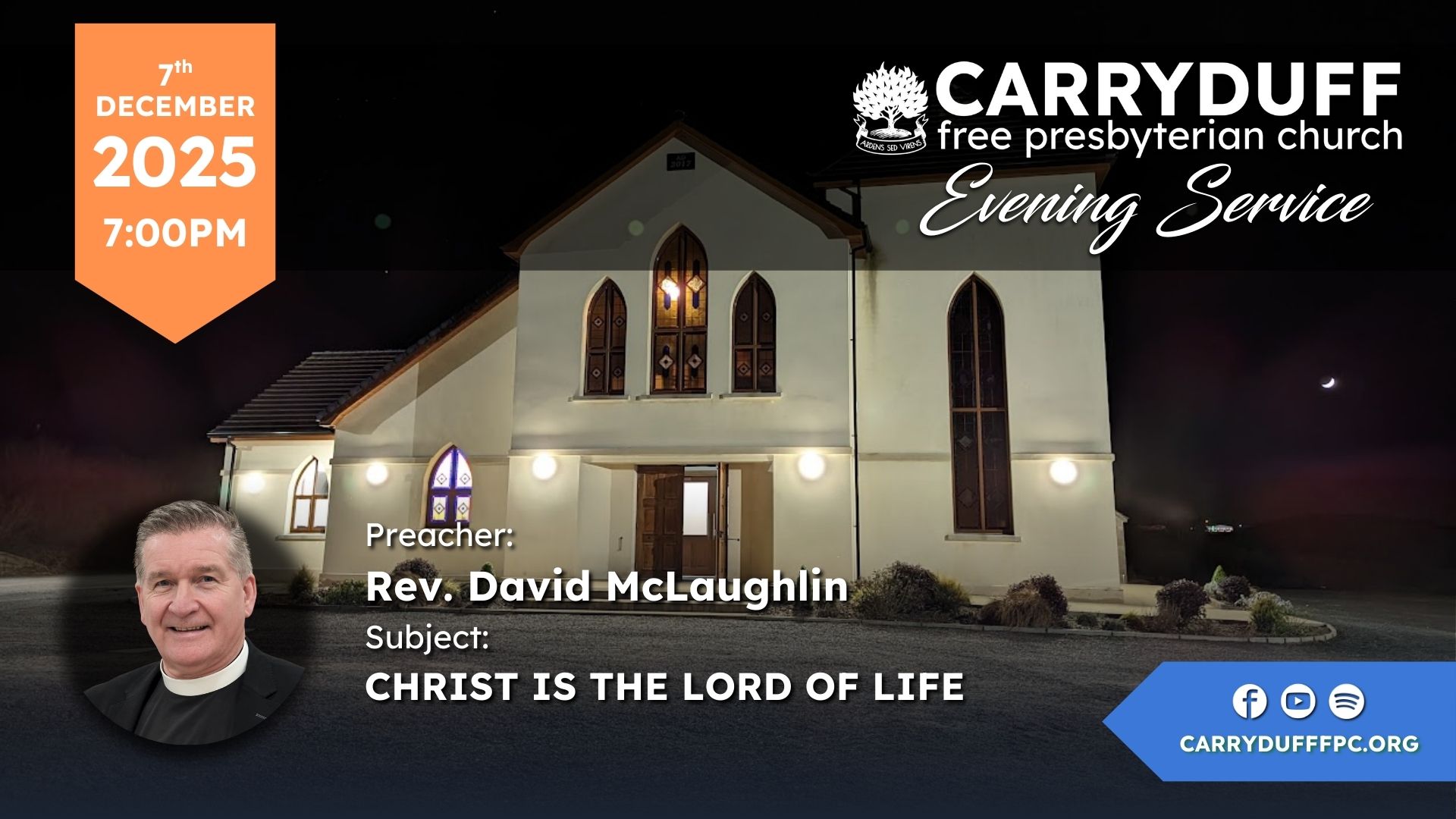

Date: SUN 7:00pm 14th December 2025
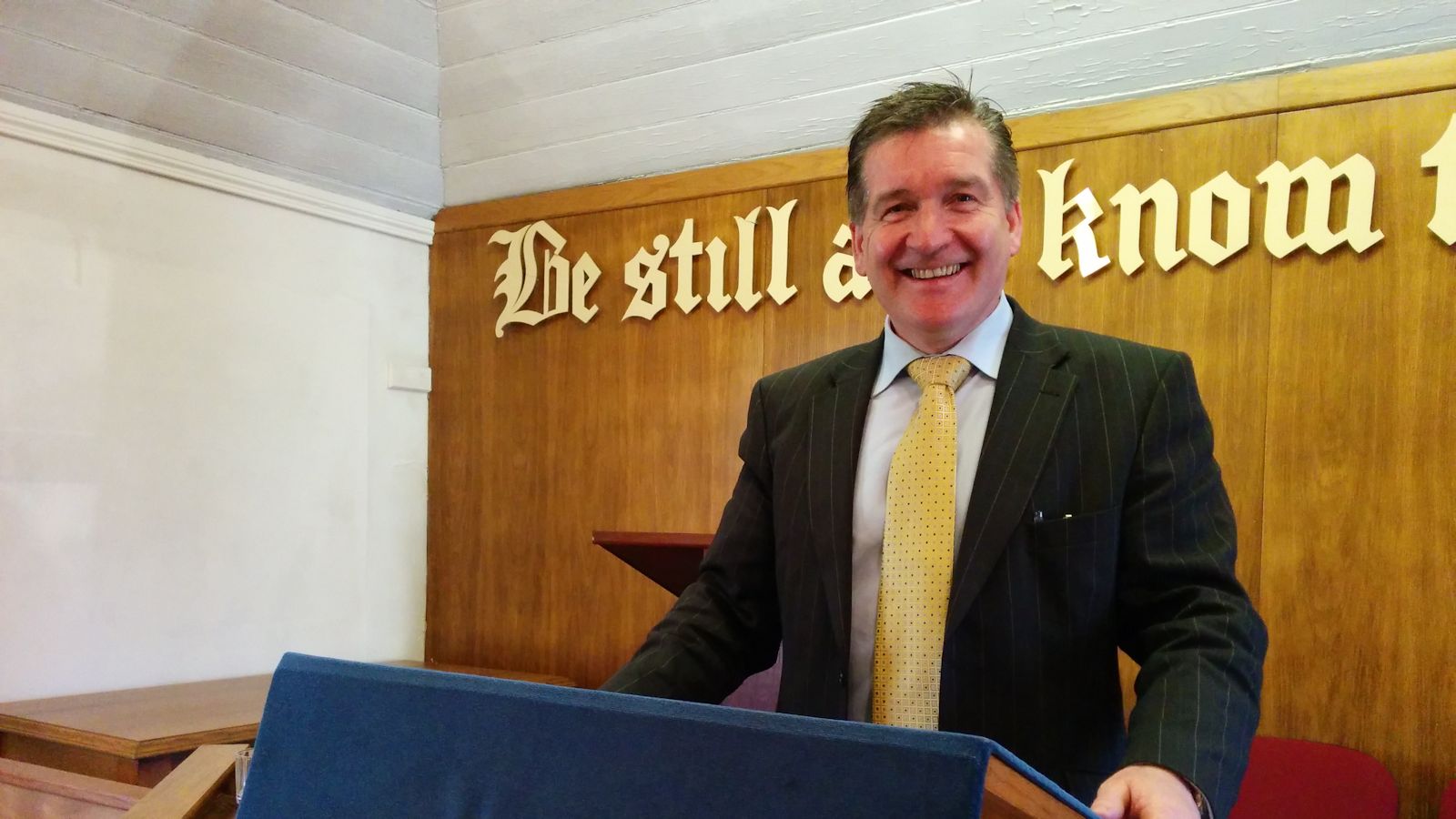
Preacher: Rev. David McLaughlin
Bible Reference: John 1:4-5
4 In him was life; and the life was the light of men. 5 And the light shineth in darkness; and the darkness comprehended it not.
Podcast
Sermon Summary
The sermon, delivered in a traditional evangelical style, begins with a reading of John 1:1–18, emphasising the divine authority of Scripture and offering Bibles to those who lack one. The preacher then focuses on the text from John 1:4–5: “In him was life; and the life was the light of men. The light shineth in darkness; and the darkness comprehended it not.” The central theme is Christ the Lord of Light, presented as a continuation of a previous message on Christ as the Lord of Life.
The preacher structures the sermon around three main points:
- The Truth about the Light
Jesus Christ is the true source and substance of all light—natural, spiritual, and eternal. His life (his person, work, and entire being) is “the light of men,” specifically for humanity created in God’s image. This light reveals the invisible God, His character, power, and moral attributes.- Christ is distinguished from counterfeit lights (e.g., John the Baptist was merely a witness to the Light, not the Light itself).
- The preacher explains how this light reaches every person:
- Through general revelation in creation (Romans 1:20; Psalm 19), where the universe testifies to God’s existence and power.
- Through conscience, which distinguishes right from wrong, though it is fallible like a broken clock.
- Most importantly, through the new birth (John 3:3), where regeneration grants new spiritual sight, enabling one to see sin, the Saviour, and biblical truth.
Christ, as the Light, is described as powerful (energised by divine life), purposeful (actively reaching out), living (dynamic and growing), and precious (making the invisible visible and guiding lost sinners).
- The Triumph of the Light
Verse 5 declares that the Light shines in darkness, and the darkness “comprehended it not.” The word “comprehended” carries a dual meaning: the darkness neither understands the Light nor overcomes it.- Darkness represents a world of sin, evil, rebellion, ignorance, and wickedness—both external (wars, terrorism, persecution, addiction, depression, cultural decay) and internal (the deceitful human heart; Jeremiah 17:9; Mark 7:21–23).
- Despite humanity’s spiritual blindness and hostility (evident in rejection of the Gospel and hatred of Christian truth), the Light continues to shine undimmed.
- The preacher notes that the darker the night, the brighter the Light appears. Even when Christ was crucified—the ultimate expression of darkness hating the Light—He triumphed over death, Satan, and darkness through His resurrection.
- This triumph encourages believers today: amid apostasy, declining churches, and a society rejecting Christ, the Light remains pure, powerful, and victorious. Acts of witness (preaching, distributing tracts, open-air evangelism) bear testimony to this unconquerable Light.
- The Trusting of the Light
The Light demands a personal response: it is either received by faith or rejected.- Many reject Christ (John 1:11), preferring darkness because their deeds are evil (John 3:19–20).
- Yet to those who receive Him—believing on His name—He gives the right to become children of God, born not of human effort or lineage, but of God (John 1:12–13).
- True reception involves more than intellectual assent; it requires heart-faith, trusting and resting in Christ alone for salvation, enabled by the Holy Spirit’s regenerating work.
The preacher illustrates spiritual blindness with a story of an open-air preacher in Glasgow. When an atheist publicly denied God, the Bible, and salvation, a believer responded by likening the man’s unbelief to a blind person denying the existence of the River Clyde, grass, or trees simply because he cannot see them. Unbelief stems from spiritual blindness, which only Christ, the Light of the world, can heal through faith and the new birth.