
Date: SUN 11:30am 16th November 2025
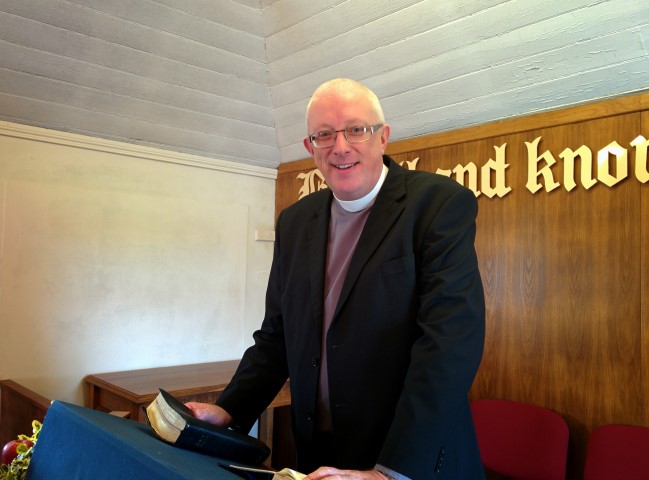
Preacher: Rev. David McLaughlin
Bible Reference: Psalms 103:2
Bless the LORD, O my soul,
and forget not all his benefits:
Podcast
Subscribe to the podcast here:
Spotify Podcasts | Apple Podcasts | Pocket Casts
Email | RSS | more information here
🕊️ Summary of the Sermon on Psalm 103 – “Are You Living on God’s Benefits?”
📖 Opening Context
The preacher begins by reading Psalm 103 from the Authorised (King James) Version, emphasising its poetic beauty and theological richness. He notes that this psalm is globally cherished within Reformed Protestant traditions, being a profound expression of praise, thanksgiving, and reflection upon God’s mercy and blessings.
Psalm 103 both begins and ends with the refrain “Bless the Lord, O my soul”, repeated seven times — symbolising spiritual perfection. The preacher highlights that this Psalm stands as a “mountain peak” in biblical praise (he cites Spurgeon’s analogy comparing it to the Alps). David is pictured as being alone with God, meditating, worshipping, and exhorting his own soul to remember and bless the Lord.
💡 Central Text and Theme
Text: Psalm 103:2 — “Bless the Lord, O my soul, and forget not all His benefits.”
Main Question: “Are you living on God’s benefits?”
The preacher contrasts state welfare benefits (a “meagre existence”) with the abundant spiritual benefits bestowed by God. He challenges listeners to depend not upon the State, but upon the Saviour’s provision.
🧩 Structure and Key Points
1. The Sort (Nature) of God’s Benefits
The Hebrew word benefits — in the plural — indicates abundance and variety. It appears only three times in Scripture: Psalm 103:2, Psalm 68:19 (“Blessed be the Lord, who daily loadeth us with benefits”), and Psalm 116:12 (“What shall I render unto the Lord for all His benefits toward me?”).
These references testify to the witness of God’s goodness and encompass all forms of divine provision — spiritual, physical, mental and emotional.
The preacher identifies six principal benefits:
- God’s Pardon
- Forgiveness of sins: “Who forgiveth all thine iniquities.”
- Genuine pardon means complete cleansing and forgetfulness on God’s part (“I will remember thy sins no more”).
- Forgiveness comes through repentance and faith in Christ, not through mere moral reform.
- He emphasises the necessity of the new birth: “Ye must be born again.”
- Sin is defined as transgression of God’s law (Psalm 51, Romans 5:12).
- All have sinned; therefore, redemption through Christ’s atonement is essential.
- God’s Pleasure (Love and Favour)
- “Who crowneth thee with lovingkindness and tender mercies.”
- God’s love is everlasting, free, sacrificial, personal and constant.
- The preacher cites John 3:16, Romans 5:8, 1 John 4:10, and uses the story of a farmer’s weather vane inscribed “God is love” — illustrating that divine love never changes whatever direction life’s winds blow.
- God’s Provision
- “Who satisfieth thy mouth with good things.”
- The Lord meets every need — Isaiah 41:10, Isaiah 43:1–2, Philippians 4:19.
- Believers should recognise the countless blessings of daily life: health, home, food, employment, family, Scripture and the Church.
- “Blessed be the Lord who daily loadeth us with benefits.”
- Conscious gratitude is the remedy for spiritual forgetfulness.
- God’s Presence
- “Fear not, for I am with thee.”
- Drawing upon the well-known image of “Footprints in the Sand”, the preacher reminds the congregation that when only one set of footprints appears, God Himself is carrying His child.
- In sickness, grief or loneliness, the believer experiences the Lord’s companionship and care.
- God’s Protection
- The Lord is a “sun and shield” for His people.
- Even life’s tragedies fall within God’s perfect providence: “All things work together for good to them that love God.”
- The preacher stresses the need to submit to divine sovereignty, trusting His plan even when it cannot be understood.
- God’s Peace
- John 14:27: “Peace I leave with you… not as the world giveth.”
- Christ bestows both peace with God (reconciliation through His blood) and the peace of God (inner stability and joy).
- “Peace” here means security, assurance and spiritual rest amid life’s storms.
2. The Seriousness of God’s Benefits
The key command: “Forget not” — a moral and spiritual imperative to remember.
To forget means:
- Losing memory, neglecting to care, ignoring divine grace.
- Forgetfulness results in apathy, ingratitude and spiritual indifference.
The preacher warns that we often:
- Forget what we ought to remember (God’s mercies), and
- Remember what we ought to forget (our grievances and worldly distractions).
He uses two illustrative anecdotes:
- The Ten Lepers (Luke 17:11–19) – Only one returned to thank Jesus.
- Edward Spencer (1860) – A Bible student who saved 17 people from drowning in Lake Michigan but received no word of thanks or recognition, not even at his funeral. Humanity often shows the same disregard towards God’s saving grace.
A medieval parable follows: A king invites his page boys to dine, together with a filthy beggar who eats greedily without thanksgiving. The king rebukes them — gratitude and humility are essential in the palace as before God. We, too, must not receive divine blessings like thoughtless beggars at the King’s table.
3. The Subject of God’s Benefits
These benefits belong within a Psalm of Praise.
They focus upon:
- God’s Person — who He is,
- God’s Power — what He does, and
- God’s Praise — how we respond.
The psalmist’s soul, words, worship, and work must all resound with gratitude. Believers are urged to make thanksgiving a continual way of life.
✝️ Call to Salvation and Hope
The sermon ends with a direct gospel appeal.
For those not yet redeemed:
- The most vital benefit is redemption — “Who redeemeth thy life from destruction.”
- “To redeem” means to buy back at the cost of a ransom.
- That ransom was the self-sacrifice of Jesus Christ upon the Cross.
- On the ground of His shed blood, believers receive forgiveness, peace, protection, provision, and the promise of heaven.
- Only those in Christ will enter eternal life.
- The preacher invites the congregation to move from death to life, despair to hope, darkness to light — to discover forgiveness and new life in Jesus Christ.
🕯️ Overall Message
- Do not forget: the greatest tragedy is to live surrounded by divine blessings yet remain ungrateful or unredeemed.
- Every believer must consciously live upon God’s benefits — His pardon, presence, protection, provision, peace and love — responding with thanksgiving and praise.
- The psalm both begins and ends with adoration: “Bless the Lord, O my soul.” That must be the believer’s lifelong refrain.
🪶 Summary in One Sentence
True life is not sustained by the fragile benefits of the State, but by the eternal benefits of the Saviour — forgiveness, love, provision, and peace — which we must never forget, but continually bless the Lord for.