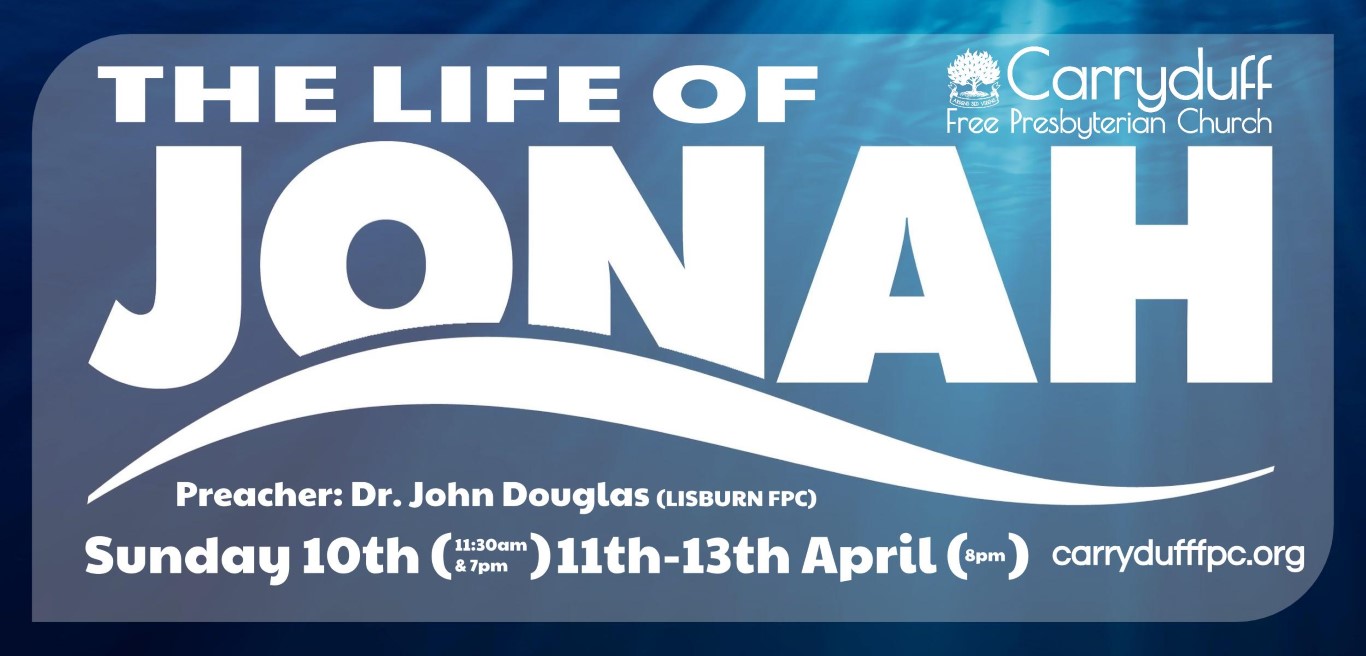

Date: SUN 7:00pm 29th March 2026
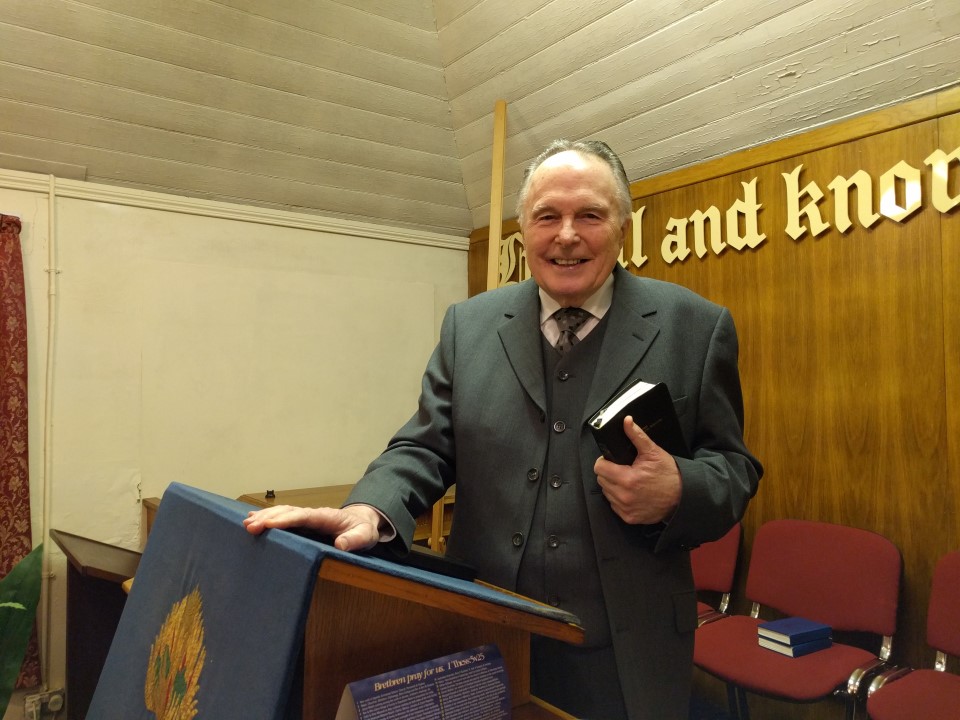
Preacher: Rev. David McLaughlin
Bible Reference: Jonah 1:1-2
Podcast
Sermon Summary
The narrative of Jonah the Prophet occupies a curious and commanding place in the canon of Scripture. It stands not only as a book of prophetic history, but as a moral mirror—one in which we see both man’s rebellion and God’s redemptive patience. This portion of Scripture does not begin with sentimentality or poetic comfort. It begins with a call, a command, and a confrontation.
“Now the word of the LORD came unto Jonah the son of Amittai, saying, Arise, go to Nineveh, that great city, and cry against it; for their wickedness is come up before me.” — Jonah 1:1–2 (KJV)
Here the divine voice breaks into human complacency. It disturbs the quiet life of a prophet settled in comfort and routine. It pierces the dull clamour of a godless world with three simple words that still echo through every generation: “Arise, go, cry.”
The message of Jonah, when understood through a Reformed lens grounded in Scripture alone (Sola Scriptura), exposes man’s depravity, magnifies God’s holiness, and unfolds the beauty of sovereign mercy. It is God initiating, God speaking, God warning, God pursuing, and God saving.
Let us expand upon this remarkable text under three headings:
- The Divine Declaration — the sovereign origin, authority, and nature of God’s Word.
- The Depravity Described — the moral darkness and corruption of Nineveh mirrored in our modern world.
- The Deliverance Displayed — the gracious pursuit of sinners and the pattern of mercy revealed through Jonah and fulfilled in Christ.
1. The Divine Declaration
“Now the word of the LORD came unto Jonah…”
Every true movement of spiritual awakening begins with God speaking. It is not man climbing upward but God descending downward. The initiative belongs to the divine Will. Revelation is never discovered—it is disclosed. Salvation is never achieved—it is received. “Faith cometh by hearing, and hearing by the Word of God.” (Romans 10:17).
There is profound theology loaded into that simple expression: “the word of the LORD came.”
- It came to Jonah — not from Jonah. Divine revelation is objective, not subjective. The prophet was not inventing nor speculating; he was receiving. The preacher’s authority is derivative—it arises only from God’s Word faithfully declared.
- It was the Word of the LORD — not the word of man. The Hebrew YHWH denotes the covenant God who binds Himself to His people through His promises and judgments. This is the uncreated, self‑existent One, who speaks light into darkness and life into death.
- It came with purpose — the Word of God never arrives without design. As Isaiah proclaimed, “It shall not return unto me void, but it shall accomplish that which I please.” (Isaiah 55:11).
The Nature of Revelation
Scripture is God-breathed. The Apostle Paul writes:
“All scripture is given by inspiration of God, and is profitable for doctrine, for reproof, for correction, for instruction in righteousness.” (2 Timothy 3:16)
The Greek term theopneustos literally means “breathed out by God.” The breath that formed Adam from the dust is the same breath that forms the living Word that convicts and regenerates the heart. We are not dealing here with opinions, but with oracles; not inspiration in the poetic sense, but inspiration in the supernatural sense.
That this Word came unto Jonah is proof that revelation is personal as well as propositional. God speaks to particular people at particular times for particular purposes, yet the truth He reveals is binding upon all. When God utters, the universe must obey. He spoke, and the worlds were formed. He speaks again, and men must rise and go.
The Authority of Scripture
The Reformed conviction of Sola Scriptura insists that the Bible alone is the ultimate authority in faith and practice. The preacher is not a negotiator, but a herald of divine decree. To modify, dilute, or reinterpret the message to suit culture is to betray one’s commission. In the words of John Calvin, “When God deigns to speak, our wisdom is to be silent and to receive the truth.”
Jonah’s task stood upon that same principle. He was not sent to share but to declare. He was not invited to dialogue with Nineveh but to herald judgment. The phrase, “Arise, go, cry,” encapsulates the entire duty of the prophet — stand up, set forth, speak out.
2. The Depravity Described
“…for their wickedness is come up before me.”
God’s Word never enters a vacuum; it enters a context of sin. Divine speech always intersects human rebellion. In Nineveh, it found a society teeming with arrogance, cruelty, and moral degeneracy.
The Magnitude of Nineveh
Nineveh was the capital of the Assyrian Empire—a formidable and terrifying power. Ancient historians record a city enclosed by walls one hundred feet high and wide enough for chariots to race side by side. It was a crown of civilisation, a marvel of architecture, commerce, and military strength. Yet beneath its splendour lay filth beyond measure.
The Assyrians prided themselves in bloodshed. Evidence uncovered from Nineveh’s ruins depicts beheadings, flayings, and human impalements displayed as public theatre. Nahum, another prophet in Scripture, calls it “the bloody city, full of lies and robbery” (Nahum 3:1). Violence and vanity ruled side by side; luxury fed upon torture.
God’s words to Jonah — “for their wickedness is come up before me” — use the language of a legal indictment. Sin has ascended like smoke from a corrupt bonfire, a stench that reaches heaven’s court. The Almighty takes account. He is no passive observer. Every act of cruelty, every deceit, every suppression of truth adds to the moral ledger that one day will be settled before His throne.
The Mirror of Modern Nineveh
Nineveh of old lives again across the cities of the modern world. London, Belfast, Manchester, Glasgow—our metropolises shine with artificial light yet groan under spiritual darkness. The idols have changed, but the idolatry remains.
- Where Nineveh bowed before statues, we bow before screens.
- Where Nineveh worshiped power, we worship pleasure.
- Where Nineveh gloried in conquest, we glory in consumption.
We have deified the self and declared autonomy our creed. Human life is disregarded, from the unborn child to the elderly forgotten in care homes. In Britain alone, over 10,000 babies a year are legally destroyed in the womb—a modern holocaust wrapped in sterile language. When legislators debate whether to permit abortion moments before birth, as if moral rightness can be timed to the clock, one cannot but hear the echo of Nineveh’s cry of defiance.
Add to this the proliferation of godless philosophies, the breakdown of the family, and the celebration of every manner of immorality, and we find a civilisation that has redefined wickedness as virtue and rebellion as liberation. “Woe unto them that call evil good, and good evil” (Isaiah 5:20).
The Reality of Human Sinfulness
The Reformed tradition rightly insists upon the doctrine of total depravity—that human beings in their fallen state are incapable of moral or spiritual self‑restoration. Sin is not a flaw to be polished away; it is a disease to be slain by grace. “There is none righteous, no, not one… there is none that seeketh after God.” (Romans 3:10‑11).
The heart of man, says Jeremiah, “is deceitful above all things and desperately wicked” (Jeremiah 17:9). Outward refinement masks inward rebellion. Modern man has exchanged idols of wood and stone for idols of ideology and self‑will. The human race, in its natural condition, is not innocent ignorance seeking enlightenment—it is active rebellion suppressing truth (Romans 1:18).
God’s gaze penetrates through all pretence. “The eyes of the LORD are in every place, beholding the evil and the good.” (Proverbs 15:3). Sin cannot hide, the guilty cannot excuse, and nations cannot indefinitely postpone reckoning. As the cup of iniquity fills in Nineveh, it fills again today.
3. The Deliverance Displayed
“Arise, go to Nineveh, that great city, and cry against it.”
It is a mark of divine mercy that God warns before He wounds. He sends a messenger before He sends destruction. The very fact that Jonah received a commission rather than the Ninevites receiving immediate judgment displays the astonishing long-suffering of God.
The Call to Arise
The word “Arise” implies interruption. Jonah was sitting, settled, perhaps spiritually complacent—a respectable prophet in a respectable land. But God does not consecrate comfort. He disturbs slumber. The same word resounds to every believer and every church grown apathetic amidst convenience: Arise.
Modern Christianity too often mirrors Jonah’s posture. We attend services, speak orthodox language, and profess high theology while remaining inert in mission. God’s call remains unchanged: “Arise, go.” The faith that merely sits is dead. The doctrine that never moves the heart to obedience is hypocrisy.
The Cost of Obedience
Jonah’s resistance sprang not from ignorance but reluctance. Nineveh was far; Nineveh was dangerous; Nineveh was despised. To preach repentance there was to court humiliation or death. Yet true obedience always bears a cost. Christ would later declare, “If any man will come after me, let him deny himself, and take up his cross daily, and follow me.” (Luke 9:23).
The costliness of obedience is what purifies its motives. When the Church seeks only safe influence and popular affirmation, she loses her prophetic edge. The times demand courage—the kind born of conviction that God’s Word is worth more than our reputation.
The Content of the Message
“Cry against it.” Jonah was not sent to deliver a motivational lecture. He was not sent to propose moral improvement. The message entrusted to him was one of warning and mercy intertwined: judgment impending, repentance possible. His cry was clear, concise, and uncompromising—“Yet forty days, and Nineveh shall be overthrown” (Jonah 3:4).
The modern pulpit has substituted compassion without courage for truth without tears. But true gospel preaching contains both: it denounces sin and announces grace. The gospel that saves must first confront. Until a man knows he is lost, he cannot be found. Until a nation acknowledges guilt, it cannot receive pardon.
The Pattern of Grace and Mercy
Jonah’s mission prefigures Christ’s cross. The reluctant prophet was cast into the sea to calm the storm of divine wrath; Jesus was cast into death itself to quiet the storm of human sin. Jonah spent three days in the belly of the fish; Christ lay three days in the tomb. Jonah emerged to proclaim deliverance; Christ rose to secure it eternally.
The “sign of Jonah” to which Christ referred (Matthew 12:40) is thus not merely a historic miracle but a redemptive pattern: death, burial, and resurrection—judgement borne, mercy granted. God’s warning to Nineveh was therefore already gospel in embryo. It carried the undertone that forgiveness was possible, because substitution was coming.
The Fruits of Repentance
The astonishing outcome of Jonah’s preaching was that Nineveh believed God (Jonah 3:5). From king to commoner, they donned sackcloth and cried mightily unto the Lord. The greatest revival in the Old Testament did not occur in Israel, but among Gentile pagans under the threat of destruction. Grace triumphed where sin abounded.
This is the pattern for every true awakening: God speaks, sinners tremble, hearts repent, mercy flows. No city is too wicked, no nation too hardened, no individual too corrupt for grace to reach—if only they will heed the divine warning.
4. Application for Our Time
a. To the Church
The tragedy of our age is not mainly the world’s sin but the Church’s silence. Jonah’s hesitation has become institutionalised. Multitudes of churches choose the pew of comfort over the pulpit of confrontation. Scripture is trimmed to fit cultural fashions. Sermons are drafted to entertain rather than convict. We must recover the ancient note of divine urgency.
Reformation preaching begins where Jonah’s call began—with the authority of Scripture and the holiness of God. The preacher must fear God more than the faces of men. Shepherds who will not cry against wickedness have abandoned their post.
b. To the Nation
Britain once sent missionaries to the world. Now she needs missionaries within her own borders. The blood of innocents cries from her soil; her statutes have legalised what Heaven condemns. Education has displaced catechism; government has deified self‑expression. The Lord’s‑Day is despised, marriage is redefined, truth is ridiculed. And yet, God still sends a warning before destruction. “Righteousness exalteth a nation: but sin is a reproach to any people.” (Proverbs 14:34).
Nineveh repented at Jonah’s preaching—a heathen empire shamed God’s covenant nation. Shall Britain, with a Bible in every home and sermons broadcast across every medium, remain unmoved? Judgment will not delay forever.
c. To the Individual
Perhaps the most searching application is to the single soul. Jonah’s message is not only corporate; it is personal. Sin accumulates before God until it reaches a reckoning. The wrath of God abides—present tense—on the unbeliever (John 3:36). Each of us must confront the question: Have I repented and believed the gospel of Christ?
You may have religion without regeneration, morality without grace, decency without salvation. But none can stand before God apart from the covering righteousness of Christ. The same mercy offered to Nineveh is offered to you. The storm of judgment was borne by another; flee to Him.
5. Concluding Reflections
The book of Jonah encapsulates the gospel itself in miniature form: sin, judgment, repentance, redemption, and restoration. Each stage reveals not only God’s justice, but His astonishing patience.
- God speaks – Revelation.
- Man rebels – Depravity.
- God pursues – Grace.
- Man repents – Conversion.
- God restores – Redemption.
The modern mind wishes for a silent God who blesses without confronting and loves without judging. The real God of Scripture, however, warns precisely because He loves. Jonah’s opening words to Nineveh—“for their wickedness is come up before me”—carry both the weight of judgment and the whisper of grace. Judgment is coming, yes; but mercy still calls.
In the balance of eternity, our generation stands much like that ancient city—proud, prosperous, and perilously near ruin. Yet the same Lord who once sent Jonah now sends His Word through faithful messengers. The same Christ who stayed judgment by His cross still pleads: “Repent ye, and believe the gospel.”
The message is clear. God warns before He wounds. He calls before He condemns. He shows mercy before He strikes.
Let us therefore not slumber like Jonah in the ship’s hold, nor boast like Nineveh within her walls. Let us arise, cry mightily unto God, and hold fast to the One who is “greater than Jonas.” For soon the day of grace will close, and only those sheltered beneath the blood of the Lamb shall stand secure when the storm of divine wrath breaks forth.
“Seek ye the LORD while he may be found, call ye upon him while he is near.” (Isaiah 55:6)