
Few passages of Scripture more clearly expose the spiritual disorders that can arise when human self‑will eclipses divine order than the eleventh chapter of First Corinthians. It begins with Paul’s reminder:
“Be ye followers of me, even as I also am of Christ.” (1 Cor 11:1)
This statement does not elevate Paul as a leader to be adored, nor does it establish any personal faction loyal to him. He had already condemned that very spirit of division earlier in the epistle, when some said, “I am of Paul; and I of Apollos; and I of Cephas; and I of Christ” (1 Cor 1:12). His appeal there was that the believers “all speak the same thing,” and that there be “no divisions” among them (1 Cor 1:10). Paul’s instruction in this chapter, therefore, does not call the church to follow the man, but to imitate his obedience to Christ. His own discipleship serves as an example of Christ‑likeness, not as a rival authority.
Having established that his authority rests entirely under Christ’s headship, Paul proceeds to address the two great disorders plaguing the Corinthian church. The first was the neglect or distortion of the head covering (verses 2–16); the second, the profaning of the Lord’s Supper (verses 17–34). Although these two abuses differ in appearance, both arise from the same root: disregard for the Lordship of Christ and the divine structure He ordained for His church.
In both cases, visible symbols—clothing and communion—were meant to declare invisible truths: submission, reverence, unity, and holiness. Yet Corinth, intoxicated by pride, vanity, and social fashion, corrupted both.
Paul restores order not by appealing to culture or convenience, but by recalling creation and divine ordinance. His reasoning unfolds with the precision of revelation itself: headship defines worship, and worship expresses headship. The covering of the head and the sanctity of the table are two manifestations of one principle—the glory of Christ and the subordination of man. Where those are rightly understood, visible order and spiritual health return; where they are neglected, confusion and weakness prevail.
The Principle of Headship
Before Paul gives instruction on coverings or conduct in the congregation, he establishes the foundation upon which all Christian order rests:
“But I would have you know, that the head of every man is Christ; and the head of the woman is the man; and the head of Christ is God.” (1 Cor 11:3)
This statement outlines a divine hierarchy that is not one of inequality or oppression, but of harmony, accountability, and love. It reflects the perfect order that exists within the Godhead itself. Christ, though co‑equal with the Father, willingly submitted to the Father’s will in His mediatorial work: “The Son can do nothing of Himself, but what He seeth the Father do” (John 5:19). The Father’s headship is not tyranny but benevolence; the Son’s submission is not inferiority but glory. In the same manner, true headship in human relationships mirrors divine order — authority tempered by love, and obedience shaped by trust.
Paul confirms this principle elsewhere. In 1 Timothy 2:13–14, he writes: “For Adam was first formed, then Eve. And Adam was not deceived, but the woman being deceived was in the transgression.” Paul appeals to the creation order, not culture. Adam was given the original mandate to keep God’s command; Eve was made a “help meet for him” (Gen 2:18) — one who complements and completes his stewardship. The Fall came through the disordering of this structure: the abdication of godly leadership on man’s part and the assertion of independence on woman’s part. Redemption, therefore, restores that proper balance.
Yet Paul never permits headship to become license for oppression. The man’s authority stands only insofar as he himself remains under the authority of Christ, who is his Head. Ephesians 5:23–25 defines it clearly: “For the husband is the head of the wife, even as Christ is the head of the church; and he is the Saviour of the body. Husbands, love your wives, even as Christ also loved the church, and gave himself for it.” Genuine headship is self‑sacrifice. A man who rules without tenderness or who demands obedience without righteousness has already ceased to represent Christ. His leadership is only legitimate when it accords with God’s Word and Law.
The woman’s obedience, therefore, is neither unthinking nor unconditional. Christian submission operates within moral boundaries. As the apostles declared, “We ought to obey God rather than men” (Acts 5:29). If a husband, father, or any human authority commands what contradicts the revealed will of God, obedience to Christ must take precedence. True biblical submission is an intelligent act of faith — the alignment of one’s will beneath properly exercised authority, not servility to sin.
When a man lives under Christ’s rule, his leadership becomes refuge and strength to those under his care. His love and integrity elicit trust; his wife’s obedience becomes an act of devotion to God, not mere concession to man. Her submission is thus spiritual, not mechanical — an echo of the church’s willing surrender to her Redeemer. Both serve one another: he leads by love; she follows by faith.
Within this order, Scripture gives women a noble and expansive ministry. They are not excluded from teaching but are given specific audiences — teaching how to live, not merely what to know. Titus 2:3–5 instructs older women to be “teachers of good things,” to train the younger women “to be sober, to love their husbands, to love their children, to be discreet, chaste, keepers at home, good, obedient to their own husbands.” This is not trivial domesticity; it is moral formation — the shaping of family, community, and church character from the ground up. Similarly, Timothy’s faith was “unfeigned” precisely because his grandmother Lois and his mother Eunice (2 Tim 1:5) taught him the Scriptures from infancy (2 Tim 3:15). The line of faith, in practice, often runs through the influence of godly women.
The Proverbs 31 woman exemplifies this entire principle in balance. Far from being silent or weak, she is decisive, industrious, wise, and generous. “She girdeth her loins with strength, and strengtheneth her arms… She openeth her mouth with wisdom, and in her tongue is the law of kindness.” (Prov 31:17, 26.) She is under her husband’s covering yet exercises broad initiative. Her husband safely trusts in her; her children rise up and call her blessed. Her strength does not conflict with her submission — it perfects it. She demonstrates that godly womanhood flourishes within divine order, not outside it.
In this way, Scripture presents man and woman not as rivals but as reflections of complementary aspects of God’s image. Man symbolizes initiative and protective love; woman represents wisdom, nurture, and spiritual perception. When man loves as Christ loves — sacrificially — and when woman responds with reverent cooperation under God’s Word, the home becomes a living parable of the Gospel.
Therefore, in 1 Corinthians 11, Paul is not imposing cultural etiquette — he is restoring creational order. The head of every man is Christ; the head of the woman is the man — but only as the man himself remains obedient to his Head. Above all stands God the Father, from whom all authority flows and before whom all must bow. When that order is kept — when love governs authority and obedience operates within righteousness — peace reigns in both home and church, and each gender displays the glory of the God who made them.
The Visible Sign of Headship: The Head Covering
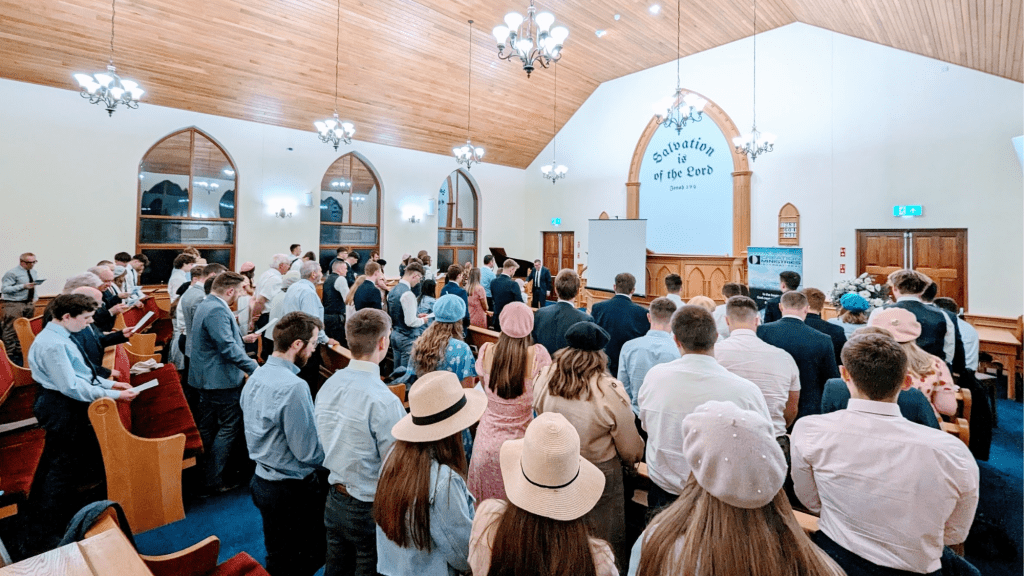
When Paul writes that “Every man praying or prophesying, having his head covered, dishonoureth his head. But every woman that prayeth or prophesieth with her head uncovered dishonoureth her head” (1 Cor 11:4–5), he describes not private devotion but the public gathering of the church for worship. The verbs praying and prophesying encompass acts of corporate communion with God—those moments when the congregation comes together to pray, to praise, to read, and to testify under the Spirit’s leading. Paul’s instructions therefore regulate the visible order of the church when it assembles before God, not a believer’s solitary prayers at home.
The expression “prophesying” does not mean preaching from the pulpit or occupying the teaching office of the church, which Paul elsewhere forbids to women (1 Tim 2:12; 1 Cor 14:34). In the New Testament, prophesy can mean to speak forth divine truth, to praise under the Spirit’s inspiration, or to sing songs that magnify God’s presence. This sense appears in 1 Chronicles 25:1‑3, where the sons of Asaph, Heman, and Jeduthun “prophesied with harps, with psalteries, and with cymbals” — that is, they sang psalms as instruments of inspired praise. The same broader meaning can apply here: the woman taking part vocally in the assembly—praying aloud, joining in song, or responding in the gathered worship—did so under the visible sign of her place within divine order.
Paul’s concern, then, is not to restrict women from spiritual participation, but to ensure that participation visibly accords with God’s appointed structure. In worship, men represent unveiled authority; women represent veiled humility. The man’s uncovered head signifies that his spiritual Head—Christ—is revealed, unmediated, and supreme. To cover it would be to obscure the symbol of divine glory. Conversely, the woman’s covered head signifies her reverent acknowledgment of God‑ordained headship and her own direct devotion to Christ through that order.
This outward distinction in appearance is not arbitrary; it preaches theology without words. The physical head mirrors the spiritual reality of authority and submission. When the man prays or praises uncovered, he publicly acknowledges Christ’s headship; when the woman prays or sings covered, she publicly honours the divine hierarchy by which all things are ordered. The visible act itself becomes part of the confession of faith: God is the Head of Christ, Christ is the Head of man, and man is the appointed head of woman.
Paul’s teaching is therefore about the decorum of corporate worship—how the congregation manifests inward truth through outward form. Each believer takes their rightful place: men leading in prayer and governance under Christ’s authority, and women participating reverently within that framework, displaying by their covering the beauty of submission that mirrors the Church’s relation to her Lord. The distinction preserves not only propriety but theology; it is a silent testimony that worship is not self‑expression but ordered adoration before the throne of heaven.
Linguistic Distinctions: Katakalyptō and Peribolaion
In discerning the precise meaning of Paul’s directions, much depends upon the language he uses. The Greek verb in verses 5–7, translated “to cover,” is katakalyptō, meaning literally “to veil over,” “to cover the head.” It unambiguously denotes the placing of an external covering upon the physical head, as a distinct act performed at will.
In contrast, when Paul writes in verse 15, “for her hair is given her for a covering,” he employs the noun peribolaion, which means a wrap or mantle—something thrown or wrapped about the body. The words are not interchangeable. Katakalyptō signifies a deliberate, situational head covering used in worship; peribolaion signifies a full-body wrap or enclosing garment, like a cloak or veil surrounding the entire person.
This linguistic shift is deliberate and significant. Throughout verses 4–13 Paul is expounding the practice of head covering within the assembly—men uncovered, women covered. In verse 15, however, he moves to a secondary, illustrative argument drawn from nature. There he contrasts the natural, God-given distinction of hair with the artificial, humanly imposed coverings of heathen societies.
The Pagan Practice of the Full Covering
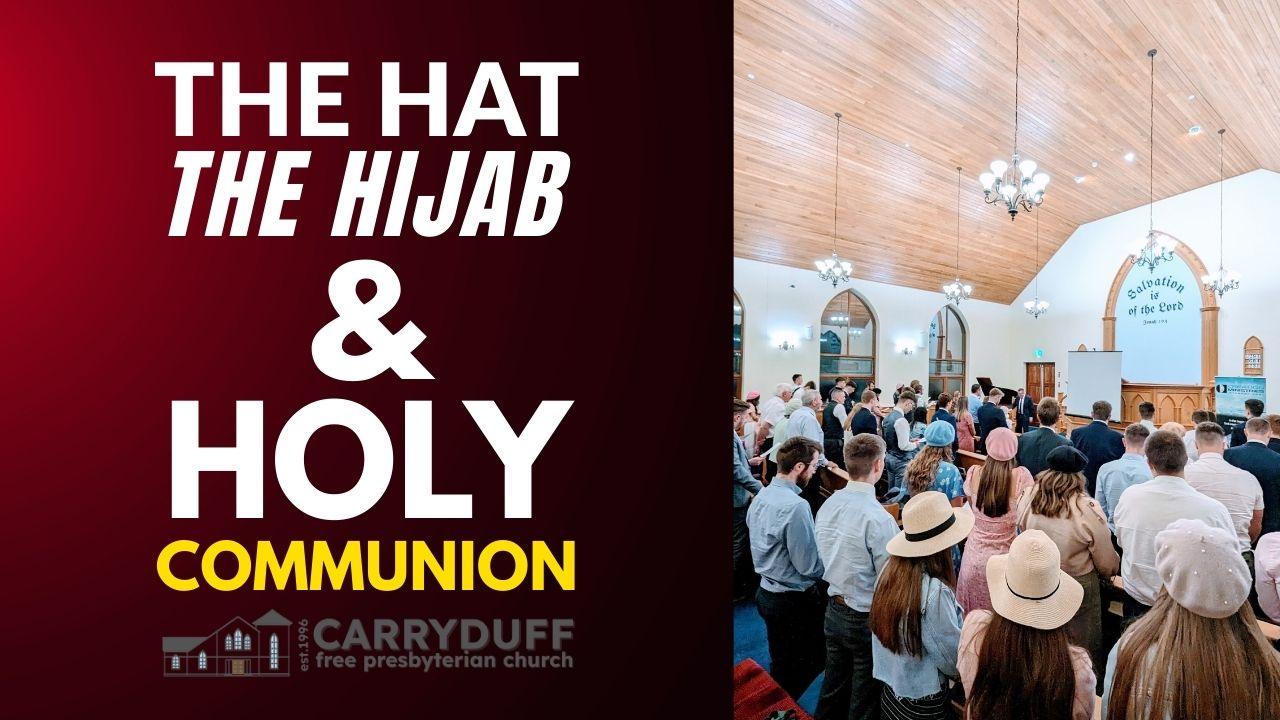
In the ancient world, pagan religions often clothed women in garments that entirely enveloped the body and head, symbolizing subjection, impurity, or inferior social standing. The Roman palla, the Assyrian and Arabian mantilla, and the Islamic hijab or burka of later centuries are of the same type—a covering of subordination, wrapping the figure from head to foot, allowing only a small aperture for the eyes. In such systems, woman was not a companion but a possession. Her concealment expressed degradation, not devotion.
When Paul uses the term peribolaion in verse 15, he invokes this image purposefully. The meaning of the verse is not that a woman’s hair itself is the required covering for worship, but rather that God has already given her a natural garment, namely her long hair, in the place of the pagan shroud. Thus, the phrase may rightly be rendered, “her hair is given her instead of a mantle.” She need not adopt the degrading full-body veil of heathen religion; her natural adornment, bestowed by the Creator, marks her feminine glory and suffices for daily modesty.
However, within the context of congregational worship, she is to place upon her head an additional covering—not as a social symbol, but as a sacred one. Hair distinguishes her from man by nature; the veil distinguishes her in worship by grace. The first is natural, the second is spiritual.
Creation and Nature: Paul’s Two Supporting Arguments
Having laid down the principle that men are to worship with uncovered heads and women with covered ones, Paul strengthens his conclusion with two arguments drawn from the fundamental order of reality: creation and nature.
First comes the argument from creation (verses 7–9). Paul writes, “For a man indeed ought not to cover his head, forasmuch as he is the image and glory of God: but the woman is the glory of the man.” Man was created first and directly from the dust, bearing the image and representative glory of God. Woman was then fashioned from man’s side, created to complement, assist, and harmonize with him. The sequence of creation and purpose establishes sacred distinction: authority and initiative belong to man; responsive fellowship and preservation belong to woman. The apostle grounds his reasoning not in fluctuating cultural custom, but in God’s original design—a design confirmed by redemption itself.
The second supporting argument arises from nature (verses 13–15). Paul appeals to the conscience and instinct of humanity: “Doth not even nature itself teach you, that, if a man have long hair, it is a shame unto him? But if a woman have long hair, it is a glory to her: for her hair is given her for a covering.”
The key expression “long hair” translates the Greek verb komaō (κομάω), which literally means to let the hair grow in a feminine manner, to wear it in an adorned or cultivated style proper to womanhood. It signifies not only length but the distinctly feminine presentation of the hair—the softness, arrangement, and grace that reflect woman’s natural ornamentation and difference from man. Paul’s reference, therefore, is not physiognomic but theological: it concerns the visible preservation of gender distinction woven into creation and acknowledged by nature and conscience alike.
At this point it helps to remember that long hair on a man was not always condemned in the Old Testament. The Nazarite vow (Numbers 6:2) temporarily required both men and women, who had voluntarily dedicated themselves to a special period of separation, to refrain from cutting their hair. This was a ceremonial law—a visible sign of consecration under the Mosaic covenant. Yet like every ceremonial shadow, the Nazarite vow found its fulfillment in Christ. He is the perfectly consecrated One, wholly separated unto God, the true Nazarite in substance—not by outward hair but by inward holiness. With His coming, all such external tokens of temporary sanctity were fulfilled and therefore set aside (Hebrews 10:1, 9). The believer’s consecration now consists not in uncut hair or legal signs, but in union with Christ, “Sanctified through the offering of the body of Jesus Christ once for all.” (Heb 10:10.)
Thus Paul’s appeal to nature is not an endorsement of Old Testament ritual forms but a reaffirmation of the creational distinction that preceded and transcends them. Under the New Covenant, the outward marks of sanctity have been replaced by the inward reality—but the moral and natural principles remain.
From creation we learn God’s order in design; from nature we perceive that this order has been impressed upon human instinct itself. The woman’s komaō—her long, feminine hair—serves as her natural veil, signifying beauty, modesty, and distinction. When she covers that natural glory in worship, she confesses that every human glory is subordinate to the glory of God. The man, by contrast, worships unveiled to manifest the direct image of divine headship and authority.
Even ordinary matters like hairstyle and head covering thus testify to profound truths: that creation bears the imprint of divine wisdom, that gender distinction is a sacred ordinance, and that every element of worship must visibly acknowledge the Creator’s order. The Corinthian church had blurred those lines; Paul recalls them to what both creation and nature still proclaim — that visible difference is not optional but reveals eternal truth, and that in Christ the outward order of worship remains the visible echo of inward grace.
Because of the Angels
“For this cause ought the woman to have power on her head because of the angels.”
— 1 Corinthians 11:10
This brief phrase has stirred centuries of speculation, yet when read in its proper context, Paul’s reasoning is lucid and deeply reverent. Within 1 Corinthians 11, the apostle explains why visible order in worship matters — the head covering for women, the uncovered head for men, and the divine hierarchy that these actions symbolize. Verse 10 gathers all of that teaching into one breathtaking statement linking earthly worship to heavenly order: the woman should bear the sign of authority because of the angels.
1. The Immediate Logic
The verse opens with “for this cause” — that is, because of the order established at creation:
- man as the image and glory of God,
- woman as the glory of man,
- and both under the headship of Christ and of God.
Then Paul says she “ought to have power on her head.” The Greek refers not to literal strength or mastery, but to a symbol of authority — in context, the head covering. It is the visible mark that she willingly acknowledges divinely appointed headship.
Finally comes the phrase “because of the angels.” The practice of covering in worship, Paul insists, is not simply about human relationships or cultural modesty; it reflects a heavenly reality that includes the watching hosts of God.
2. Angels as Witnesses of Worship
Throughout Scripture, angels appear as observers and participants in divine worship. They behold the order of creation, they attend the throne, and they witness the workings of redemption.
- In Ephesians 3:10, Paul writes that through the church “the manifold wisdom of God” is made known “to the principalities and powers in heavenly places.”
- In 1 Corinthians 4:9, believers are described as a “spectacle to the world, and to angels, and to men.”
- In Isaiah 6:2, even the sinless seraphim cover their faces before the holiness of God.
Worship on earth, then, is not an isolated human ritual but part of a vast heavenly choir. Angels look upon the church as a mirror of divine order, expecting to see on earth the same reverence that reigns in heaven.
3. Theological Significance
Paul’s argument runs deeper than decorum. He teaches that the arrangement of authority and submission in the church is a reflection of the harmony of heaven itself. The angels, who perfectly maintain obedience to God’s will, are witnesses to whether we honour that same order.
Thus the covering of the head is not merely a cultural symbol but a confession before heaven. It proclaims:
- that divine authority is acknowledged,
- that the roles God appointed are gladly accepted, and
- that the worship of the church is in continuity with the worship of the heavenly host.
The woman’s act of veiling therefore expresses solidarity with the angels’ own reverence — they veil their faces before God’s majesty; she veils her head as a token of participation in that same sacred order.
4. Reverence Before the Unseen Audience
Scripture sometimes depicts angels withdrawing from or judging irreverent worship. Paul’s reminder is pastoral as well as theological: conduct yourselves as those under the gaze of holy witnesses. To discard divine order, to treat sacred things as casual, is to offend the very beings who delight in God’s glory.
“Because of the angels” means remember who is present. Worship on earth transpires in an arena far larger than the visible congregation. The unseen assembly of heaven stands alongside, and the conduct of believers either harmonizes with or jars against the music of their obedience.
5. The Summary
To say that a woman ought to wear a sign of authority “because of the angels” is to affirm several linked truths:
- Heaven watches earthly worship.
The angels observe how the church honours God’s order. - The covering testifies to divine hierarchy.
It is a visible confession that creation’s pattern still governs God’s people. - Reverent order mirrors heavenly order.
As angels veil themselves in awe before the Lord, believers likewise manifest humility before Him. - Disorder dishonours both heaven and earth.
The same God who commands celestial harmony demands visible holiness among His redeemed.
6. The Meaning for Today
Paul’s appeal is timeless. Worship is not a self‑contained human act but participation in the ongoing praise of heaven. The head covering stands not as bondage but as reverence; it tells the truth about divine order to an unseen audience.
In that single phrase — “because of the angels” — Paul lifts the discussion above mere custom and into eternity. The church gathers in the sight of the Lord and His servants, testifying that the order of heaven governs earth. Each submitted heart, each covered head, each act of faithful obedience becomes a reflection of that celestial worship where all creation bows before the Majesty of God.
The Glory of God Alone
Underlying all these distinctions lies a consummate truth that unites theology, symbol, and practice: no flesh may glory in God’s presence. The woman’s hair, says Paul, is her glory; therefore she veils her glory in the assembly that the glory of Christ may be manifest alone. The man, who represents Christ’s authority, worships with the head uncovered to display that the glory unveiled within the church is the glory of its Head. The differing roles converge in the same confession—that all honour belongs to the Lord, and none to the creature.
Thus the head covering ordinance is not an archaic convention but a living witness to eternal order. It safeguards the distinction of the sexes, it preserves the visible order of the congregation, and it manifests the humility of redeemed humanity before divine majesty.
Transition to the Lord’s Supper
Immediately after correcting the misuse of headship and the visible symbols of authority, the apostle turns to another breach of divine order within the same assembly — the abuse of the Lord’s Supper (verses 17–34). The shift is deliberate. Both errors proceed from one spiritual corruption: disregard for Christ’s Lordship and indifference to one another within the fellowship of the saints. The disorder that had manifested in appearance now appeared in communion; the same lack of spiritual discernment ran through both.
Paul begins, “Now in this that I declare unto you I praise you not, that ye come together not for the better, but for the worse.” Their gatherings, intended for edification, had degenerated into occasions of carnal display. The fellowship meal preceding the Supper, meant to express love and equality among believers, had become an index of pride and division. The rich ate to excess, the poor were shamed, and the unity of the assembly was fractured. Such conduct not only dishonoured the brethren but obscured the very substance that the Supper proclaimed — the self‑giving of Christ for His spiritual body, the Church.
The Same Principle Displayed at the Table
Just as the head covering was an outward confession of inward order, the Lord’s Supper was an outward confession of inward unity and holiness. In both cases Paul insists on the necessity of discerning the Lord’s body. To uncover or cover the head wrongly was to blur the visible distinction that reflects divine authority; to eat and drink without discernment was to blur the spiritual distinction between common food and the sacred ordinance of communion. In both acts, holy symbols were treated as ordinary, and external form was severed from inward reality.
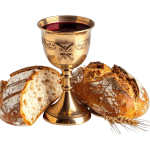
When Paul cites the words of institution — “This is my body, which is broken for you… This cup is the new testament in my blood” — he recalls the Supper’s true purpose: edification through remembrance and renewed sanctification in spiritual fellowship. Participation was to feed the soul, strengthening believers in grace and love. When approached in faith and humility, the Supper builds up the saints; when approached carelessly, it weakens them spiritually.
Spiritual Weakness, Not Physical Judgment
Paul’s solemn warning follows: “For he that eateth and drinketh unworthily, eateth and drinketh damnation to himself, not discerning the Lord’s body. For this cause many are weak and sickly among you, and many sleep.”
These expressions — weakness, sickness, and sleep — describe spiritual decline, not primarily bodily illness. The apostle’s concern is spiritual vitality, not physical health. The church in Corinth had ceased to nourish one another in fellowship; the communion of saints had grown cold. Neglect of this sacred meal produced a community of believers who were spiritually underfed, weary, and lifeless. In modern terms, their worship had become a ritual rather than a means of grace.
Paul is using the language of the body metaphorically. A body deprived of nourishment becomes weak; so too the spiritual body languishes when denied true communion with its Head. The Supper was instituted as a recurring Feast of Remembrance — a means by which the saints, partaking together of Christ through faith, are built up in sanctification and love. To neglect that purpose, or to engage in it without discernment, leads inevitably to spiritual decay. “Many sleep” thus refers to the torpor of the soul — believers who, though living, have grown inert, unresponsive to the Spirit, slumbering rather than serving.
Therefore, the warning functions not as a threat of outward plague but as an inward diagnosis: the sickness of a congregation that has ceased to feed upon Christ and to love one another. Divine discipline, in this sense, is corrective — the Lord allows spiritual barrenness to bring His people to repentance. “But when we are judged, we are chastened of the Lord, that we should not be condemned with the world.” The purpose of such chastening is restoration to spiritual health through renewed reverence and unity.
The Communion Feast as Spiritual Nourishment
Beyond mere remembrance, the Supper is a divinely appointed means whereby the church renews its fellowship “in the Lord.” The bread and cup proclaim not only Christ’s death but also the living fellowship of His people in sanctification. When rightly observed, this ordinance becomes a spiritual feast strengthening faith, humility, and mutual love. Each believer partakes not in isolation but as a member of one spiritual body; the act itself is a confession that “we being many are one bread, and one body: for we are all partakers of that one bread” (1 Cor 10:17).
Thus Paul’s rebuke is not chiefly about ceremonial precision but about spiritual fellowship. To treat the Supper as a mere meal or as an individual exercise is to sever oneself from that fellowship, starving the soul. The spiritual sickness he observed in Corinth was the direct result of neglecting this sanctifying communion — the neglect of shared remembrance, the absence of charity, the failure of the body to edify itself in love.
The Unity of Worship Restored
The ordinances of the head covering and of the Lord’s Supper, though different in form, are united in meaning. Both are appointed to preserve order, reverence, and holiness within the congregation. The one safeguards visible submission under divine headship; the other safeguards spiritual nourishment and unity within the body. Disregard of either disrupts the balance of worship: when the outward order collapses, inward grace wastes away.
Paul’s remedy for both disorders is the same — self‑examination before God. “Let a man examine himself, and so let him eat of that bread, and drink of that cup.” Examination restores discernment; discernment rekindles reverence; reverence restores sanctification. When believers recover the right posture of heart and head before God, their visible worship and inward communion harmonize again under Christ’s authority.
Enduring Meaning
The lessons of 1 Corinthians 11 speak with undiminished relevance. The church’s vitality depends not merely on doctrinal confession but on devout observance of the ordinances that embody it. To cover the head is to confess divine order; to partake rightly of the Lord’s Table is to confess divine unity. The covering proclaims submission; the Supper proclaims sanctification. Both are expressions of fellowship with Christ and with one another.
Neglect either, and the same symptoms appear: weakness in faith, sickness in love, and sleep in service. Observe both in humility and sincerity, and the opposite ensues — growth, strength, and sanctified fellowship. The warning against spiritual lethargy thus calls every believer to renewed participation in the communion of saints and steady cultivation of holiness.
Conclusion
In 1 Corinthians 11, the apostle Paul portrays worship as a sacred order sustained by two visible witnesses: the head covering, signifying recognition of divine authority, and the communion feast, signifying participation in divine life. Both are acts of reverent obedience and instruments of sanctification. The head covering declares that Christ alone is the Head; the Lord’s Supper declares that Christ alone is the Sustenance.
To invert either is to lose clarity of revelation and strength of spiritual health. To observe both with understanding is to mirror heaven upon earth — a church ordered by grace, nourished through fellowship, and sanctified in continual remembrance of Him who gave Himself for His people. Every act of worship then becomes what it was in apostolic days: a holy blend of humility and joy, distinction and unity, the outward honouring of divine truth and the inward feeding of the soul upon Christ, the Living Bread.