
In an age when the winds of compromise and ecumenism blow fiercely across the ecclesiastical landscape, threatening to erode the foundations of biblical truth, the life and legacy of Rev. Dr. Stanley Bertram (Bert) Cooke stand as a beacon of unwavering faithfulness and separatist conviction. As we reflect on his triumphant homegoing on 5th December 2025, at the age of 96, and the poignant tribute delivered by his longtime friend and colleague Rev. Ivan Foster, we are invited to journey through the story of a man who rose from youthful conversion to become a prince of preachers, a wise counselor, and an implacable foe of apostasy—urging every Free Presbyterian today to take up the sword he so valiantly wielded and stand firm against the subtle encroachments of doctrinal dilution and unholy alliances. Come, explore this timeless testimony, and let it stir your heart to renewed vigilance for the purity of the gospel.
The Legacy of Rev. Dr. Bert Cooke: A Timeless Call for Free Presbyterians to Stand Firm Against Apostasy and Ecumenism
In the quiet sanctity of Moneyslane Free Presbyterian Church on 8th December 2025, a congregation gathered not merely to mourn but to celebrate the homegoing of a spiritual giant. Rev. Dr. Stanley Bertram (Bert) Cooke, who had passed peacefully into eternity just three days earlier on 5th December at the age of 96 in Brooklands Nursing Home, Kilkeel, was remembered as a pillar of faith, a defender of biblical truth, and an unyielding opponent of compromise. The Service of Thanksgiving, followed by burial in Ballygowan Free Presbyterian graveyard, drew tributes from across the Free Presbyterian Church of Ulster and beyond. Among the speakers was Rev. Ivan Foster (Rtd), a longtime colleague and friend, whose heartfelt address wove personal anecdotes, historical reflections, and scriptural exhortations into a tapestry that highlighted Cooke’s extraordinary life. Foster’s words, delivered with the gravitas of shared battles in the faith, served as both eulogy and rallying cry—a reminder that Cooke’s legacy demands that today’s Free Presbyterians renew their vigilance against the encroaching shadows of apostasy and ecumenism.
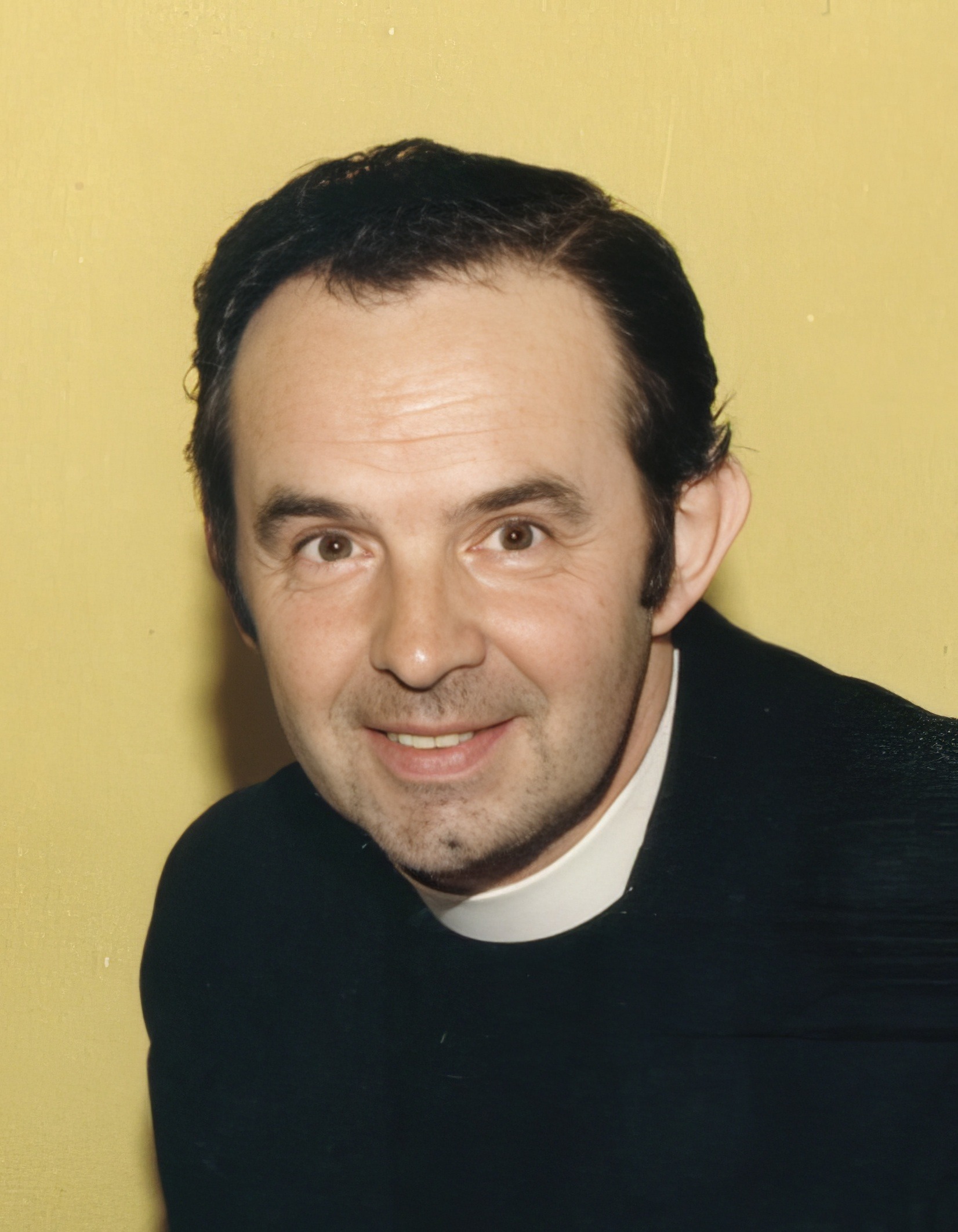
Born in Belfast in 1929 into a devout Presbyterian family, Bert Cooke’s early years were steeped in the rhythms of church life. His father served on the committee of Ravenhill Presbyterian Church, and his mother, a woman of profound prayer, instilled in him the Scriptures, hymns, and catechisms that would later become the bedrock of his ministry. Yet, like many young men, Cooke drifted into a “godless and worldly life” during his adolescence, marked by a lack of prayer and an absence of inner peace. His mother’s persistent intercessions, however, pursued him like the hound of heaven. The turning point came in September 1949, at the age of 20, during a gospel crusade led by the renowned Canadian evangelist Dr. Oswald J. Smith at McQuiston Memorial Presbyterian Church in Belfast. Under deep conviction, Cooke heard an inner voice echoing Genesis 6:3: “My Spirit shall not always strive with man.” In that moment, he surrendered to Christ, experiencing a radical transformation. His mother, upon hearing the news, wept tears of joy, declaring that she had “prayed him to the Saviour.” This conversion was no fleeting emotion; it ignited a lifelong passion for the gospel, shortly after his cousin, Rev. John Douglas, had undergone a similar awakening.
The call to preach followed swiftly, manifesting as an inner burden within months of his salvation. Once tongue-tied and hesitant, Cooke found fluency in prayer and a burning zeal to proclaim the Word. He began attending Ravenhill Evangelical Mission Church under the young Rev. Ian Paisley, forging a friendship that would shape the trajectory of Ulster’s evangelical landscape. Together, they traveled in Paisley’s modest Morris Minor, praying fervently for souls during gospel missions. Cooke’s first sermon, delivered on Christmas Eve 1950 at Keswick Mission Hall, lasted a mere 18 minutes but was blessed with divine unction. Drawing from 2 Corinthians 6:2—”Now is the accepted time; behold, now is the day of salvation”—he preached with a simplicity and power that belied his inexperience. This marked the beginning of a preaching ministry that would span over seven decades, characterized by cross-centered messages and an unwavering emphasis on the blood atonement.
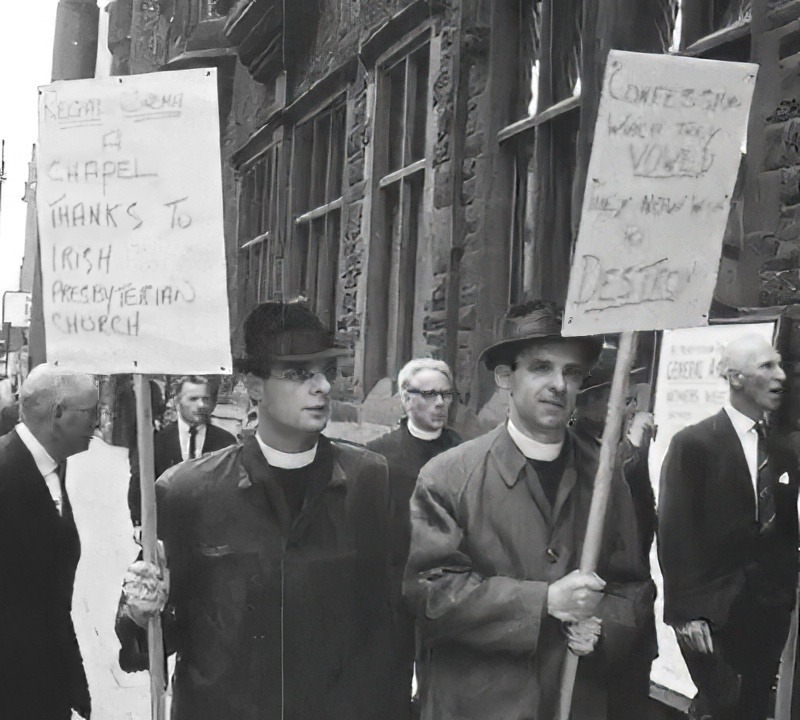
The historical context of Cooke’s early ministry was one of spiritual ferment and ecclesiastical upheaval. The post-World War II era saw a surge in evangelism, both in America—with figures like John R. Rice drawing multitudes—and in Ulster, where Paisley’s campaigns converted hundreds. It was into this atmosphere that Cooke and Douglas were spiritually born. However, 1951 brought a defining crisis: the Crossgar stand. Invited by saved elders to preach in Lissara Presbyterian Church in Crossgar, County Down, Paisley faced opposition from the Down Presbytery of the Irish Presbyterian Church, which intervened to shut down the meetings due to his separatist stance against liberalism. Refusing to comply, the elders took a bold stand, leading to the formation of the Free Presbyterian Church of Ulster on St. Patrick’s Day, 17th March 1951. This new denomination emerged as a bastion of biblical fundamentalism, rejecting the ecumenical trends and theological compromises plaguing the mainline churches. The Newsletter reported the event, noting that every seat in the inaugural service was filled, signaling the birth of a movement committed to gospel purity.
For young Bert Cooke, this development was initially troubling. As a student preacher at Mount Merrion Free Presbyterian Church alongside Douglas, he grappled with the apparent setback to evangelism. Paisley, once filling halls with hundreds, was now persona non grata, his invitations revoked and meetings reduced to handfuls. Cooke confided to Foster on multiple occasions that he feared Paisley had taken a wrong step, potentially halting the momentum of soul-winning. Yet, in 1955, a pivotal moment arrived at Mount Merrion. Office-bearers, resistant to Paisley’s protests against apostasy and ecumenism in the Irish Presbyterian Assembly, invited Cooke to join their defiance. Displaying the wisdom that would define him, Cooke withdrew to pray, seeking God’s will. Emerging from his knees, he declared himself a Free Presbyterian through and through, committing to the doctrine of separation as outlined in Scripture—not a watered-down version, but the full biblical imperative of 2 Corinthians 6:17: “Come out from among them, and be ye separate.” He boldly stated, “If standing for the virgin birth and the blood atonement wrecks this church, then the sooner it is wrecked, the better.” The congregation revived under this stand, and Cooke never wavered, honoring the principles of separation until his death.
This commitment propelled Cooke into fruitful pastorates. After nine years at Mount Merrion and a tenure at Rasharkin Free Presbyterian Church, he was installed in Armagh on 9th December 1967. The ministry there was forged in fire: a bombing attempt on 5th November 1967 damaged the portable hall, and during the Troubles, Roman Catholic rebels hurled missiles without police intervention. Undeterred, Cooke exhorted his flock with Isaiah 54:17: “No weapon that is formed against thee shall prosper.” Under his 26-year leadership until retirement in February 1994, the congregation flourished, moving from a temporary hall in the city mall (erected amid opposition and later relocated) to a permanent building opened on 4th January 1975. Armagh became a “mother church,” planting fellowships in Markethill, Dungannon, Tandragee, and Tullyvallen, despite the era’s violence.
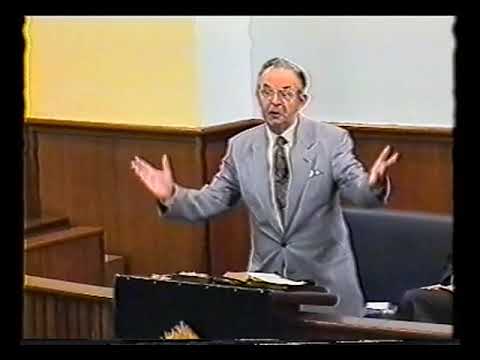
As the first Deputy Moderator of the Free Presbyterian Church, Cooke provided calm, scriptural wisdom in presbytery debates, often speaking last to deliver decisive counsel. He also served as Professor of Homiletics and Pastoral Theology at Whitefield College of the Bible in Banbridge, training future pastors that preaching is divine revelation, not mere performance. He emphasized humility, prayer, and holiness, teaching, “A good sermon must move the heart before it can move the congregation.” His influence extended internationally, preaching in Free Presbyterian Churches of North America from the 1980s onward in states like South Carolina, Pennsylvania, and North Carolina. Regarded as a spiritual father, he concluded appeals with, “If we keep close to the Book and to the blood, all will be well.”
Central to Cooke’s legacy was his implacable opposition to apostasy—the abandonment of biblical truth—and ecumenism, the compromising unity that dilutes doctrine. Born into a Presbyterian Church poisoned by liberalism under figures like Professor J. E. Davey, who denied the blood atonement and Christ’s deity, Cooke witnessed firsthand the eternal dangers of false teaching. In his 2011 reflection at the denomination’s 60th anniversary, he spoke of being “overruled by God” into Free Presbyterianism. His final major sermon in 2015 at Armagh’s 50th anniversary affirmed, “Fifty years of Gospel preaching—I have no reason to change my message. Jesus Christ the same yesterday, today, and forever.”
This conviction crystallized in his seminal work, Free Presbyterianism, Why?, a sermon-turned-booklet preached in venues like Mount Merrion, Kilkeel, and Lisburn. Drawing parallels between ancient idolatry and modern compromise, Cooke warned that ecumenism is betrayal, not unity, declaring, “God will not bless compromise… we must worship Him in spirit and in truth.” He critiqued the Irish Presbyterian Church’s endorsement of Davey, tracing faithfulness from Reformers like Henry Cooke and the 1859 Revival to the Free Presbyterian witness. Emphasizing separation as positive obedience, he quoted 1 Samuel 17:29: “What have I now done? Is there not a cause?” Cooke urged believers to avoid platforms with evangelicals remaining in apostate denominations, viewing such as disobedience to God’s command to separate.
Foster’s tribute poignantly likened Cooke to “Mr. Valiant-for-Truth” in John Bunyan’s Pilgrim’s Progress. As Valiant faces death, he declares, “I am going to my Father’s… My sword I give to him that shall succeed me in my pilgrimage… My marks and scars I carry with me.” Foster envisioned heavenly trumpets welcoming Cooke, reuniting him with Paisley, Douglas, and others. Personal traits—warmth, wit, humility, and loyalty—endeared him to many. His wife Agnes, a pillar of support, cared for him through frailties, enabling his longevity. In his final days, whispering his longing for heaven, Cooke embodied the blessedness of Psalm 32:1: “Blessed is he whose transgression is forgiven, whose sin is covered.”
Yet, Foster’s address was no mere reminiscence; it issued a clarion call to younger Free Presbyterians. Lamenting that many have not encountered apostasy’s dreadfulness firsthand, he warned against softening on separation. “We should not get soft in this matter,” he urged, recommending Free Presbyterianism, Why? as essential reading. In an age of renewed ecumenical pressures, Cooke’s life demands action: stand firm, denounce compromise, and wield the sword of truth. As he proclaimed in his sermons, “The battle for truth must be fought in every generation.” Let Free Presbyterians heed this legacy, ensuring the gospel flame burns undimmed.