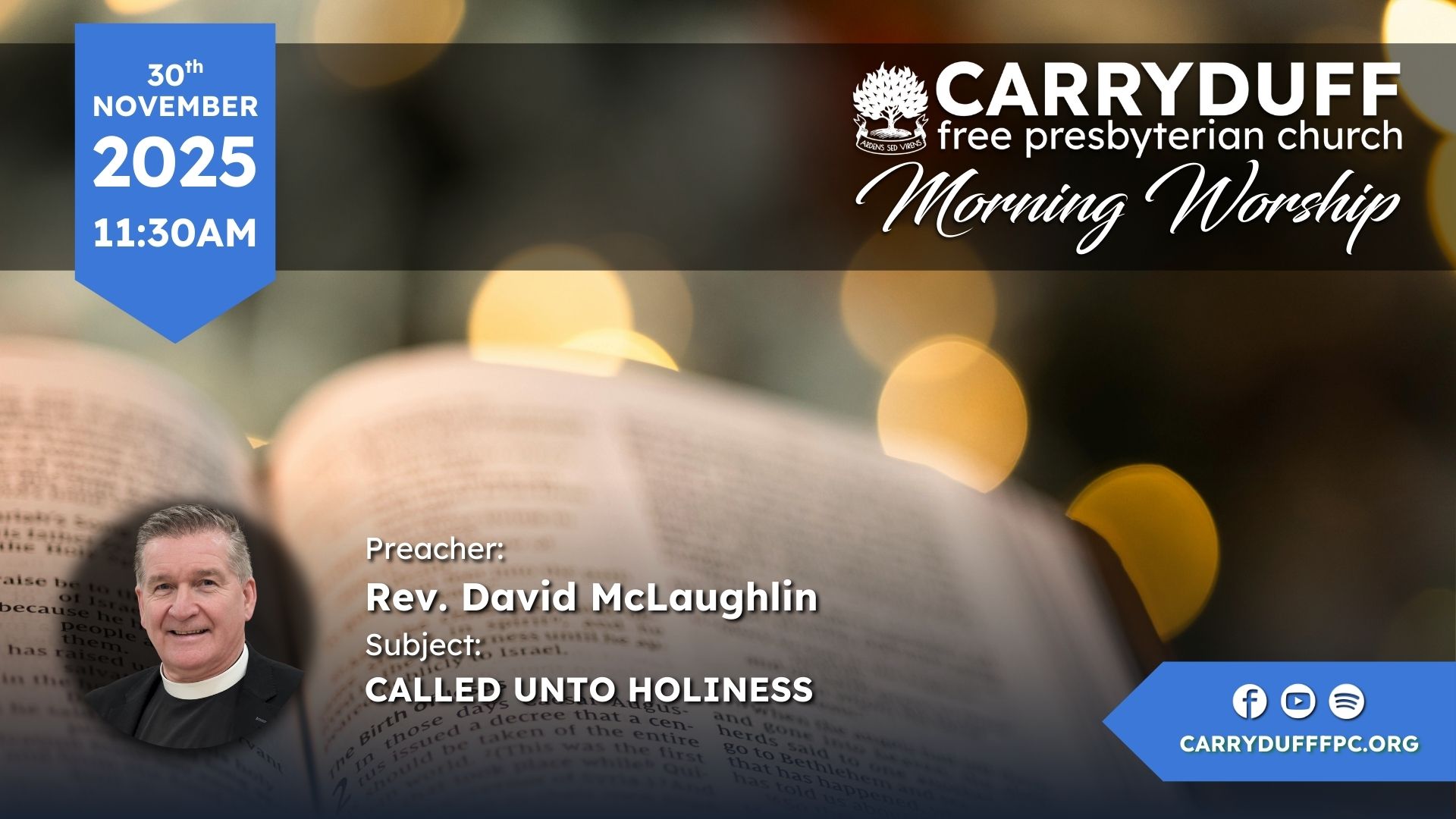

Date: SUN 11:30am 30th November 2025
Preacher: Rev. David McLaughlin
Bible Reference: 1 Thessalonians 4:3
For this is the will of God, even your sanctification, that ye should abstain from fornication:
Podcast
Subscribe to the podcast here:
Spotify Podcasts | Apple Podcasts | Pocket Casts
Email | RSS | more information here
Sermon Summary
(1 Thessalonians 4:3–8, preached from the King James Bible)
The preacher continued an expository series on 1 Thessalonians, focusing on chapter 4, verses 3–8, under the title Called Unto Holiness. After commending the congregation’s singing and offering free Bibles, he read verses 1–8 and declared the central truth: “For this is the will of God, even your sanctification” (v. 3) and “God hath not called us unto uncleanness, but unto holiness” (v. 7).
The sermon unfolded in three main points:
1. The Essence of the Call to Holiness
The Greek word for “sanctification” and “holiness” appears three times in the passage (vv. 3, 4, 7), emphasising its importance. Scripturally and theologically, sanctification has three distinct aspects, each involving a member of the Trinity:
- Positional sanctification: The moment a sinner trusts Christ, he is placed “in Christ” and declared holy because of union with Him.
- Progressive sanctification: The ongoing work of the indwelling Holy Spirit (v. 8) who conforms the believer to the image of Christ, enabling him increasingly to die unto sin and live unto righteousness. This is the primary focus of the passage.
- Perfected sanctification: At death (or Christ’s return), the believer is finally and fully delivered from the presence and power of sin.
The preacher stressed that Paul is here addressing progressive sanctification – the daily, practical outworking of holiness in the believer’s life.
2. The Exhortation of the Call to Holiness
Paul states plainly and without ambiguity that holiness is the revealed will of God for every Christian. It is not optional, negotiable, or determined by cultural standards or personal preference. Key truths emphasised:
- God’s ultimate purpose for His people is that they be holy and without blame before Him (Ephesians 1:4).
- Christ loved the church and gave Himself for her in order to sanctify and cleanse her and ultimately present her holy and without blemish (Ephesians 5:25–27).
- Holiness is not the ground of salvation (we are not saved by works), but it is the inevitable evidence and fruit of genuine salvation.
- A life marked by persistent, unrepented immorality gives evidence that a person does not truly know God, regardless of their profession (Hebrews 12:14; 2 Timothy 2:19).
The preacher warned against the widespread error of seeking God’s will only in secondary matters (marriage partner, career, ministry) while ignoring the clear biblical mandate to pursue holiness.
3. The Experience of the Call to Holiness
Paul specifically commands the Thessalonian believers to abstain from fornication (Greek porneia), a broad term covering every form of sexual immorality: premarital sex, cohabitation, adultery, incest, homosexuality, pornography, and all sensual impurity.
This command was especially relevant because:
- The first-century Gentile world was characterised by gross idolatry and rampant sexual immorality (temple prostitution, multiple partners, etc.).
- Many converts had come out of that background and needed clear instruction that the Christian life demanded a complete break with such practices.
- The modern Western world (from the 1960s “sexual revolution” onward) has returned to a similar pagan ethos. Television, film, the internet, advertising, and fashion openly promote sensuality; Christian marriage and biblical morality have been systematically undermined.
The preacher quoted Romans 1:18–27 to show that when a society rejects the knowledge of the true God, He gives it over to uncleanness and dishonouring of the body. Britain, once influenced by Christian values, has seen the restraining “dam” burst, resulting in an explosion of immorality.
Concluding Application
The indwelling Holy Spirit is the Christian’s great Helper in the pursuit of holiness. It is impossible to be genuinely indwelt by the Spirit and show no sanctifying influence or desire for godliness. When a believer does sin (and all do), there is an Advocate with the Father (1 John 2:1) and the Spirit’s power to confess, repent, and press on.
The preacher closed with a passionate plea: God’s people in an increasingly pagan culture must demonstrate by their lives that the God they serve is holy. The motto for every Christian must be “Holiness unto the Lord.”
Though the preacher admitted he had almost hesitated to deliver such a direct message, he felt compelled by faithfulness to the text, praying that it would be received in the spirit in which it was given.