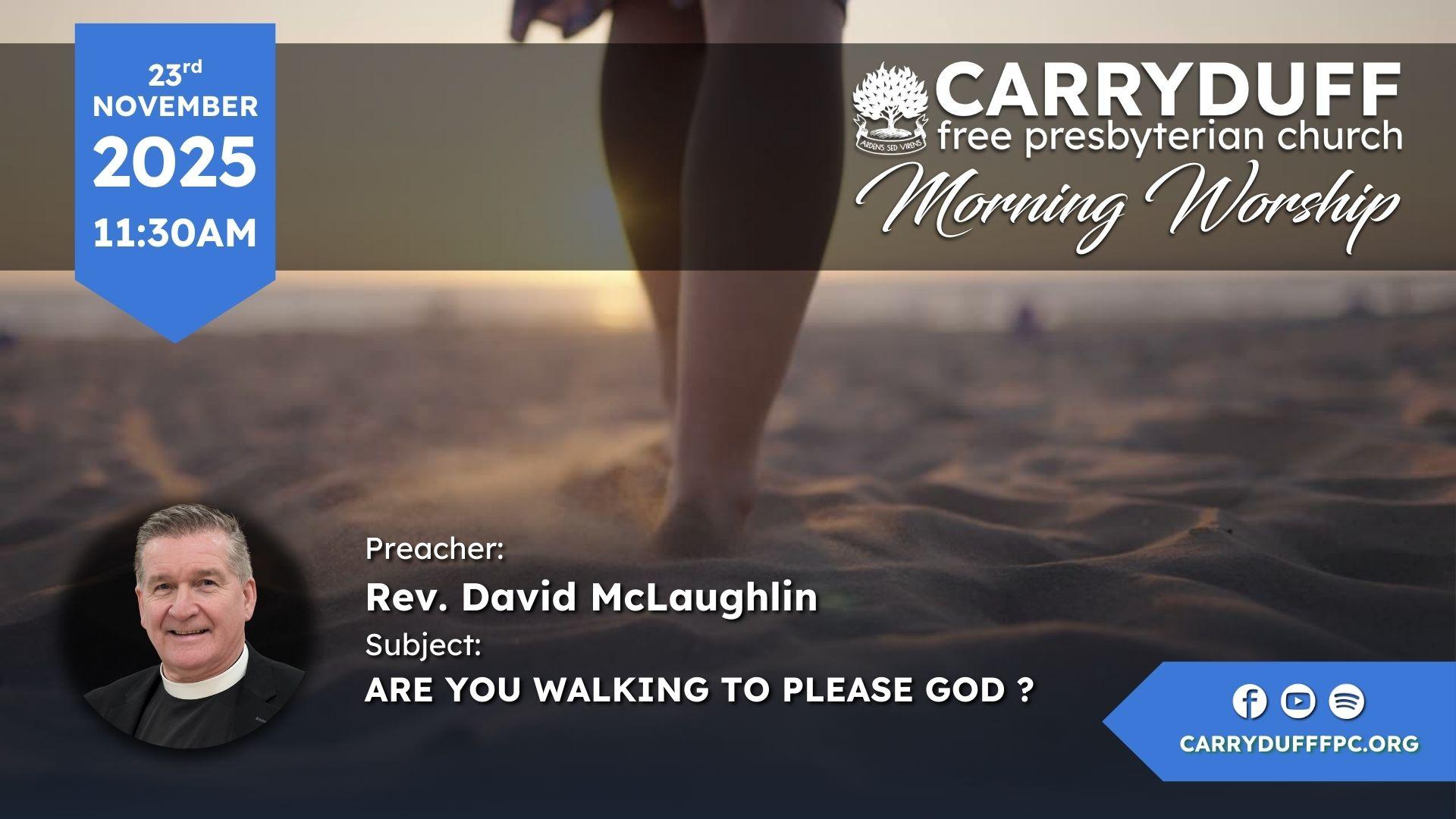

Date: SUN 11:30am 23rd November 2025
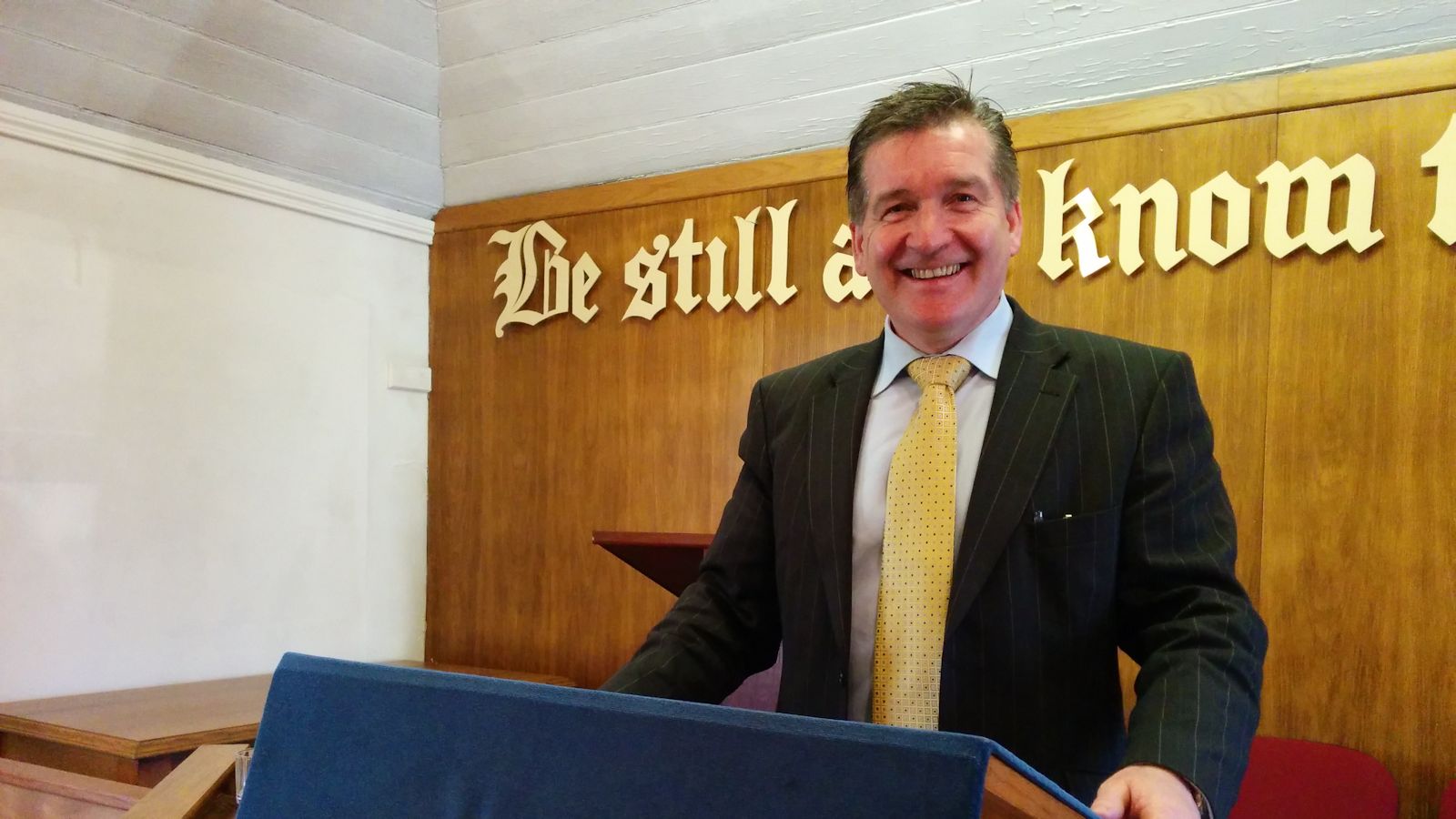
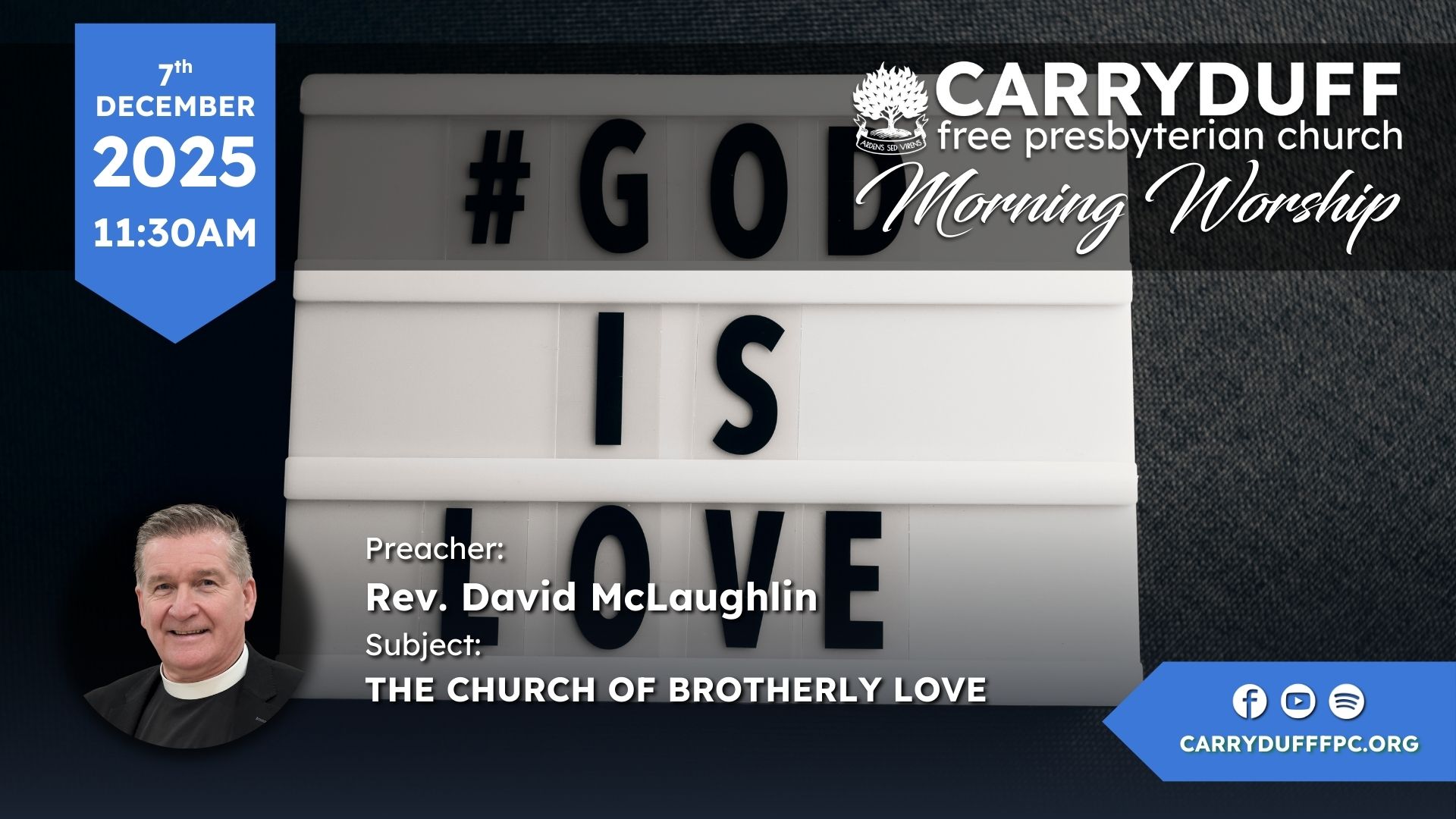
Preacher: Rev. David McLaughlin
Bible Reference: 1 Thessalonians 4:1-2
Furthermore then we beseech you, brethren, and exhort you by the Lord Jesus, that as ye have received of us how ye ought to walk and to please God, so ye would abound more and more. For ye know what commandments we gave you by the Lord Jesus.
Detailed Summary of the Sermon: “The Christian’s Pathway to Pleasing God”
(1 Thessalonians 4:1–2, preached from the Authorised Version)
The preacher is continuing an expository series through 1 Thessalonians. Having covered the doctrinal and pastoral heart of the letter in chapters 1–3 (the Thessalonians’ conversion, Paul’s ministry amongst them, Satan’s opposition, Timothy’s encouraging report, and Paul’s prayers), he now reaches chapter 4 where Paul turns from doctrine to duty. The word “furthermore” (v. 1) signals “next in the queue” – a deliberate shift to practical Christian living.
Text: 1 Thessalonians 4:1–2
“…that as ye have received of us how ye ought to walk and to please God, so ye would abound more and more. For ye know what commandments we gave you by the Lord Jesus.”
The sermon’s theme is “The Christian’s Pathway to Pleasing God” (or “Are You Walking to Please God?”). The preacher structures his message around three clear headings drawn from the text:
1) The Priority of the Christian’s Walk: To Please God
- Pleasing God must be the supreme ambition of every true believer (“brethren” = born-again Christians).
- This is not the ground of our salvation (we are not saved by pleasing Him), but the fruit and evidence that we are saved, indwelt by the Spirit, and love the One who redeemed us.
- Scripture support: Eph 5:8–10 (walk as children of light, proving what is acceptable to the Lord); Heb 11:6 (without faith it is impossible to please Him); 1 Cor 6:19–20 (ye are not your own…glorify God in your body).
- The preacher frankly acknowledges the daily struggle: even as believers we naturally wake up thinking “What will make me happy today?” rather than “What will please God today?” We must fight self-centredness and deliberately re-orient our priorities.
- A strong quote from Puritan Thomas Watson is read, urging believers to begin each day with God in Scripture and prayer so that the heart is “wound up toward heaven” and goes better all day.
2) The Pathway of the Christian’s Walk: A Heart Renewed and in Harmony with God
- The phrase “how ye ought to walk” points first to the heart. True Christian walking is not external rule-keeping but a heart relationship – walking with God as Adam did before the Fall (Gen 3:8) and as 1 John 1:7 commands: “walk in the light, as He is in the light.”
- Regeneration is essential: only a new heart (2 Cor 5:17) can love and agree with a holy God (Amos 3:3 – “Can two walk together except they be agreed?”).
- The preacher issues a passionate plea, especially in view of the Free Presbyterian Church’s upcoming 75th anniversary in 2026: we must recover “a heart for God.” Mere intellectual belief or religious activity without heart-transformation produces empty churches and powerless lives.
- A heart in harmony with God will hate what He hates (sin, the world, the flesh, the devil) and love what He loves (purity, truth, righteousness). Such a heart naturally expresses gratitude, love, and devotion in every sphere – marriage, money, music, materialism, ministry – with no reserves, no regrets, and no retreat.
3) The Precepts of the Christian’s Walk: The Commandments of God
- Verse 2 reminds the Thessalonians that they already know the “commandments” Paul gave “by the Lord Jesus.” The preacher understands these to be the moral law summarised in the Ten Commandments – God’s unchanging transcript of His own character and will for His people.
- The Ten Commandments are not a way of salvation but the rule of life for those already saved by grace. Jesus Himself expounded them inwardly in the Sermon on the Mount (anger = murder; lust = adultery).
- They are to be loved, lived, and used as the sole infallible yardstick for all doctrine and practice. The preacher solemnly warns against elevating tradition, science, church councils, creeds, or personal experience above Scripture (“To the law and to the testimony…” – Isa 8:20).
- A modern illustration is given of a man who refused to commit insurance fraud because the commandment “Thou shalt not steal” confronted and comforted him.
- Where Bible authority is rejected (even under the cloak of scholarship), darkness and decline follow. The preacher laments the closure of once-sound churches in Northern Ireland because of rationalism and Bible-rejection.
Conclusion and Application
The preacher summarises: to walk so as to please God we must
- make pleasing Him our greatest priority,
- ensure our hearts are renewed and in loving agreement with His, and
- order our lives by the precepts of His holy commandments revealed in Scripture.
He closes with a call to self-examination and to living out these truths for the glory of God, announcing that the following Lord’s Day he will address the challenging but vital subject of sanctification (v. 3ff.), asking the congregation to pray for preacher and hearers alike.
Podcast
Subscribe to the podcast here:
Spotify Podcasts | Apple Podcasts | Pocket Casts
Email | RSS | more information here