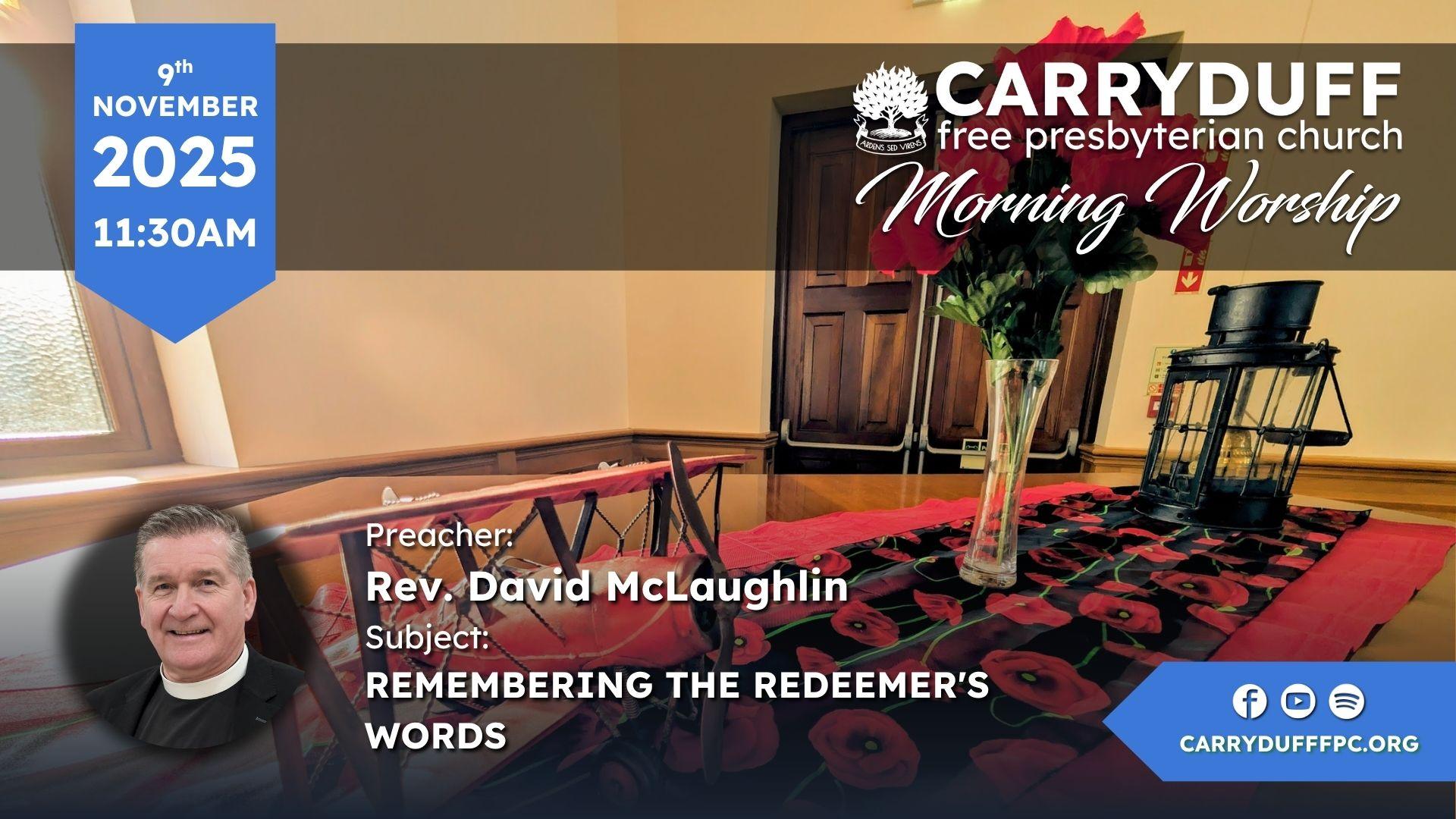
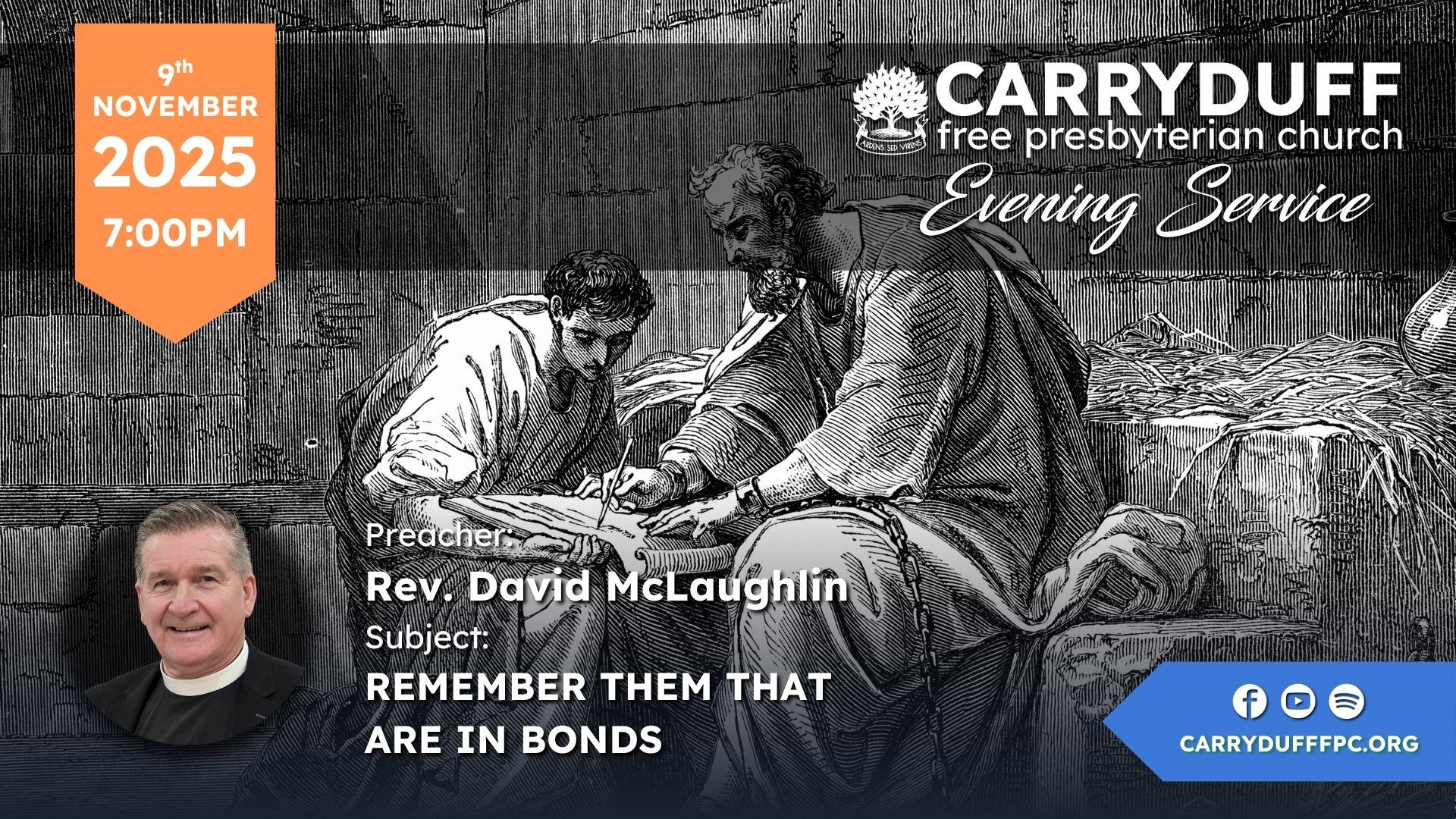

Date: SUN 7:00pm 9th November 2025
Preacher: Rev. David McLaughlin
Bible Reference: Hebrews 13:3
Remember them that are in bonds, as bound with them; and them which suffer adversity, as being yourselves also in the body.
Podcast
Subscribe to the podcast here:
Spotify Podcasts | Apple Podcasts | Pocket Casts
Email | RSS | more information here
Sermon Summary
📜 Sermon Summary – Remembrance Sunday, 9 November 2025
Text: Hebrews 13:1–15 | Theme: “Remember the Prisoners”
🕊️ Introduction
The preacher began by reading from Hebrews chapter 13, emphasising the continuity between doctrine and duty — chapters 1–12 set the theological foundation, while chapter 13 delivers practical commands for Christian living. Today’s message, delivered on Remembrance Sunday, linked the act of national remembrance with the biblical command to “remember them that are in bonds.”
🇬🇧 The Meaning of Remembrance
The act of remembrance was described as:
- Deeply personal – Behind every poppy, every medal, and every name lies a story. Each represents a life lived and sacrificed for the freedoms we enjoy today.
- Deeply powerful – A collective national act of gratitude and respect for those who fought and died.
- Deeply precious – Not merely patriotic, but biblically mandated, for Scripture commands God’s people to remember.
- Deeply painful – A reminder of the staggering loss of life: between 15 and 40 million in World War I, and as many as 85 million in World War II, alongside millions more injured and scarred in body and mind.
The pastor connected the remembrance of fallen soldiers to the greatest battle of all — the battle of the cross, where Christ triumphed over sin, death, and hell.
🔗 “Remember the Prisoners” – Hebrews 13:3
The heart of the sermon centred on Hebrews 13:3:
“Remember them that are in bonds, as bound with them; and them which suffer adversity, as being yourselves also in the body.”
The verse was unpacked as a command, not a suggestion. The congregation was urged to form the habit of remembering — not merely recalling facts, but acting out of compassion and solidarity.
1. The People Mentioned
The “prisoners” are believers imprisoned for their faith. Drawing from the Book of Acts, the preacher recalled examples of persecution — Peter, John, James, and Paul — and traced the suffering of Christians through ten waves of persecution under the Roman emperors.
He then moved through history:
- Persecution of the Waldensians, Huguenots, and Covenanters.
- Murders and massacres of Protestants across Europe.
- And into modern times — hundreds of millions of believers today facing hostility and danger for their faith.
He cited data from Open Doors and World Watch List 2025:
- 310 million Christians currently face high to extreme levels of persecution.
- 66 governments actively restrict or oppress Christian communities.
- 380 million believers globally experience persecution of some kind.
2. The Procedure Highlighted
The instruction to “remember” was presented as both mental and practical.
To remember is not passive — it is an ongoing, conscious habit leading to compassion and helpful action.
- In the first century, prisoners depended entirely on their family and fellow believers for food, clothing, and care.
- Remembering meant identifying with their suffering, not ignoring it.
- The preacher condemned modern apathy, warning that Western Christians have grown indifferent to global persecution.
Modern examples included:
- The persecution of Christians in Nigeria, where tens of thousands have been massacred by Boko Haram and Fulani militants.
- Atrocities in Sudan, India, and Indonesia.
- Censorship and hostility even in Western nations, where public proclamation of Scripture is increasingly branded as “hate speech.”
3. The Programme to be Employed
Practical steps were urged:
- Pray for persecuted believers, pastors, and families.
- Protest and lobby governments, sign petitions, and raise awareness.
- Preach the gospel faithfully in our own communities.
- Practice Christian compassion through giving, advocacy, and solidarity.
- Partner with organisations such as Open Doors, Voice of the Martyrs, and International Christian Concern.
✝️ Final Exhortation
The sermon closed by pointing to Jesus Christ, “the great Shepherd of the sheep,” who Himself suffered without the gate to sanctify His people with His own blood. The congregation was called to:
- Identify with the Saviour as they identify with the suffering church.
- Embrace the freedom found only in Christ — “If the Son shall make you free, ye shall be free indeed.”
The preacher concluded with a challenge to the younger generation and the entire church:
“We will not be a church that stands for nothing. We will pray, we will protest, and we will practice what we preach — God helping us.”
🕯️ Summary Message
Remember the prisoners.
Remember the persecuted.
Remember the price of freedom — both temporal and eternal.
And as we remember, let our love turn to action, our gratitude to service, and our faith to courage.
Remembrance Day Photos