
16 All scripture is given by inspiration of God, and is profitable for doctrine, for reproof, for correction, for instruction in righteousness: 17 That the man of God may be perfect, throughly furnished unto all good works.
Subscribe to the podcast here:
Spotify Podcasts | Apple Podcasts | Pocket Casts
Email | RSS | more information here
Sermon Summary: Getting Back to the Bible
Scripture Focus: 2 Timothy 3:10-17
Theme: The Protestant Reformation and the centrality of the Bible in Christian faith.
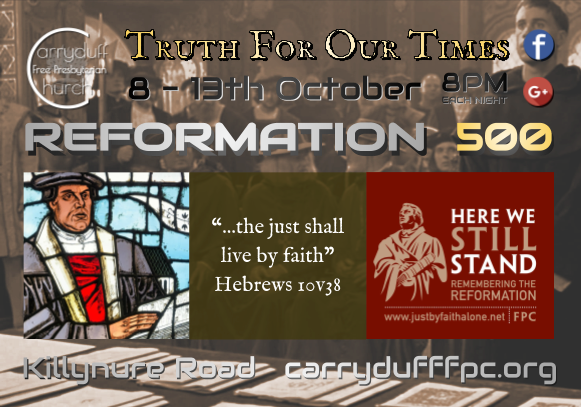
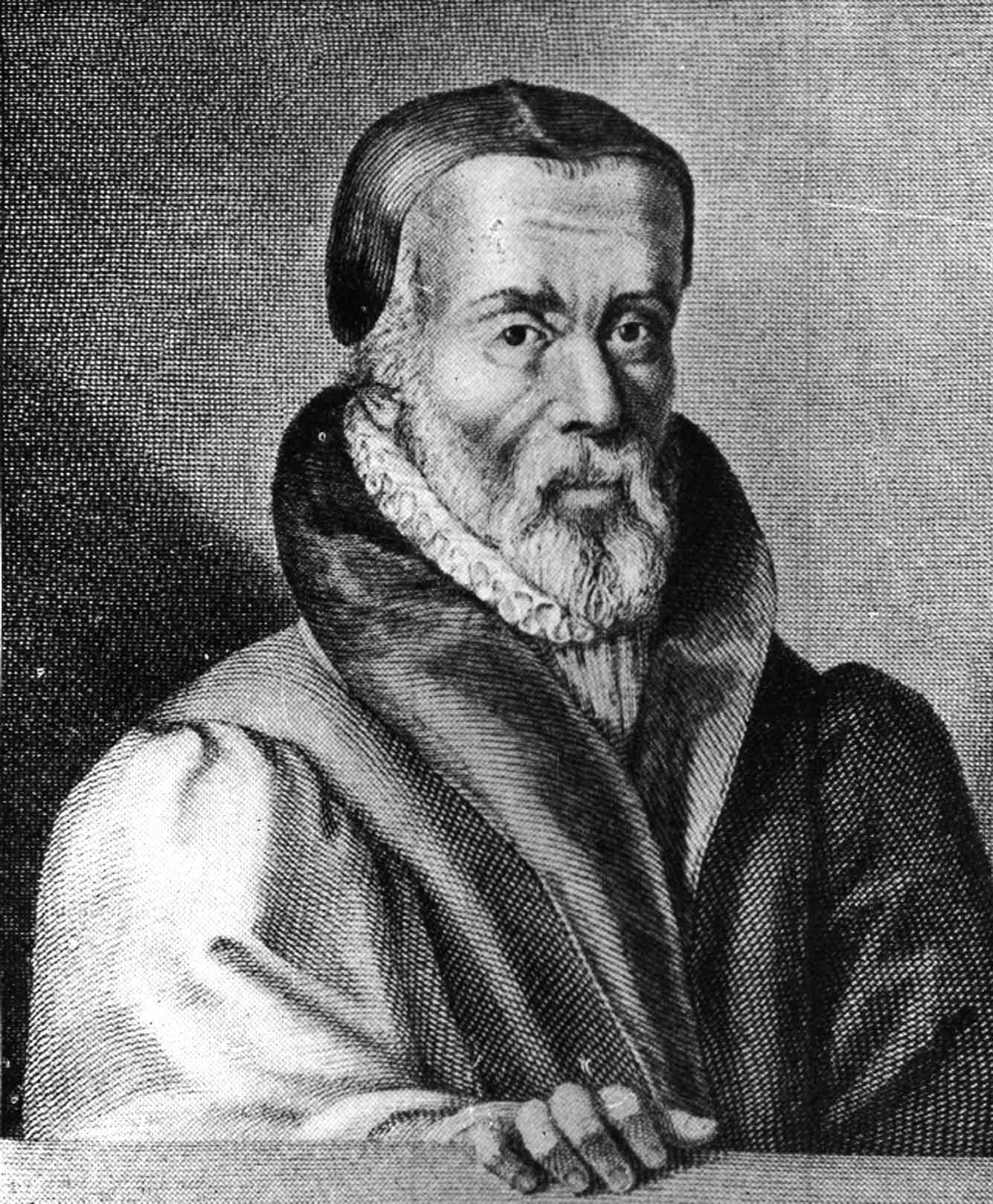
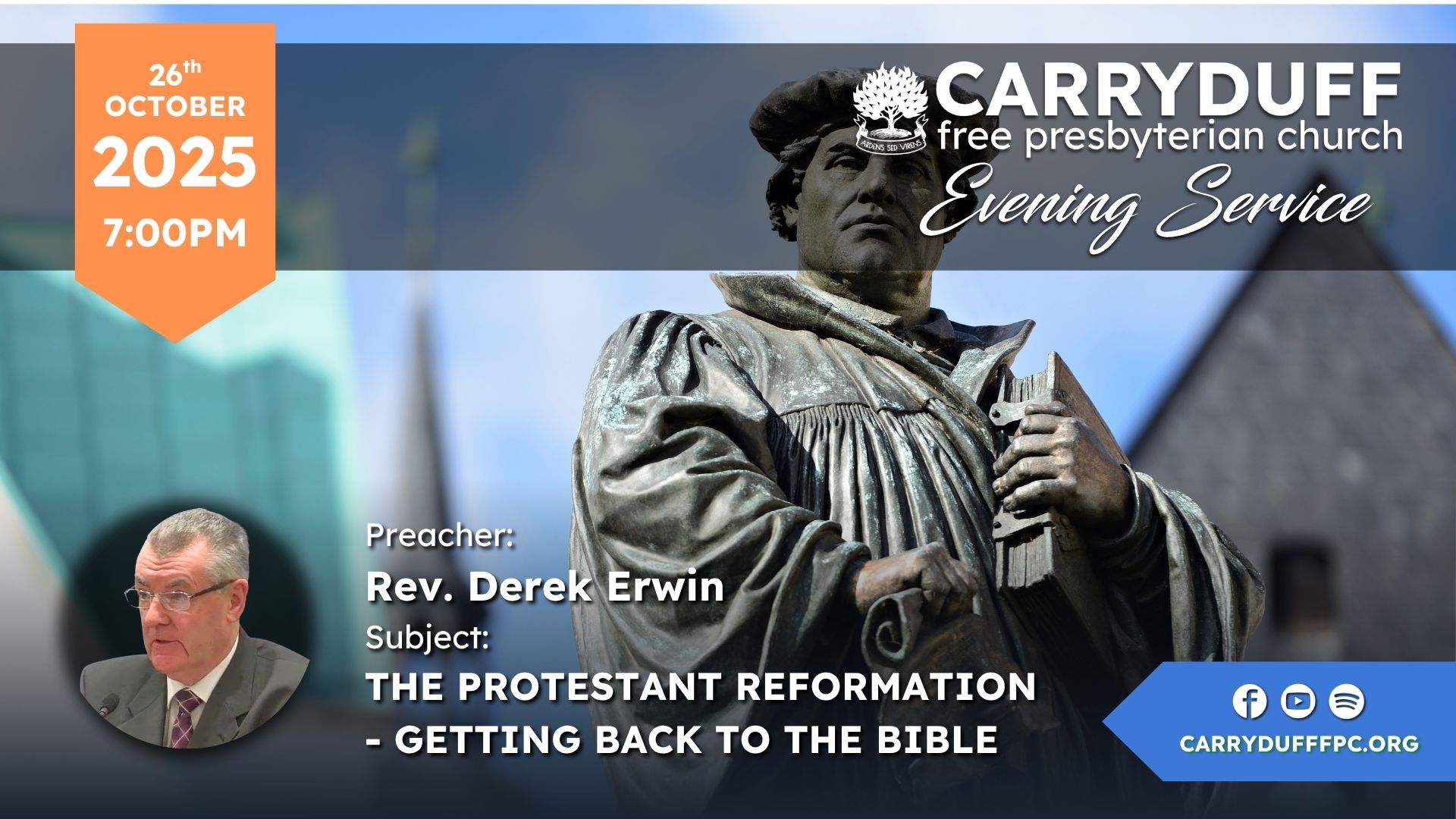
Date: 26th October 2025 delivered in the context of commemorating the 500th anniversary of the translating of the New Testament into English by William Tyndale.
The sermon reflects on the significance of the Protestant Reformation and emphasizes the Bible as the foundation of Christian faith, drawing heavily on 2 Timothy 3:10-17. The preacher uses this passage to underscore the divine inspiration, authority, and practical value of Scripture, connecting these truths to the historical impact of the Reformation and its relevance for today.
Key Points:
- Context of the Protestant Reformation:
- The sermon begins by noting the transformative impact of the Protestant Reformation, which occurred just over 500 years ago, in 1517 when Martin Luther nailed his 95 Theses to the door at Wittenberg Cathedral. This movement, described as a divine intervention, brought light to a world shrouded in the “Dark Ages,” where people were ignorant of the Gospel due to limited access to the Bible and widespread illiteracy.
- The Reformation is framed as a return to the Bible, making it accessible to ordinary people through translations into vernacular languages (e.g., Martin Luther’s German New Testament and William Tyndale’s English translation). This challenged the Roman Catholic Church’s monopoly on religious authority, which had kept people in spiritual darkness.
- The preacher introduces the Five Solas as a concise summary of Reformation theology:
- Sola Scriptura (Scripture Alone): The Bible is the sole source of religious authority.
- Sola Christus (Christ Alone): Salvation is through Christ alone.
- Sola Fide (Faith Alone): Justification is by faith alone.
- Sola Gratia (Grace Alone): Salvation is by God’s grace alone.
- Soli Deo Gloria (Glory to God Alone): All is done for God’s glory.
- These principles affirm the authority of Scripture, the centrality of Christ, and salvation by grace through faith, setting the Reformers apart from the erroneous teachings of the Roman Catholic Church.
- The Bible’s Divine Inspiration (2 Timothy 3:16-17):
- The preacher emphasizes the phrase “All Scripture is given by inspiration of God” to affirm the Bible’s inerrancy and divine origin. The term “all” is highlighted as inclusive, meaning every part of Scripture is God-breathed and without error.
- Three key terms describe the Protestant view of Scripture:
- Verbal Inspiration: Every word is inspired, not just thoughts or concepts. Jesus’ reference to the “jot and tittle” (Matthew 5:17-18) illustrates the precision and permanence of God’s Word.
- Plenary Inspiration: All parts of Scripture are equally inspired, whether genealogies or the Sermon on the Mount.
- Inspiration: The text is “God-breathed,” written by human authors under divine guidance, ensuring its accuracy in the original manuscripts.
- The Bible’s unique nature is evidenced by its composition: 66 books written by approximately 40 authors over 1,500 years across three continents, yet unified in its theology and redemptive theme. This coherence, along with fulfilled prophecies (e.g., Isaiah’s prediction of the virgin birth, Micah’s prophecy of Bethlehem), confirms its divine origin.
- The Bible’s Transformative Power:
- The sermon highlights the Bible’s ability to change lives, citing personal transformations through the Gospel message. The preacher notes that millions throughout history have been saved from eternal judgment through the Scriptures’ message of salvation by grace.
- The Bible is described as a “lion” that defends itself (per Charles Spurgeon’s analogy). It needs no defense; its truth is self-evident when proclaimed.
- The Bible’s Practical Value:
- Quoting 2 Timothy 3:16, the preacher outlines the Bible’s profitability for:
- Doctrine: Teaching essential truths about salvation and Christian living.
- Reproof: Convicting believers of sin, likened to a hammer breaking a rock (Jeremiah 23:29).
- Correction: Guiding believers back to the right path when they stray.
- Instruction in Righteousness: Training believers to grow spiritually and live godly lives.
- Examples include the Book of Romans for doctrine, Corinthians for reproof, Galatians for correction, and Ephesians for instruction, particularly in outlining the believer’s wealth, walk, and warfare in Christ.
- The ultimate purpose is to make the “man of God perfect, thoroughly furnished unto all good works” (2 Timothy 3:17), equipping believers for a life of service and godliness.
- Quoting 2 Timothy 3:16, the preacher outlines the Bible’s profitability for:
- Contemporary Challenges and Applications:
- The preacher laments the modern rejection of the Bible, even among some professing Christians who doubt its authority or authenticity. This mirrors the spiritual darkness of the pre-Reformation era.
- The decline of Protestantism in some areas is noted, with small congregations and a lack of biblical truth indicating a “bankrupt” and “apostate” state. However, the preacher contrasts this with reports of Gospel growth in other regions, where people are embracing the truth.
- Believers are urged to cherish the Bible, study it diligently, and rely on the Holy Spirit to illuminate its truths. The sermon warns against neglecting Scripture, which leads to spiritual stagnation, and encourages persistence in prayerful reading to experience its life-giving power.
- Call to Revival:
- The sermon concludes with a prayer for revival, asking God to move powerfully as He did during the Reformation and other historical awakenings (e.g., in Wales, Scotland, England, and Ulster). The preacher pleads for a renewed passion for Gospel preaching and Bible reading in these “dark times.”
- The Bible is presented as a “wonderful book” that reveals Christ, restores souls, and equips believers for every good work. It is likened to Goliath’s sword: “There is none like it.”
Tone and Style:
The sermon is delivered with earnestness and passion, reflecting a deep reverence for Scripture and a sense of urgency about the spiritual state of the modern world. The preacher uses vivid imagery (e.g., the Bible as a lion, a hammer, or a jigsaw puzzle) and personal anecdotes (e.g., assembling a jigsaw puzzle with his grandson) to make the message relatable. The tone is both exhortative and pastoral, encouraging believers to return to the Bible while warning against spiritual complacency.
Key Illustrations:
- The Lion Analogy: Quoting Spurgeon, the preacher compares defending the Bible to releasing a lion, which can defend itself.
- Jigsaw Puzzle: The gradual fulfillment of biblical prophecies is likened to assembling a jigsaw puzzle, with pieces coming together over time to reveal God’s plan.
- Sailing Boat: The inspiration of Scripture is compared to a sailing boat moved by the wind of the Holy Spirit, guiding human authors to produce God’s Word.
- David’s Reproof: The story of Nathan confronting David (2 Samuel 12) illustrates the Bible’s power to convict and restore.
Conclusion:
The sermon calls believers to revere and engage with the Bible as the inspired, inerrant Word of God, drawing lessons from the Protestant Reformation’s emphasis on Sola Scriptura. It challenges the congregation to resist the cultural drift away from biblical authority, to seek personal and corporate revival, and to trust the Scriptures for doctrine, reproof, correction, and instruction in righteousness. The preacher closes with a prayer for God to bless His Word and send a fresh outpouring of His Spirit, echoing the transformative power of the Reformation.