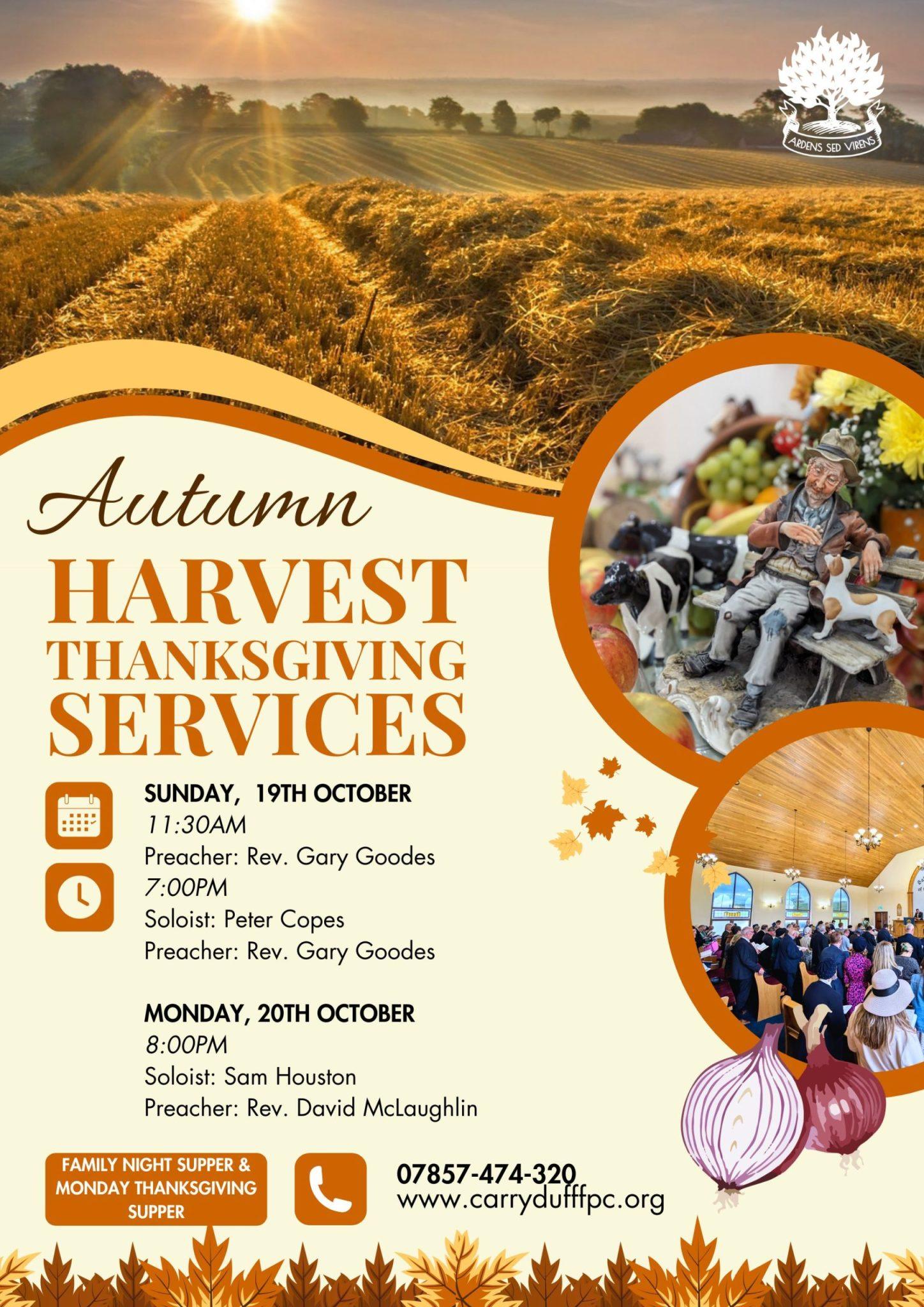

Date: SUN 11:30am 19th October 2025
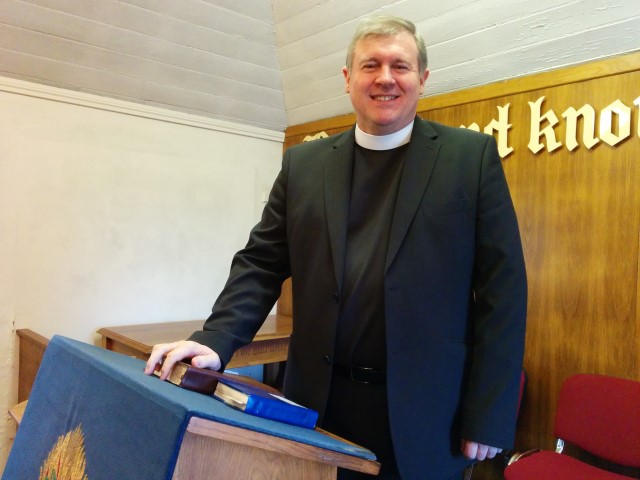
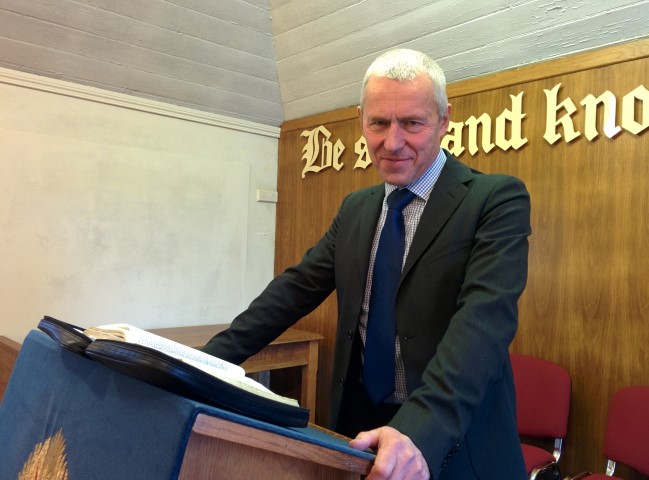
Preacher: Rev. Gary Goodes
Bible Reference: 2 Kings 7:2
Then a lord on whose hand the king leaned answered the man of God, and said, Behold, if the LORD would make windows in heaven, might this thing be? And he said, Behold, thou shalt see it with thine eyes, but shalt not eat thereof.
Subscribe to the podcast here:
Spotify Podcasts | Apple Podcasts | Pocket Casts
Email | RSS | more information here

Harvest 2025 Photos
Sermon Summary: From Starvation to Salvation (2 Kings 6:24–7:20)
Context and Setting: The sermon draws from 2 Kings chapters 6 and 7, focusing on a dire moment in Israel’s history. The Syrian army, led by King Ben-Hadad, has besieged Samaria, causing a severe famine. The situation is so desperate that people are starving, resorting to eating donkey heads and dove’s dung, and even cannibalism (2 Kings 6:24–29). The preacher uses this grim backdrop to contrast physical starvation with spiritual famine, setting the stage for a message of hope and faith.
Key Points:
- The Situation: A Desperate Famine (2 Kings 6:24–30)
- The famine in Samaria is so severe that basic items like a donkey’s head and dove’s dung fetch exorbitant prices (6:25). The desperation leads to horrific acts, such as a mother eating her own child (6:28–29).
- The preacher compares this physical famine to a modern spiritual famine, referencing Amos 8:11, which speaks of a famine “of hearing the words of the Lord.” In today’s world, particularly in places like Carryduff, many neglect God’s Word, living without spiritual nourishment despite a heritage of gospel revival (e.g., the 1857 revival).
- The sermon highlights the hopelessness of the situation: even the king is powerless (6:26–27), symbolising the inadequacy of worldly solutions (money, influence, education) to address spiritual need. Without Christ, individuals are as vulnerable as the starving Israelites, facing eternal consequences.
- The Solution: Faith in Action (2 Kings 7:3–9)
- Four lepers, outcasts sitting outside Samaria’s gate, decide to act rather than perish in inaction (7:3–4). Facing death either way—starvation in the city or risk with the Syrians—they choose to approach the enemy camp.
- Miraculously, God intervenes by causing the Syrians to hear the sound of a great army, prompting them to flee, leaving behind food, clothing, and treasures (7:5–7). The lepers discover this abundance and initially hoard it, but soon realise their responsibility to share the good news with the starving city (7:8–9).
- The preacher likens the lepers’ bold step to the faith required for salvation. Inaction leads to spiritual death, but a step of faith towards Christ brings blessings akin to the lepers’ discovery of provision. The sermon challenges listeners to avoid the “sin of the desert”—knowing the way to salvation but failing to share it, as illustrated by an anecdote about an Arab guide.
- The Skeptic: Rejecting God’s Word (2 Kings 7:1–2, 17–20)
- Elisha prophesies that the famine will end the next day, with flour and barley sold at low prices (7:1). A skeptical lord, close to the king, doubts this, scoffing that even God opening “windows in heaven” could not make it happen (7:2). Elisha warns that he will see the miracle but not partake in it.
- The prophecy is fulfilled as the people plunder the Syrian camp, but the doubting lord is trampled to death at the gate as the starving masses rush for food (7:17–20). His unbelief robs him of God’s blessing, a warning to those who reject God’s Word today.
- The preacher underscores that faith comes from hearing God’s Word (Romans 10:17), and unbelief is a “thief” that steals salvation and eternal life. Listeners are urged to trust God’s promise of salvation through Christ, lest they miss out like the skeptical lord.
- Application: From Starvation to Salvation
- The sermon draws a parallel between the lepers’ journey from desperation to abundance and the Christian’s journey from spiritual starvation to salvation through faith in Christ. Just as a farmer plants seeds with faith in a harvest, believers must trust Christ for salvation.
- The preacher shares his testimony of conversion from atheism at age 23, emphasising the joy and blessings of a life in Christ compared to the emptiness of living without Him. He challenges listeners not to “do nothing” and risk eternal loss, but to take a step of faith.
- Believers are also called to share the gospel, as the lepers shared their discovery. Failing to do so is likened to withholding life-saving water in a desert, making Christians accountable for others’ spiritual fate (Ezekiel 3:18).
Conclusion and Call to Action: The sermon concludes with a heartfelt appeal for listeners to move from spiritual famine to the feast of salvation by placing faith in Christ. The lepers’ faith, the crowd’s rush for provision, and the skeptic’s tragic end serve as a vivid illustration of the stakes involved. The preacher prays for a “harvest” of souls, urging attendees to seek forgiveness and eternal life in Christ before leaving the service.
Tone and Style: Delivered with passion and urgency, the sermon uses vivid imagery (e.g., “donkey head burger” and “dove’s dung for dessert”) to convey the desperation of the famine and the hope of God’s provision. It blends scriptural exposition with contemporary application, using personal anecdotes and cultural references (e.g., Carryduff’s revival history) to connect with the congregation. The tone is both convicting and invitational, aiming to stir faith and action.
Key Takeaway: The message of 2 Kings 6–7 is a call to faith in God’s provision, both physical and spiritual. By stepping out in faith, sharing the gospel, and trusting God’s Word, believers can move from starvation to salvation, avoiding the fate of those who reject God’s promises.