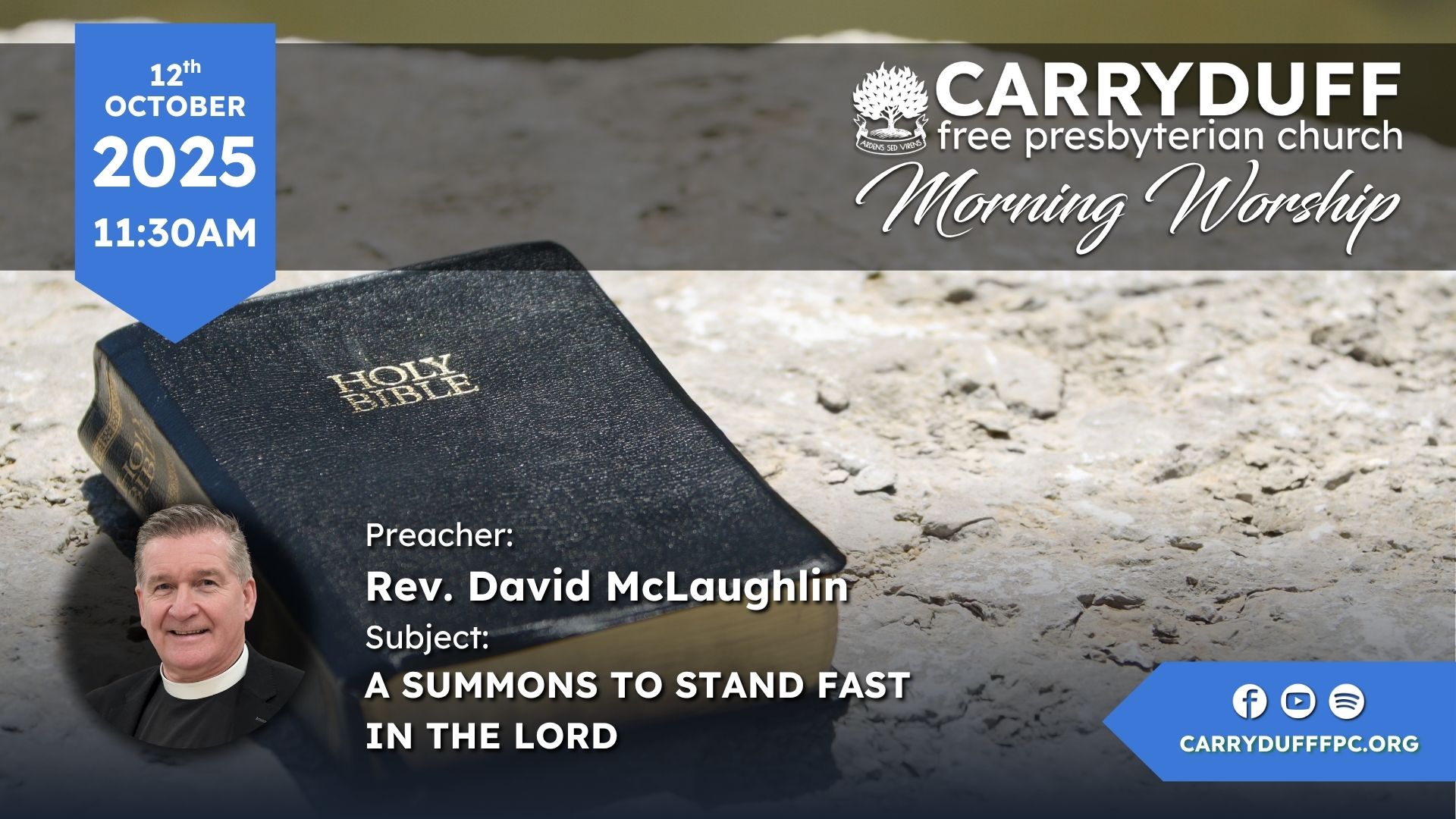

Date: SUN 11:30am 12th October 2025
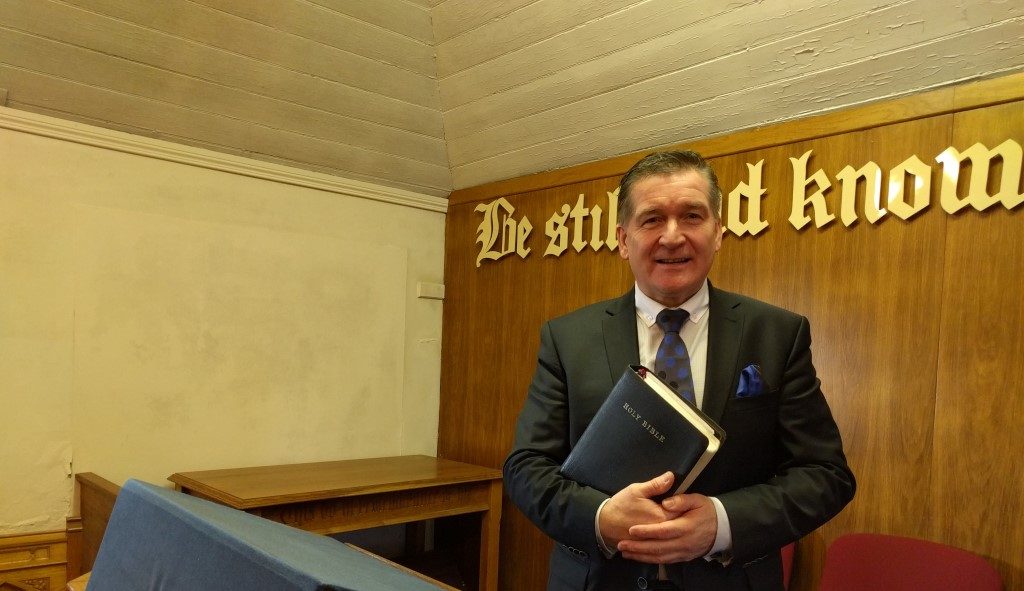
Preacher: Rev. David McLaughlin
Bible Reference: 1 Thessalonians 3:8
For now we live, if ye stand fast in the Lord.
Subscribe to the podcast here:
Spotify Podcasts | Apple Podcasts | Pocket Casts
Email | RSS | more information here
Sermon Summary: 1 Thessalonians 3:7-13 – A Summons to Stand Fast in the Lord
Introduction and Context
The sermon, based on 1 Thessalonians 3:7-13, with a particular focus on verse 8, is part of a series of expository sermons delivered from the King James Bible. The preacher highlights the Apostle Paul’s deep concern for the Thessalonian church, a young congregation facing intense trials, persecution, and temptation. Paul, alone in Athens, was anxious about whether these new believers were remaining steadfast in their faith amidst pressures to abandon Christianity. The sermon’s theme, drawn from verse 8 (“For now we live, if ye stand fast in the Lord”), is described as a “summons to stand fast in the Lord,” encapsulating Paul’s heartfelt desire for the Thessalonians’ perseverance.
Scriptural Reading
The passage (1 Thessalonians 3:7-13) expresses Paul’s relief and joy upon receiving Timothy’s positive report about the Thessalonians’ faith. Despite their afflictions, including persecution and temptation to revert to paganism or Judaism, they remained firm. Paul prays for their continued growth in faith, love, and holiness, anticipating their ultimate blamelessness at Christ’s return.
Key Points of the Sermon
- The Essence of Standing Fast in the Lord
- Definition: To “stand fast” means to be unyielding, rigid, and immovable in faith, likened to digging in one’s heels or adopting a “no surrender” mindset. This applies both physically and spiritually, particularly under pressure to abandon faith.
- Context of Pressure: The Thessalonian believers faced severe trials, including the murder of family members, imprisonment, and confiscation of possessions. The “tempter” urged them to forsake Christianity. Paul’s call to “stand fast” is a directive to remain resolute despite these challenges.
- Biblical Consistency: The preacher cites multiple scriptures where Paul uses the phrase “stand fast” (e.g., 1 Corinthians 16:13, Galatians 5:1, Philippians 1:27, 4:1, 2 Thessalonians 2:15), emphasizing perseverance in faith, liberty, unity, and adherence to biblical traditions when tempted to give up.
- Application: The church today must resist pressures to abandon faith, such as societal trends or personal trials. The preacher urges believers to emulate historical figures like Shamgar or the Scottish defenders in their national anthem, who stood firm with “dogged determination.”
- The Evidence of Standing Fast in the Lord
- Proof of Genuine Faith: The Thessalonians’ steadfastness under trial was evidence of their authentic salvation. Their vibrant, healthy spiritual life demonstrated the reality of their faith, described as “sound as a pound” (a Belfast colloquialism for reliability).
- Impact on the Church: When believers stand fast, it strengthens the church and glorifies God. Conversely, falling away or backsliding sends a negative message to the ungodly, suggesting that the gospel or God’s grace is ineffective. The preacher references the appointment of a female archbishop in the Church of England, who disregards biblical authority, as an example of modern apostasy that undermines the gospel’s credibility.
- Faith as a Body of Truth: The term “faith” in this context refers both to the act of believing in Christ and to the objective body of Christian doctrine (Jude 3). Believers are called to contend for this faith, defending core truths like the deity of Christ, the atonement, justification by faith, and the authority of Scripture.
- Battle for the Bible: The preacher highlights a contemporary “battle for the Bible,” criticizing modern translations based on corrupted manuscripts (e.g., Codex Alexandrinus, Codex Vaticanus) that omit passages like Mark 16:9-20, John 7:53-8:11, and 1 John 5:7. He advocates for translations rooted in the Textus Receptus, like the King James Bible, and emphasizes the importance of verbal and plenary inspiration.
- Historical Responsibility: Using the analogy of the Israelites preserving Joseph’s bones across generations, the preacher calls young people in the Free Presbyterian Church to contend for the faith, ensuring its preservation for future generations.
- The Experience of Standing Fast in the Lord
- Positive Impact on Paul: Timothy’s report that the Thessalonians were standing fast revived Paul’s spirit, giving him joy and encouragement amidst his own distress (verse 7). This demonstrates the interconnectedness of the church family—when one member stands firm, it uplifts others.
- Negative Consequences of Backsliding: The preacher shares two cautionary tales: a pastor who abandoned faith due to bitterness over a family illness and an elder who left his family for another woman, causing pain to his church and children. Such failures harm the church’s witness and discourage others.
- Practical Implications: Standing fast results in a vibrant witness for Christ, shining as a light in dark places (Matthew 5:16). It fosters a life of sanctification and service, impacting homes, workplaces, and communities. Conversely, failing to stand fast leads to discouragement and spiritual decline within the church.
- Contemporary Challenges: The preacher references Matthew 24:12, noting that “iniquity shall abound” and “the love of many shall wax cold” in the last days. He identifies backsliding as a modern issue, beginning with neglecting Bible reading. Daily engagement with Scripture is presented as the “most Protestant thing” to protect against spiritual decline.
Application and Conclusion
The sermon concludes with a call to personal reflection: Can believers say they are “standing fast in the Lord”? This involves understanding the essence of steadfastness, demonstrating genuine faith through endurance, and experiencing the positive impact of perseverance on the church and its witness. The preacher encourages young people to resist societal pressures (e.g., drinking or dancing cultures) and to live by faith, not just for salvation but for daily spiritual vitality. He emphasizes that standing fast is a public testimony of Christ’s saving and keeping power, encouraging others to live for the Lord. The sermon ends with a prayer for God’s blessing on the congregation, acknowledging that only the surface of this rich passage has been explored.
Key Themes
- Perseverance: Believers are summoned to remain unmovable in faith despite trials, persecution, and temptation.
- Evidence of Faith: Steadfastness proves the authenticity of one’s salvation and strengthens the church’s witness.
- Contending for Truth: The church must defend biblical doctrine and the authority of Scripture in an age of apostasy.
- Community Impact: Individual faithfulness uplifts the church, while backsliding causes widespread harm.
- Daily Bible Reading: Engaging with God’s Word is essential to guard against spiritual decline.
This sermon is a passionate plea for believers to stand firm in their faith, rooted in Scripture, and to live as vibrant witnesses for Christ in a challenging world.