
Date: Fri PM 29th March 2019
Singers: Mourne Youth Choir
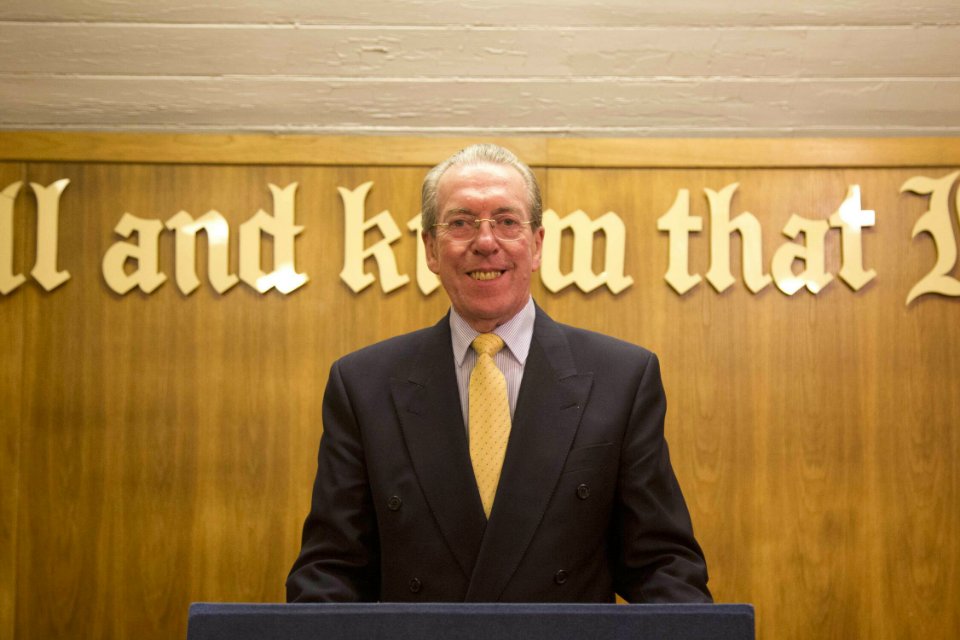
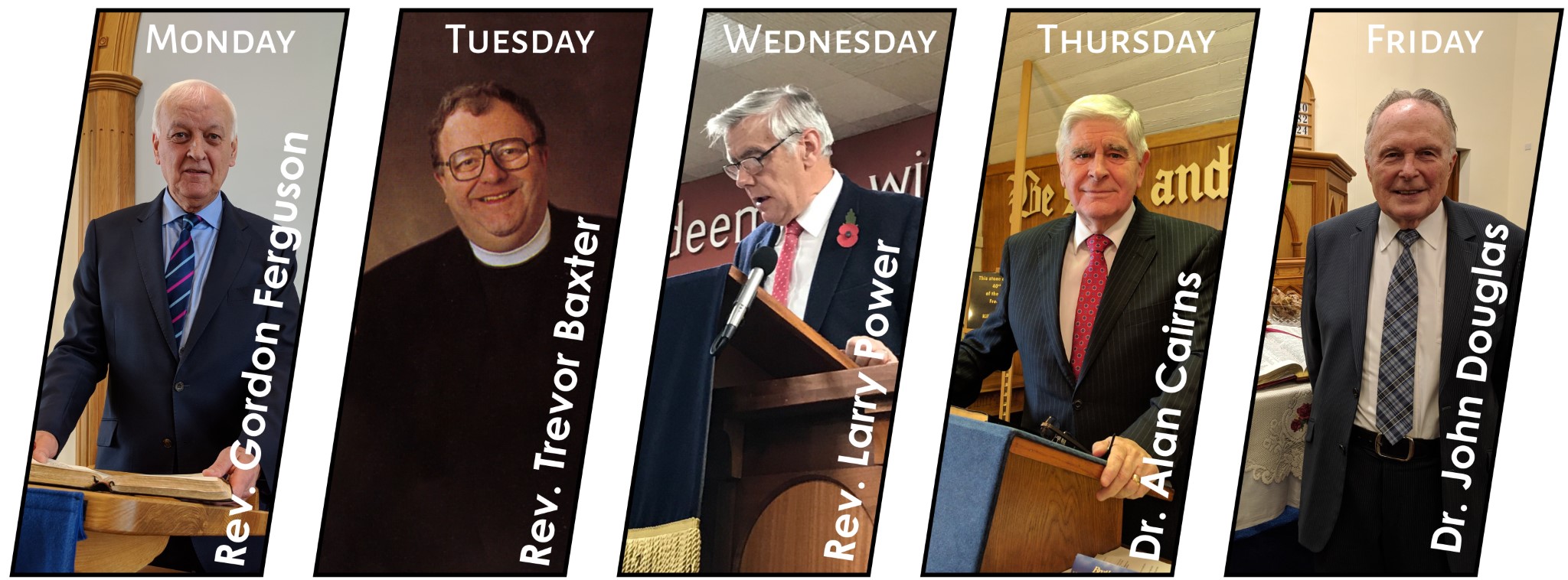
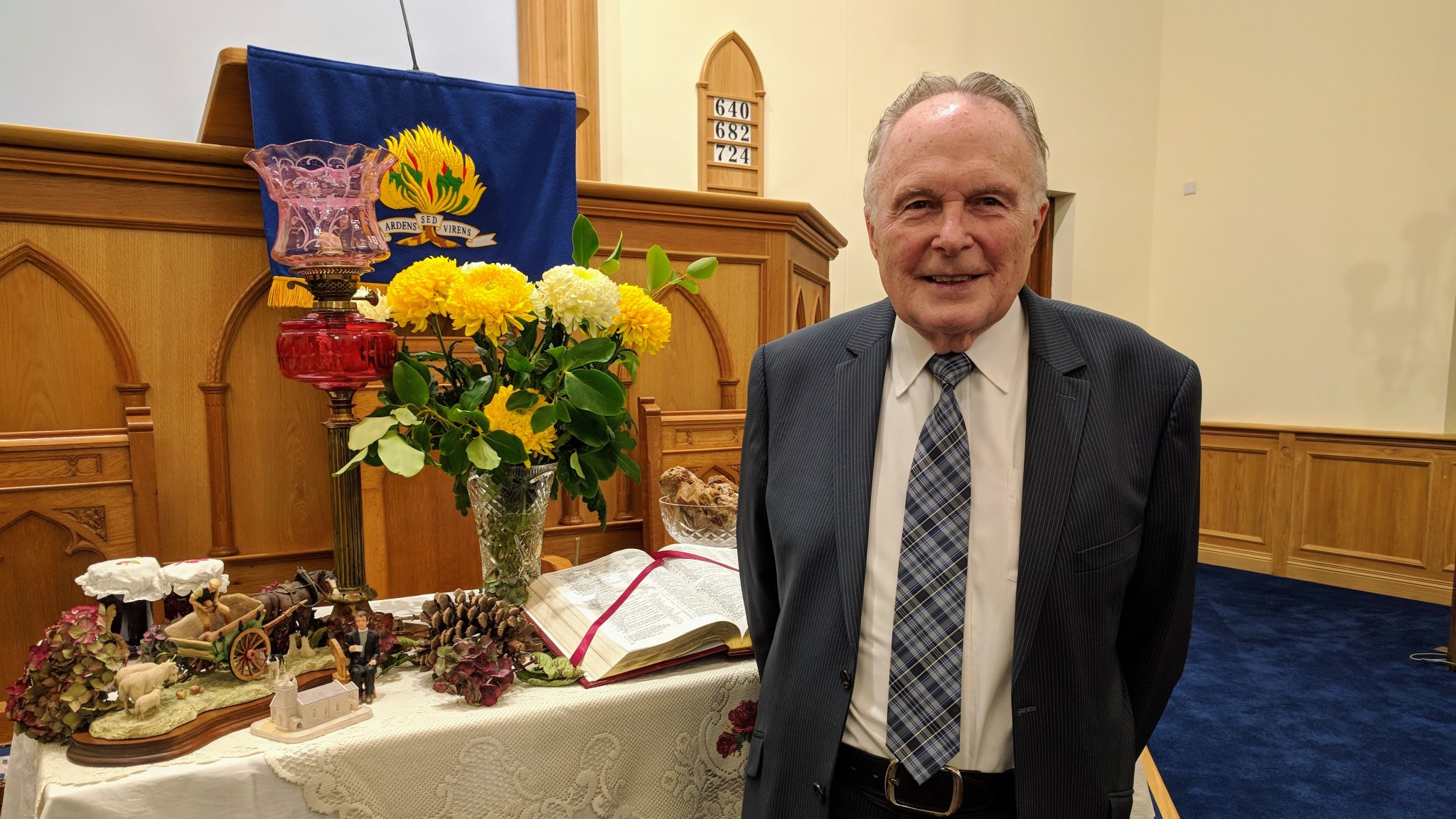
Preacher: Dr. John Douglas
Bible Reference: 2 Timothy 1:12
For the which cause I also suffer these things: nevertheless I am not ashamed: for I know whom I have believed, and am persuaded that he is able to keep that which I have committed unto him against that day.
Podcast
Subscribe to the podcast here:
Spotify Podcasts | Apple Podcasts | Pocket Casts
Email | RSS | more information here
The Testimony of Dr. John Douglas and the Enduring Legacy of the Free Presbyterian Church
Come and hear, all ye that fear God, and I will declare what He hath done for my soul (Psalm 66:16). These words have been the heartbeat of my life and ministry. As we mark more than seven decades since the founding of the Free Presbyterian Church of Ulster on 17 March 1951, I look back with profound gratitude at the way the Lord has led, preserved, and used a small band of believers who were determined to stand unashamedly for the truths of Scripture in an age of growing compromise. My own story is woven inextricably into the fabric of this denomination—from the day a young Ian Paisley knelt with me in Ravenhill Church and pointed me to Christ, to the many years of preaching, pastoring, and training the next generation. This is not merely a history; it is a testimony of God’s unfailing grace.
Childhood and the Providence of God in Wartime
I was born the eldest of four children—three boys and one girl—in the city of Belfast. The shadow of the Second World War hung heavily over those early years. My father began his service in the Royal Ulster Rifles and later transferred to the Royal Corps of Signals because of his keen interest in radio and telecommunications. He fought under General Montgomery through North Africa, Italy, and into Europe, and by the mercy of God escaped the beaches of Dunkirk when so many did not. While he was away, my mother took us to the safety of her parents’ farm near Ballygowan, in the countryside between Ballygowan and Comber. Those years on the farm remain among the happiest of my life—running free in the fields, learning the rhythms of rural living, and coming to understand the hearts of country people. Looking back, I see the hand of God preparing me, for I would later minister for many years among farming communities where that early experience proved invaluable.
Tragedy touched our family when my younger brother, the second boy, died in infancy—perhaps only a week or two old. I still recall the tiny white coffin and my father carrying it to the grave. My mother cradled him and said he was the most beautiful child she had ever seen. Though I never knew him on earth, the words of King David comfort me: “I shall go to him, but he shall not return to me” (2 Samuel 12:23). Heaven holds reunions we cannot yet imagine.
When the war ended and my father returned, we resumed life in Belfast. He remained a soldier at heart, and family discipline sometimes felt like army life! Church was important to him, but his Presbyterian congregation was a long walk away—almost an hour each way in a child’s reckoning. On dry Sundays we went, but the preaching offered no clear gospel, no call to repentance or faith in Christ. My mother, concerned for our spiritual upbringing, searched for a nearer Sunday school. After trying several, friends led us to Ravenhill Evangelical Mission Church—a small, independent work that had been born out of a courageous stand against liberalism in the Irish Presbyterian Church.
The Roots of Separation: Standing Against Apostasy
To understand the birth of the Free Presbyterian Church, one must go back to the 1920s and the heresy trial of Professor J. Ernest Davey. A brilliant and urbane scholar, Davey openly denied the deity and virgin birth of Christ, the inspiration of Scripture, the bodily resurrection, and the blood atonement. He described Jesus as a “Galilean peasant” limited by the prejudices of His time and even suggested the Bible was filled with myth. In 1927 he faced five serious charges relating to the Person and Work of Christ, yet the Belfast Presbytery and the General Assembly acquitted him by overwhelming majorities. Evangelicals who brought the charges were branded troublemakers and socially ostracised. In response, faithful elders—four out of five from Ravenhill Presbyterian Church—withdrew and formed the independent Ravenhill Evangelical Mission Church, determined to uphold biblical truth without compromise.
It was into this congregation of strong conviction that the Lord brought a young preacher in 1946—Rev. Ian R.K. Paisley, fresh from his studies and only twenty years old.
Saved by Grace: My Conversion in 1946
Two momentous events occurred in August 1946. On the first Sunday of the month, Ian Paisley was ordained and installed as minister of Ravenhill—the beginning of a ministry that would shake Ulster. Toward the end of that same month, I came to know the Lord Jesus Christ as my personal Saviour.
Sunday school played a vital part. My regular teacher was a fine Christian man, but teaching was not his gift; often he sent his wife in his place, and what a difference she made! She presented the gospel clearly, personally, and urgently, pressing upon us the question: “Do you know the Lord? Are you ready to meet Him?” My aunt, saved under evangelist Peter Connolly in earlier revival days, also spoke faithfully to me about salvation. Conviction grew deep. Night after night I lay awake in the darkness, staring at the ceiling and thinking of Christ’s sudden return. The words of Matthew 24:44 burned in my heart: “Be ye also ready: for in such an hour as ye think not the Son of man cometh.” In fear I prayed, “Lord, don’t come tonight—I’m not ready.”
One Sunday the burden became unbearable. After class I lingered, hoping to speak to someone. The hall emptied, but at last a teacher emerged from a side room. Trembling, I said, “I want to be saved.” He replied, “Wait here—I’ll fetch the minister.” Moments later the tall young Ian Paisley appeared. He led me to a pew near the back of the church—a spot I could still point out if the building stood unchanged. There he opened the Bible and patiently explained the way of salvation: “He was wounded for our transgressions” (Isaiah 53:5); “Him that cometh to me I will in no wise cast out” (John 6:37); “If thou shalt confess with thy mouth the Lord Jesus…” (Romans 10:9).
When doubts about assurance arose in my mind, he gently pressed John 6:37 home: “You came to Him today—will He cast you out?” “No,” I whispered. “Then rest on His promise.” He also insisted on confession of Christ, overcoming my childish shyness. That day I trusted the Saviour, and later that afternoon I told my family, however briefly, “I have come to the Lord today.” I was, to my knowledge, the first soul Ian Paisley led to Christ in his ministry.
The Prayer Meetings of 1949: The Spark of Revival
The year 1949 proved pivotal. New converts like my cousin Bert Cook (later the beloved Dr. S.B. Cook) and Bob Scott came into the church with burning zeal. Bob, a tall, commanding young man of twenty, had a remarkable gift for open-air preaching. We often walked Belfast’s streets together on Saturday evenings, stopping at open-air meetings where Bob would boldly testify. His voice carried, his manner drew crowds, and frequently souls approached him afterward seeking salvation.
Bob became burdened for the crowds pouring out of Corn Market cinemas. “They’re a captive audience,” he said. “We must preach there.” We took the burden to Rev. Paisley, who wisely replied, “First we must pray.” Thus began a series of Saturday night prayer meetings in Ravenhill—just Paisley, Bob Scott, and myself. Though Bob and I were inexperienced, the Spirit of prayer fell powerfully. We prayed for hours without ceasing, crying to God for revival in Belfast and Ulster. Week after week the meetings continued, sometimes all night. Paisley emerged from those times visibly anointed and empowered by the Holy Spirit. Great gospel campaigns followed, with hundreds professing faith and new congregations planted. The Lord had answered prayer.
The Founding at Crossgar: 17 March 1951
The immediate occasion for the denomination’s birth came in Crossgar. The vacant Lissara Presbyterian Church had a committee of godly, mostly converted elders desperate for evangelical preaching. They invited Ian Paisley to conduct a mission in March 1951. At the eleventh hour the Down Presbytery forbade it, fearing Paisley’s separatist convictions. Rather than submit, the elders moved the mission to the local mission hall in Killyleagh Street. Blessing fell abundantly—over ninety souls were saved.
Continued obstruction from the Presbytery forced a decision. After much prayer and heart-searching—knowing the cost in family ties, employment, and social standing—the elders and people stepped out in faith. On 17 March 1951 they constituted the Crossgar Free Presbyterian Church, the first congregation of what would become the Free Presbyterian Church of Ulster. Persecution was swift and severe, yet the Lord honoured their courage. Ravenhill soon joined, followed by others. In a final act of defiance, the Irish Presbyterian Church elected Professor Davey as Moderator the following year.
The 1960s: Trials, Imprisonment, and Church Planting
The 1960s brought fierce opposition amid rising ecumenism and the early stirrings of the Troubles. Annual protests outside the Irish Presbyterian General Assembly highlighted links to the World Council of Churches. In 1966 police tactics led to the imprisonment of Rev. Ian Paisley, Rev. John Wylie, and Rev. Ivan Foster. I served as chaplain to Rev. Wylie, preaching the gospel boldly even to the warders.
While the men were incarcerated, rallies swept Ulster. At one in Dundrum, locals pleaded for a witness in the Moneyslane area. Services began in October 1966 in the local Orange Hall, packed from the start despite police intimidation. My own trial that year for an allegedly inflammatory speech in Rathfriland exposed official overreach and ended in victory. Missions in Newcastle, Waringstown, and elsewhere saw precious souls saved—including Roman Catholics who later won family members to Christ.
The 1970s–1980s: Growth and Consolidation
Called to Lisburn Free Presbyterian Church in the early 1970s, I pastored there for over fifty years, watching it grow into one of our strongest congregations. The denomination expanded rapidly amid the violence of the Troubles—over twenty Ulster churches by 1980, with international outreach beginning in Canada (1967), the United States (1976), and Australia. Martyrs Memorial Church in Belfast, opened in 1969, became a centre of gospel witness.
As Clerk of Presbytery for many years, I helped guard doctrinal purity. Rev. Paisley’s political work through the Democratic Unionist Party intertwined with our spiritual stand against terrorism and compromise.
The 1990s–2000s: Training the Next Generation
From the 1990s I served as Principal of Whitefield College of the Bible, training young men for the ministry in an age when modernism and ecumenism advanced relentlessly. The college upheld the King James Bible, creationism, and premillennial truth. Congregations multiplied—reaching over sixty in Ulster alone—with mission works in Kenya, Uganda, India, and beyond. Radio and later internet broadcasting extended the witness worldwide.
We steadfastly opposed the 1998 Belfast Agreement, viewing it as moral and political compromise. Personal joys included an honorary doctorate and continued preaching fellowship with my cousin Dr. S.B. Cooke, whose sharp mind and warm heart blessed countless lives.
A Closing Exhortation
I have known whom I have believed, and am persuaded that He is able to keep that which I have committed unto Him against that day (2 Timothy 1:12). In private prayer closets, in faithful Bible reading, in supporting the local church—here is strength for dark days. Never make excuses; they are merely a polite way of saying no to God.
The Free Presbyterian Church was raised up to contend earnestly for the faith once delivered. From humble beginnings in a mission hall in Crossgar, God has built a worldwide testimony. May the coming generations hold fast the same precious truths until the trumpet sounds.
To God alone be the glory. Amen.